
Risk-On, Risk-Off: How Mood Moves Markets
Some days every chart moves together, ignoring its own story — that's sentiment. Learn risk-on and risk-off, safe havens and commodity currencies, and why markets sometimes rally on terrible news.
📘 The tide that lifts (or sinks) every boat
Some mornings you open your platform and every chart is doing the same thing. The Aussie is down, the Kiwi is down, stocks are down — and the yen, the franc and gold are all bid. Twelve unrelated markets, one synchronized move.
No single economy caused that. Mood did. When fear or confidence sweeps global markets, individual stories get overridden by one collective question:
"Do I want opportunity today — or safety?"
The market's aggregated answer is called sentiment, and it comes in two weather systems.
🎯 What you will learn
Risk-on and risk-off — and which currencies each mood favours.
Why the yen, franc and dollar act as bunkers.
How the same news can produce opposite reactions.
Simple ways to read today's mood before you trade.
🌦️ The two weather systems
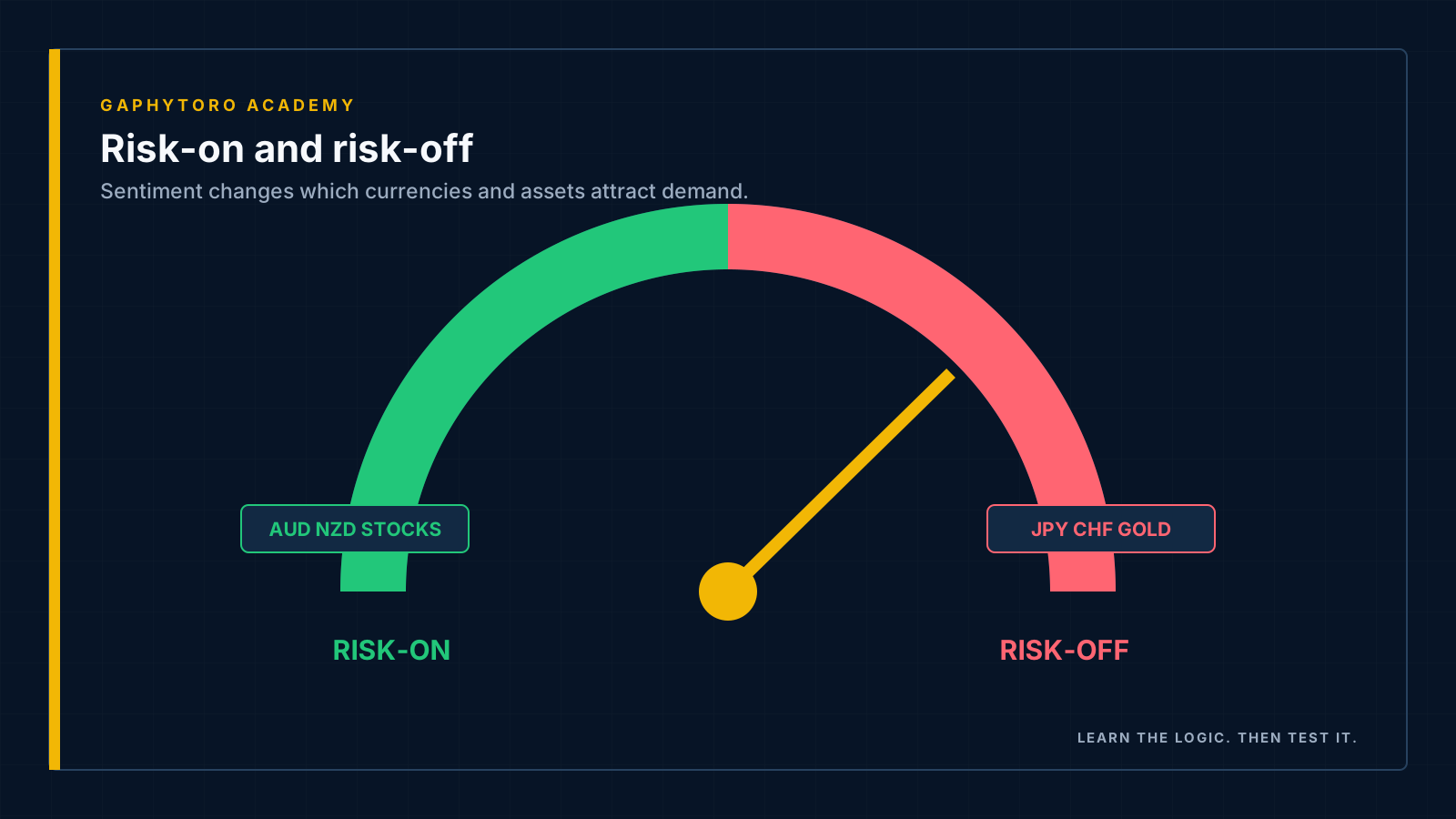
| Risk-ON ☀️ | Risk-OFF ⛈️ | |
|---|---|---|
| The mood | Confidence — "growth is coming, get me opportunity" | Fear — "protect the capital, get me out" |
| Money flows toward | Stocks, emerging markets, growth-linked currencies | Safe havens: JPY, CHF, USD, gold, government bonds |
| Currencies that smile | AUD, NZD, CAD, EM currencies | JPY, CHF, USD |
| Typical triggers | Strong global data, easing tensions, stimulus | Conflicts, crises, shocks, contagion fear |
Why these teams?
Commodity currencies — the Australian, New Zealand and Canadian dollars — ride global growth. Australia sells iron ore, New Zealand sells dairy, Canada sells oil; when the world is building and consuming, demand for their exports (and their currencies) climbs. When the world hides under a blanket, that demand fades first.
Safe havens earn their label from deep, liquid, trusted markets that can absorb panicked capital. The US dollar doubles as the world's reserve currency — the default bunker in a global emergency, sometimes even when the emergency involves the US itself. The yen and franc carry decades of "bring the money home when scared" behaviour.
🙃 When markets react "wrong"
Sentiment explains the reactions that make beginners doubt their sanity:
Terrible data, rising stocks: weak numbers convince markets the central bank must cut rates — cheap money ahead — and risk assets celebrate the medicine rather than mourn the illness.
A crisis touching the US lifts the dollar: global fear triggers a stampede into the deepest market there is, which happens to be American.
"Good" news sinks a commodity currency: if the improvement cools rate-hike expectations (remember the Aussie jobs surprise), yield seekers walk away.
Watch how tangled the threads get in live coverage: gold falling while Middle-East tensions rise looks like a paradox — until you see that the tension lifted oil, oil stoked inflation expectations, inflation revived rate-hike bets, and higher yields outmuscled gold's safe-haven bid. Sentiment and rate expectations wrestling in real time.
The lesson inside the paradoxes: never trade the headline. Trade the market's reaction chain to the headline — and when you cannot map the chain, stand aside. Flat is a position.
🧭 Reading today's mood
You do not need a Bloomberg terminal. Three glances before any session:
Equity futures — green and calm suggests risk-on; deep red says caution.
JPY pairs — a firm bid across yen pairs is the market quietly buying its bunker.
Gold — surging gold with sinking yields is fear wearing its Sunday best.
Then note the mood in your journal — one word, risk-on, risk-off or mixed — on every trade. Sentiment tags reveal a pattern most traders never see: strategies that shine in one weather system and drown in the other. Your analytics can only surface that pattern if the tag exists.
✅ Key takeaways
Sentiment is the market-wide choice between opportunity and safety.
Risk-on favours AUD, NZD, CAD; risk-off favours JPY, CHF, USD and gold.
Markets can rally on bad news (rate-cut hope) and sink havens on good news — trace the chain, not the headline.
Futures, yen pairs and gold give a free three-glance mood reading.
Tag every trade's sentiment weather; patterns follow.
⏭️ Coming up next
You now understand what moves markets. Time for the module that decides whether you survive them: risk management and position sizing — the mathematics of staying in the game.