
How the Forex Market Actually Works
The forex market has no building, no opening bell and no central exchange — yet it moves over $7 trillion a day. Learn who actually trades currencies, how prices are really set, and why the market never sits still.
📘 There is no forex building
Quick — picture a financial market. You probably imagined a trading floor: screens everywhere, people shouting, a bell ringing at 9:30.
Now forget all of it, because forex has none of those things.
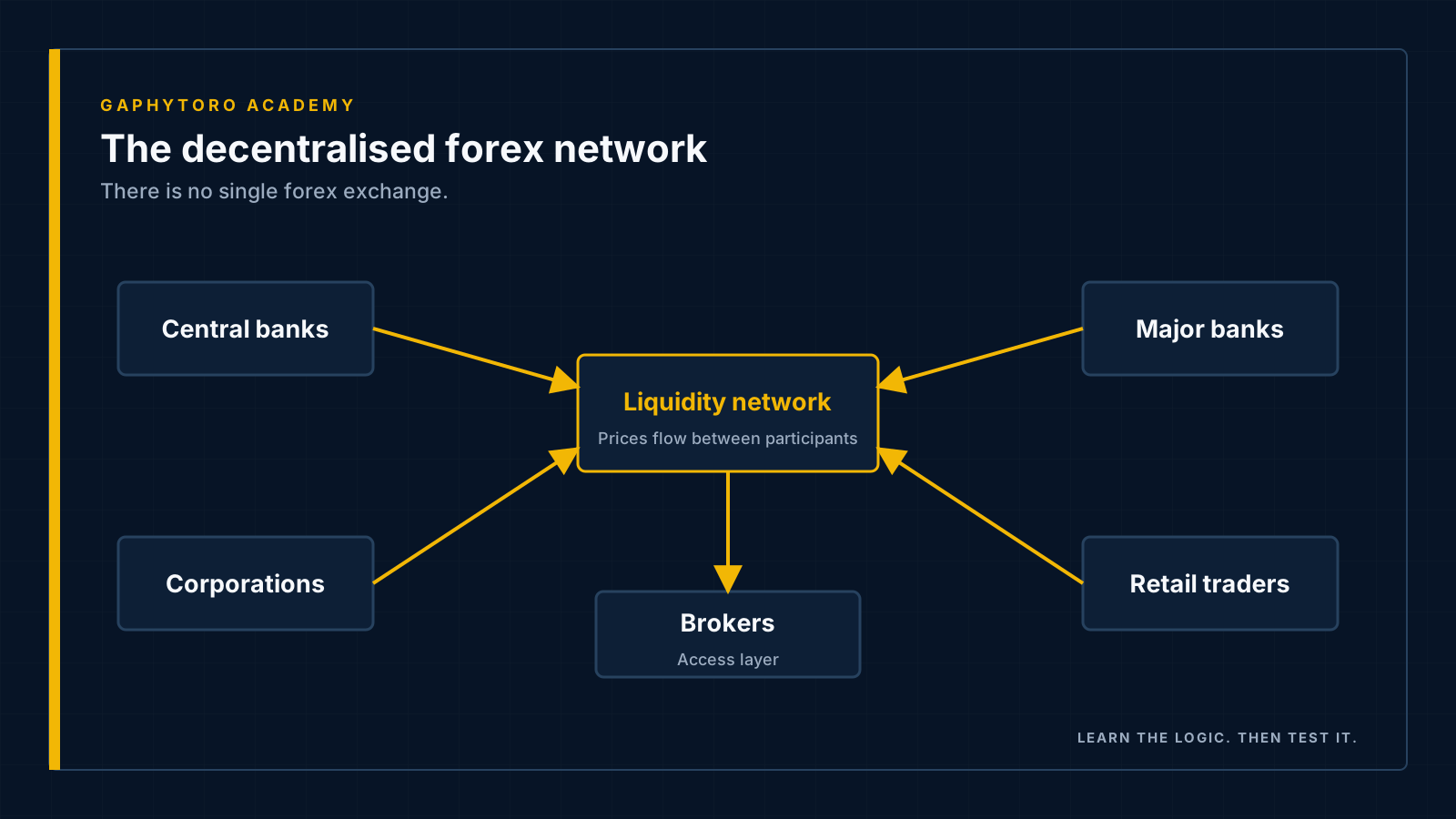
The foreign exchange market has no central exchange, no physical location and no opening bell. It is a global network of banks, institutions and computers passing prices to each other — 24 hours a day, five days a week. Traders call this an over-the-counter (OTC) market: trades happen directly between parties instead of through one central marketplace.
And it is enormous. More than $7 trillion changes hands every single day. For comparison, the New York Stock Exchange — the one with the actual bell — trades a small fraction of that.
🎯 What you will learn
Why forex has no central exchange, and what that means for you.
Who actually trades currencies (spoiler: mostly not people like us).
How a price reaches your screen.
The four big forces that move exchange rates.
💱 What is actually being traded?
In the stock market you buy a slice of a company. In forex, the product is money itself.
Every international transaction needs a currency exchange somewhere. A Japanese airline buying American-built planes needs dollars. A Kenyan importer paying a German supplier needs euros. A tourist landing in Bangkok needs baht.
Most of that exchanging is practical, not speculative. But layered on top sits a vast speculative market — participants exchanging currencies purely because they expect the rate between them to change.
Forex trading is not about owning something that grows. It is about correctly anticipating how the relationship between two currencies will shift.
🏛️ The food chain: who trades forex
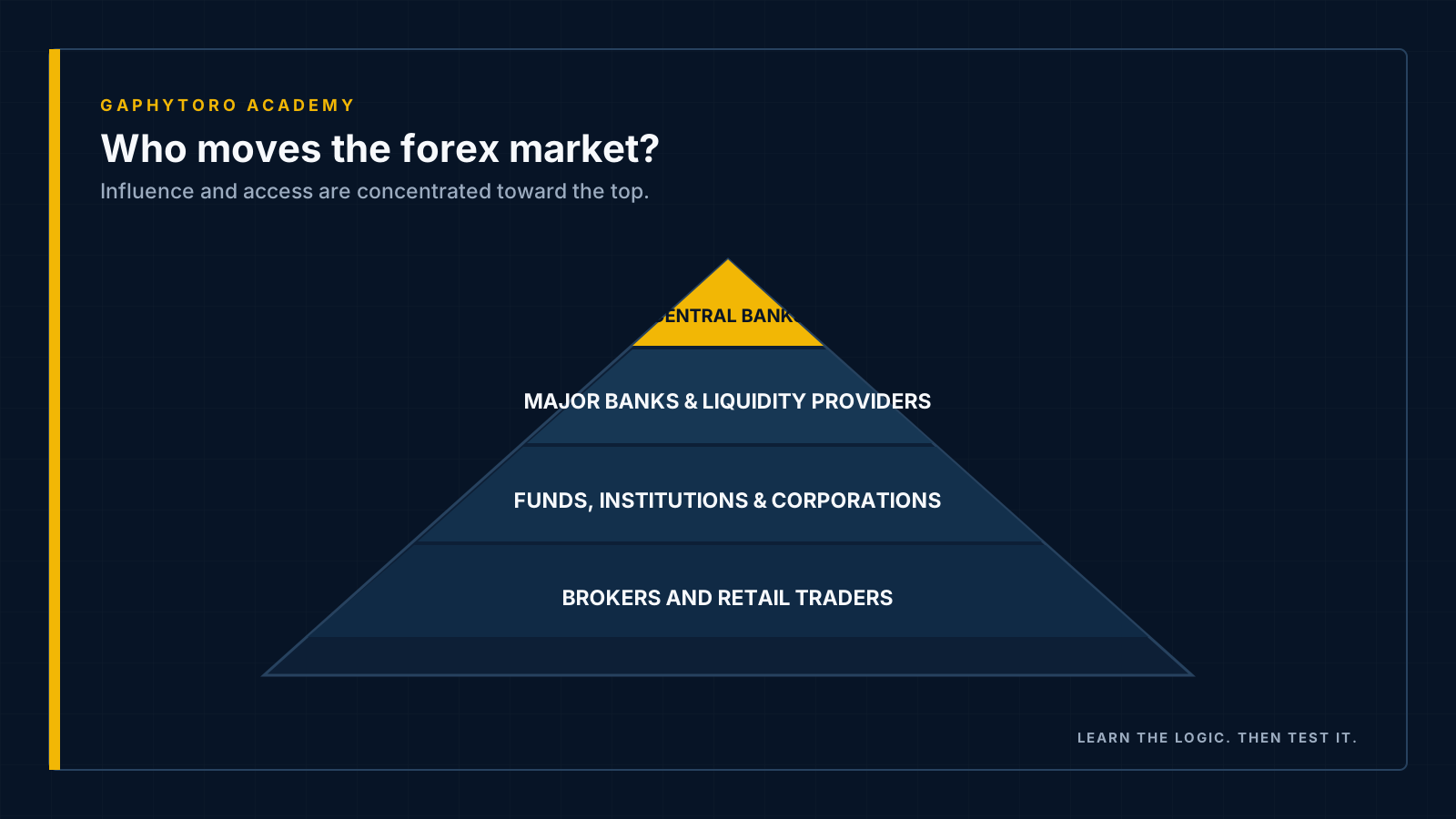
The market has a pecking order. Size determines influence.
| Participant | Why they trade | Market impact |
|---|---|---|
| Central banks | Manage national currencies, set interest rates, hold reserves | Massive — one sentence from a central bank can move a currency for months |
| Major commercial banks | Trade with each other in the interbank market; fill client orders | Very large — they set the wholesale prices everyone else builds on |
| Institutions & funds | Hedge portfolios, speculate, rebalance international holdings | Large — their flows create many of the trends traders follow |
| Corporations | Pay overseas suppliers and staff, hedge future costs | Moderate — steady, practical flow |
| Retail traders (you) | Speculate on rate changes via brokers | Tiny individually — we ride the waves, we do not make them |
This ordering matters for your expectations. As a retail trader you will never move EUR/USD. Your job is humbler and smarter: read what the big players are doing and position alongside them. That reading skill — built through study and careful trade review — is the entire craft.
🔌 How a price reaches your screen
When you open your platform and see EUR/USD at 1.0850, here is the relay race that delivered that number:
Giant banks quote prices to each other in the interbank market — the wholesale level.
Liquidity providers aggregate those quotes and stream them to brokers.
Your broker adds its spread or commission and shows you a tradable price.
Prices update several times per second because thousands of participants are constantly adjusting what they are willing to pay. Nobody decides the price of the euro. The price is simply the last point where a buyer and seller agreed.
🌪️ The four forces that move currencies
Why did EUR/USD just tick up? At any moment, some blend of four forces:
1. Interest rates
Money flows toward yield. When a central bank raises rates, holding that currency pays better, and demand tends to rise. Rate expectations are the single most-watched driver in forex — as you will see when we cover fundamental analysis later, and as our market desk tracks in posts like this ECB rate-shock breakdown.
2. Economic health
Growth, jobs, inflation, trade balances. Strong economies attract investment; investment needs the local currency; demand lifts the rate.
3. Sentiment and risk appetite
When investors are confident, money chases opportunity in growth-linked currencies. When they are scared, it stampedes into safe havens. Entire days trade on mood.
4. Surprises
Elections, conflicts, resignations, pandemics. Markets price in what they expect — so it is the unexpected that produces violent moves.
Rule to remember: prices move on the gap between what the market expected and what actually happened. News that matches expectations often moves nothing at all.
📓 Why this matters for your trading
Understanding market structure keeps you realistic. You are not outmuscling banks; you are a small boat reading the currents made by aircraft carriers. Small boats survive on discipline: knowing why they entered, where they are wrong, and what the bigger flows are doing.
That is exactly what a forex trading journal is for — and why every lesson in this course will keep nudging you to write down what you see. The traders who improve are the ones with records to learn from.
✅ Key takeaways
Forex is a decentralised, over-the-counter market — a network, not a place.
Over $7 trillion changes hands daily, mostly between banks and institutions.
Retail traders ride flows created by far larger players.
Rates, economic health, sentiment and surprises are the four big price movers.
Markets move on surprises versus expectations, not on news alone.
⏭️ Coming up next
You now know who trades and why prices move. Next: the strange grammar of forex — why currencies always come in pairs, and what you are really buying when you "buy EUR/USD".