
Currency Pairs Explained: Majors, Minors and Exotics
You never trade a currency — you trade a relationship between two of them. Learn to read a quote like a native: base and quote currencies, majors, minors, crosses, exotics, and what buying or selling a pair really means.
📘 The tug-of-war
Here is the single most important mental picture in forex:
Every currency pair is a tug-of-war between two economies. The price tells you who is winning right now.
You can never just "buy euros" in forex. The euro has no price by itself — only a price in terms of something else. Dollars? Yen? Pounds? Each comparison is its own tug-of-war, with its own rope, its own crowd and its own score.
That score is the currency pair.
🎯 What you will learn
How to read any forex quote instantly.
What base and quote currencies are.
What actually happens when you buy or sell a pair.
The difference between majors, minors, crosses and exotics — and why beginners should care.
🔍 Anatomy of a quote
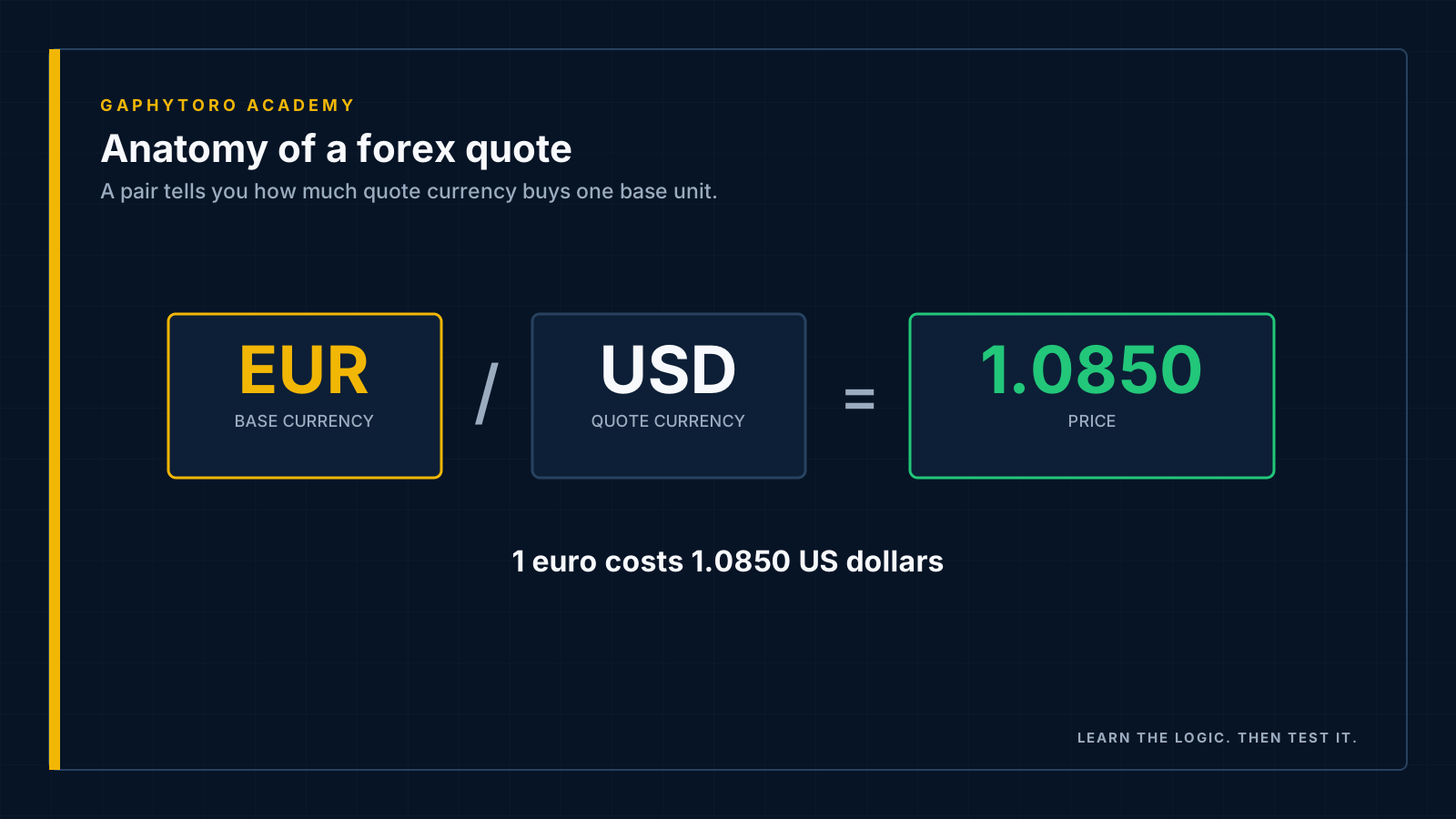
Take the most traded pair on Earth:
EUR/USD = 1.0850
The first currency (EUR) is the base currency. It is the thing being priced. Quantity: always exactly 1.
The second currency (USD) is the quote currency. It is the measuring stick.
The number answers one question: how much of the quote currency buys one unit of the base? Here: 1 euro costs 1.0850 dollars.
If EUR/USD rises to 1.0950, the euro got stronger against the dollar (each euro now costs more dollars). If it falls to 1.0750, the euro weakened — or equally, the dollar strengthened. Every move is both currencies at once. The rope moves because someone pulled.
🛒 What buying and selling really means
When you buy EUR/USD (traders say "go long"), you are simultaneously:
Buying euros, and
Paying for them with dollars.
You profit if the euro strengthens against the dollar. When you sell EUR/USD ("go short"), you do the reverse — and profit if the euro weakens.
This confuses beginners: how can I sell something I never owned? Because in forex every trade is an exchange, not a purchase. Selling EUR/USD just means holding dollars instead of euros for the duration of the trade. There is always a side you hold and a side you owe — swapping between them is the trade.
Bookmark this: long = betting the base currency wins the tug-of-war. Short = betting the quote currency wins.
🗂️ The pair families
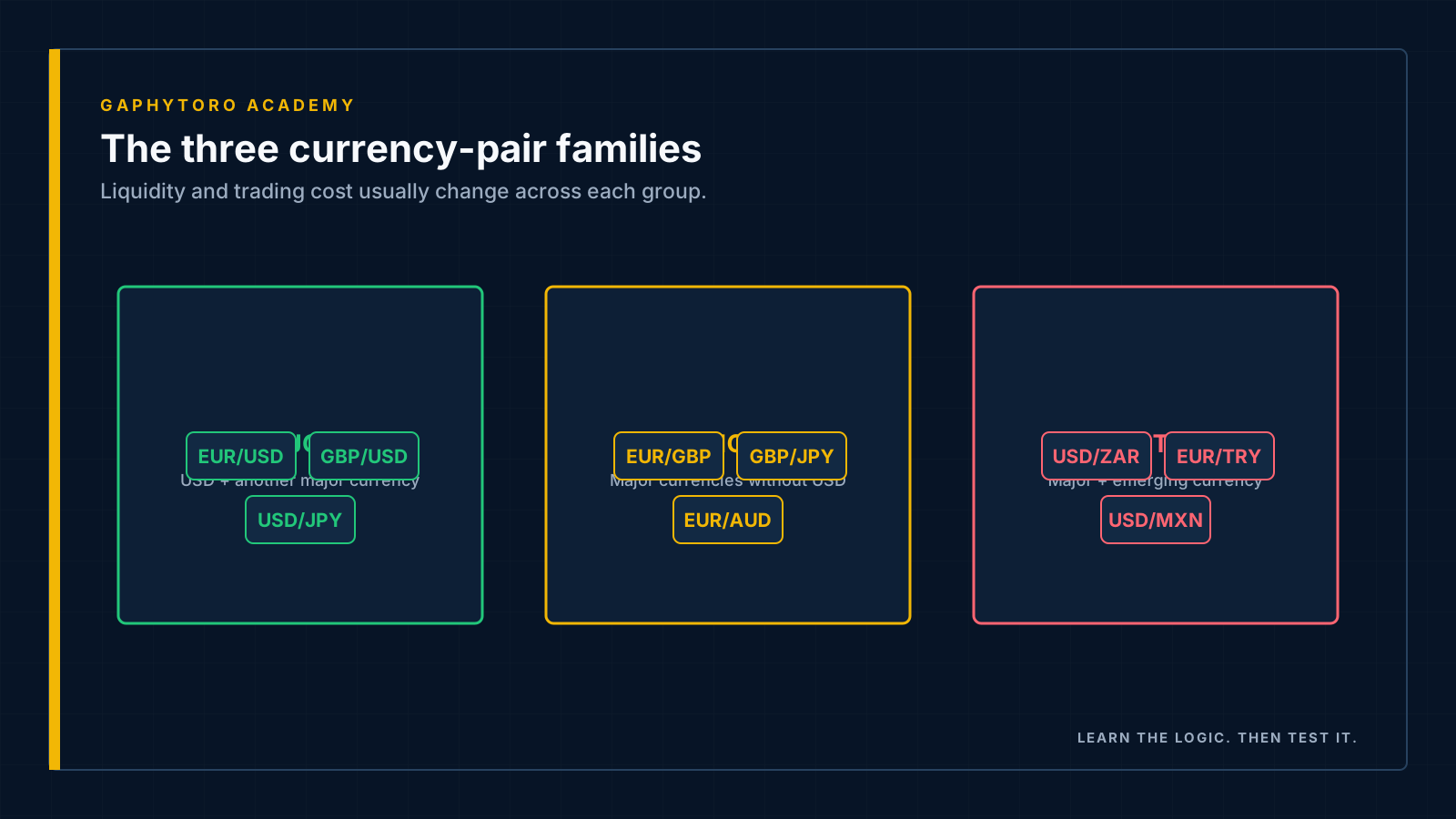
| Family | What it is | Examples | Typical spread |
|---|---|---|---|
| Majors | USD paired with another heavyweight currency | EUR/USD, GBP/USD, USD/JPY, USD/CHF, AUD/USD, USD/CAD, NZD/USD | Tightest |
| Minors / crosses | Heavyweights paired without the USD | EUR/GBP, EUR/JPY, GBP/JPY, AUD/NZD | Moderate |
| Exotics | A heavyweight paired with an emerging-market currency | USD/ZAR, USD/TRY, EUR/KES, USD/MXN | Widest by far |
Some pairs even have nicknames from the old telegraph and dealing-desk days: GBP/USD is "Cable", NZD/USD is "the Kiwi", and traders often call EUR/USD simply "the euro".
Why beginners should start with majors
Liquidity. Majors have the deepest crowds of buyers and sellers, so you can enter and exit near the price you see.
Cost. Tight spreads mean each trade starts in a shallower hole.
Information. Analysis, news and clean charts are abundant for majors. Exotics can gap wildly on thin news and wide spreads eat small accounts alive.
Exotics are not evil — they are simply an advanced arena. Earn your way there.
📓 A journaling habit to start now
From your very first demo trade, record which pair you traded and why that pair. Most beginners discover from their own trading journal that they perform far better on one or two pairs than everywhere else. That discovery — usually visible within 30 logged trades in your trading analytics — is worth more than any indicator you will ever download.
✅ Key takeaways
Currencies are always quoted in pairs: base first, quote second.
The price = how much quote currency buys one unit of base.
Long = you expect the base to strengthen; short = you expect it to weaken.
Majors are the beginner's home: liquid, cheap to trade, well-documented.
Every move is relative — two currencies move, not one.
⏭️ Coming up next
You can read a pair. Now you need the trader's dialect: pips, pipettes, lots and spreads — the units that turn price movement into money.