
Trading Psychology: The Six Saboteurs in Your Head
Fear, greed, FOMO, revenge trading, overconfidence and hesitation — meet the six saboteurs that empty accounts faster than any bad strategy, and the process-first systems that beat them.
📘 The most expensive opponent you will ever face
Here is a puzzle. A trader learns everything in this course. Solid strategy, proper sizing, clean charts. Six months later, the account is empty. What happened?
Nothing was wrong with the knowledge. Something was wrong with the execution under pressure — because between every plan and every click sits a human nervous system that evolved for dodging predators, not managing floating losses.
Trading psychology is not motivational fluff. It is the discipline of building systems that work with your wiring instead of pretending you can out-willpower it. Meet the six saboteurs first; then we arm you.
🎯 What you will learn
The six emotional patterns that empty beginner accounts.
Why willpower fails and systems succeed.
Process-versus-outcome judgement — the professional's operating system.
How a journal becomes an emotional mirror.
😈 The six saboteurs
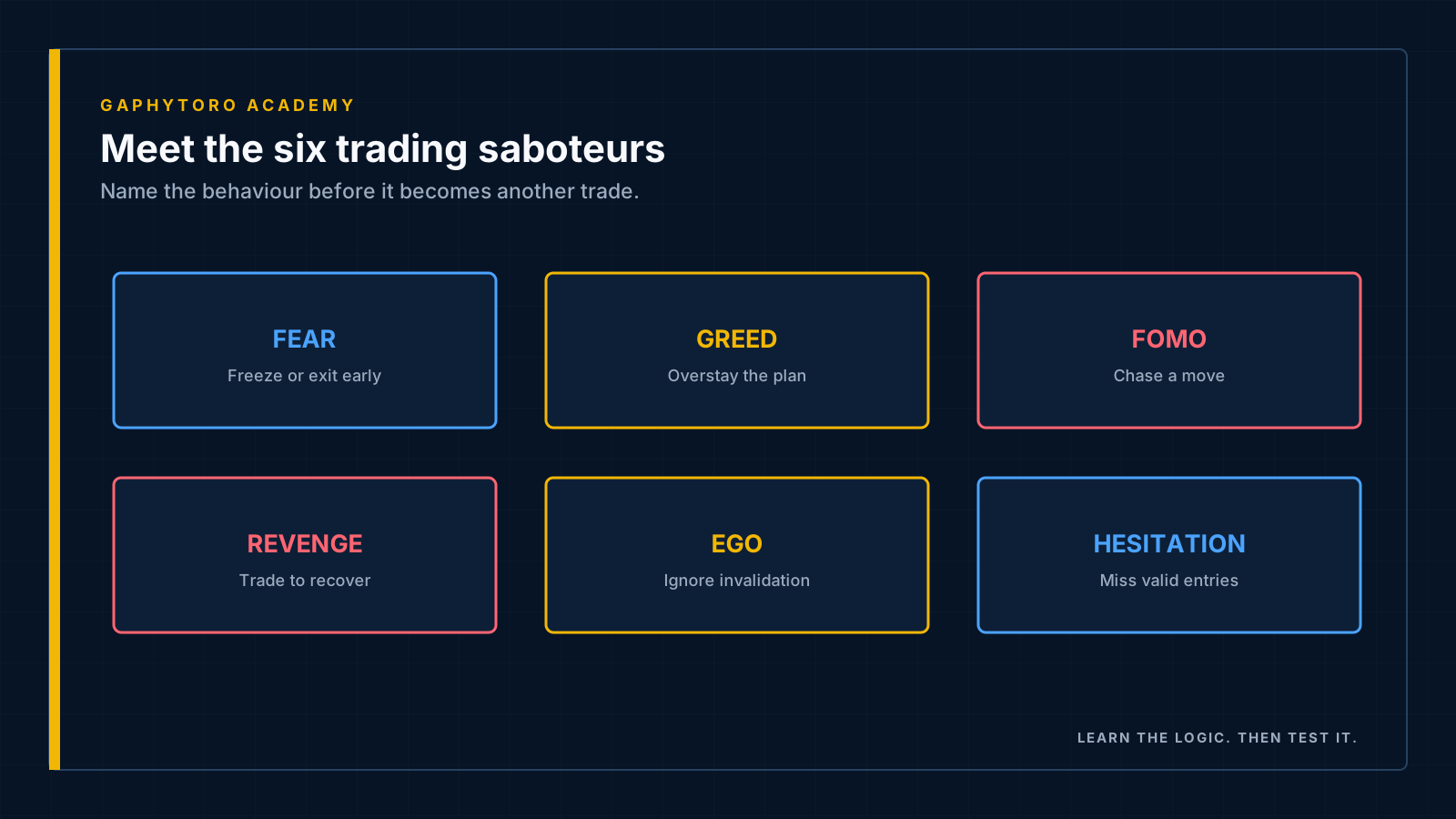
1. Fear — the trigger-freezer
The setup arrives, every rule aligns… and your hand refuses. Or worse: fear's twin, panic, closes a healthy trade at +5 pips that ran to +60 without you. Fear usually traces to oversized risk — when 1% is truly at stake, clicking gets easier. Size and fear are the same dial.
2. Greed — the target-mover
The trade hits its planned target… and you hold, because "it's flying". The market turns; the winner becomes a loser; the plan died the moment profit appeared. Greed converts good trades into bad memories.
3. FOMO — the chase reflex
Price rockets without you and something primal screams get in before it's gone. So you buy the top of the move — providing exit liquidity for the disciplined trader who entered at the level you had drawn but did not wait for. The market runs daily; missing a train is free, chasing one is not.
4. Revenge — the debt collector
A loss feels like an insult, and you demand the money back from the same pair, right now, at double size. This is revenge trading, the fastest documented route from a bad hour to a blown account. The market is not an opponent; it does not know you exist and cannot owe you anything.
5. Overconfidence — the winning-streak tax
Five wins in a row and suddenly the rules feel beneath you: size creeps up, checklists get skipped, "I've got a feel for this now". Winning streaks end; over-sized, rule-free trades make sure they end catastrophically. Confidence is earned by process, spent by ego.
6. Hesitation-then-overtrade — the pendulum
Skip three valid setups out of doubt, then — furious about the missed profit — take five invalid ones out of frustration. The pendulum swings between paralysis and spray-fire, and both ends lose. Overtrading is boredom and frustration wearing a strategy costume.
Common thread: every saboteur attacks in the gap between plan and execution. Shrink the gap, and there is nowhere to attack.
🛡️ Systems beat willpower
You cannot delete emotions. You can make them irrelevant to outcomes:
Decide everything before entry. Entry, stop, target and size, placed as orders — recall the order-types lesson: a full ticket makes impulse mechanically harder. In-trade decisions are where saboteurs live; a complete plan leaves them nothing to decide.
Circuit breakers, pre-agreed. The −3% daily stop from the risk lesson is a psychological tool wearing a risk costume: it fires exactly when revenge and frustration peak, and removes the weapon.
One next-train rule for FOMO. Missed the move? Write the level you would have entered, set an alert for the retest, walk away. Chasing is banned; waiting is the job. The market runs the same trains daily.
Log the feeling, not just the fill. One emotion word per trade — calm, anxious, rushed, vengeful. Honest tags turn your journal into an emotional mirror: most traders discover their "rushed" trades lose several times more than their "calm" ones, a fact worth more than any indicator ever plotted.
⚖️ The professional's operating system: process over outcome
One reframe separates professionals from everyone else. Beginners judge trades by result: made money = good trade. Professionals judge by process: did I follow my rules?
| Followed the rules | Broke the rules | |
|---|---|---|
| Made money | Good trade ✅ | Dangerous trade — the market just paid you to learn a bad habit |
| Lost money | Good trade — a business expense, budgeted in advance | Bad trade ❌ |
Read the strange quadrants twice. A rule-following loss is a good trade. A rule-breaking win is a trap — the most expensive kind, because it teaches you that breaking rules pays. In a probabilistic game, single outcomes are noise; the process is the only thing you control, so it is the only thing worth grading. That grading — trade by trade, in writing — is precisely what structured trade review exists to do.
✅ Key takeaways
Fear, greed, FOMO, revenge, overconfidence and the hesitate/overtrade pendulum attack between plan and click.
Full pre-trade tickets, circuit breakers and the next-train rule shrink that gap to nothing.
Oversized risk amplifies every saboteur; correct sizing quiets them all.
Grade process, not outcome — rule-breaking wins are the most expensive trades you will ever take.
Tag every trade with its emotion; your journal becomes the mirror your memory refuses to be.
⏭️ Coming up next
Psychology gives you the why; the next lesson builds the container: a professional daily routine — pre-market prep, execution checklists and the post-trade review loop that compounds skill.