
Leverage and Margin: The Chainsaw Chapter
Leverage lets a $1,000 account control a $100,000 position — which is exactly as powerful and as dangerous as it sounds. Learn how margin, equity, margin calls and stop-outs actually work, with the numbers laid bare.
📘 The chainsaw
A chainsaw is a brilliant tool. It lets one person do the work of ten. Nobody calls a chainsaw evil — but nobody hands one to a beginner without a serious safety talk, either.
Leverage is trading's chainsaw. It is the reason a small account can trade meaningful size. It is also the single most common reason beginner accounts die in their first months. Same tool, both outcomes — the difference is entirely in the handling.
This lesson is the safety talk. It contains more numbers than any lesson so far. Work through them; do not skim. Your account depends on this one.
🎯 What you will learn
What leverage actually does to profits and losses.
Margin, used margin, free margin, balance, equity and margin level — decoded with one running example.
What margin calls and stop-outs are, and the story of how they happen.
Why professionals think in risk-per-trade, not leverage.
⚖️ What leverage does
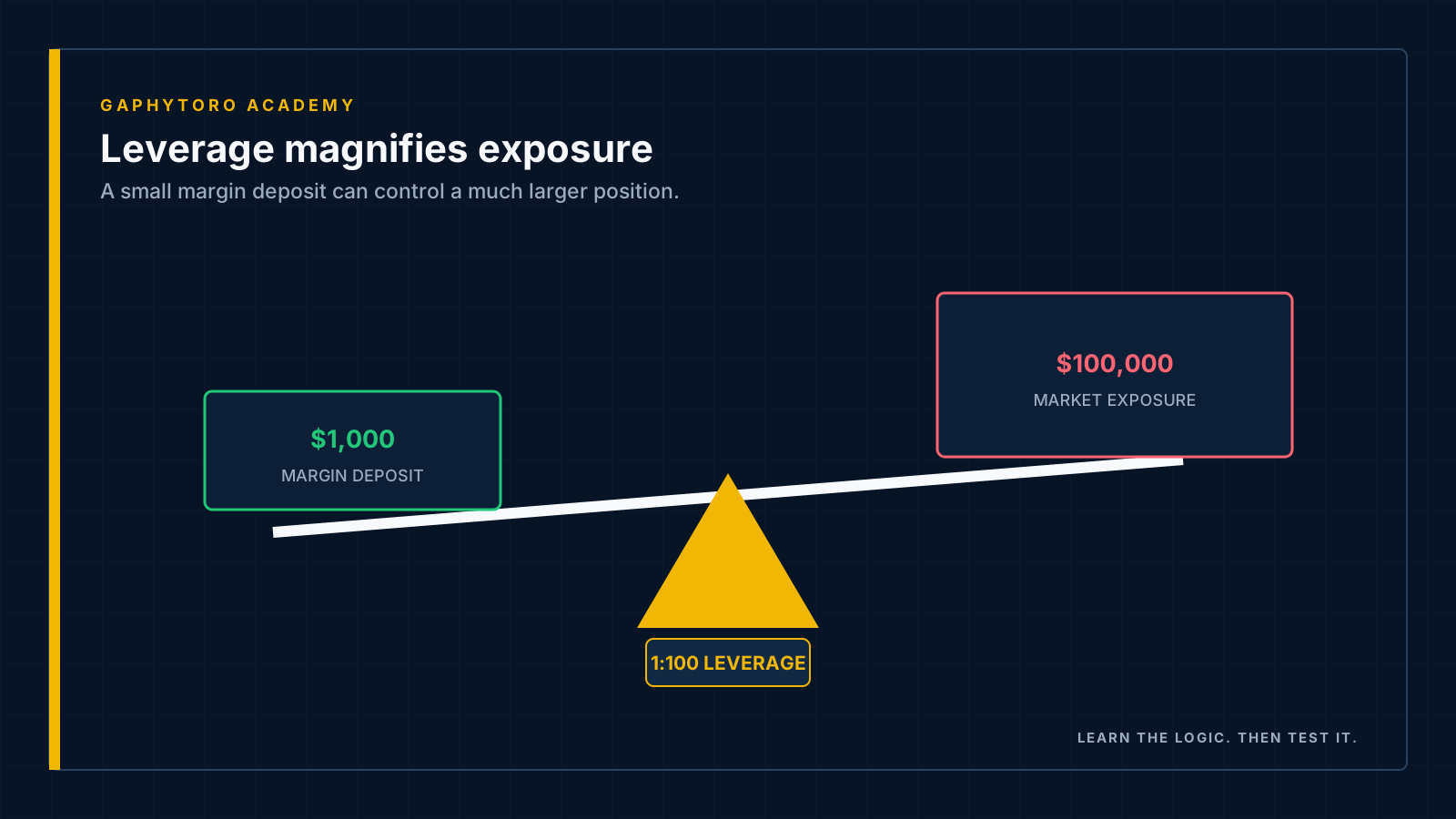
Leverage is borrowed trading power. With 1:100 leverage, every $1 in your account can control $100 of position.
Account: $1,000
Leverage: 1:100
Maximum position: $100,000 — one standard lot.
Now watch what a mere 1% market move does to that maxed-out position:
| 1% move | Position P/L | Effect on your $1,000 |
|---|---|---|
| In your favour | +$1,000 | +100% — account doubled |
| Against you | −$1,000 | −100% — account gone |
Read that again. A 1% currency move — an ordinary Tuesday — either doubles or erases the account. Leverage does not create opportunity. It multiplies whatever happens, in both directions, with total indifference.
Leverage is not free money. It is borrowed exposure, and the market collects on it with interest paid in stress.
🧾 The margin dashboard
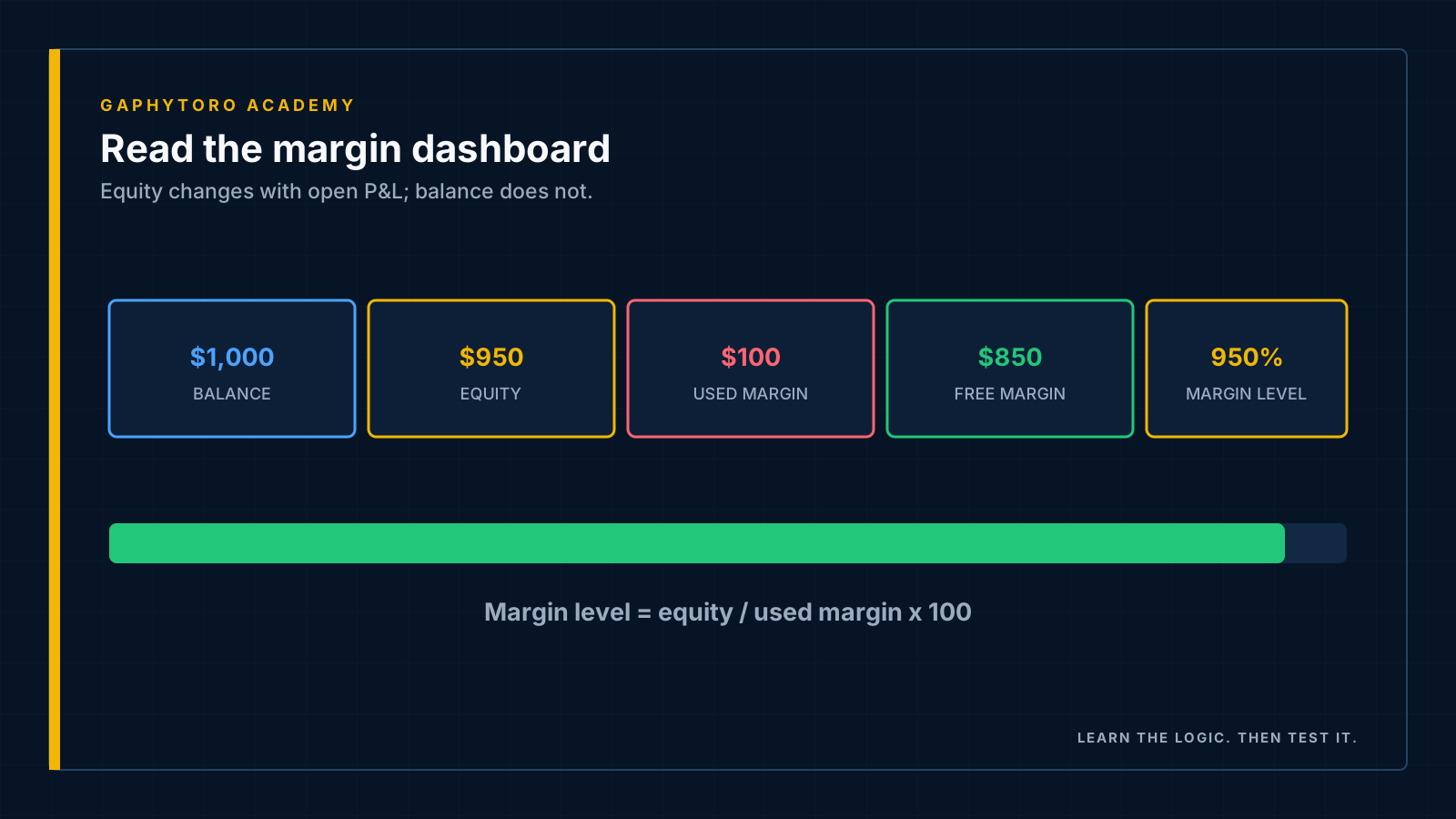
When you open a leveraged position, your broker sets aside a deposit from your account as collateral. That deposit is margin. Everything on your platform's account bar flows from it. One running example makes them all clear:
You have $1,000 and open 0.1 lots of EUR/USD ($10,000 exposure) at 1:100 leverage. The position is currently down $50.
| Term | Meaning | In our example |
|---|---|---|
| Balance | Cash from closed trades only — ignores open positions | $1,000 |
| Equity | Balance ± open profit/loss — your real-time truth | $950 |
| Used margin | Collateral locked for open positions ($10,000 ÷ 100) | $100 |
| Free margin | Equity − used margin: fuel for new trades and room for losses | $850 |
| Margin level | Equity ÷ used margin × 100% — your account's health gauge | 950% |
Margin level is the number your broker watches. High = healthy. As losses grow, equity falls, and margin level falls with it — toward two tripwires.
🚨 The two tripwires
Margin call
When margin level drops below the broker's first threshold (often 100%), you get a margin call — a warning that your equity no longer comfortably covers your positions: close something or add funds. It is the smoke alarm before the fire.
Stop-out
If losses continue to a lower threshold (often 50% or below), the broker does not ask anymore. It force-closes your positions, starting with the worst loser, to protect the borrowed exposure. This is a stop-out — the market equivalent of the bank repossessing the car.
How it actually happens: meet Sam
Sam funds $1,000, hears leverage is "how traders get rich", and opens a full standard lot on GBP/USD ($100,000 exposure — used margin $1,000, margin level 100% from the very first tick). Cable dips 30 pips — a completely normal wiggle. That is a $300 paper loss, equity $700, margin level 70%. Margin call. Sam holds, sure it will come back. Another 25 pips. Equity $450, margin level 45% — stop-out. Sam's account lost 55% on a 0.55% market move, on a wiggle the chart barely shows.
Nothing unusual happened to the market that day. Sam's size was the entire accident.
🛡️ How professionals actually think
Here is the reframe that separates survivors from statistics: professionals barely discuss leverage. They discuss risk per trade — the percentage of the account lost if the trade hits its stop-loss. Keep that between 1–2% and your leverage stays naturally tame; the position size is chosen from the risk, never from the maximum the broker allows. The full method comes in the position sizing lesson of the risk-management module — it is the most important lesson in this course.
Until then, one habit: every demo trade you place, log your position size and the percentage of the account that was truly at risk. When you review the log in your trading journal, oversized trades glow in the dark — a pattern far easier to see in a drawdown chart than in the heat of the moment.
✅ Key takeaways
Leverage multiplies both outcomes with total indifference — it is exposure, not opportunity.
Equity is your real-time truth; balance ignores open trades.
Margin level (equity ÷ used margin) is the health gauge brokers act on.
Margin call = warning; stop-out = forced liquidation. Both are size problems, not market problems.
Professionals size positions from risk-per-trade (1–2%), never from available leverage.
⏭️ Coming up next
You know the machinery and its dangers. Next we choose where to operate it: how forex brokers work, what regulation actually protects you from, and how to spot a broker you should run from.