
Pips, Lots and Spreads: The Trader's Dialect
Pips, pipettes, lots, bid, ask, spread — forex has its own dialect, and fluency is non-negotiable. Learn the units that turn price moves into money, with worked examples you can check yourself.
📘 Learning the dialect
Walk into any trading community and you will hear sentences like:
"Caught 40 pips on cable this morning, half a lot, spread was under a pip."
Gibberish? Today that changes. This is the vocabulary lesson of the entire course — the one every later lesson builds on. Take it slowly and do the small calculations yourself.
🎯 What you will learn
What pips and pipettes are, and how to spot them in any quote.
How lot sizes decide what a pip is worth in money.
Why the bid-ask spread means every trade starts slightly negative.
The words traders use for market conditions and direction.
📏 The pip: forex's unit of distance
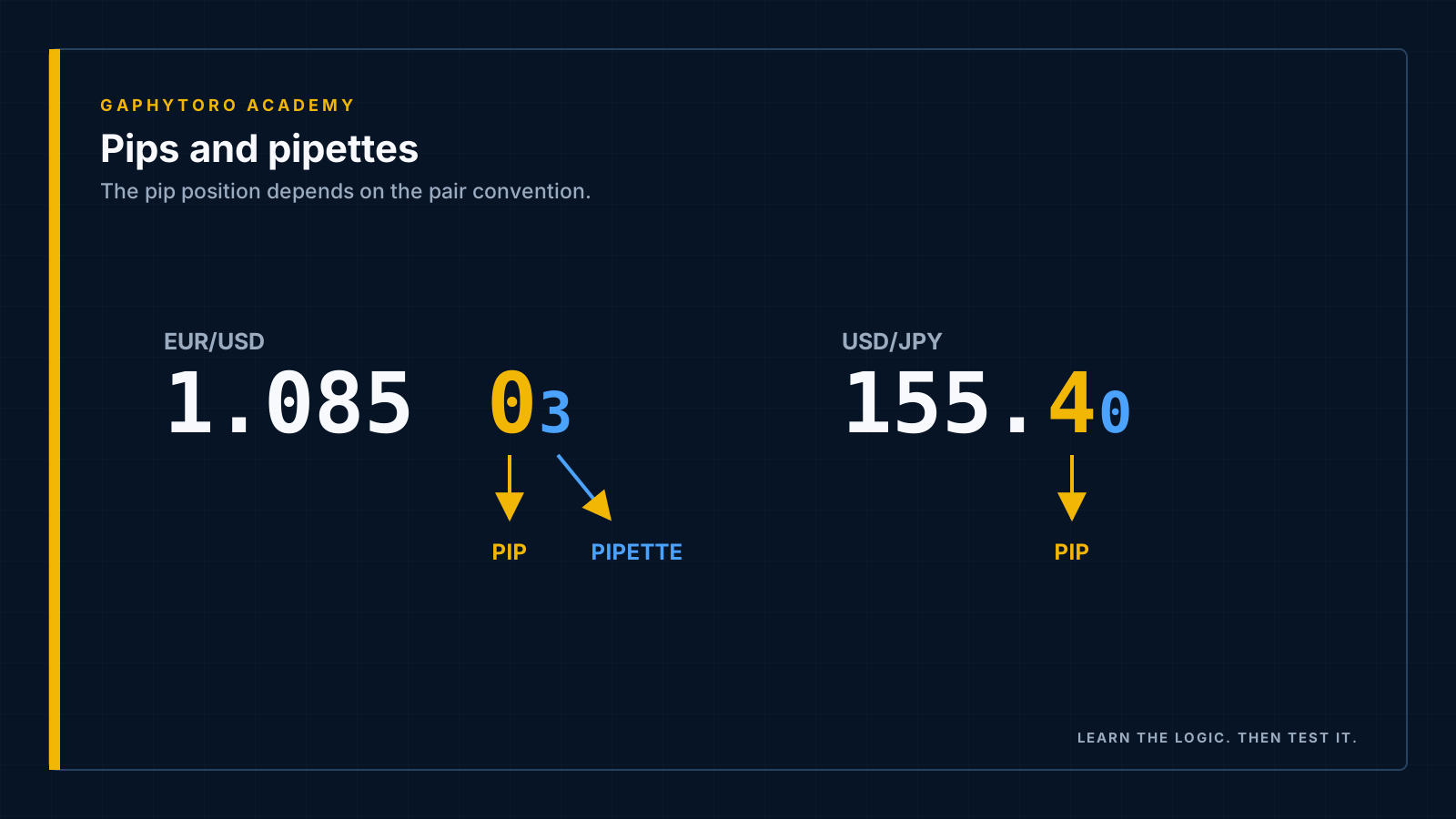
A pip ("price interest point") is the standard unit of price movement.
For most pairs, a pip is the 4th decimal place: EUR/USD moving from 1.0850 to 1.0851 is one pip.
For yen pairs, a pip is the 2nd decimal place: USD/JPY moving from 155.40 to 155.41 is one pip.
Most platforms also show a 5th (or 3rd, for yen) decimal — a pipette, one-tenth of a pip. On your platform, the pipette is usually displayed as a smaller superscript digit. Do not let it fool you into thinking a 10-pipette move is a 10-pip move.
Why not just use money? Because traders need a currency-neutral way to talk about distance. "The trade moved 30 pips against me" means the same thing whether your account holds dollars, euros or shillings. Distance first, money second.
📦 Lots: forex's unit of quantity
You cannot buy one single euro. Forex trades in standard bundles called lots:
| Lot type | Units of base currency | Pip value (EUR/USD) |
|---|---|---|
| Standard lot (1.0) | 100,000 | ≈ $10 per pip |
| Mini lot (0.1) | 10,000 | ≈ $1 per pip |
| Micro lot (0.01) | 1,000 | ≈ $0.10 per pip |
Distance × quantity = money. The same 50-pip move is worth $5 on a micro lot, $50 on a mini lot, and $500 on a standard lot. The market moved identically; only your exposure differed.
This is the seed of every risk-management lesson to come: you cannot control the distance price moves, but you completely control the size you trade.
Worked example (check this yourself)
You buy 0.1 lots of EUR/USD at 1.0850.
Price rises to 1.0885 — a move of 35 pips.
At ≈ $1 per pip on a mini lot: +$35.
Had price dropped the same distance: −$35. Symmetry is the point.
↔️ Bid, ask and the spread: the entry fee
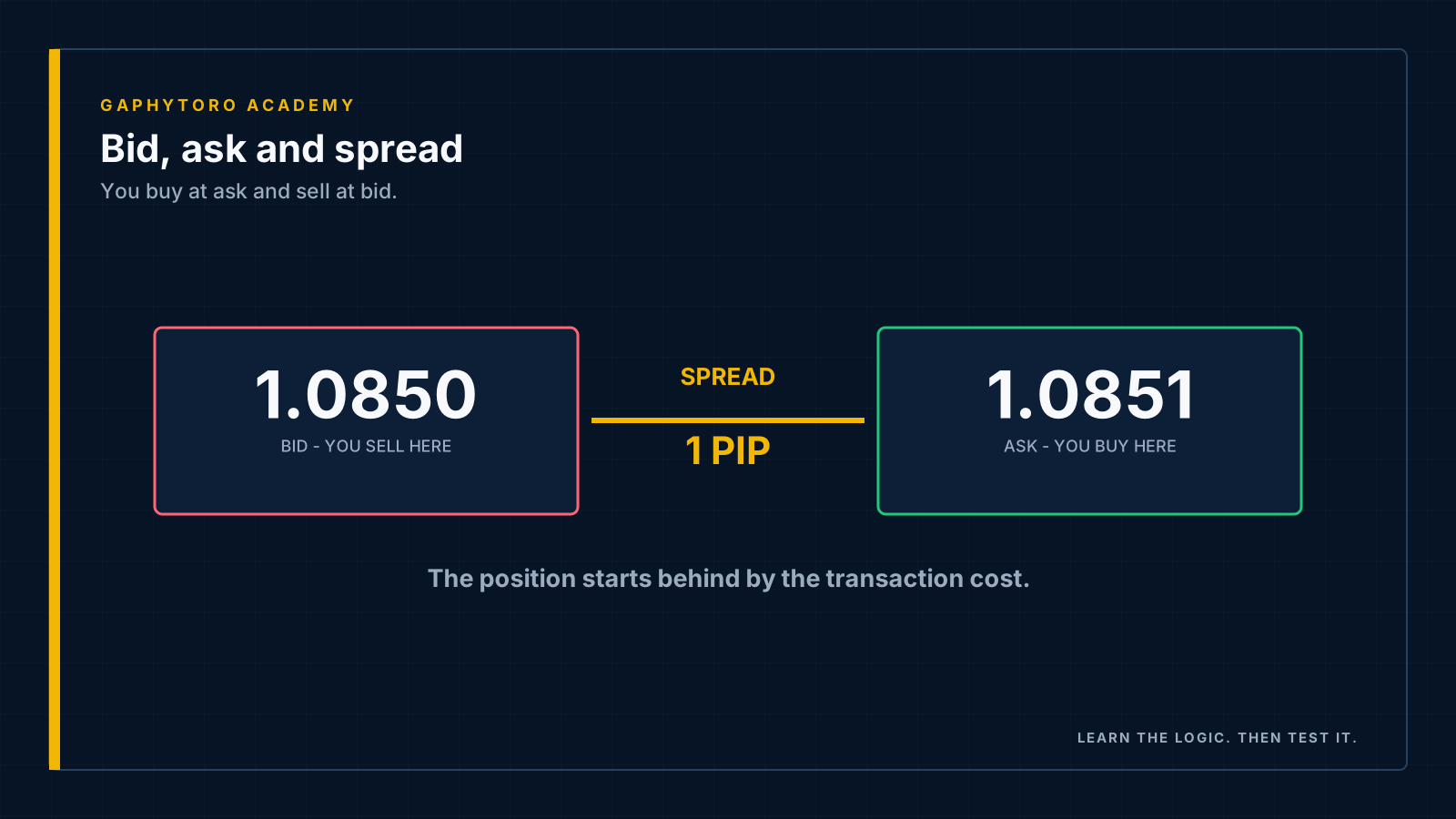
Every quote is actually two prices:
The bid — what buyers will pay you. You sell at the bid.
The ask — what sellers demand. You buy at the ask.
The gap between them is the spread — the market's built-in transaction cost, and typically how your broker gets paid.
Example: EUR/USD is quoted 1.0850 / 1.0851 (a 1-pip spread). The moment you buy at 1.0851, the price you could sell at is 1.0850. Every trade opens one spread underwater. Not a scam — simply the cost of doing business, like a market stall's buy and sell prices for the same goods.
Spreads are not fixed. They widen when liquidity thins — during major news, at the daily rollover, on exotic pairs. A pair that costs 1 pip at London lunchtime can cost several times that in the dead zone after New York closes. You will learn the rhythm of this in the market-sessions lesson.
🗣️ Condition and direction words
| Term | Meaning |
|---|---|
| Liquidity | How much buying/selling interest exists right now. High liquidity = tight spreads, smooth fills. |
| Volatility | How fast and far price is moving. High volatility = big swings — opportunity and danger in equal measure. |
| Bullish | Expecting price to rise (bulls strike upward with their horns). |
| Bearish | Expecting price to fall (bears swipe downward). |
| Flat / square | Holding no position. Underrated professional skill. |
📓 Fluency check
Reread the sentence from the top: "Caught 40 pips on cable this morning, half a lot, spread was under a pip."
Translation: a GBP/USD trade gained 40 pips of distance on a 0.5-lot position (≈ $5 per pip, so about $200), and the transaction cost was less than one pip. If you translated it without help — congratulations, you speak trader.
When you start logging trades, record the pip distance and the money result separately — alongside your risk metrics like R-multiple. Distance tells you about your market reading; money tells you about your sizing. A trade review tool that separates the two will teach you more than either number alone.
✅ Key takeaways
A pip is the 4th decimal (2nd for yen pairs); a pipette is a tenth of that.
Lots set your exposure: standard ≈ $10/pip, mini ≈ $1/pip, micro ≈ $0.10/pip on EUR/USD.
Distance × quantity = money. You control quantity; the market controls distance.
You buy at the ask, sell at the bid; the spread means every trade starts slightly behind.
Spreads widen when liquidity thins — timing affects cost.
⏭️ Coming up next
Now that pips and lots are second nature, we can safely open the most dangerous drawer in the toolbox: leverage and margin — the feature that builds accounts and the same one that destroys them.