
Fundamental Analysis: Why Currencies Really Move
Interest rates, inflation, jobs and the central banks that react to them — learn the economic engine underneath every chart, how to read an economic calendar, and why markets move on surprises rather than news.
📘 The engine under the chart
Technical analysis reads the footprints. Fundamental analysis studies the animal making them.
Every squiggle on EUR/USD is, at bottom, the market's running referendum on two economies: which one will grow faster, keep inflation tamer, and — above all — pay more to hold its money. You do not need an economics degree to trade forex. You need a working model of five moving parts and the discipline to check a calendar. This lesson supplies both.
🎯 What you will learn
The interest-rate engine — the single biggest driver in forex.
How inflation, jobs and growth feed central-bank decisions.
How to read an economic calendar like a trader, not a tourist.
The forecast game: why "good" news can sink a currency.
🏦 The interest-rate engine
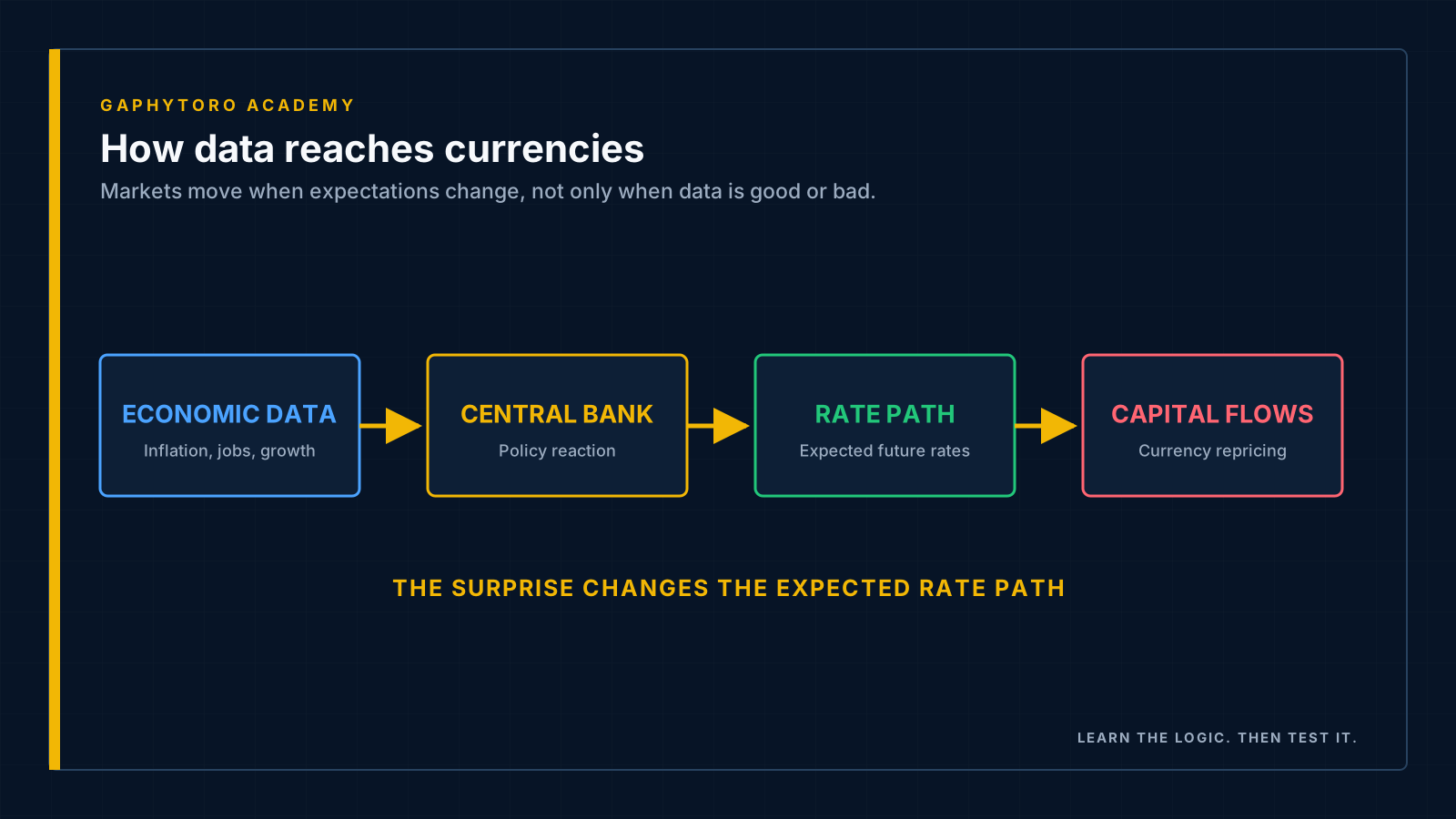
Recall from the market-structure lesson: money flows toward yield. Central banks — the Federal Reserve, the European Central Bank, the Bank of England, the Bank of Japan and their peers — set the base interest rate for their currency, and that rate is gravity for global capital.
Rates rise (or markets expect they will): deposits and bonds in that currency pay more → global money wants in → demand lifts the currency.
Rates fall (or cuts are expected): yield evaporates → money looks elsewhere → the currency softens.
Almost everything else in fundamental analysis matters because it feeds this engine. Inflation data matters because central banks raise rates to fight inflation. Jobs data matters because weak employment invites rate cuts. GDP matters because overheating economies get cooled with hikes. The chain is always: data → central-bank reaction → rate expectations → currency flows.
When any release drops, ask one question: does this make the central bank more likely to raise or to cut? Answer that, and you have done real fundamental analysis.
📊 The big five releases
| Release | What it measures | Why the market cares |
|---|---|---|
| Interest-rate decision | The central bank's policy rate + statement | The engine itself — decisions AND the language around them move markets for weeks |
| Inflation (CPI) | How fast consumer prices rise | Hot inflation pressures banks to hike; cooling inflation opens the door to cuts |
| Employment (e.g. US Non-Farm Payrolls) | Jobs created, unemployment rate, wages | Strong jobs = economy can handle higher rates; weak jobs = cuts loom |
| GDP | Total economic output growth | The broad health report card behind every policy debate |
| Retail sales | Consumer spending pulse | Consumers drive most modern economies; their wallets lead the data |
Watch this chain play out in real coverage: our market desk's piece on the ECB hiking into an energy shock is the engine running in one direction, and a jobs surprise easing rate-hike pressure on the RBA is the same engine easing off. Same logic, opposite directions.
📅 Reading the economic calendar
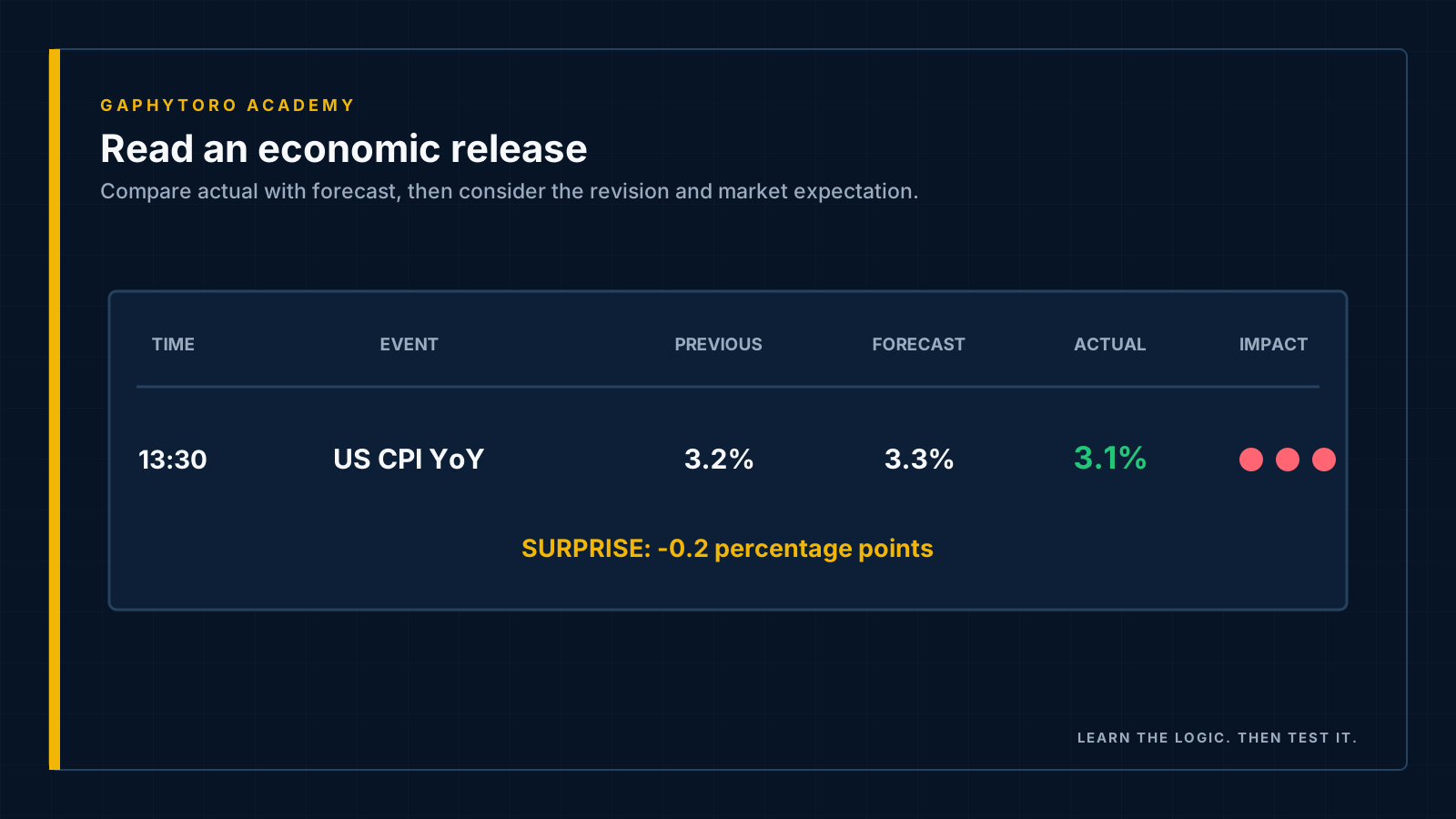
An economic calendar lists scheduled releases with three numbers per event:
Previous — last period's figure.
Forecast — the consensus expectation of analysts.
Actual — the real number, revealed at release time.
Calendars mark expected impact (usually low/medium/high). Your beginner workflow is simple: every morning, know what high-impact events touch your pairs and when. That is it. You are not trading these events — you are refusing to be ambushed by them. The trader who "randomly" got stopped out at 13:30 on the first Friday of the month did not meet bad luck; they met Non-Farm Payrolls unprepared.
🎲 The forecast game
Here is the part that breaks beginner brains, so read it twice:
Markets do not move on good or bad news. They move on news that is better or worse than expected.
If US jobs data comes in strong at +200k but the market expected +250k, the dollar can fall on "good" news — because the actual disappointed the forecast that was already priced in. The market had bought the rumour; the fact under-delivered; positions unwound.
This is why price sometimes barely blinks at a blockbuster headline (fully expected) and explodes on a boring one (huge surprise). The gap between actual and forecast — not the headline — is the tradable event. Sentiment around that gap is tomorrow's lesson.
📓 Fundamentals in your journal
From now on, add one line to every trade note: what was the fundamental backdrop? ("USD bid all week on hawkish Fed talk", "quiet calendar, pure technical range".) Months later, your trade reviews will reveal whether you trade better with the fundamental wind at your back or in your face — a question serious traders pay analysts to answer, sitting unread in most journals. GaphyToro's macro intelligence layer attaches this context to your trades automatically, but the habit of thinking it matters more than the tooling.
✅ Key takeaways
Interest-rate expectations are forex's master driver; data matters because it moves them.
The chain: data → central-bank reaction → rate expectations → currency flows.
Know the calendar daily; never be ambushed by a scheduled event.
Markets trade the gap between actual and forecast — not the headline.
Log the fundamental backdrop on every trade; your future review will thank you.
⏭️ Coming up next
Data is only half the story. The other half is mood: fear, greed, and the risk-on/risk-off tide that can sweep every chart in the same direction at once. That is market sentiment — next lesson.