
Choosing a Forex Broker Without Getting Burned
Your broker holds your money, fills your trades and sets your costs — choose like it matters, because it does. Regulation, execution models, real trading costs, platforms, and the seven warning signs of a broker to avoid.
📘 The business partner you cannot avoid
You cannot walk into the interbank market and ask for a price. Retail traders reach forex through a broker — a company that streams you prices, executes your orders, holds your deposit and lends you leverage.
That makes your broker the most important business partner of your trading life. A good one is invisible: fair prices, instant fills, boring withdrawals. A bad one is a slow leak — or a trapdoor.
The good news: bad brokers advertise themselves loudly, once you know what to listen for. By the end of this lesson you will.
🎯 What you will learn
What regulation actually protects you from (and what it cannot).
How brokers execute your orders and make their money.
The three real costs of trading.
What MetaTrader is and why half the industry runs on it.
Seven warning signs that should end the conversation.
🛡️ Regulation: the seatbelt
A regulated broker answers to a financial authority — bodies like the UK's FCA, Australia's ASIC or Cyprus's CySEC — and in serious jurisdictions that typically means:
Segregated client funds — your money sits in accounts separate from the broker's operating cash, so it is not spent running the business.
Conduct rules and audits — pricing, marketing and complaint handling are supervised.
Negative balance protection in many regions — you cannot lose more than you deposited.
Regulation does not guarantee you will profit, and it does not make a broker's spreads good. It guarantees there is a referee. Verify the licence yourself on the regulator's own public register — matching the exact company name and licence number the broker claims. Copycat names are a real scam pattern, and "regulated" in a tiny offshore haven with no enforcement counts for little.
⚙️ How brokers execute and earn
Two broad models, both legitimate when honestly run:
| Model | How it works | Typical costs |
|---|---|---|
| Market maker | The broker takes the other side of your trade internally, managing its net exposure | Wider spread, no commission |
| ECN / STP | Orders pass through to liquidity providers; the broker matches, not opposes | Raw spread + fixed commission |
Beginners often panic at "the broker takes the other side". At regulated market makers this is a managed, audited process — not a plot against your $200 account. What actually matters to you is total cost, execution quality and withdrawal reliability, not the model's name.
💸 The three real costs
Spread — the bid-ask gap you met last lesson. Compare it on the pairs you will actually trade, at the times you will trade them.
Commission — a fixed fee per lot on ECN-style accounts. Simple and transparent.
Swap — a small daily charge (or occasionally credit) for holding positions overnight, driven by the interest-rate gap between the pair's two currencies. Day traders barely notice it; position holders must budget for it.
🖥️ Platforms: where you will actually live
The broker supplies prices; the platform is the cockpit you trade from. The industry standards are MetaTrader 4 (MT4) and MetaTrader 5 (MT5) — free, broker-connected platforms whose charts, order tickets and account bar you met in the margin lesson. Their layout is worth learning even if you later use something fancier, because the concepts transfer everywhere: watchlist, chart, one-click order ticket, open-positions tab, account history.
Explore them risk-free: every decent broker offers an unlimited demo account. And when you reach the journaling module, you will see how a journal that connects directly to your MT4 or MT5 account — like GaphyToro's MT5 integration — logs every trade automatically, so your review data builds itself while you practise.
🚩 The seven warning signs
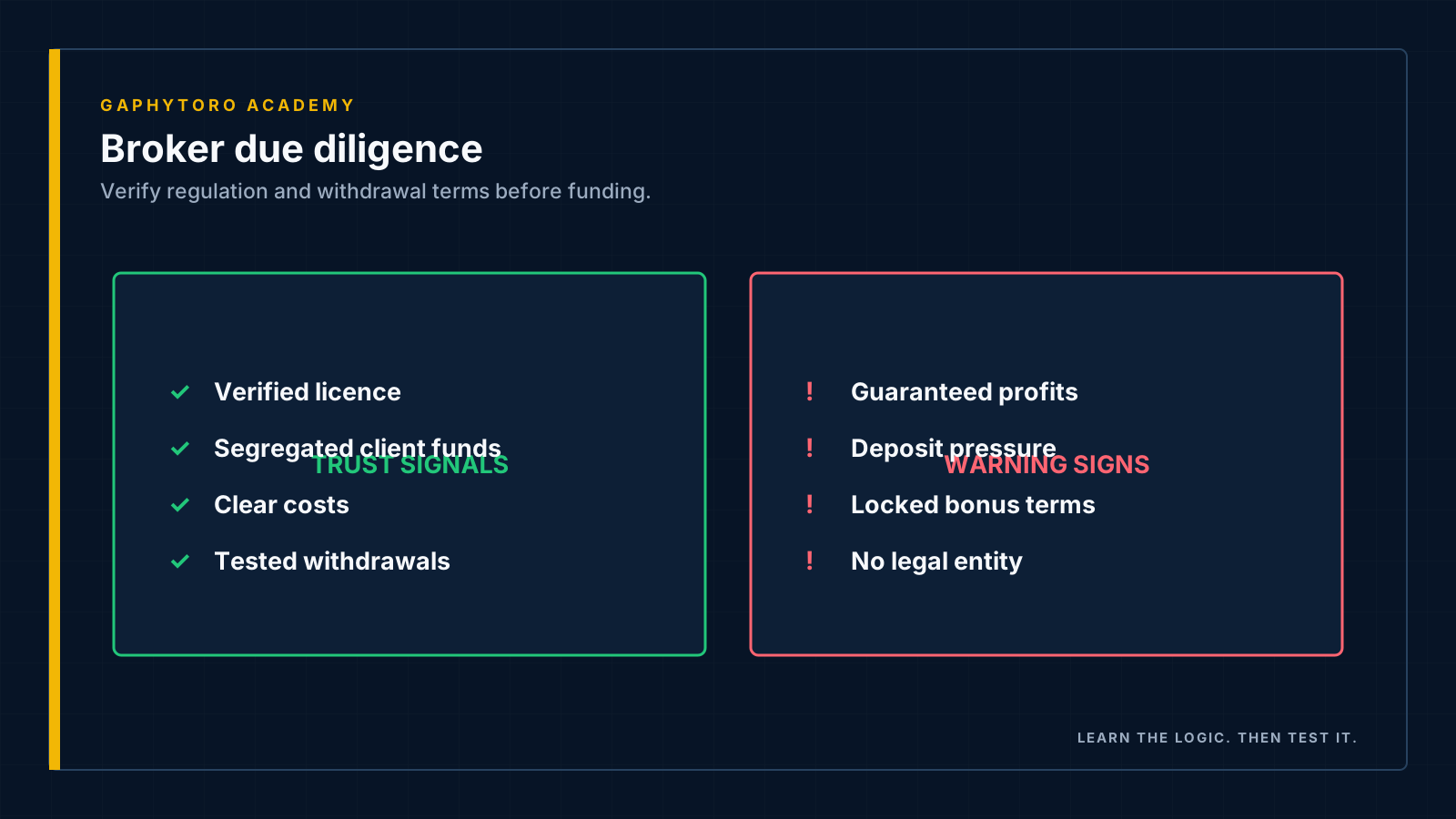
Any ONE of these should end your evaluation:
Guaranteed profits or "risk-free" trading in the marketing. Nobody legitimate says this. Ever.
Unverifiable regulation — a licence you cannot find on the regulator's own register, or one from a jurisdiction with no enforcement teeth.
Withdrawal friction stories — consistent user reports of delays, surprise "verification" hurdles or fees invented at cash-out time.
Pressure to deposit — account managers phoning with bonuses that expire tonight. Legitimate brokers do not hard-sell deposits.
Bonuses with lock-in terms — deposit bonuses whose fine print traps your own money behind impossible volume requirements.
Nobody home — no verifiable company address, faceless support, a website younger than your demo account.
Someone else trades for you — "just give us access and our experts will grow it". That is not brokerage; that is how deposits disappear.
The pattern behind all seven: money moves in easily and information (or money) struggles to move out. Reverse those two flows and you have found a decent broker.
📓 Your homework
Shortlist two or three regulated brokers available in your region. For each: verify the licence on the regulator's register, open a demo, and compare the spread on EUR/USD during the London session. Note your findings — this is your first piece of written trading research, and the habit of writing findings down is the one this whole journal-first approach is built on.
✅ Key takeaways
Regulation is a referee, not a profit guarantee — and you must verify licences yourself.
Market maker vs ECN matters less than total cost, execution and withdrawal reliability.
Your real costs are spread, commission and swap.
MT4/MT5 are the industry-standard cockpits; learn them on demo, free.
One warning sign is enough. There are always other brokers.
⏭️ Coming up next
Broker chosen, platform open — time to actually talk to the market. Next lesson: the six order types, and how stop-loss and take-profit orders turn a hopeful click into a plan.