
Order Types: The Six Sentences the Market Understands
Market orders, limits, stops, stop-losses and take-profits — the market only understands six sentences, and this lesson makes you fluent in all of them, including the memory trick that ends limit-vs-stop confusion forever.
📘 Six sentences
Every conversation you will ever have with the market uses just six sentences. Two are instant, four are scheduled. Traders who mix them up buy breakouts they meant to fade and sell bottoms they meant to buy — real money lost to grammar mistakes.
Learn the six cold, and the order ticket stops being scary forever.
🎯 What you will learn
Market orders vs pending orders.
The four pending orders — and the memory trick that keeps them straight.
How stop-loss and take-profit orders automate your exits.
Slippage, requotes and gaps: when fills differ from plans.
⚡ Sentence one and two: market orders
A market order says: "Fill me NOW at the best available price." Buy at the ask, sell at the bid, executed in milliseconds. Its virtue is certainty of entry; its cost is that you accept whatever price the market offers in that instant — which, in fast conditions, may differ slightly from the one you clicked (more on slippage below).
⏰ Sentences three to six: pending orders
A pending order says: "When price reaches level X, execute me — even if I'm asleep." There are four, and they confuse every beginner until this clicks:
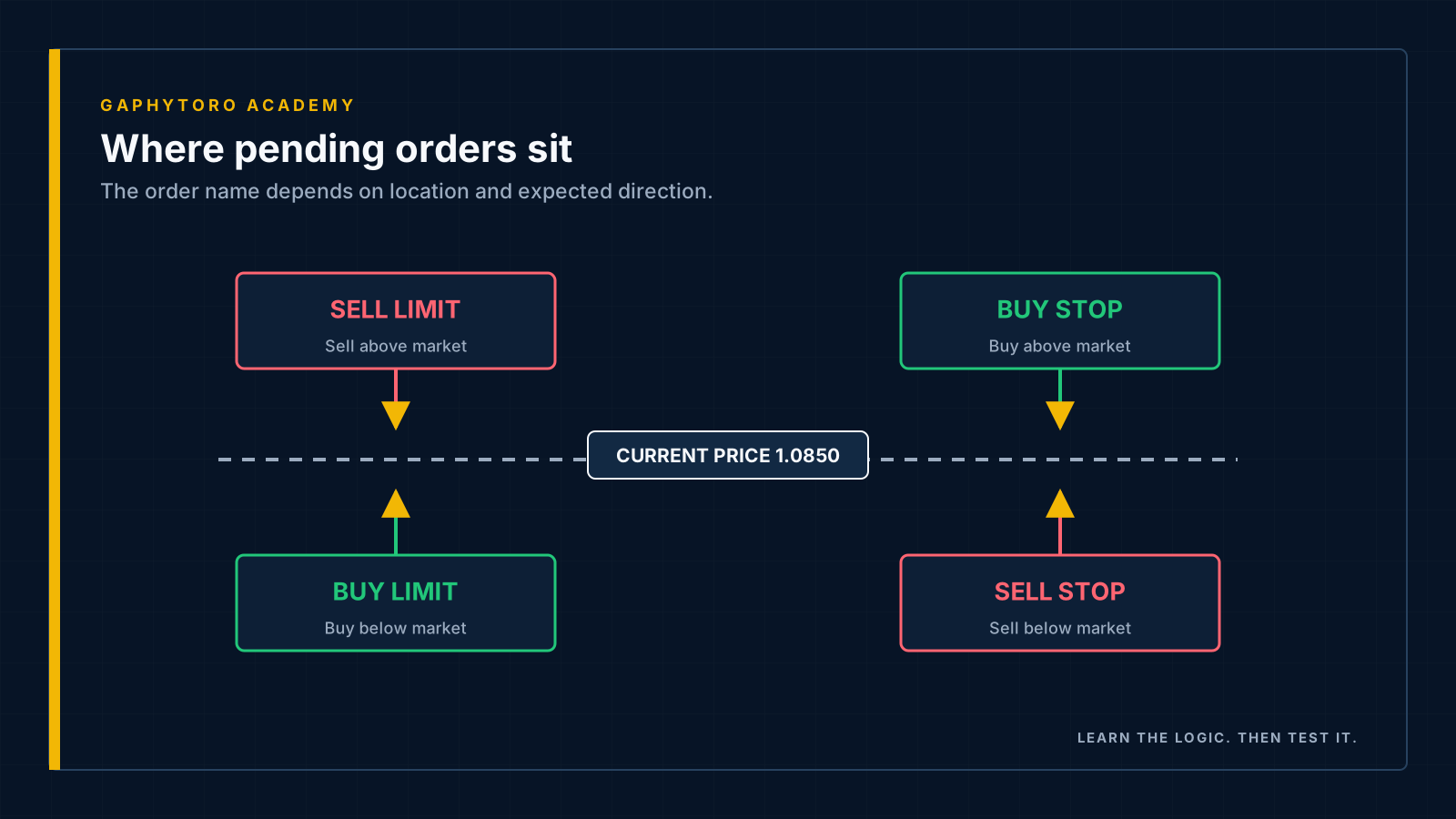
| Order | Placed where? | The logic |
|---|---|---|
| Buy limit | Below current price | "I want in cheaper — fill me on a dip" |
| Sell limit | Above current price | "I want out richer — fill me on a rally" |
| Buy stop | Above current price | "If it breaks upward, that confirms strength — join the move" |
| Sell stop | Below current price | "If it breaks downward, that confirms weakness — join the move" |
The memory trick: LIMIT = a better price than now (buy cheaper, sell dearer — patient bargain-hunting). STOP = a worse price than now (buy higher, sell lower — paying for confirmation that a move is real). If an order seems to want a "worse" price, it is buying confirmation, not bargains.
🛡️ The two orders that guard your account
Attached to any position, two automatic exits:
A stop-loss (SL) closes the trade at a predefined loss. It is the answer to the question every trade must answer before entry: "Where am I provably wrong?"
A take-profit (TP) closes the trade at a predefined gain — locking in the target while you sleep, work or resist the urge to fiddle.
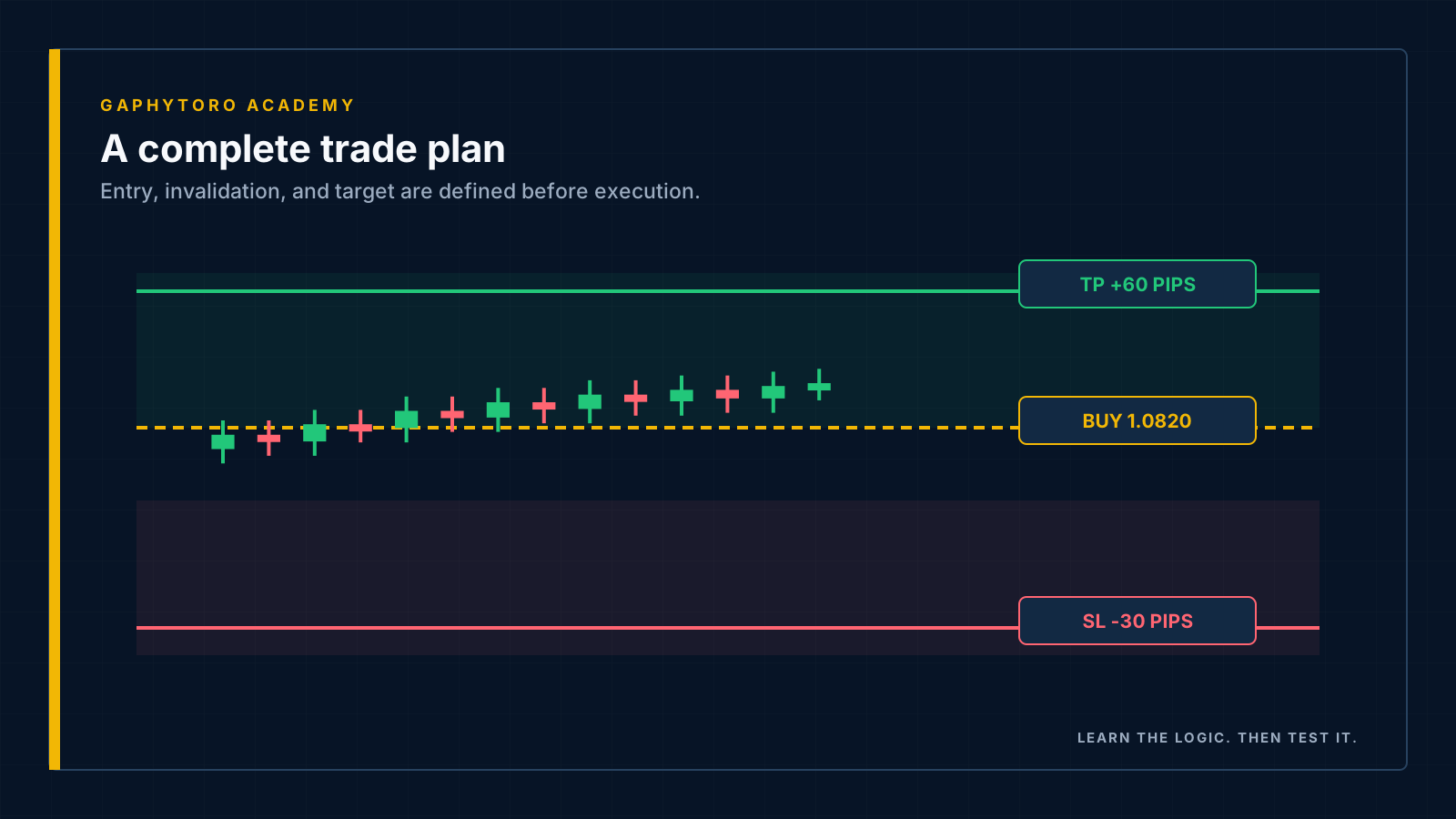
A complete order, assembled
EUR/USD trades at 1.0850. Your analysis says the 1.0820 area is a demand zone worth buying, wrong below 1.0790, with room to run toward 1.0880.
You place: buy limit 1.0820 (entry on the dip), SL 1.0790 (30 pips of risk), TP 1.0880 (60 pips of reward).
One ticket now contains your entire plan — entry logic, invalidation point and target — executing without you. That 30/60 structure is a 1:2 risk-reward ratio, a concept we will build entire lessons on.
Notice what happened: the order ticket forced you to write a plan. This is why professionals love pending orders — they make impulse mechanically harder. And your plan deserves to outlive the trade: log the setup, levels and reasoning in your trading journal so future-you can audit whether the plan or the execution failed. That audit — comparing planned exits with actual exits — is exactly what trade review software automates.
⚠️ When fills differ from plans
Slippage — in fast markets, your order fills at the next available price, not necessarily the one requested. Usually a fraction of a pip; during major news, sometimes many pips. It cuts both ways, but you should plan for the unkind direction.
Requotes — on some execution types, the broker offers a new price when the old one vanished mid-click. Accept or decline.
Gaps — price can jump levels entirely (weekend opens, big announcements). A stop-loss inside a gap fills at the next traded price beyond it — this is how a 30-pip planned risk occasionally becomes more. Rare on majors, but real.
House rule for beginners: flat during major scheduled news. The minutes around central-bank decisions and jobs reports produce wide spreads, thin books and maximum slippage — a professional's battlefield and a beginner's casino.
✅ Key takeaways
Market orders = now; pending orders = at my level, later.
Limit = better price than now (bargains); stop = worse price than now (confirmation).
Every trade carries an SL (where I'm wrong) and a TP (where I'm paid) — decided before entry.
Slippage and gaps mean fills are promises, not guarantees — respect news windows.
A full order ticket is a written plan. Keep the plan; review it later.
⏭️ Coming up next
You can speak to the market at any hour — but which hours are worth speaking in? Next: the three trading sessions, their overlaps, and why the same pair is a sprinter at lunchtime and a sloth at midnight.