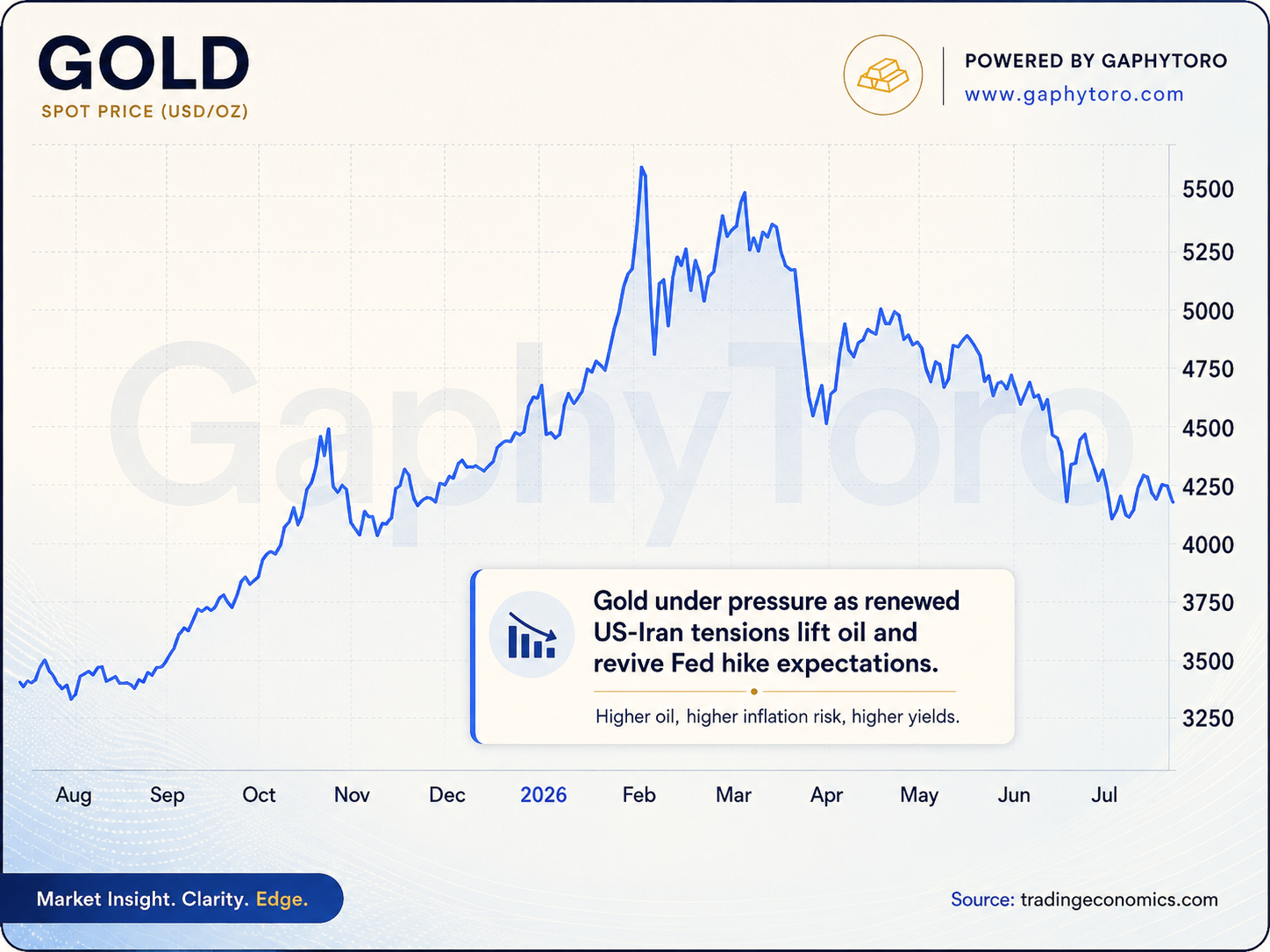
Gold is falling because the war is still feeding the rates story.
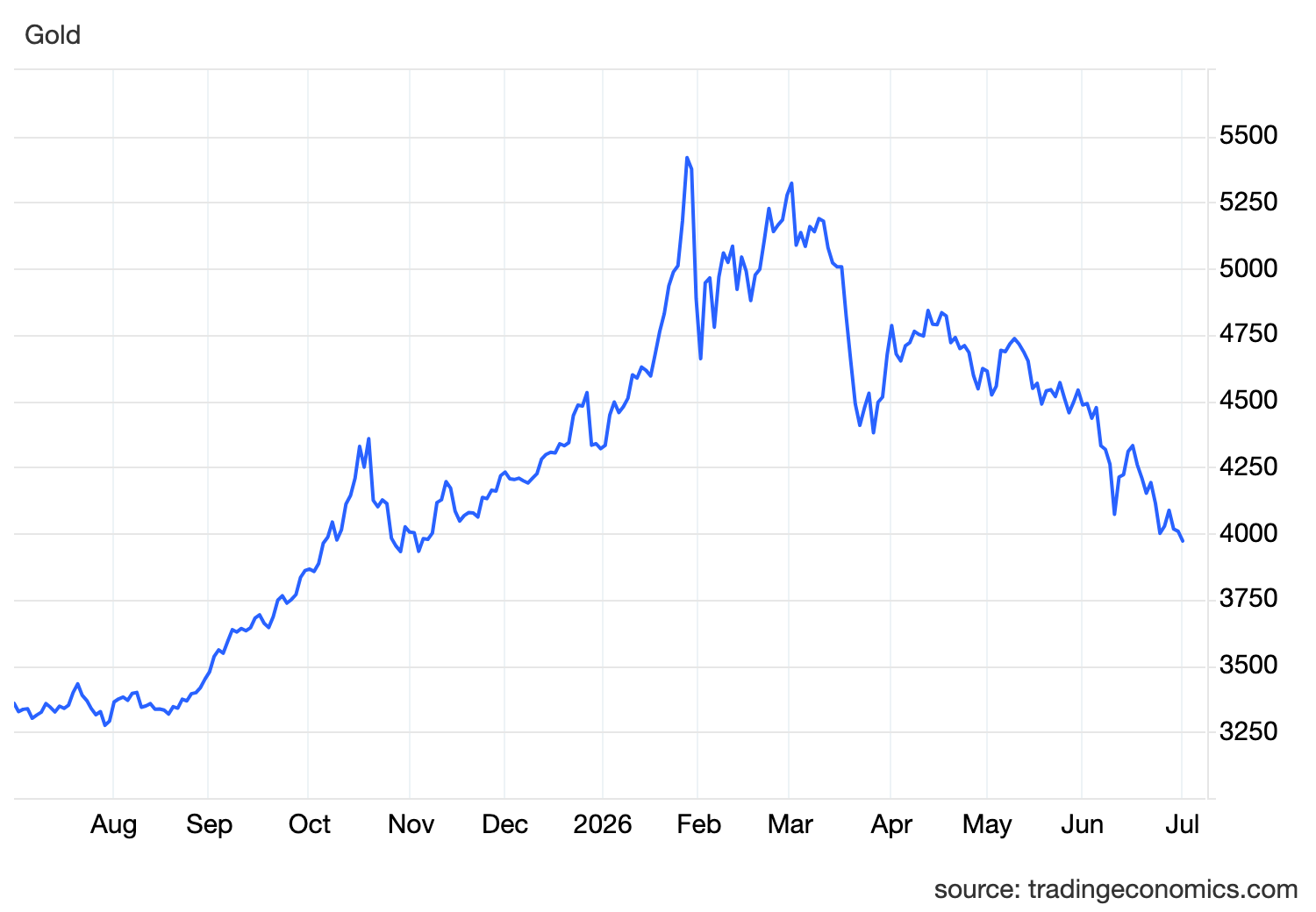
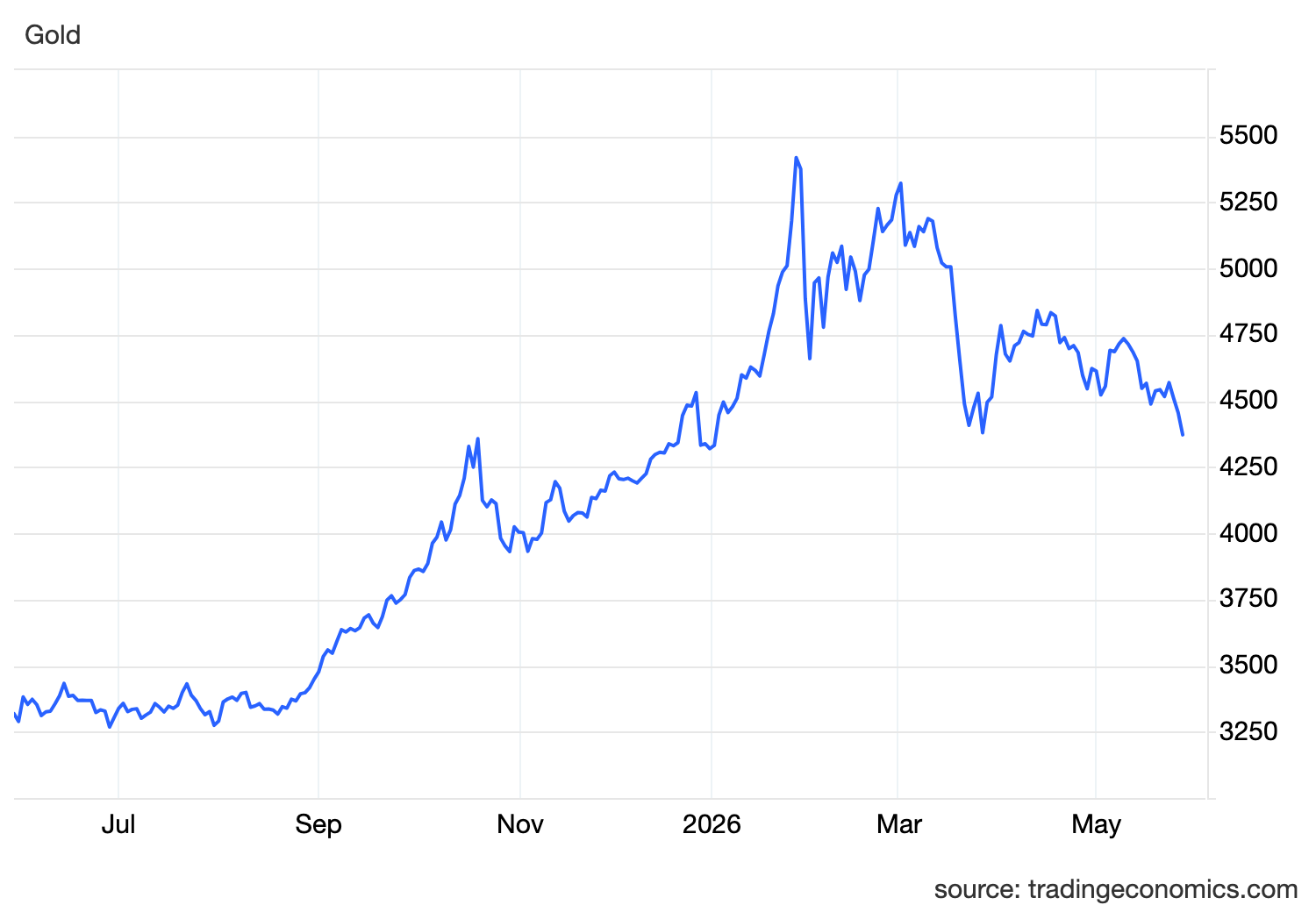
The metal dropped below 4400, hitting a two-month low, and is now down more than 15% since the conflict began. That move is important because it shows the market is not trading this conflict as a simple safe-haven setup.
Normally, fresh military strikes and stalled peace talks would support gold.
This time, the opposite is happening.
The reason is oil, inflation and yields.
Reports of fresh US strikes on an Iranian military site have made the peace outlook more uncertain. Tehran still wants to maintain control over the Strait of Hormuz and preserve its nuclear program, while President Trump has made it clear that the US will not accept what he calls a bad deal. He also rejected easing sanctions, despite Iran’s demand for financial relief and an end to attacks.
That keeps the conflict alive.
More importantly, it keeps the oil risk alive.
Hormuz remains the central macro channel. If shipping through the strait stays disrupted, energy prices remain elevated. If energy prices stay elevated, inflation pressure stays in the system.
That is the reason gold is struggling.
The market has already seen this pressure in recent US data. Consumer inflation accelerated, producer inflation surged, and the message from both prints was clear. The energy shock is no longer just sitting in crude oil. It is moving into the broader economy through fuel, transport, production costs and import prices.
That is where yields come in.
Bond investors react fast when inflation risk rises. If inflation looks sticky, or worse, if it starts accelerating again, investors demand higher yields to compensate for holding long-term debt.
So the chain is simple.
The war keeps Hormuz risk alive.
Hormuz risk keeps oil elevated.
Higher oil lifts inflation pressure.
Inflation pressure pushes yields higher.
Higher yields pressure gold.
Gold does not pay interest. So when Treasury yields rise, especially when real yields stay firm, the opportunity cost of holding gold increases. That is why the metal can fall even when geopolitical risk is still high.
This is the key point.
Gold is not falling because markets are calm.
Gold is falling because the conflict is making the inflation problem worse.
That changes the Fed reaction function.
If inflation was cooling and growth was weakening, the Federal Reserve could start talking about rate cuts again. But with energy prices still elevated and inflation data already running hot, the Fed has very little room to ease.
Markets have already moved in that direction.
Rate cuts are being pushed out, and investors are increasingly treating higher-for-longer as the base case. If inflation keeps accelerating, the market may keep pricing the possibility of another hike rather than a cut.
That is bearish for gold.
It also supports the dollar.
A stronger dollar adds another layer of pressure on bullion because gold becomes more expensive for foreign buyers. At the same time, higher US yields make dollar assets more attractive, especially when other major economies are dealing with weaker growth and imported energy pressure.
Oil remains the asset that decides the next move.
If negotiations improve and Hormuz reopening becomes credible, oil can fall. That would ease inflation pressure, cool yields and give gold a cleaner path to recover.
But if talks remain stuck and military activity continues, oil can stay supported. That keeps inflation risk elevated, keeps the Fed cautious and keeps gold under pressure.
Risk sentiment is also tied to the same chain.
Higher oil squeezes consumers and company margins. Higher yields raise discount rates. A Fed that cannot cut removes one of the biggest supports for equities. So the conflict is not just a gold story. It is a full financial-conditions story.
The current setup is clear.
Gold is being hit by the rates channel.
Fresh Iran tensions should support defensive demand, but the inflation impact is stronger. Until oil cools or yields fall, gold rallies remain vulnerable.
This is not peace.
But it is also not a clean gold bull case.
It is war-driven inflation, and right now, that is bad for bullion.
Filed under
Written by

Founder & CEO, GaphyToro
Philip Ogina is the Founder and CEO of GaphyToro, a trader-first performance ecosystem built to help modern traders improve through structure, discipline, data, and better execution. He is a trader, investor, market analyst, educator, and software builder focused on building tools and infrastructure for the next generation of traders.