The Japanese yen is being pressured from almost every direction at once.
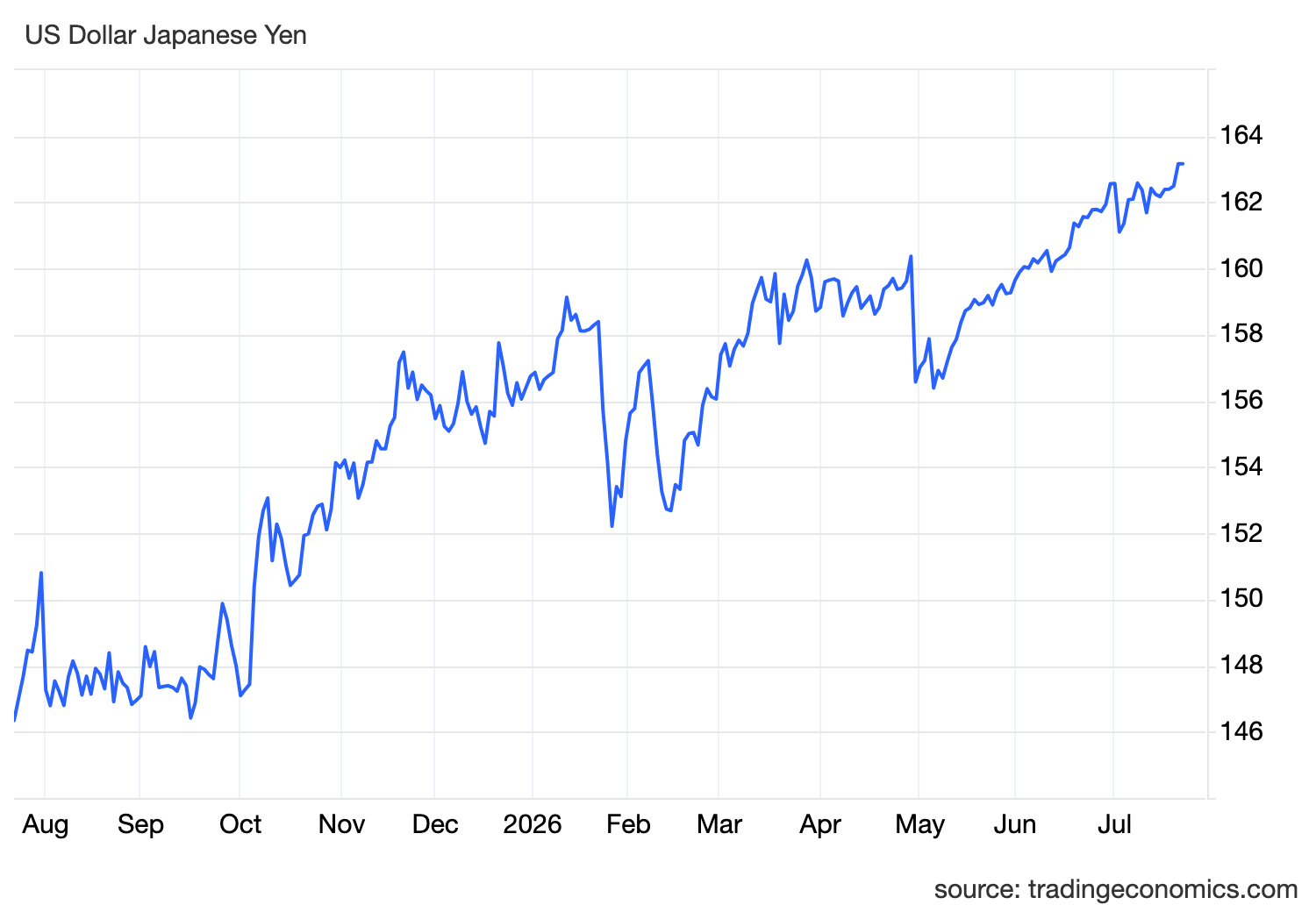
The currency weakened beyond 163 per dollar, reaching its lowest level since October 1986 and pushing markets back onto high alert for possible intervention from Japanese authorities.
This is no longer simply a story about a strong US dollar.
It is a combination of higher oil prices, rising US Treasury yields, carry-trade demand, Japan’s deteriorating trade position and growing concern about the government’s fiscal direction.
Each force is reinforcing the next.
The immediate pressure begins with the Middle East.
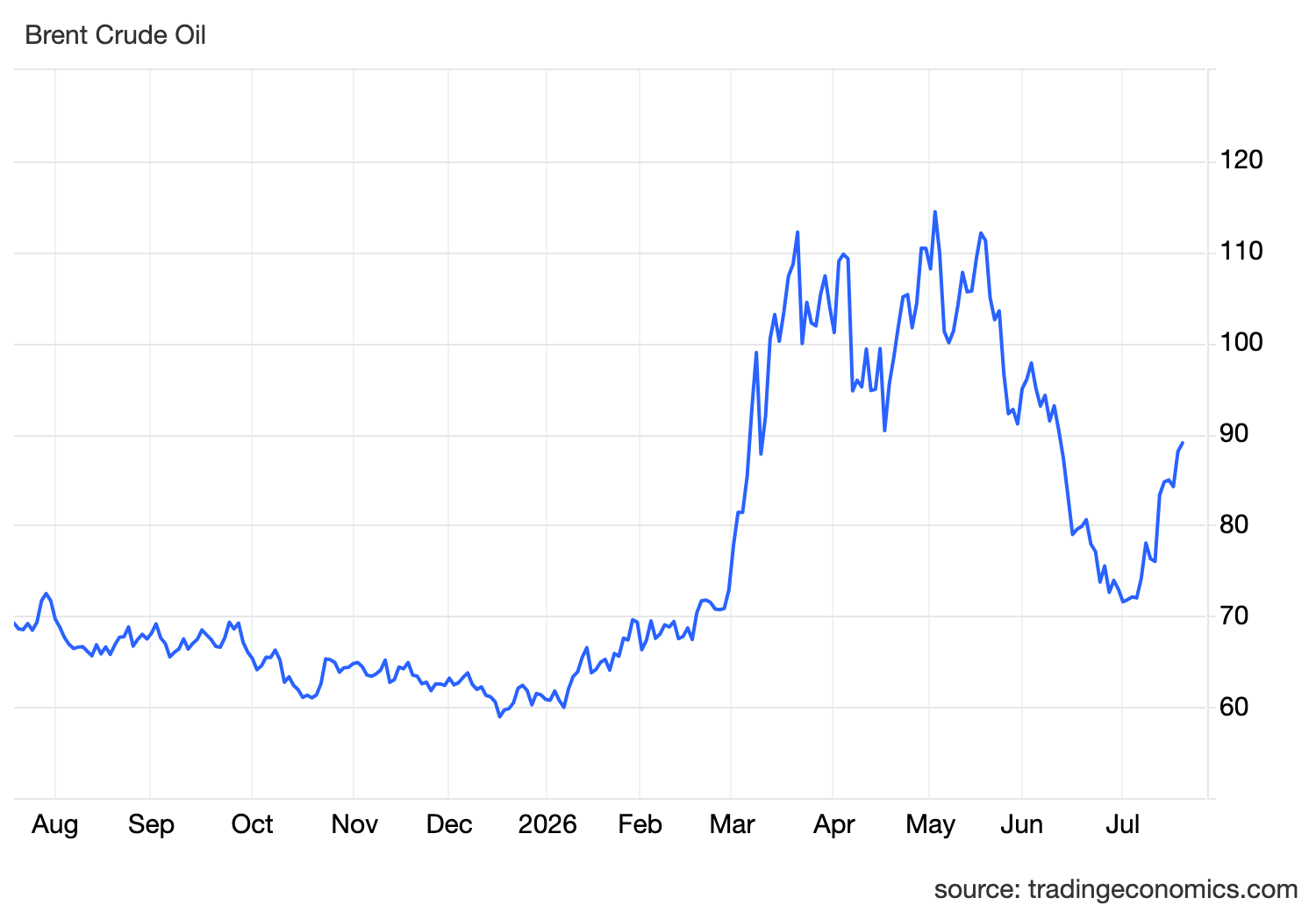
Escalating tensions between the United States and Iran have pushed oil prices higher and renewed concerns about energy flows from the region. Japan is particularly vulnerable because it imports most of its crude oil and relies heavily on Middle Eastern suppliers.
When oil rises, Japan’s import bill increases.
When the yen is already weak, those imported barrels become even more expensive in local currency terms.
That creates a damaging feedback loop.
A weaker yen raises the cost of imported energy.
Higher energy costs worsen inflation and the trade balance.
A weaker external position then places additional pressure on the currency.
The latest trade figures show this dynamic becoming increasingly visible.
Japan returned to a trade deficit in June as imports grew faster than exports. Exports remained strong, supported partly by the weak currency and demand for Japanese technology and industrial products, but import growth was even stronger as higher oil prices and yen depreciation raised the value of goods entering the country.
That matters because yen weakness is often described as automatically positive for Japan.
It can benefit exporters by increasing the yen value of overseas earnings. But the same currency move raises the cost of fuel, food, raw materials and imported components.
For households and companies with limited pricing power, the negative side can become increasingly severe.
The US interest-rate outlook is adding another layer of pressure.
Treasury yields have climbed as renewed oil disruption revived inflation concerns and kept expectations of another Federal Reserve rate hike alive. Higher US yields increase the return available on dollar-denominated assets and widen the effective gap between American and Japanese interest rates.
That supports the carry trade.
Investors can borrow in relatively low-yielding yen and move capital into higher-yielding dollar assets. As long as the rate differential remains wide and the yen continues weakening, that trade can remain attractive.
The Bank of Japan has already raised its policy rate to 1.0%, its highest level in more than three decades.
But one rate increase has not been enough to change the broader currency dynamic.
US rates remain substantially higher. US yields continue rising. Japan’s inflation-adjusted interest rate remains deeply unattractive. The market therefore sees the BoJ as normalising policy, but not quickly enough to remove the incentive to sell yen.
This is where the central bank faces a difficult choice.
More aggressive tightening could support the currency and reduce imported inflation. But higher rates would also raise borrowing costs across an economy that is already dealing with weaker purchasing power, expensive energy imports and a huge government debt burden.
Moving too slowly has its own costs.
Persistent yen weakness increases import prices and makes it harder for the BoJ to control inflation. It also damages household confidence because wages may struggle to keep pace with increases in energy, food and everyday living costs.
The BoJ is therefore caught between currency stability and financial stability.
It needs to demonstrate that policy normalisation is credible.
But it cannot tighten so aggressively that it destabilises growth, government financing or the bond market.
Fiscal policy is making that balance even more difficult.
The government has unveiled large spending and investment plans aimed at supporting strategic industries, national security and economic growth. Those programmes may improve productive capacity over time, but markets are increasingly focused on how they will be funded.
Japan already carries one of the largest public debt burdens among developed economies.
Additional borrowing can increase the supply of government bonds and push long-term yields higher. Normally, higher domestic yields could support the yen. But when yields rise because investors are concerned about fiscal sustainability rather than stronger economic growth, the currency reaction can be negative.
That appears to be part of the current market tension.
Investors are not simply asking whether Japanese rates will rise.
They are asking why they are rising and whether the government can maintain confidence while expanding spending.
This is why the yen is weakening even after the BoJ raised its policy rate.
Monetary tightening is being offset by fiscal expansion, imported inflation and a much stronger yield environment in the United States.
Government intervention is therefore becoming increasingly likely.
Japanese authorities have repeatedly warned that they are prepared to respond to excessive or disorderly currency moves. A fall beyond 163, especially after such a rapid decline, increases the probability that the Ministry of Finance orders yen purchases.
However, intervention has limits.
Japan can sell dollars and buy yen to slow the decline, punish speculative positions and create sharp short-term reversals. It can also make traders more cautious by intervening at unpredictable moments rather than defending a clearly stated exchange-rate level.
But intervention cannot permanently reverse the underlying trend by itself.
If US yields remain high, oil stays elevated and the BoJ maintains a cautious tightening path, traders may eventually rebuild short-yen positions after the immediate intervention shock fades.
That is the key distinction.
Intervention can change momentum.
It cannot automatically change fundamentals.
A lasting yen recovery would probably require at least one of three developments.
US yields would need to fall as inflation and Fed hike expectations ease.
Oil prices would need to retreat, reducing Japan’s import burden.
Or the BoJ would need to convince markets that further rate increases are coming faster than currently expected.
Without one of those changes, intervention may provide temporary relief rather than a durable reversal.
The yen’s weakness also has important consequences for Japanese equities.
Exporters can initially benefit because overseas revenues become more valuable when converted back into yen. Automakers, machinery producers and large multinational companies may therefore receive earnings support.
But the broader picture is less positive.
Companies dependent on imported fuel and materials face rising costs. Airlines, retailers, utilities, transport firms and domestic manufacturers may experience margin pressure if they cannot pass those costs to consumers.
Technology stocks also face conflicting forces.
A weaker yen can support overseas earnings, but rising global bond yields reduce the valuation investors are willing to place on future profits. If Japan’s yields rise alongside US yields, highly valued AI and semiconductor companies could face additional pressure.
Japanese banks may benefit from higher domestic rates and wider lending margins, but rapid moves in government bonds can also create volatility in balance sheets and funding markets.
For households, the currency decline is more clearly negative.
A weaker yen raises the cost of imported food, energy and consumer products. Higher oil prices intensify that pressure at the same time government stimulus is attempting to support domestic demand.
This reduces real purchasing power and can weaken consumer confidence even when nominal wages are rising.
The trade deficit reinforces the same message.
Japan is exporting more, but the value of imports is rising even faster. The economy is earning more from overseas demand while simultaneously paying significantly more for the energy and materials it needs.
That is not a sustainable source of currency strength.
For global markets, the yen’s decline matters because it remains one of the most important funding currencies in the financial system.
A steadily weakening yen encourages carry trades and supports risk-taking. But suspected intervention or a sudden change in BoJ policy can trigger rapid position unwinding.
Investors who borrowed yen to buy higher-yielding assets may be forced to close positions quickly if the currency suddenly strengthens.
That can create volatility across equities, bonds, commodities and other currencies.
The risk is therefore not only that the yen continues falling.
The risk is that the eventual reversal becomes violent.
The current macro chain is clear.
Middle East escalation pushes oil higher.
Higher oil increases Japan’s import costs.
The weaker yen magnifies those costs.
The trade balance deteriorates.
Rising US yields widen the effective rate advantage of the dollar.
Carry trades increase pressure on the yen.
Fiscal spending concerns weaken confidence further.
Intervention risk then rises as the currency reaches increasingly extreme levels.
The next move will depend heavily on oil, US yields and the response from Tokyo.
If oil remains elevated and the Federal Reserve keeps another hike on the table, dollar-yen could remain under upward pressure despite intervention warnings.
If US inflation cools, Treasury yields retreat and Middle East tensions ease, the yen could recover as traders reduce carry exposure.
A more forceful BoJ signal could also change the balance, particularly if policymakers indicate that imported inflation and currency weakness justify another rate increase.
For now, however, the yen remains trapped between a strong dollar and a fragile domestic policy mix.
Japan is importing inflation through energy.
The United States is exporting yield through restrictive monetary policy.
And fiscal concerns are making it harder for the BoJ to convince markets that policy normalisation will be strong enough to defend the currency.
The yen is not weakening because of one isolated problem.
It is weakening because oil, rates, trade and fiscal policy are all pointing in the same direction.
Powered by GaphyToro
GaphyToro is a trading journal and trader-development platform designed to help traders document their decisions, evaluate execution, identify recurring strengths and mistakes, and improve discipline through structured performance data.
Record your trades, analyse your results and build a more consistent trading process at www.gaphytoro.com.
Filed under
Written by

Founder & CEO, GaphyToro
Philip Ogina is the Founder and CEO of GaphyToro, a trader-first performance ecosystem built to help modern traders improve through structure, discipline, data, and better execution. He is a trader, investor, market analyst, educator, and software builder focused on building tools and infrastructure for the next generation of traders.