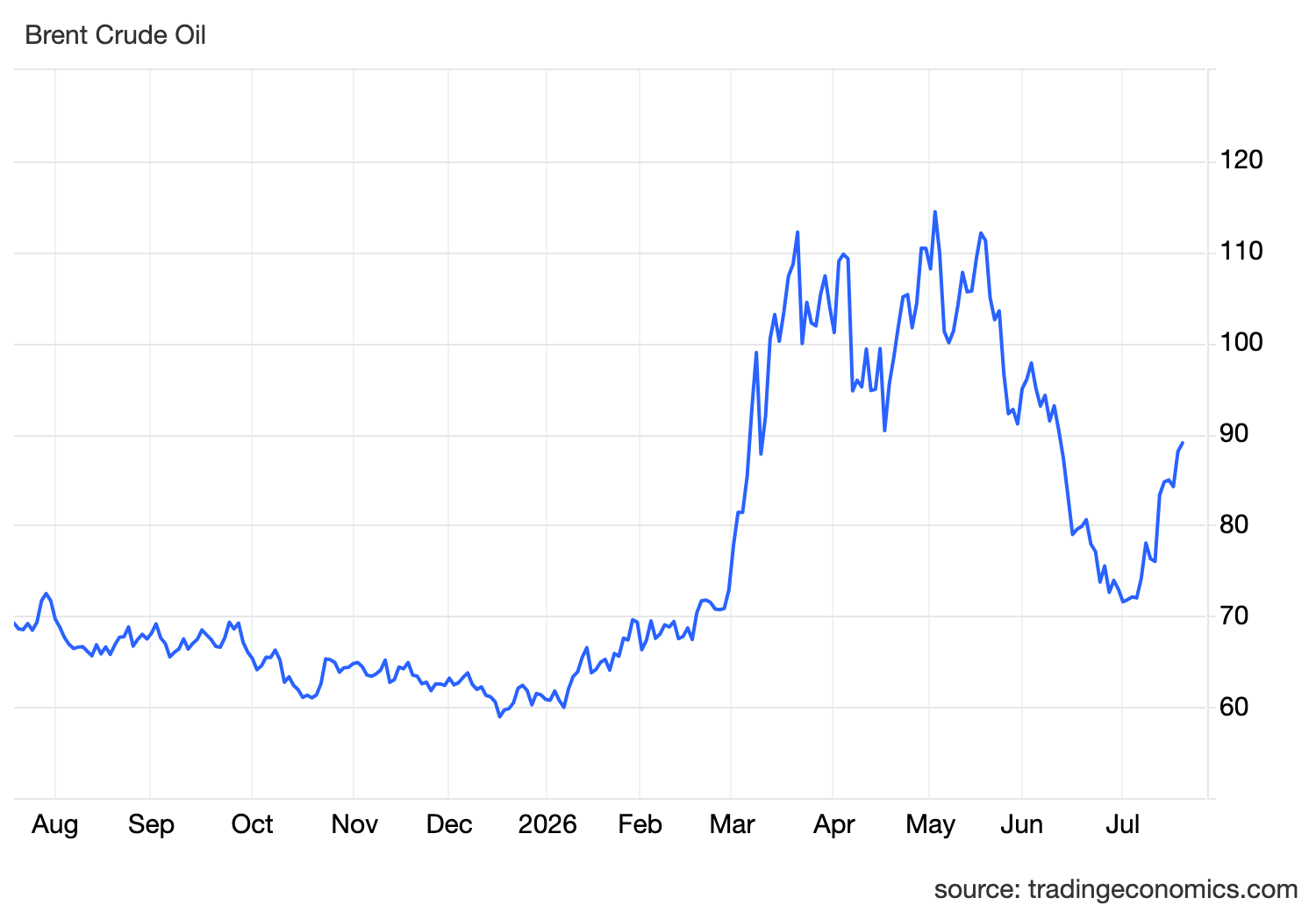
Brent crude has returned above $90 because the market is no longer pricing a temporary interruption to Middle Eastern oil flows.
It is pricing the risk of a prolonged supply crisis.
Oil extended last week’s gains after the conflict between the United States and Iran intensified across the Strait of Hormuz and the surrounding Gulf region. Iran declared that its ceasefire with Washington had effectively collapsed, while reports that Iranian forces intercepted vessels passing through the strait reinforced concerns that commercial shipping could face another severe disruption.
This marks a major reversal from the market narrative seen earlier in July.
The interim peace agreement had encouraged traders to expect a gradual recovery in Hormuz traffic, the return of Iranian exports and rising production from other Gulf countries. Combined with higher OPEC+ output quotas, those developments created expectations that the oil market could eventually move toward surplus.
That supply-glut narrative has now been replaced by a renewed war premium.
Brent has risen roughly 30% from its July lows as the peace process unraveled, the United States restored its blockade of Iranian ports and Tehran intensified its actions against commercial vessels.
The market is no longer asking how much additional production OPEC+ can provide.
It is asking whether available production can reach global buyers safely.
That distinction is critical.
Oil supply is not determined only by the number of barrels being produced. It also depends on shipping access, insurance availability, port operations, pipelines, storage facilities and the willingness of crews to enter a conflict zone.
A producer may have oil available, but that supply has limited value to the global market if tankers cannot transport it.
The Strait of Hormuz remains at the center of this risk.
The waterway is the main export route for several of the world’s largest energy producers, including Saudi Arabia, the United Arab Emirates, Kuwait, Iraq, Qatar and Iran. Disruption therefore affects not only Iranian exports, but a significant portion of the crude oil, refined products and liquefied natural gas supplied by the entire Gulf region.
The latest escalation is especially concerning because the conflict is moving beyond military targets.
Bridges, utilities, ports and energy facilities have increasingly come under attack. Kuwait Petroleum Corporation reported that one of its oil facilities was hit over the weekend, demonstrating that the risk is no longer limited to vessels transiting Hormuz.
Once infrastructure becomes part of the battlefield, the potential duration of the supply disruption increases.
A temporary shipping delay can be reversed quickly if security conditions improve. Damage to ports, power systems, storage sites or export terminals can take much longer to repair.
That raises the possibility that oil supply remains constrained even if the fighting eventually slows.
The human cost of the conflict is also increasing.
The death of another US service member and the continued exchange of strikes between Washington and Tehran reduce the political room for either side to step back. Retaliation creates pressure for further retaliation, making a rapid diplomatic resolution increasingly difficult.
This is why Brent has moved so aggressively.
The market is rebuilding the probability of several overlapping risks.
Hormuz traffic could decline further.
Insurance and freight costs could rise.
Iranian exports could remain blocked.
Regional production infrastructure could suffer additional damage.
Other Gulf producers could become more cautious about increasing output.
Each of those risks raises the effective cost of delivering oil to the global economy.
The macroeconomic consequences extend well beyond energy markets.
Higher oil prices feed directly into fuel and transportation costs. They also raise expenses across manufacturing, agriculture, logistics, aviation, chemicals and food distribution.
If those costs remain elevated, businesses eventually pass part of the increase to consumers.
That creates a renewed inflation problem.
The earlier retreat in oil had helped US inflation fall sharply in June. Lower energy costs contributed to weaker headline CPI and reduced expectations that the Federal Reserve would raise rates immediately.
The latest oil rally threatens that progress.
June inflation data described an economy benefiting from falling energy prices. Brent above $90 points toward a very different inflation environment for the coming months.
This creates another difficult decision for the Federal Reserve.
Recent US employment data suggested that the labour market is losing momentum. Payroll growth slowed sharply, reducing confidence that the economy could absorb substantially tighter policy without weakening further.
At the same time, another oil shock could lift headline inflation, inflation expectations and business costs.
The Fed could therefore face slower employment alongside renewed price pressure.
That is the policy combination central banks fear most.
Cutting or holding rates could allow inflation expectations to rise.
Increasing rates could intensify the slowdown in employment and domestic demand.
For now, markets are likely to keep at least one additional Fed hike in consideration as long as oil remains elevated and the risk of further disruption persists.
The next inflation reports may not immediately capture the full effect of Brent’s latest rise. Energy shocks take time to pass through fuel prices, freight rates, production costs and consumer goods.
Markets will therefore watch inflation expectations and bond yields alongside the official data.
If Treasury yields rise with oil, the dollar could regain support through both safe-haven demand and tighter policy expectations.
The United States is less dependent on imported energy than many economies in Europe and Asia, giving the dollar a relative advantage during a global supply shock. Countries that rely heavily on imported oil face worsening trade balances, higher domestic inflation and weaker growth.
That does not make the US economy immune.
Higher gasoline prices still reduce household purchasing power, raise corporate costs and weaken consumer confidence. But relative resilience can support the dollar when other major economies appear more exposed.
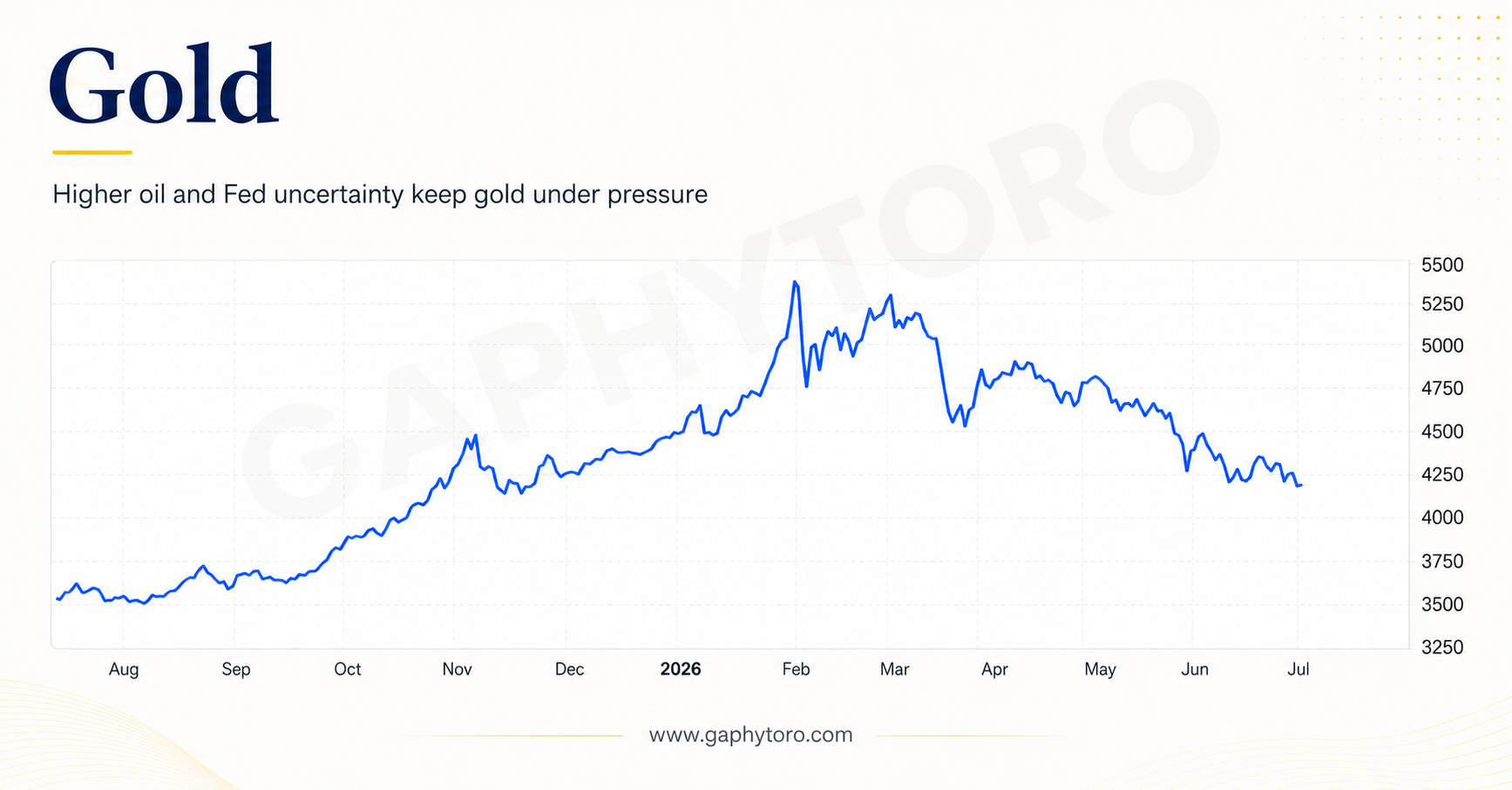
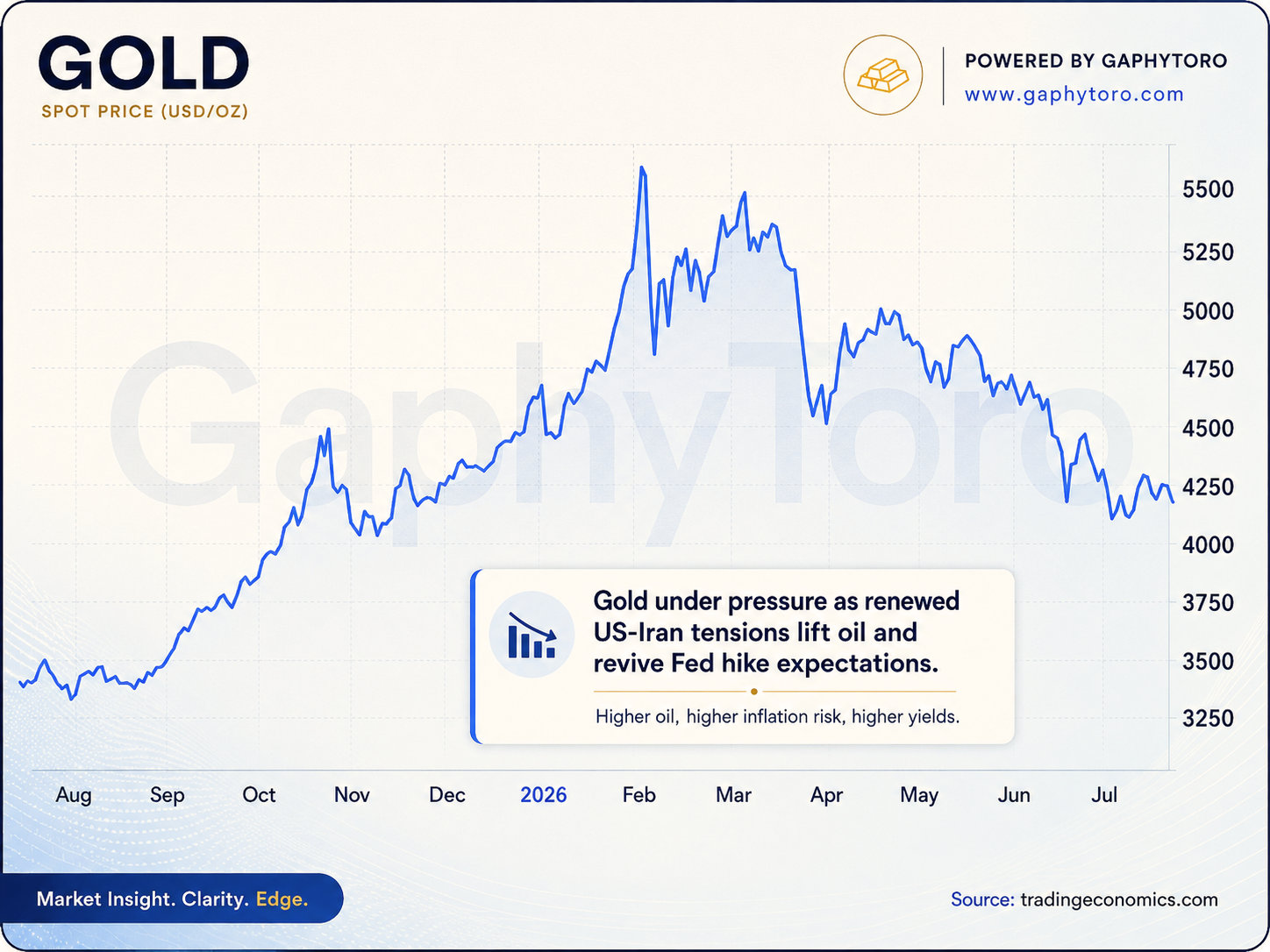
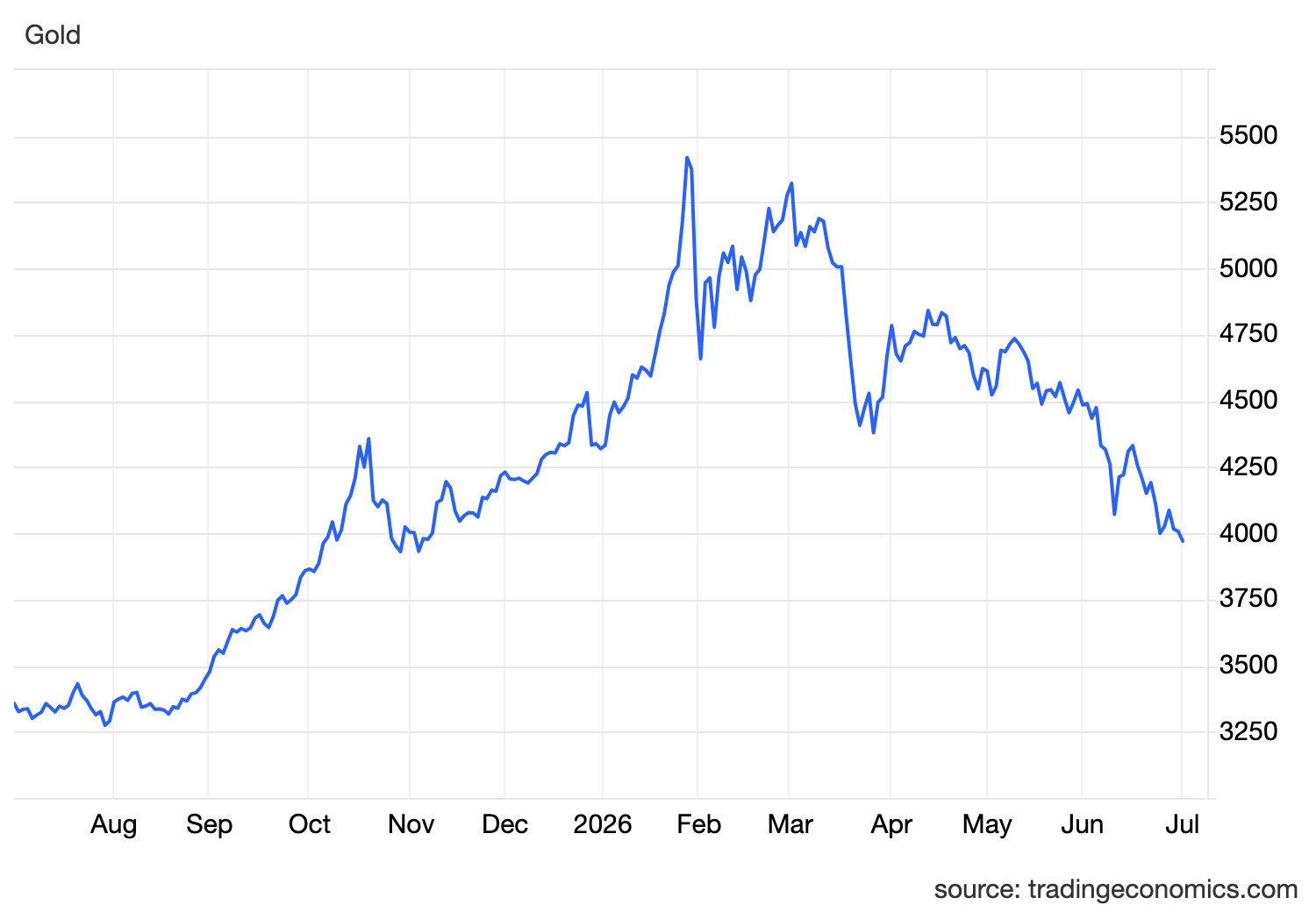
Gold faces a more complicated reaction.
The expanding conflict can attract safe-haven demand, but this particular crisis remains inflationary. If higher oil lifts Treasury yields and strengthens the dollar, the negative rate effect can once again outweigh gold’s traditional geopolitical premium.
That is why gold has repeatedly struggled during periods of Middle East escalation.
The conflict supports fear.
But the energy shock supports higher interest rates.
For equities, Brent above $90 creates pressure through both earnings and valuations.
Transportation, manufacturing, consumer and airline companies face higher operating costs. At the same time, renewed inflation concerns can keep bond yields elevated, reducing the value investors place on future corporate earnings.
Energy producers may benefit from higher crude prices, but the wider equity market faces a less supportive environment.
Europe and Asia remain particularly vulnerable.
Japan imports most of its energy, meaning higher oil can increase import costs, weaken household purchasing power and complicate the Bank of Japan’s inflation outlook.
European economies face similar exposure. Higher energy costs can weaken industrial activity while keeping inflation above central-bank targets.
Emerging markets that import large quantities of fuel may face pressure on their currencies, fiscal budgets and external balances.
The global impact therefore depends on how long Brent remains elevated.
A short-lived spike would create market volatility but limited lasting economic damage.
A sustained period above $90 would be more serious.
It could reverse recent improvements in inflation, delay policy relief, weaken consumer demand and increase the risk of a global slowdown.
A move toward $100 would intensify those concerns.
The key variable is not simply whether Iran can formally close the Strait of Hormuz.
The more immediate issue is whether shipowners, insurers and producers continue treating the route as commercially viable.
A waterway can remain technically open while functioning at a fraction of its normal capacity.
That is what markets are pricing.
The next phase will depend on three developments.
First, whether attacks on commercial vessels continue.
Second, whether energy infrastructure across the Gulf sustains further damage.
Third, whether Washington and Tehran preserve any remaining path toward negotiations.
A diplomatic breakthrough could remove part of the geopolitical premium and return attention to higher OPEC+ supply.
Further escalation would push the market deeper into supply-protection mode.
For now, the balance of risk remains tilted toward higher volatility.
The interim peace agreement has collapsed.
The blockade has returned.
Shipping is under threat.
Energy infrastructure is increasingly exposed.
Brent is not above $90 simply because traders are reacting emotionally to war headlines.
It is above $90 because the infrastructure and shipping network connecting Middle Eastern oil to the global economy is once again at risk.
Powered by GaphyToro
GaphyToro is a trading journal and trader-development platform built to help traders document every trade, evaluate their execution, uncover recurring performance patterns and strengthen discipline through structured data.
Record your decisions, review your results and build a more consistent trading process at www.gaphytoro.com
Filed under
Written by

Founder & CEO, GaphyToro
Philip Ogina is the Founder and CEO of GaphyToro, a trader-first performance ecosystem built to help modern traders improve through structure, discipline, data, and better execution. He is a trader, investor, market analyst, educator, and software builder focused on building tools and infrastructure for the next generation of traders.