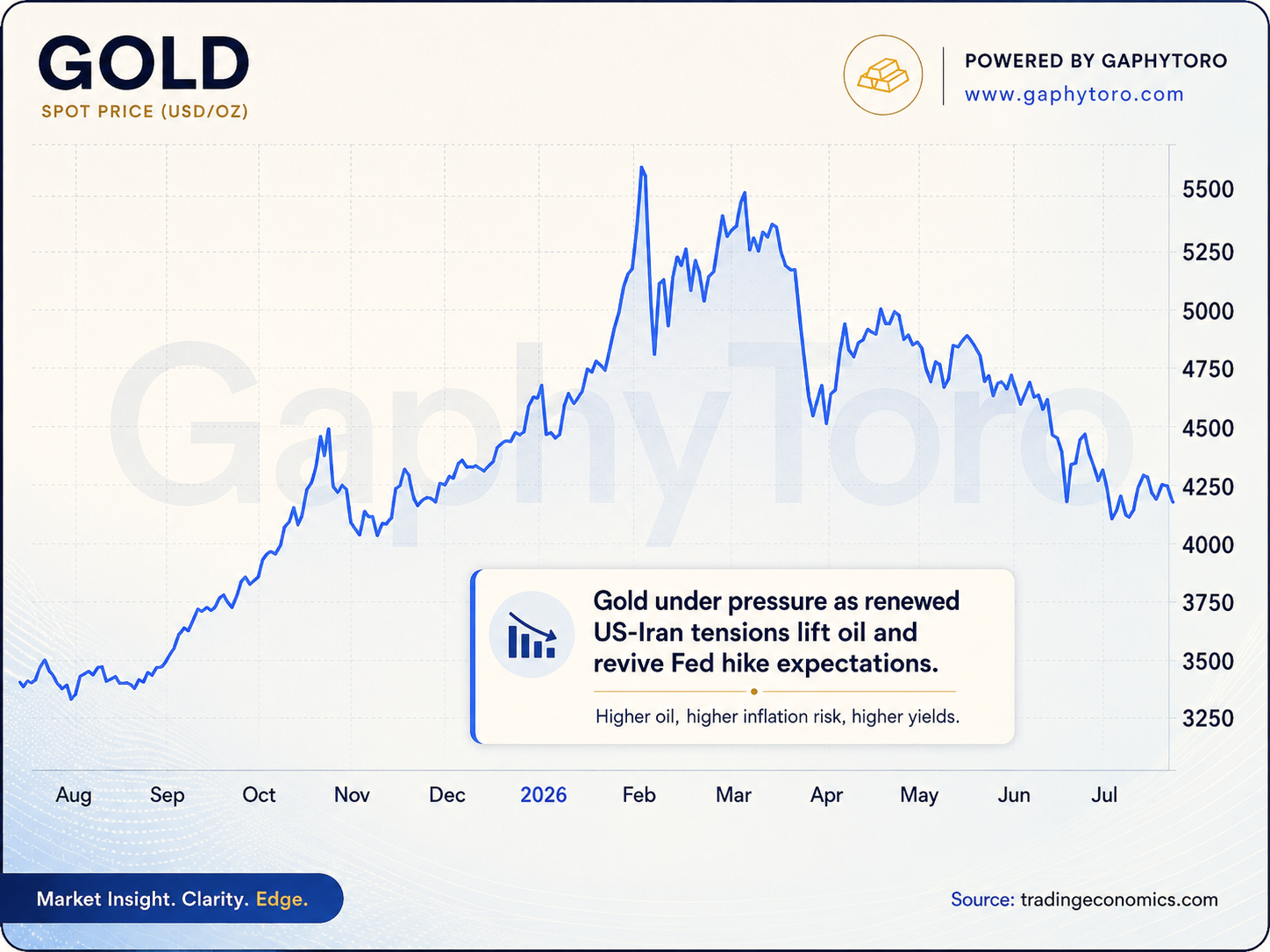
Gold is still struggling because the market is treating the latest US-Iran escalation as an inflation shock, not a simple safe-haven event.
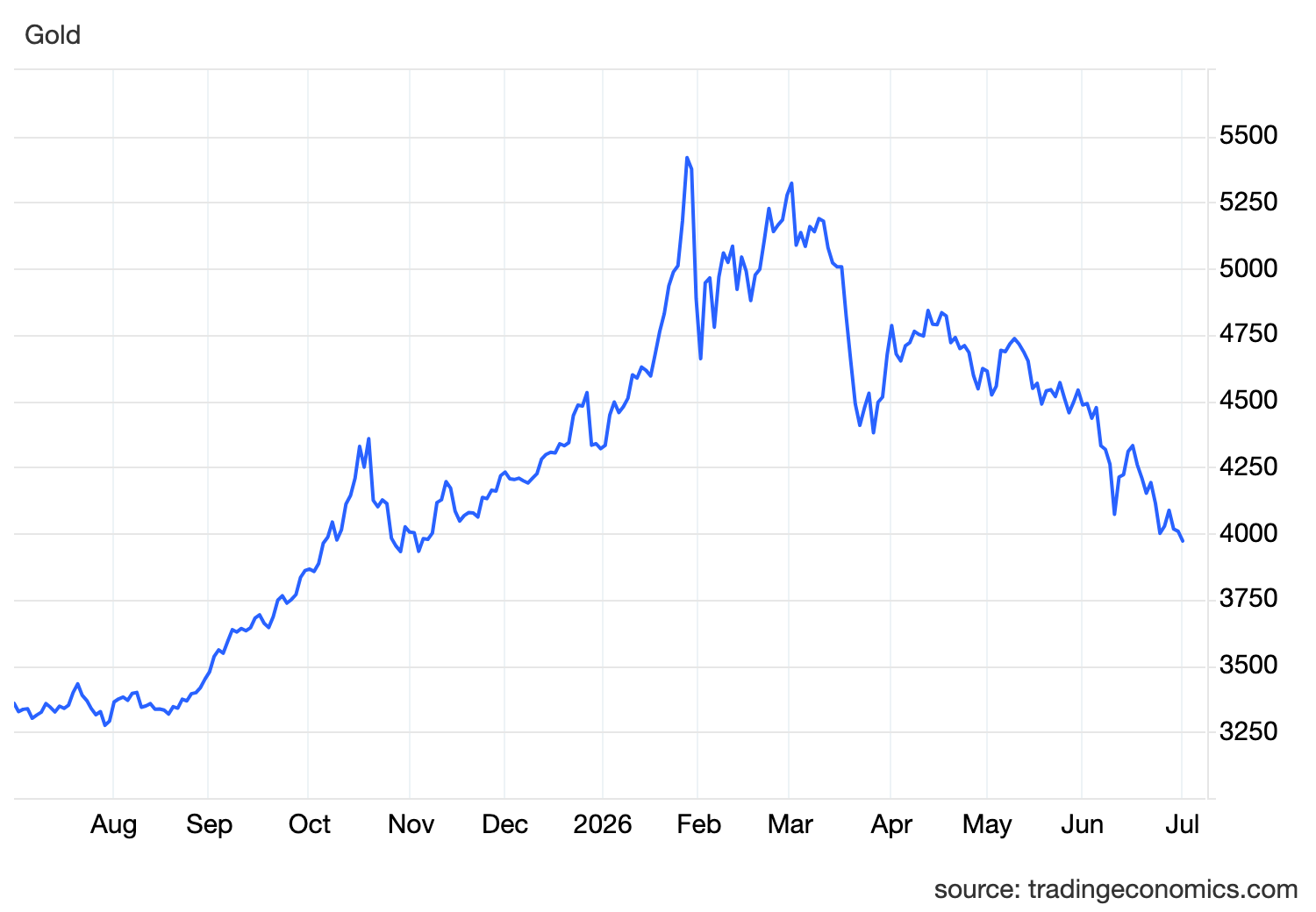
Bullion slipped below $4,100 as renewed missile strikes between the US and Iran pushed oil prices higher and strengthened expectations that the Federal Reserve may still need to raise interest rates before the end of the year.
That is the key reason gold remains under pressure.
Normally, military conflict and geopolitical uncertainty would increase demand for gold. Investors often buy bullion during periods of war risk because it is viewed as a store of value and a hedge against instability.
But this conflict is different.
The center of the risk is the Strait of Hormuz, one of the most important energy corridors in the world. When tensions rise around Hormuz, the market immediately prices the risk of disruption to oil and LNG flows. That makes the conflict inflationary.
Higher oil feeds into transportation costs, production costs, import prices and household energy expenses. That keeps inflation expectations elevated and makes it harder for the Fed to soften policy.
This is why gold is not benefiting in the normal way.
The US carried out its fourth strike in a week against Iran on Sunday after an Iranian attack on a Cyprus-flagged container ship. Tehran then declared that the Strait of Hormuz would be closed “until further notice,” although the claim was dismissed by US Central Command.
Even if the strait remains open, the market cannot ignore the risk.
A full closure is not the only concern. Slower shipping, higher insurance costs, route changes and reduced willingness among shipowners to transit the area can all tighten effective energy supply. That is enough to lift oil prices and revive inflation fears.
For gold, the problem is the rates channel.
Gold does not pay interest. When markets expect the Fed to raise rates, Treasury yields tend to rise and cash becomes more attractive. Higher yields increase the opportunity cost of holding bullion. A stronger dollar also makes gold more expensive for international buyers.
That is why gold can fall even when geopolitical risk is rising.
The market is not ignoring the conflict.
It is pricing the conflict through inflation, yields and Fed policy.
This week’s US inflation data now becomes critical.
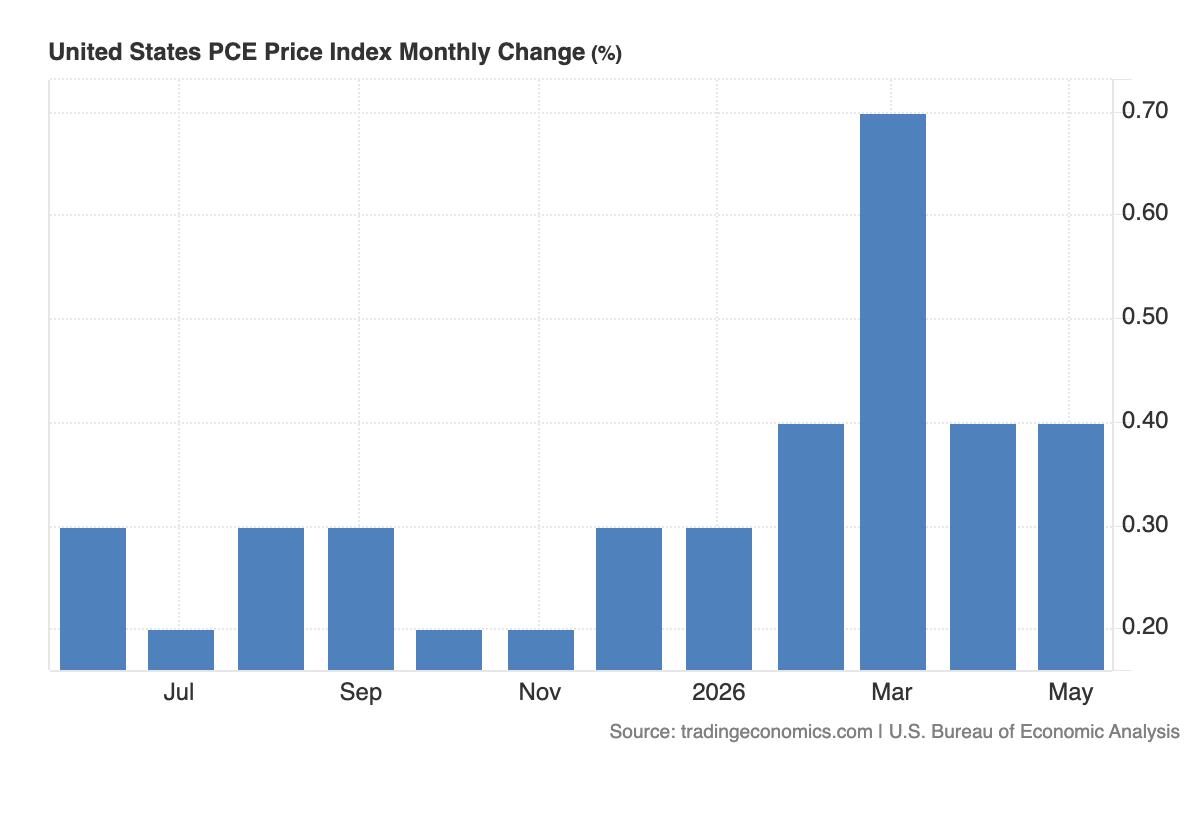
Investors are waiting to see whether price pressures are still sticky enough to justify another Fed hike. Markets currently expect one more interest-rate increase before the end of the year, and any upside surprise in inflation would strengthen that view.
The Fed is already in a difficult position.
On one side, recent jobs data has shown signs of labour-market cooling, which should normally reduce the need for tighter policy. On the other side, renewed oil pressure threatens to keep inflation elevated, especially if energy prices rise again because of supply fears around Hormuz.
That creates a difficult policy mix.
Growth momentum is no longer as strong as it was earlier in the year, but inflation risk is not fully under control. If oil keeps rising, the Fed may have less room to pause, even if employment data softens.
This is why Kevin Warsh’s first appearance before Congress matters.
Markets will listen closely for how the new Fed Chair frames the balance between inflation risks, labour-market cooling and geopolitical uncertainty. If Warsh emphasizes price stability and refuses to push back against hike expectations, gold could remain under pressure.
If he acknowledges weaker growth or suggests the Fed can be patient, gold may find some relief.
But the burden of proof is high.
The Fed has already made clear that inflation remains above target. Warsh has also signaled that the central bank will remain data-dependent and will not rely on traditional forward guidance. That means every major inflation and labour-market release will carry more weight.
For now, the market is trading the risk that inflation remains too high.
Oil is rising because Hormuz risk has returned.
Fed hike bets are holding because inflation risk is rising again.
Gold is falling because higher yields and a stronger dollar matter more than safe-haven demand in this specific setup.
That is the main takeaway.
Gold is not weak because geopolitical risk has disappeared.
Gold is weak because this geopolitical risk is inflationary.
And as long as the market believes the conflict can push oil higher and keep the Fed hawkish, gold rallies are likely to remain fragile.
Powered by GaphyToro.
At GaphyToro, we help traders move beyond surface-level headlines by connecting price action to the macro forces that actually move markets, including oil, inflation, yields, central banks, currencies and risk sentiment.
Learn more at www.gaphytoro.com.
Filed under
Written by

Founder & CEO, GaphyToro
Philip Ogina is the Founder and CEO of GaphyToro, a trader-first performance ecosystem built to help modern traders improve through structure, discipline, data, and better execution. He is a trader, investor, market analyst, educator, and software builder focused on building tools and infrastructure for the next generation of traders.