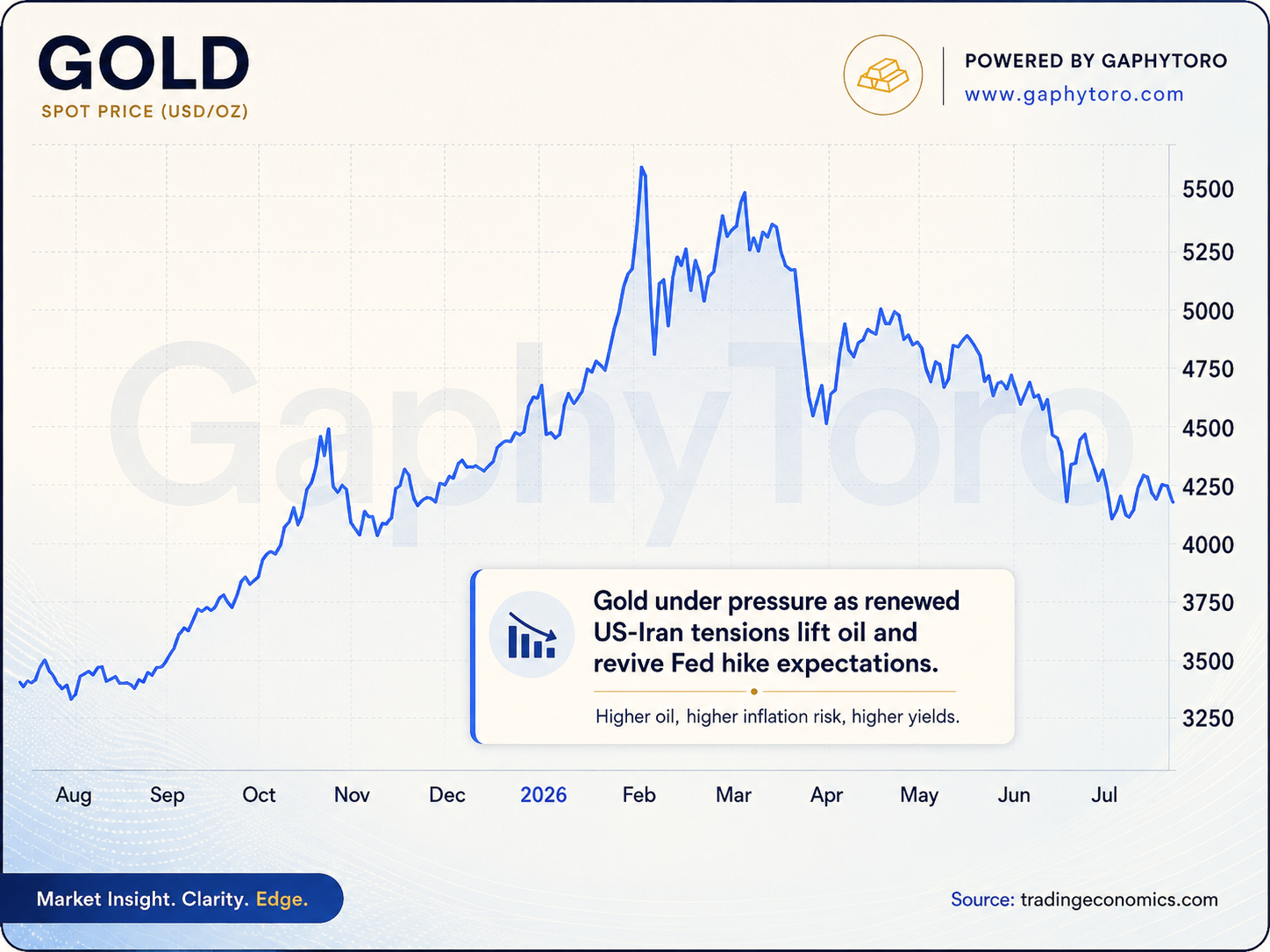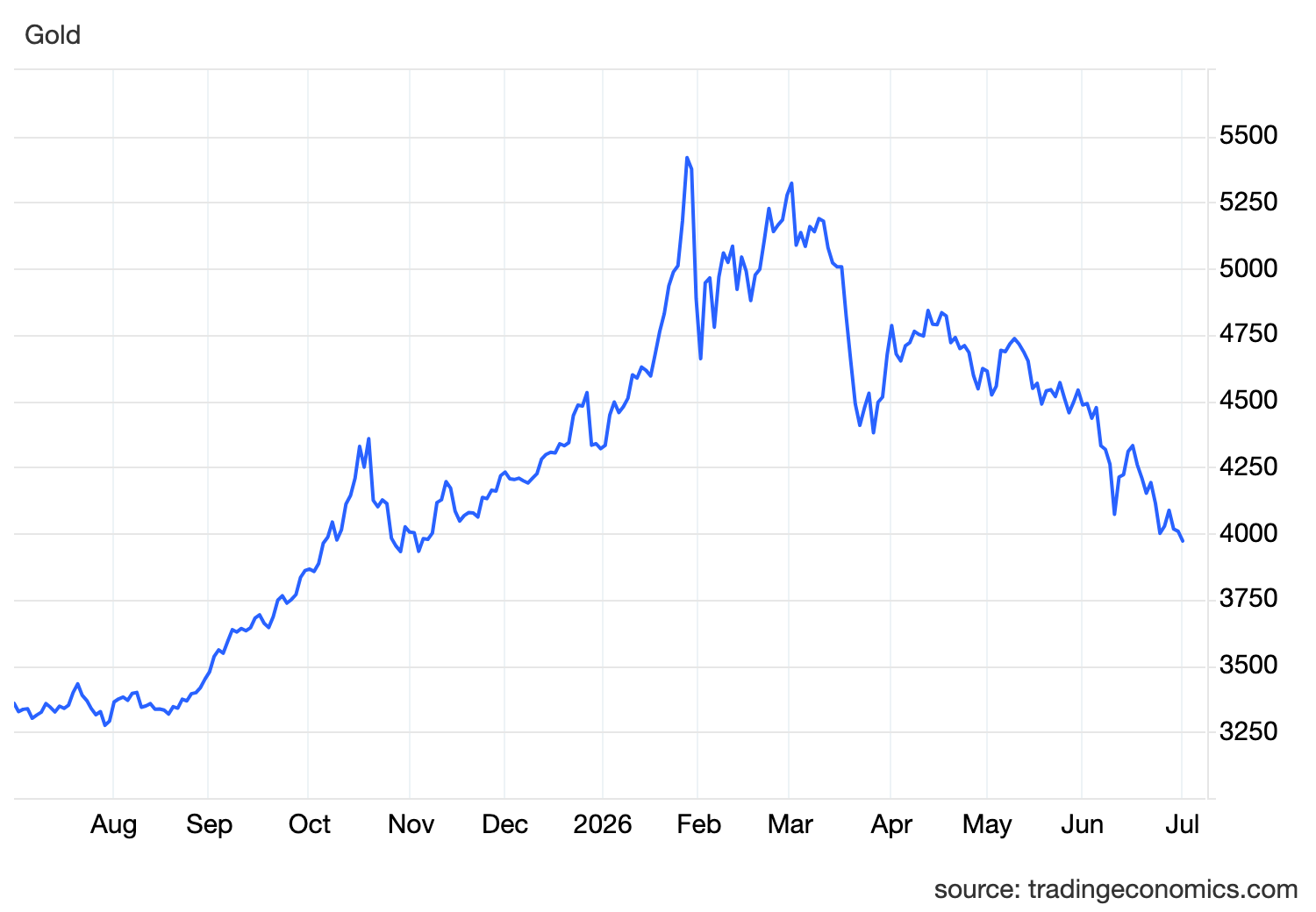
Gold is falling because the market is no longer giving bullion the benefit of the doubt.
The metal slipped below 4000, trading near its lowest level in almost eight months, as investors continued to price a more restrictive Federal Reserve. The immediate pressure is coming from stronger US economic data, but the deeper issue is that inflation remains too high while the labour market is still too resilient for the Fed to turn dovish.
The latest JOLTS data showed job openings holding around 7.6 million, near a two-year high. That is important because it tells markets that labour demand has not weakened enough to force the Fed into a softer stance. Hiring may not be booming, but companies are still showing demand for workers, and layoffs remain contained.
That matters directly for gold.
If inflation is high and the labour market is weakening sharply, the Fed has a reason to become cautious. If inflation is high and the labour market is still firm, the Fed has room to stay restrictive or even hike again.
Right now, markets are trading the second scenario.
This is why expectations for the June nonfarm payrolls report matter so much. Analysts are looking for another solid increase in jobs, and if payrolls confirm continued resilience, it will strengthen the case for a Fed rate hike later this year. Markets are already pricing at least one increase, with September now being treated as a live meeting.
That is a heavy backdrop for gold.
Gold does not pay interest. When the Fed is expected to raise rates, Treasury yields stay supported and cash becomes more attractive. That increases the opportunity cost of holding bullion. At the same time, higher US yields support the dollar, making gold more expensive for foreign buyers.
This is the main reason gold is not benefiting much from geopolitical uncertainty.
The US-Iran peace talks in Qatar remain important, but they are not the dominant driver today. Investors are hopeful that a lasting ceasefire could eventually reduce oil risk and stabilize energy flows through the Strait of Hormuz. That would be positive for the inflation outlook over time.
But the market is not there yet.
The two sides are not expected to hold direct talks, which means the diplomatic process remains fragile. Any progress could reduce the oil risk premium, but any breakdown could quickly bring back energy-driven inflation concerns.
The inflation story is still the key.
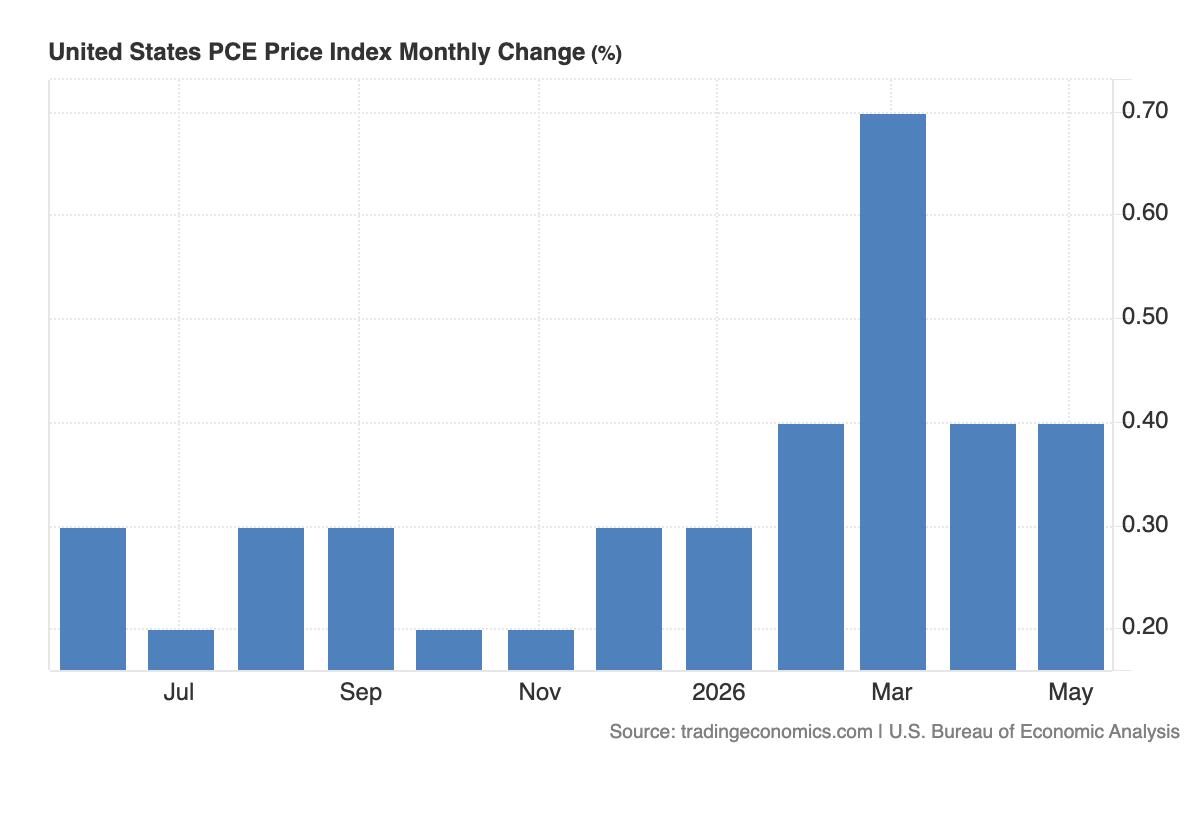
Recent core inflation readings remain well above the Fed’s 2% target. Even though oil prices have moved lower from the peak seen during the Middle East conflict, the inflation shock has already moved through the economy. Energy costs fed into transport, production, import prices and consumer expenses. Those effects do not disappear overnight.
That is why the Fed remains cautious.
The central bank is not responding only to where oil trades today. It is responding to the inflation already embedded in the data. Until core inflation clearly cools and the labour market softens, policymakers have little reason to signal relief.
This is the problem for gold.
Peace talks may reduce future inflation risk, but strong labour data and sticky core inflation keep the Fed focused on price stability. That means yields remain elevated, the dollar stays supported and gold remains under pressure.
For the dollar, the setup is still constructive. Higher expected US rates attract capital into dollar assets. If NFP comes in strong, the dollar could remain firm because markets would have more confidence that the Fed can hike without immediately damaging growth.
For yields, the risk also leans higher if labour data stays strong. Bond investors will demand compensation for an inflation outlook that remains above target and a Fed that may need to tighten again.
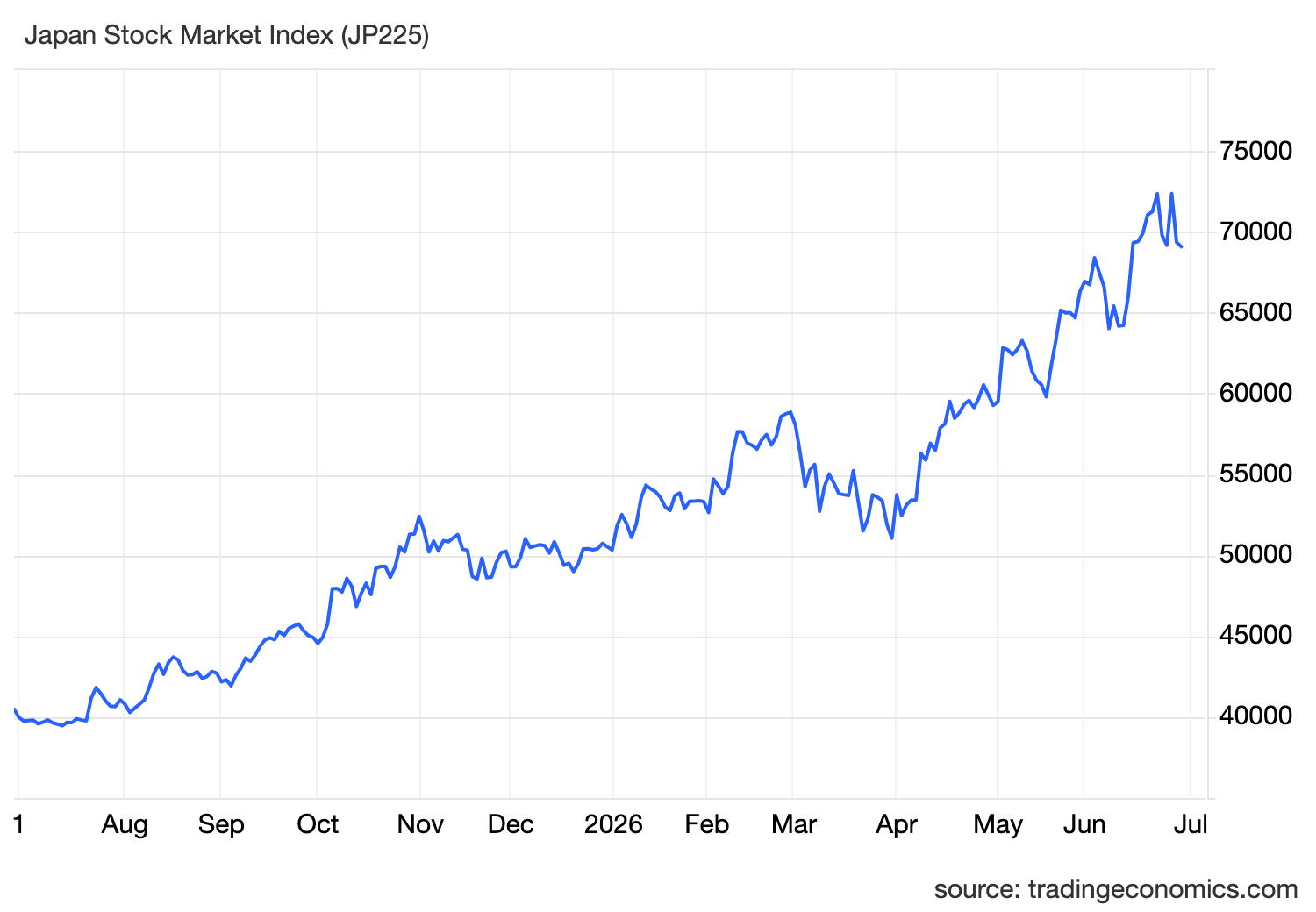
For risk assets, the picture is more mixed. Strong economic data supports earnings confidence, but higher rates pressure valuations, especially in long-duration growth sectors. That is why equities can rally selectively while gold continues to struggle.
The current gold setup is clear.
Gold is not falling because geopolitical risk has disappeared.
Gold is falling because monetary policy is winning.
The labour market remains resilient. Core inflation remains too high. Markets are pricing Fed hike risk. Treasury yields are supported. The dollar is firm.
Until that chain breaks, gold rallies are likely to remain vulnerable.
The next major test is NFP. A strong report would reinforce the September hike story and keep gold under pressure. A weak report could give bullion some relief, especially if wage growth softens and markets begin trimming Fed tightening expectations.
For now, though, gold is still trading against the Fed.
And the Fed is still trading against inflation.
Filed under
Written by

Founder & CEO, GaphyToro
Philip Ogina is the Founder and CEO of GaphyToro, a trader-first performance ecosystem built to help modern traders improve through structure, discipline, data, and better execution. He is a trader, investor, market analyst, educator, and software builder focused on building tools and infrastructure for the next generation of traders.