Japan's stock market is taking a breather.
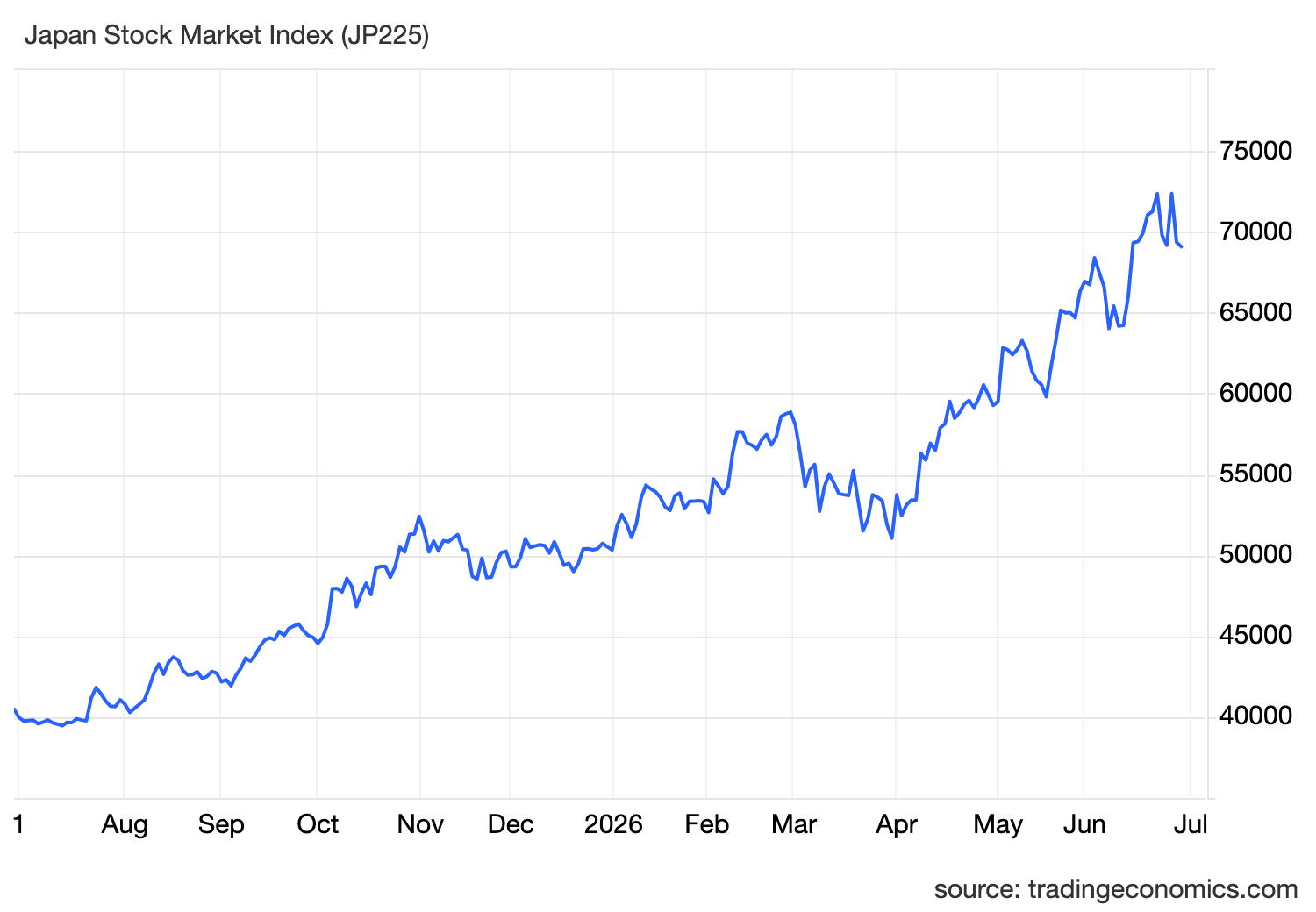
After months of AI-driven gains that pushed the Nikkei to fresh record highs, investors are becoming more selective as geopolitical uncertainty and higher global interest rates challenge equity valuations.
The Nikkei 225 fell 1.3%, extending losses for a second consecutive session, while the broader Topix also moved lower as technology stocks led the retreat.
The immediate catalyst came from the Middle East.
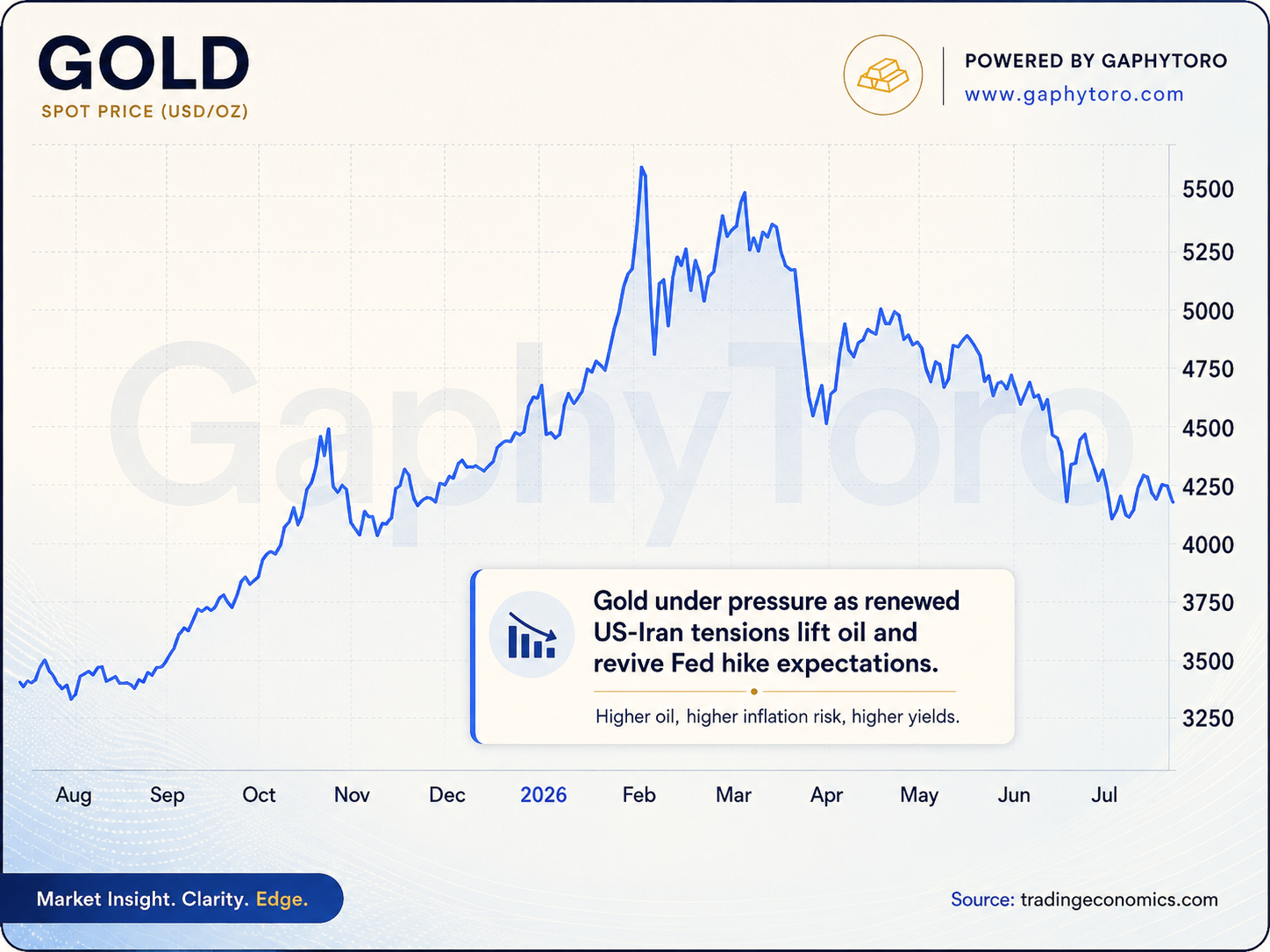
Oil prices rebounded after fresh clashes between the US and Iran near the Strait of Hormuz, reminding investors that geopolitical risks have not fully disappeared despite ongoing peace negotiations. Although both sides agreed to halt further attacks ahead of talks in Doha later this week, markets remain cautious after months of volatility surrounding one of the world's most important energy corridors.
For Japan, developments in Hormuz carry particular significance.
The country imports the vast majority of its crude oil from the Middle East, making it one of the world's most exposed economies to disruptions in regional energy supplies. Even modest increases in oil prices quickly feed into import costs, corporate margins and consumer inflation.
That dynamic has become increasingly important this year.
The conflict in the Middle East contributed to a global energy shock that pushed inflation higher across major economies and forced central banks to adopt a more hawkish stance. The Federal Reserve recently raised its inflation forecasts despite leaving rates unchanged, while the Bank of Japan increased interest rates to 1% for the first time in nearly three decades as inflation continued exceeding its target.
Higher global interest rates create another challenge for equities.
As bond yields rise, future corporate earnings become less valuable in today's terms, putting particular pressure on high-growth technology companies whose valuations depend heavily on future profits.
That helps explain why the market's biggest AI winners saw some of the sharpest declines.
Kioxia, Fujikura, Advantest, Ibiden and SoftBank all retreated as investors locked in profits following an extraordinary rally that has been driven by optimism surrounding artificial intelligence infrastructure and semiconductor demand.
The selling does not necessarily suggest the AI story is ending.
Instead, it reflects a market adjusting to a more demanding macro environment.
Investors are asking whether current valuations can continue expanding if interest rates remain elevated for longer.
Recent inflation data suggests that question is becoming increasingly relevant.
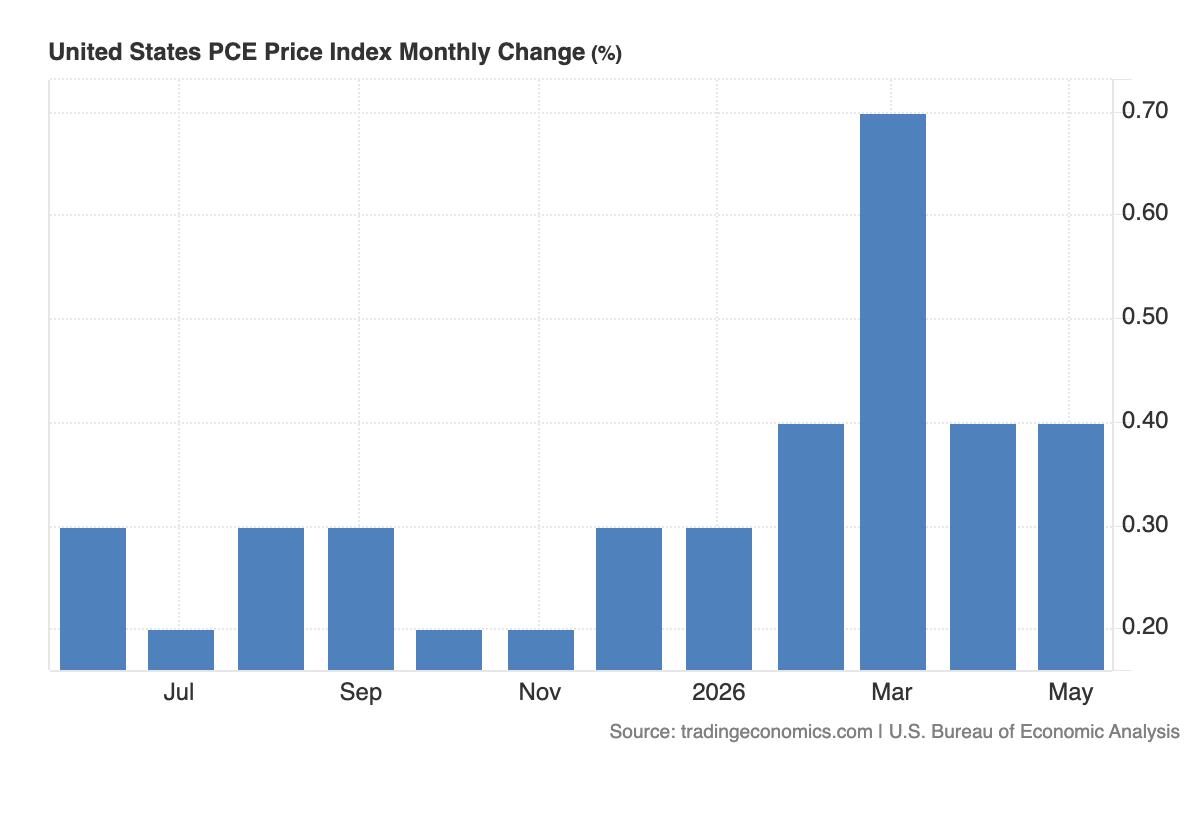
The Fed's preferred inflation measure, PCE, recently accelerated to its highest level since 2023, reinforcing expectations that US interest rates could remain restrictive well into next year. Higher US yields also strengthen the dollar, tightening global financial conditions and reducing appetite for risk assets.
Against that backdrop, strong domestic data offered only limited support.
Japan's retail sales rose 5.3% in May, the fastest annual growth since November 2023.
The figures suggest consumer spending remains resilient, helped by government stimulus measures and steady wage growth. Strong household demand provides an important cushion for Japan's economy at a time when external risks remain elevated.
However, investors appear more focused on the global picture than domestic fundamentals.
Technology shares have been the primary engine behind Japan's record-breaking equity rally, and those companies remain particularly sensitive to changes in global interest rates and investor risk appetite.
Oil prices also remain a key variable.
Although supply has improved significantly following progress in US-Iran negotiations, any renewed disruption around the Strait of Hormuz could quickly reverse recent declines in crude prices. Higher oil would reignite inflation concerns, push bond yields higher and increase pressure on richly valued growth stocks.
That is why this week's peace talks matter well beyond the energy market.
A lasting agreement would support lower oil prices, ease inflation pressures and improve the outlook for central bank policy globally.
Failure to reach a deal would risk bringing those concerns back into focus.
For now, markets are choosing caution.
Japan's economy continues showing encouraging signs.
Consumer spending is strengthening.
Corporate earnings remain solid.
But after one of the strongest equity rallies in decades, investors are becoming less willing to ignore geopolitical risks and higher interest rates.
The AI story remains intact.
The macro environment has simply become more complicated.
Filed under
Written by

Founder & CEO, GaphyToro
Philip Ogina is the Founder and CEO of GaphyToro, a trader-first performance ecosystem built to help modern traders improve through structure, discipline, data, and better execution. He is a trader, investor, market analyst, educator, and software builder focused on building tools and infrastructure for the next generation of traders.