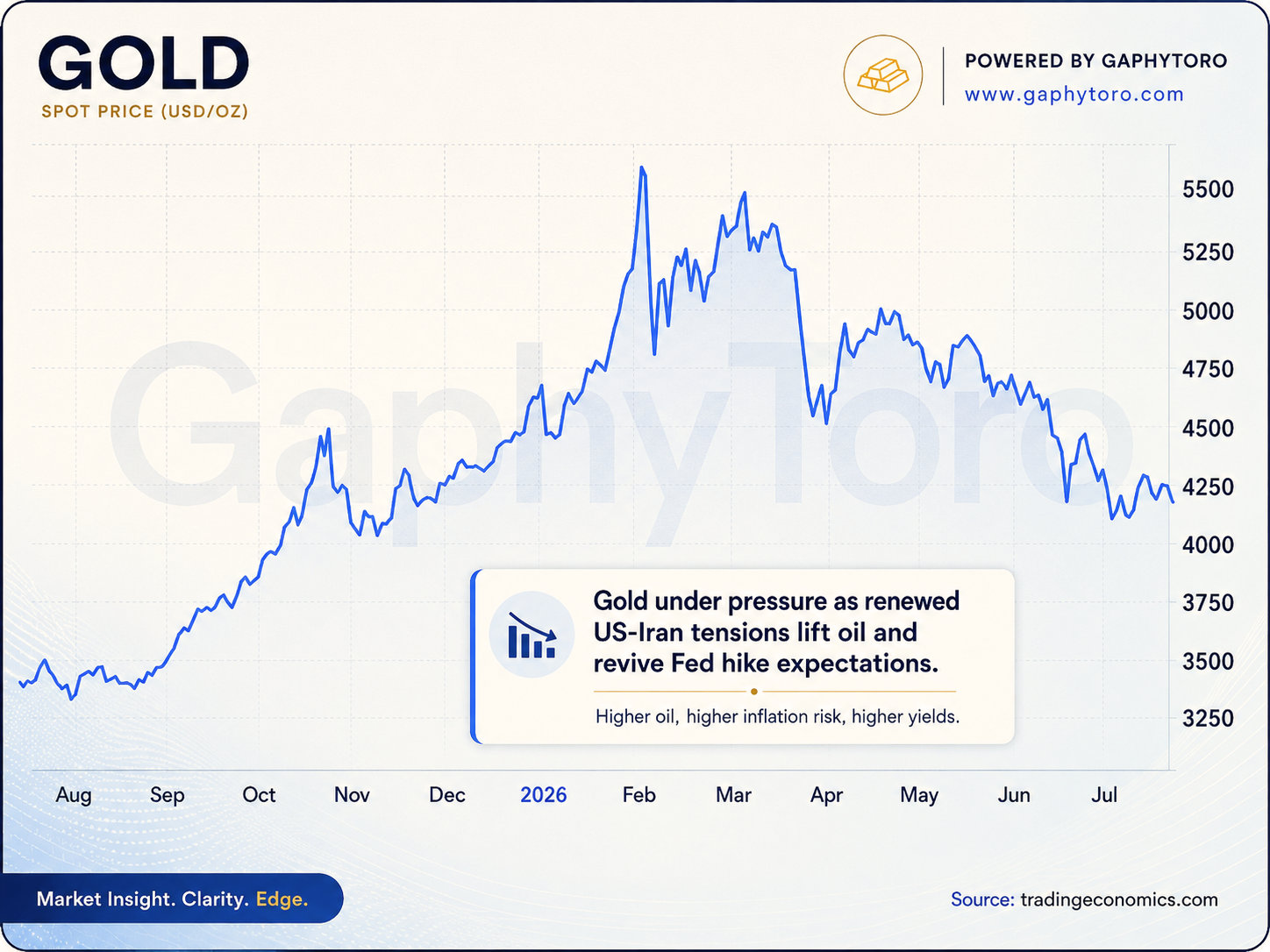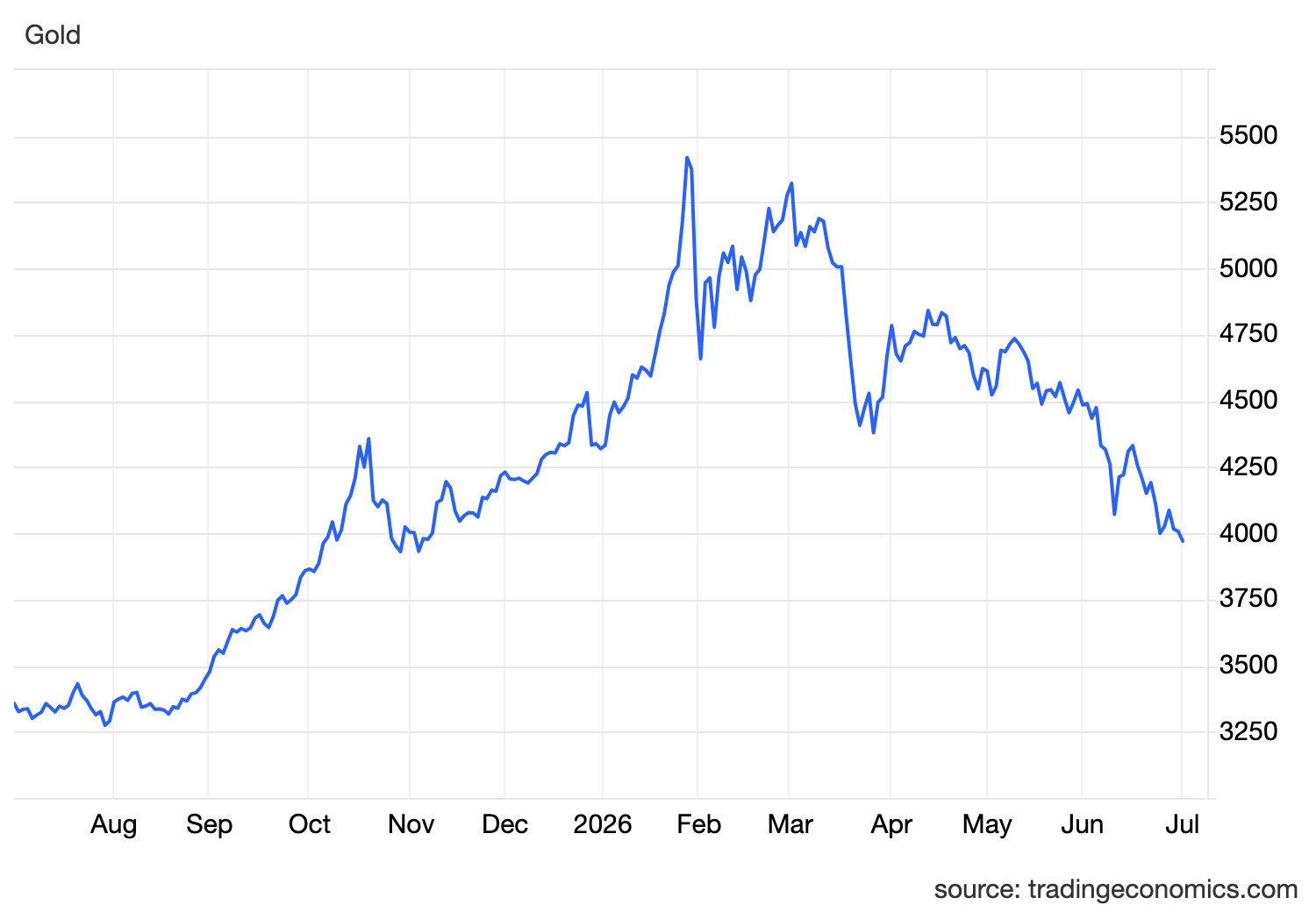
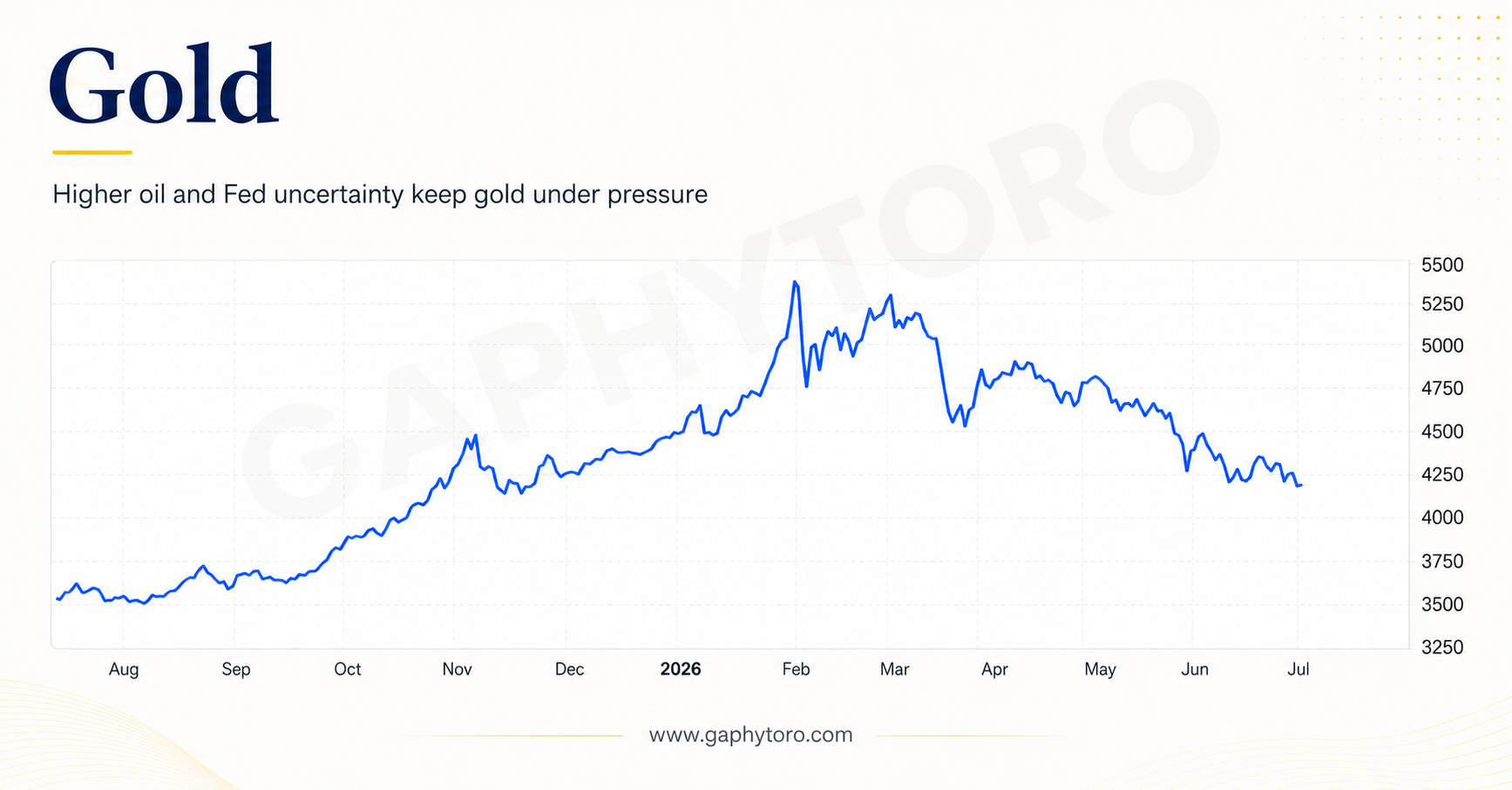
Gold is once again proving that geopolitical escalation is not automatically bullish for bullion.
The metal remained below $4,000 and was on track to lose more than 3% for the week as renewed fighting between the United States and Iran pushed oil prices higher and revived concerns about inflation, Treasury yields and Federal Reserve policy.
That is the central contradiction driving gold.
The conflict is creating the type of geopolitical uncertainty that would normally increase demand for safe-haven assets. However, it is also threatening one of the world’s most important energy-producing regions and keeping oil-supply risks elevated.
Markets are therefore pricing the conflict primarily through inflation rather than fear.
The United States carried out multiple strikes against Iran during the week, while President Donald Trump warned that Iranian infrastructure could be targeted unless diplomatic efforts produce progress. Iran responded with attacks on US bases in neighbouring countries, increasing the risk that the confrontation becomes broader and more prolonged.
The consequences extend beyond the immediate military developments.
Continued attacks can discourage tankers from entering the region, increase insurance premiums, delay cargoes and reduce the amount of energy that can move safely through the Strait of Hormuz.
Even without a complete closure, those disruptions can tighten effective supply.
That is why oil prices have risen sharply.
Higher oil feeds directly into fuel and transportation costs. It also raises expenses across manufacturing, logistics, food distribution, aviation and other energy-intensive industries. Businesses may eventually pass those costs to consumers, turning the energy shock into broader inflation.
For gold, the problem begins when that inflation risk reaches the bond market.
Higher inflation expectations make investors more likely to anticipate restrictive Federal Reserve policy. That keeps Treasury yields elevated and supports the dollar, increasing the opportunity cost of holding gold because bullion does not produce interest.
The macro chain remains clear.
Conflict threatens energy supply.
Energy disruption pushes oil higher.
Higher oil increases inflation risk.
Inflation risk keeps Fed tightening expectations alive.
Higher expected rates support yields and the dollar.
Higher yields and a stronger dollar pressure gold.
This is why gold has struggled despite a worsening geopolitical environment.
The market is not ignoring the conflict. It is pricing the conflict through monetary policy.
Softer US inflation data provided some relief this week.
Headline inflation slowed more than expected, while monthly consumer prices declined as lower energy costs from the earlier oil retreat passed through to the data. That improvement has largely removed the possibility of a July rate increase.
However, the latest inflation report reflects conditions before the newest escalation.
It tells the Fed that price pressures eased when oil was falling and energy flows were recovering. It does not capture the renewed increase in oil prices or the latest threat to regional infrastructure and shipping.
That makes the report encouraging but backward-looking.
The Fed must now determine whether the recent improvement represents a durable return to disinflation or a temporary period of relief before higher energy costs begin lifting prices again.
This is why markets remain divided over September.
A single softer inflation report makes an immediate hike less likely, particularly after recent employment data showed that job creation is losing momentum. Raising rates into a cooling labour market would increase the risk of unnecessary economic weakness.
But the Fed cannot ignore a renewed energy shock.
If oil remains elevated, inflation expectations could rise before the full impact appears in official CPI or PCE data. Policymakers may become concerned that households and businesses will begin expecting persistent price increases, making inflation more difficult to contain.
Kevin Warsh’s recent congressional testimony maintained that tension.
The Fed Chair reiterated his commitment to restoring price stability but did not give markets a clear signal about the next policy move. His position remains consistent with the communication strategy he has outlined since taking office.
The Fed will not provide a guaranteed roadmap.
It will respond to incoming data.
That means the September decision will depend on more than the latest CPI report. Policymakers will assess oil prices, inflation expectations, core PCE, wage growth, employment, consumer demand and the duration of the Middle East disruption.
For gold, that creates a difficult environment.
The weaker inflation report prevents markets from confidently pricing aggressive tightening. But rising oil prevents them from confidently removing hike risk.
Gold is therefore caught between fading immediate rate pressure and rising future inflation pressure.
The dollar adds another complication.
Renewed conflict can strengthen the dollar through safe-haven demand, particularly when the US economy appears more resilient than other energy-importing economies. At the same time, higher oil can reinforce expectations that US rates will remain restrictive.
A firm dollar makes gold more expensive for buyers using other currencies, further limiting demand.
This helps explain why the metal has failed to produce a sustained safe-haven rally even as military risks increase.
Gold’s traditional role has not disappeared.
The nature of the crisis has changed the transmission mechanism.
A financial crisis that lowers growth and interest rates can be strongly supportive for bullion. An energy conflict that increases inflation and pushes yields higher can produce the opposite result.
The second scenario is dominating today.
There are still conditions under which the outlook could improve.
A diplomatic breakthrough that reduces the threat to Iranian infrastructure and secures shipping through Hormuz would likely push oil lower. That would weaken future inflation pressure and reduce the need for additional Fed tightening.
Gold could then benefit from lower yields and a softer dollar, even as reduced geopolitical risk removes part of its traditional safe-haven demand.
The rates channel would become more supportive than the peace process is negative.
A renewed escalation would create a more complicated reaction.
Gold could initially attract defensive demand, but any sustainable rally would depend on what happens to oil and Treasury yields. If crude surges and markets increase their rate-hike expectations, bullion could remain under pressure despite the worsening conflict.
That is the key lesson from this year’s market behaviour.
War alone does not determine gold’s direction.
The inflation and interest-rate consequences of the war matter more.
The next major signals will come from oil prices, shipping conditions around Hormuz, diplomatic developments and the next round of US inflation and employment data.
If oil stabilises and core inflation continues cooling, markets may reduce September hike expectations and give gold room to recover.
If energy prices continue rising, the Fed may remain restrictive even as economic growth slows.
For now, the balance remains difficult for bullion.
Inflation has improved, but the improvement is vulnerable.
A July hike appears unlikely, but tightening risk later in the year remains alive.
Geopolitical danger is rising, but it is creating the type of inflation pressure that can hurt rather than help gold.
Gold is not falling because the market feels safe.
It is falling because the market believes the conflict may keep interest rates high.
Powered by GaphyToro
GaphyToro is a trading journal and trader-development platform designed to help traders document every trade, evaluate their execution, identify recurring strengths and mistakes, and improve discipline through structured performance data.
Turn your trading history into a clearer improvement process at www.gaphytoro.com.