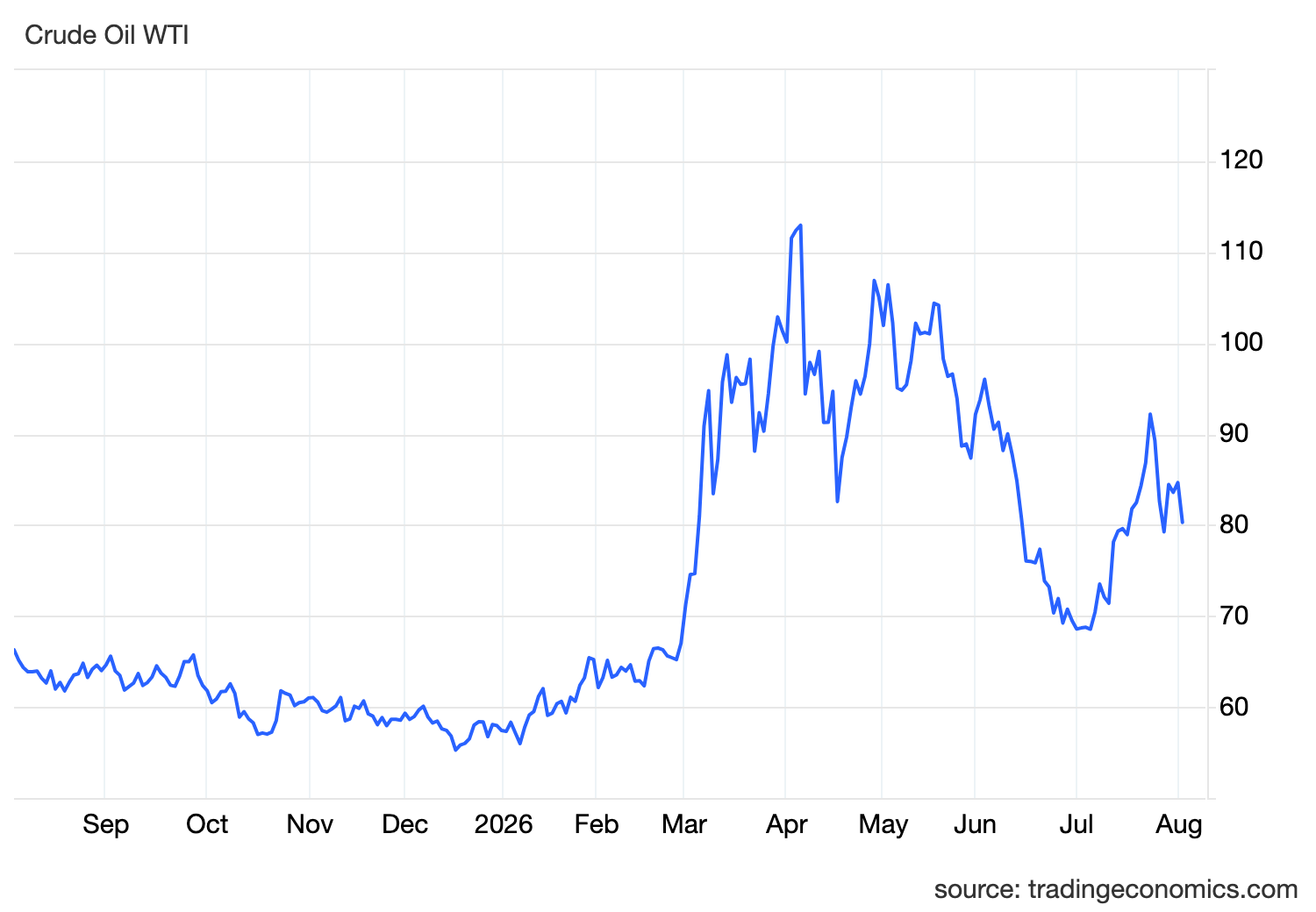
Crude oil dropped more than 4% toward $80 per barrel after President Donald Trump called off a planned military attack on Iran and announced that negotiations would resume.
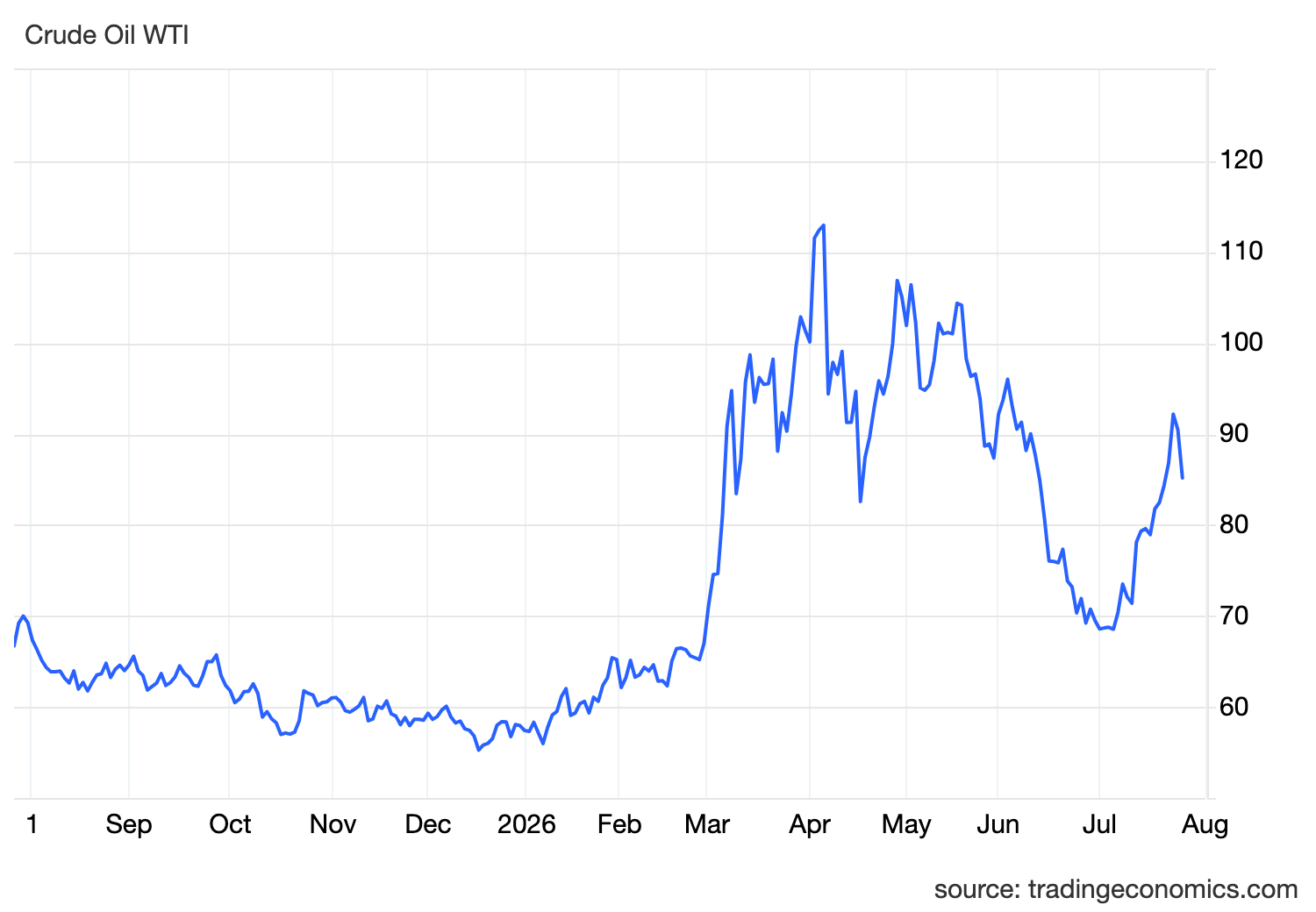
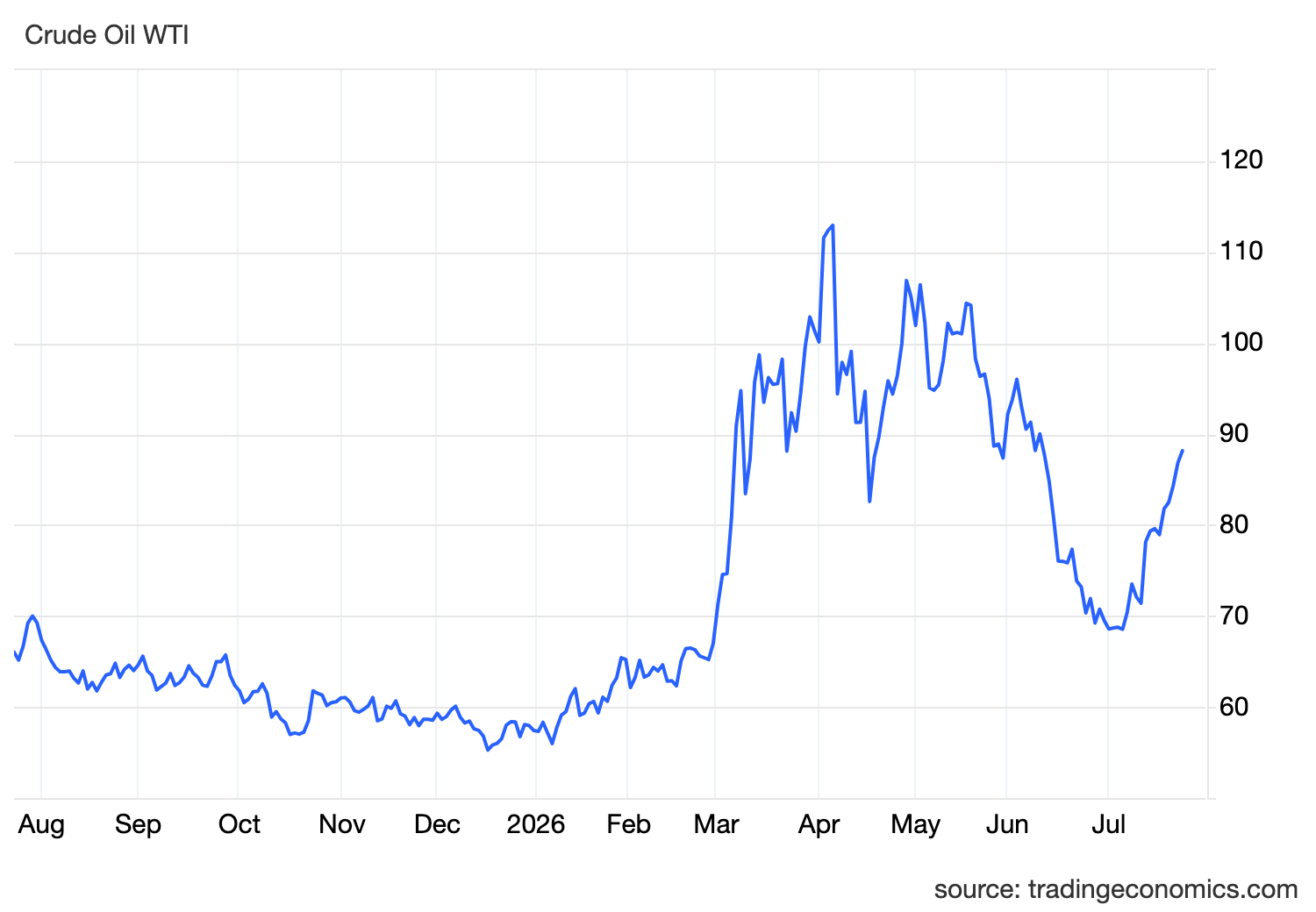
West Texas Intermediate fell approximately 4.7% to around $80.77, while Brent declined roughly 4.5% toward $84. The move partially reversed July’s surge, when oil gained more than 20% as renewed US-Iran hostilities disrupted shipping through the Strait of Hormuz and increased security risks across the Red Sea.
The immediate market reaction was straightforward.
A military strike would have increased the risk of retaliation against regional energy infrastructure, tankers and commercial shipping routes. Suspending the attack reduced the probability of another near-term supply disruption, allowing traders to remove part of the geopolitical premium embedded in oil prices.
This was not primarily a signal that global energy demand had suddenly weakened.
It was a repricing of escalation risk.
Why Oil Fell So Quickly
Oil prices do not only reflect the number of barrels currently available.
They also include a premium for barrels that could become unavailable.
The Strait of Hormuz remains one of the most important energy transit routes in the world. When shipping through the strait becomes unreliable, the market must account for possible delays, higher insurance costs, tanker shortages and the risk that producers cannot deliver exported crude even when production continues.
That uncertainty contributed to July’s rally.
The decision to prioritise diplomacy changed the immediate probability distribution. A negotiated reopening of Hormuz would improve tanker movement, reduce freight costs and allow more Gulf supply to reach international markets.
Because speculative positioning had already adjusted to the possibility of further escalation, the diplomatic announcement triggered a rapid unwinding of bullish exposure.
However, falling risk is not the same as disappearing risk.
Talks can fail.
Military action can be reconsidered.
Shipping conditions remain impaired, and further attacks have continued to affect tanker movements around the Gulf and nearby routes. The market is therefore removing part of the war premium, not declaring the supply system fully normal.
OPEC+ Adds Another Bearish Layer
The diplomatic shift arrived alongside another modest increase in OPEC+ production quotas.
Seven major participating producers approved a 188,000-barrel-per-day increase for September. This completes the planned restoration of the 1.65 million barrels per day of voluntary cuts introduced in 2023. A separate layer of roughly 2 million barrels per day in broader cuts remains in place through the end of 2026.
That distinction matters.
OPEC+ is not returning every withheld barrel to the market.
It is completing the restoration of one specific group of voluntary reductions.
Even then, announced quotas do not necessarily translate directly into additional exports. Some members face capacity constraints, compensation requirements or disruptions that prevent them from fully reaching their targets.
The price effect therefore depends on actual supply, not only the headline quota.
If diplomacy succeeds and Gulf shipping normalises, OPEC+ will have more freedom to return production without immediately overwhelming fragile transport routes.
If the conflict persists, higher quotas may offer less relief because barrels still need secure infrastructure and open shipping lanes to reach buyers.
The Inflation Transmission
The fall in oil has implications far beyond energy markets.
Lower crude prices reduce pressure on gasoline, diesel, aviation fuel, freight and industrial production costs. That can eventually slow headline consumer and producer inflation.
The transmission is not immediate, but the direction matters.
Lower oil can weaken the argument for additional monetary tightening because central banks face less pressure from energy-driven inflation.
That can reduce bond yields and soften expectations for higher policy rates.
For the Federal Reserve, sustained relief in oil would reduce one of the most visible external threats to price stability. It would not solve sticky services inflation or domestic wage pressure, but it would remove part of the supply shock that has complicated the policy outlook.
The dollar could lose some support if markets reduce expectations for further Fed tightening.
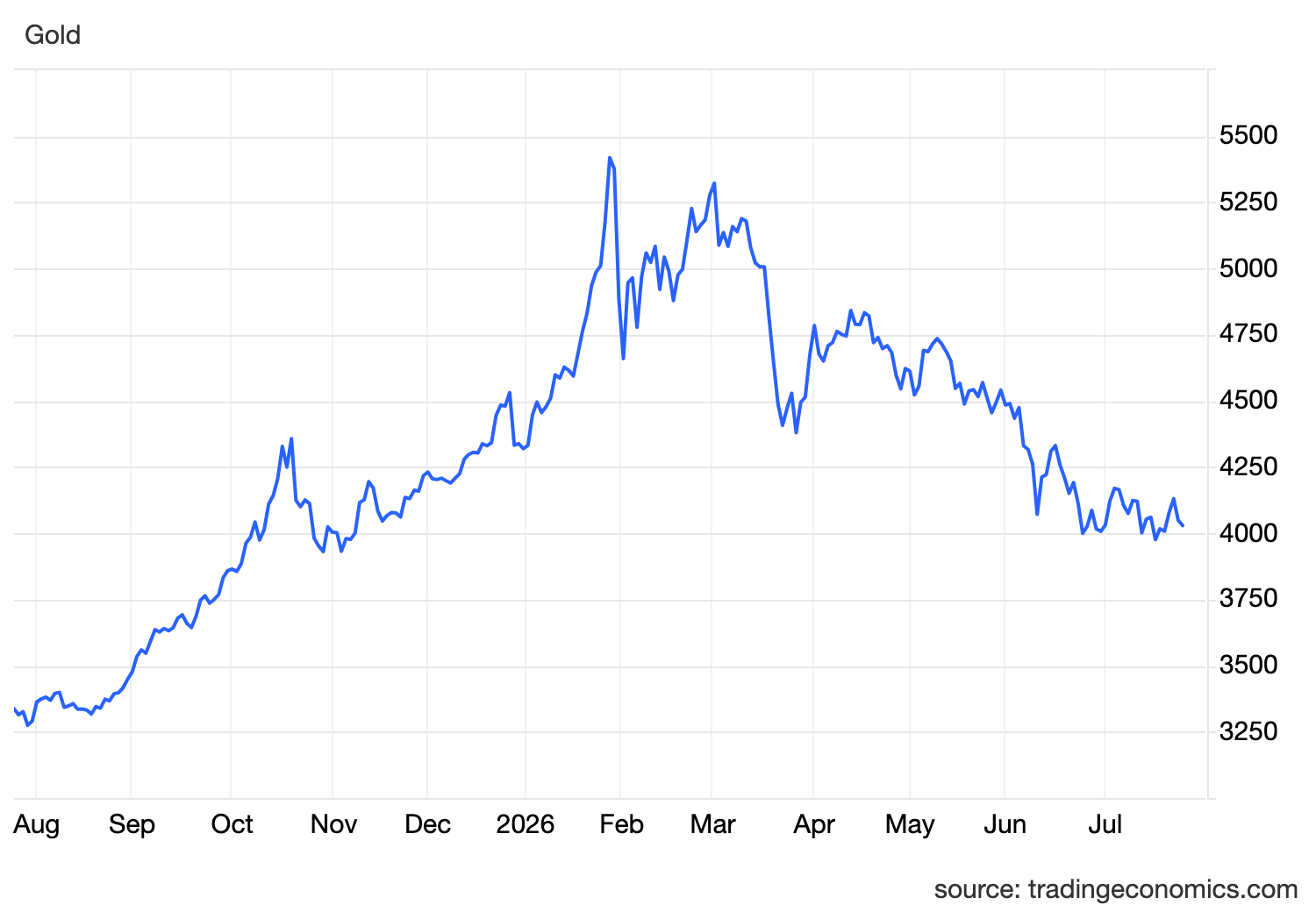
Gold could benefit from lower yields and a softer dollar, even as declining geopolitical fear reduces immediate safe-haven demand.
The key distinction is whether falling oil produces a meaningful decline in real yields.
Gold does not automatically rise when conflict intensifies. If war raises oil, inflation and yields, bullion can remain under pressure despite safe-haven demand.
A credible peace process could therefore become supportive for gold through lower energy inflation and softer yields, even though the geopolitical premium itself is declining.
What It Means for Equities
Lower oil is generally constructive for consumers and energy-importing economies.
Reduced fuel and transport costs support household disposable income and lower operating expenses for airlines, manufacturers, retailers and logistics companies.
Technology and growth shares may also benefit if falling oil reduces inflation expectations and pushes bond yields lower.
Energy producers face the opposite effect.
A sustained move toward $80 or below would reduce revenue expectations for oil companies, particularly those with higher production costs or aggressive investment plans.
However, equities should not treat one diplomatic announcement as confirmation that the conflict is ending.
If negotiations fail and oil rapidly returns toward July’s highs, the inflation and valuation pressure would return with it.
Three Scenarios From Here
Diplomatic Progress
A credible agreement that restores regular shipping through Hormuz could remove more of the geopolitical premium.
Combined with higher OPEC+ quotas, that could push oil lower and reduce inflation expectations.
The dollar and bond yields may soften, while equities and gold receive support from easier financial conditions.
Prolonged Negotiations
Talks may continue without producing a complete reopening of shipping routes.
In that environment, crude could remain volatile around current levels as the market balances diplomatic optimism against continued supply uncertainty.
This would create a range rather than a clean trend.
Renewed Escalation
Failed talks or another military operation could restore the entire war premium quickly.
Oil would likely react before economic data because the market would immediately reassess the risk to Gulf exports, tankers and regional infrastructure.
That would revive inflation concerns, support yields and the dollar, and create renewed pressure on rate-sensitive assets.
What Markets Should Watch
The first variable is the substance of the negotiations.
A meeting announcement matters less than a verifiable agreement on shipping access, security guarantees and the reopening of the Strait of Hormuz.
The second is tanker traffic.
Actual vessel movement will show whether supply conditions are improving before official production statistics fully reflect the change.
The third is OPEC+ compliance.
The September quota increase only becomes meaningfully bearish if participating producers can deliver the additional barrels.
The fourth is the price reaction itself.
If crude continues falling despite setbacks in the negotiations, the market may be shifting its attention toward rising supply or weaker demand.
If oil quickly rebounds on limited negative news, the market remains structurally sensitive to geopolitical disruption.
The Bottom Line
Oil’s decline reflects a meaningful change in immediate risk.
The United States stepped back from military escalation.
Diplomacy returned.
OPEC+ added another modest supply increase.
Those developments justify removing part of July’s war premium.
But the move toward $80 should not be confused with complete normalisation.
The Strait of Hormuz remains vulnerable, tanker flows remain disrupted and negotiations are not guaranteed to succeed.
For traders, the current environment is not simply bullish or bearish.
It is event-driven.
Peace progress can push crude lower, reduce inflation pressure and ease financial conditions.
Renewed escalation can reverse the entire move just as quickly.
The headline changed the price.
The shipping data will determine whether the change lasts.
Powered by GaphyToro
GaphyToro is a trading journal and trader-development platform built to help traders document decisions, analyse execution, identify recurring performance patterns and strengthen discipline through structured data.
Journal the trade. Review the decision. Improve with data.
Filed under
Written by

Founder & CEO, GaphyToro
Philip Ogina is the Founder and CEO of GaphyToro, a trader-first performance ecosystem built to help modern traders improve through structure, discipline, data, and better execution. He is a trader, investor, market analyst, educator, and software builder focused on building tools and infrastructure for the next generation of traders.