Japan Buys Time for the Yen as the BOJ Holds at 1%
Japan delivered two separate messages to currency markets.
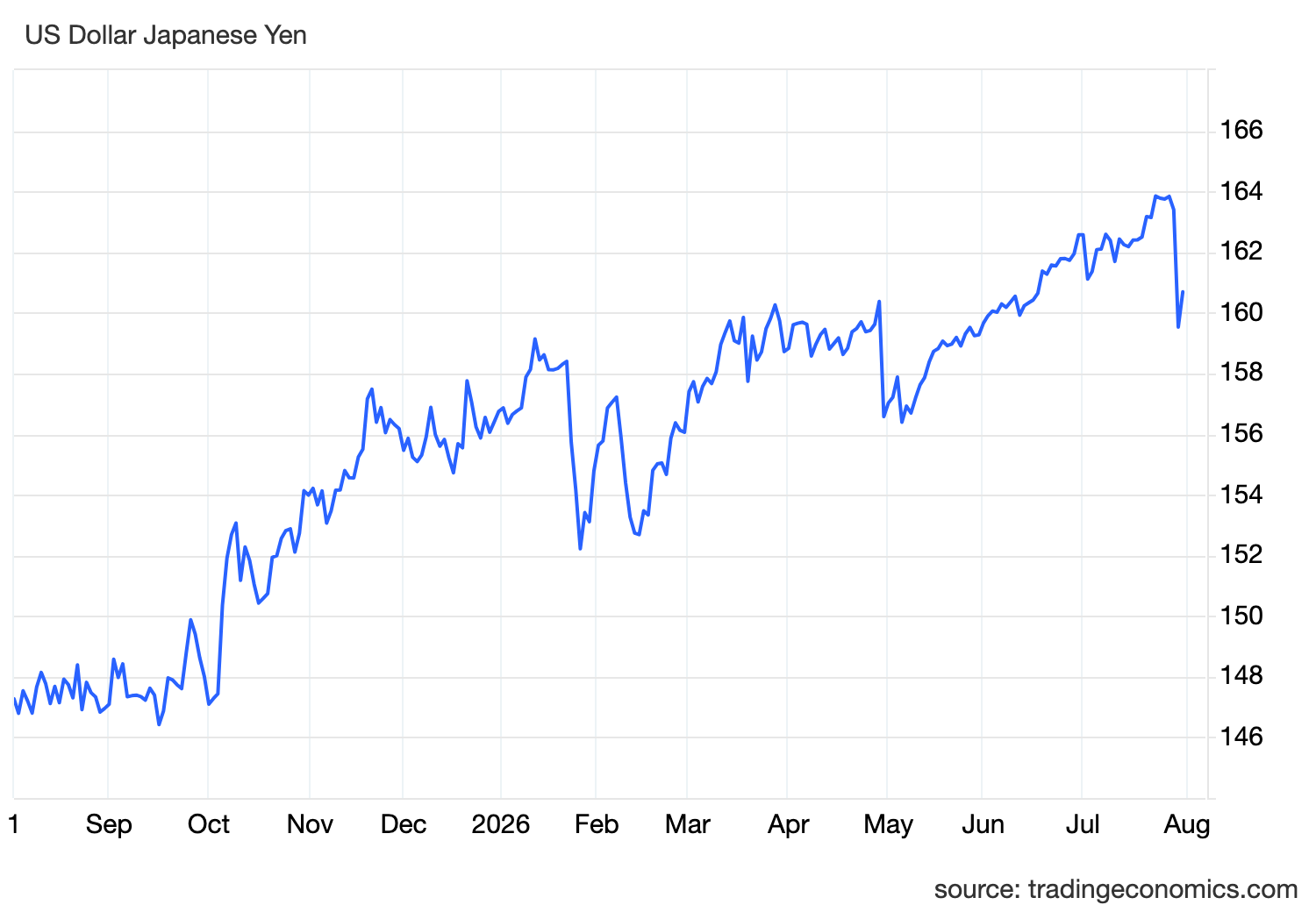
The first came through direct action. The yen surged more than 3%, strengthening from near 164 per dollar to around 158 as market participants identified the move as official yen-buying and dollar-selling intervention. Trading volumes increased sharply, and the size and speed of the move were difficult to explain through ordinary market flows alone.
The second message came from the Bank of Japan.
The BOJ left its short-term policy rate unchanged at 1%, following the 25-basis-point increase delivered in June. The decision passed by an 8-1 vote, with board member Hajime Takata preferring an immediate increase to 1.25%. The central bank also maintained that further tightening remains possible depending on economic activity, inflation, financial conditions and developments in the Middle East.
Together, the decisions reveal Japan’s current strategy.
The Ministry of Finance is attempting to disrupt speculative yen selling through intervention, while the BOJ is tightening monetary policy gradually rather than responding to currency weakness with an emergency rate increase.
That approach can reduce short-term volatility.
It does not yet resolve the fundamental forces keeping the yen under pressure.
Intervention Changes Positioning, Not the Rate Differential
Currency intervention can be extremely effective when traders are heavily positioned in one direction.
Speculators had accumulated substantial bearish exposure to the yen. When authorities entered the market, leveraged traders were forced to buy the currency quickly to close losing positions. This transformed the original intervention flow into a broader short squeeze. Reuters reported that speculative net short-yen positions were worth approximately $11.65 billion, close to their highest level in two years.
The involvement of the United States also strengthened the operation’s credibility.
Reports indicated that a dollar-yen rate check was conducted through the New York Federal Reserve, while Japanese officials said that support from Washington went beyond verbal encouragement. Rate checks do not guarantee intervention, but they signal that authorities are actively assessing market liquidity and potential transaction levels.
This matters because unilateral intervention can be dismissed as temporary.
Visible coordination makes traders less certain that they can immediately rebuild the same short-yen positions without facing another sudden official response.
However, intervention does not alter the return available from holding one currency rather than another.
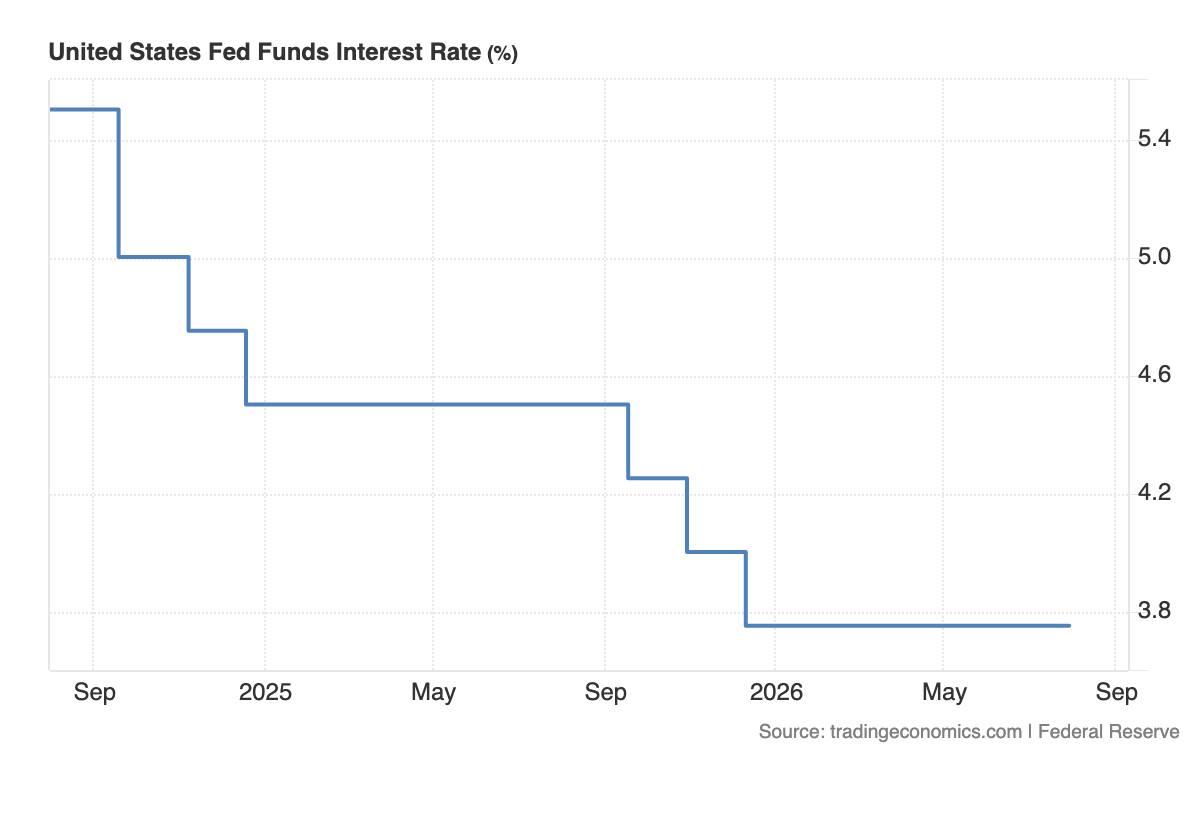
The Federal Reserve’s target range remains at 3.50% to 3.75%, while the BOJ’s policy rate is 1%. That leaves a gap of approximately 250 to 275 basis points in favour of the dollar. As long as that difference remains wide, investors retain an incentive to borrow in yen and hold higher-yielding dollar assets.
Japan can therefore interrupt the carry trade.
It has not yet removed the economic reason behind it.
Why the Yen Gave Back Part of the Surge
The yen’s retreat toward 160.5 after initially strengthening toward 158 demonstrated the limitation of intervention without a supporting policy surprise.
The BOJ kept rates unchanged, as expected. Although the central bank preserved a hawkish bias and left further increases on the table, it did not provide the immediate tightening that would have reinforced the intervention through monetary policy.
Traders consequently faced two competing signals.
Official intervention warned against aggressively selling the yen.
The continued interest-rate differential still rewarded holding dollars against it.
The resulting price action was therefore consistent with a violent positioning correction rather than confirmation of a completely new currency trend.
For a lasting yen recovery, intervention needs help from at least one of three developments:
Lower global energy prices.
Faster BOJ rate increases.
Lower US yields or a less hawkish Federal Reserve.
Without those changes, markets may continue testing how much money and political commitment Tokyo is willing to deploy.
Energy Is Central to Japan’s Currency Problem
The yen’s weakness is particularly damaging when oil and other imported energy prices are elevated.
Japan purchases much of its energy in international markets where commodities are priced in dollars. When oil rises and the yen simultaneously depreciates, Japanese companies experience two layers of cost pressure.
The dollar price of energy increases.
The number of yen required to purchase each dollar also increases.
That raises costs for electricity, transportation, aviation, manufacturing, agriculture and food distribution. Businesses may absorb part of those expenses through weaker margins, but persistent pressure is eventually passed to consumers.
The result is imported inflation.
The Middle East conflict has made this problem more urgent. Japanese authorities have repeatedly linked currency weakness to higher import costs, while the BOJ has identified energy and external supply developments as important inflation risks.
A stronger yen can cushion the local impact of expensive oil.
It cannot reduce the underlying dollar price of energy.
This is why cooling crude would probably provide a more durable improvement for the Japanese currency than intervention alone. Lower oil would reduce the import bill, ease pressure on households and give the BOJ greater flexibility in deciding how quickly to raise rates.
The BOJ’s Policy Dilemma
The Bank of Japan is attempting to normalise policy after decades of exceptionally low interest rates.
However, moving too slowly risks further yen weakness and more imported inflation.
Moving too quickly could create pressure elsewhere.
Higher policy rates would support the yen by narrowing the return gap with the United States. They could also help prevent imported price increases from becoming embedded in wages and broader consumer inflation.
But faster tightening would increase borrowing costs throughout the Japanese economy.
It could pressure business investment, household credit and property markets. It could also lift the government’s financing burden and create volatility in Japanese government bonds, particularly given concerns about the country’s fiscal position.
The BOJ is therefore balancing currency stability and inflation control against financial conditions and domestic growth.
Holding at 1% allows the central bank to evaluate the effect of June’s increase.
The dissent in favour of 1.25% shows that the debate is moving toward additional tightening rather than back toward easing.
What It Means for USD/JPY
The intervention has changed the risk profile of USD/JPY.
Before the move, selling the yen had become an increasingly one-sided trade. Investors were focused on the interest-rate differential, energy costs and Japan’s fiscal concerns, while repeated official warnings were losing their ability to move the market.
The intervention restored two-way risk.
Traders holding long USD/JPY positions must now consider the possibility that another abrupt operation could erase several hundred points within minutes.
However, the yen’s partial reversal means the market has not accepted 158 as the beginning of a sustained appreciation cycle.
A stronger signal would require the currency to retain intervention-driven gains while expectations for another BOJ increase rise. Continued appreciation accompanied by lower oil and falling US yields would carry more fundamental weight than another isolated intraday surge.
A move back toward the recent extremes would have the opposite implication.
It would suggest that markets believe the carry advantage remains powerful enough to absorb official yen buying, forcing Tokyo either to intervene again or strengthen its monetary-policy response.
What It Means for the Nikkei
A stronger yen is not automatically positive for Japanese equities.
Large exporters earn significant revenue overseas. When the yen appreciates, those foreign earnings translate into fewer yen, potentially reducing reported profits for automakers, manufacturers and technology exporters.
A sudden currency surge can therefore pressure the Nikkei, particularly companies with substantial dollar-based revenue.
The domestic effect is more balanced.
A stronger yen lowers the local cost of imported fuel, food, raw materials and equipment. That can support household purchasing power and improve margins for businesses that depend heavily on imported inputs.
Japanese equities consequently face two opposing forces.
Exporters may struggle if the yen continues strengthening.
Domestic businesses and consumers may benefit from reduced import pressure.
The final effect will depend on whether yen appreciation is controlled and gradual or becomes a disorderly carry-trade unwind.
The Global Carry-Trade Risk
The yen has historically been used as a funding currency because Japanese borrowing costs were substantially lower than those in other major economies.
Investors borrow yen and purchase higher-yielding bonds, equities and other assets elsewhere. The strategy performs well while the yen remains stable or weak.
It becomes dangerous when the currency strengthens rapidly.
A rising yen increases the cost of repaying yen-denominated funding. Leveraged investors may then need to sell foreign assets to reduce risk and purchase yen to repay their borrowing.
That process can spread volatility beyond Japan.
US technology shares, emerging-market currencies and other highly valued or leveraged assets may face pressure if a sharp yen rally triggers broad carry-trade deleveraging. The intervention therefore has implications for global risk appetite, not only USD/JPY.
What It Means for Gold
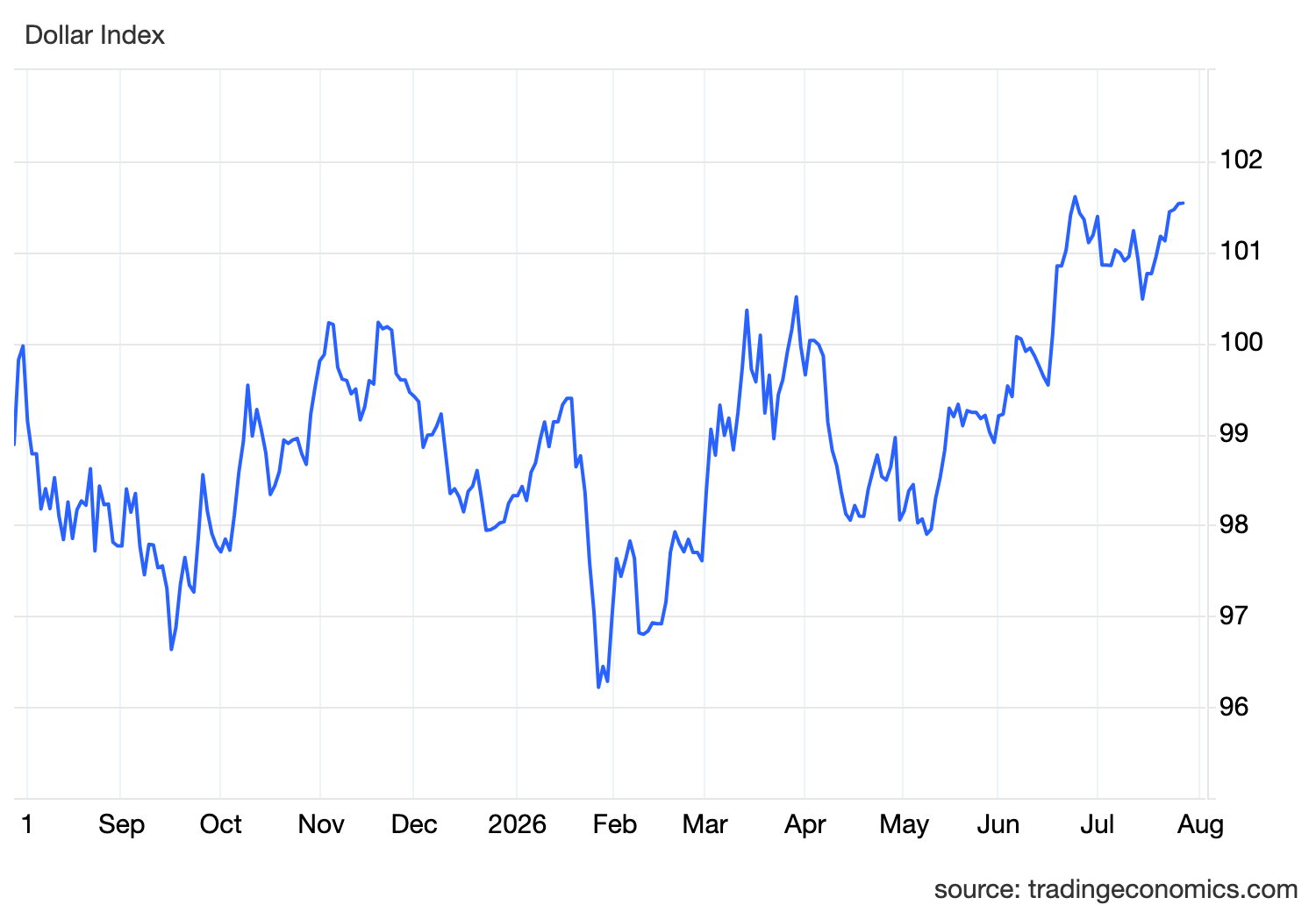
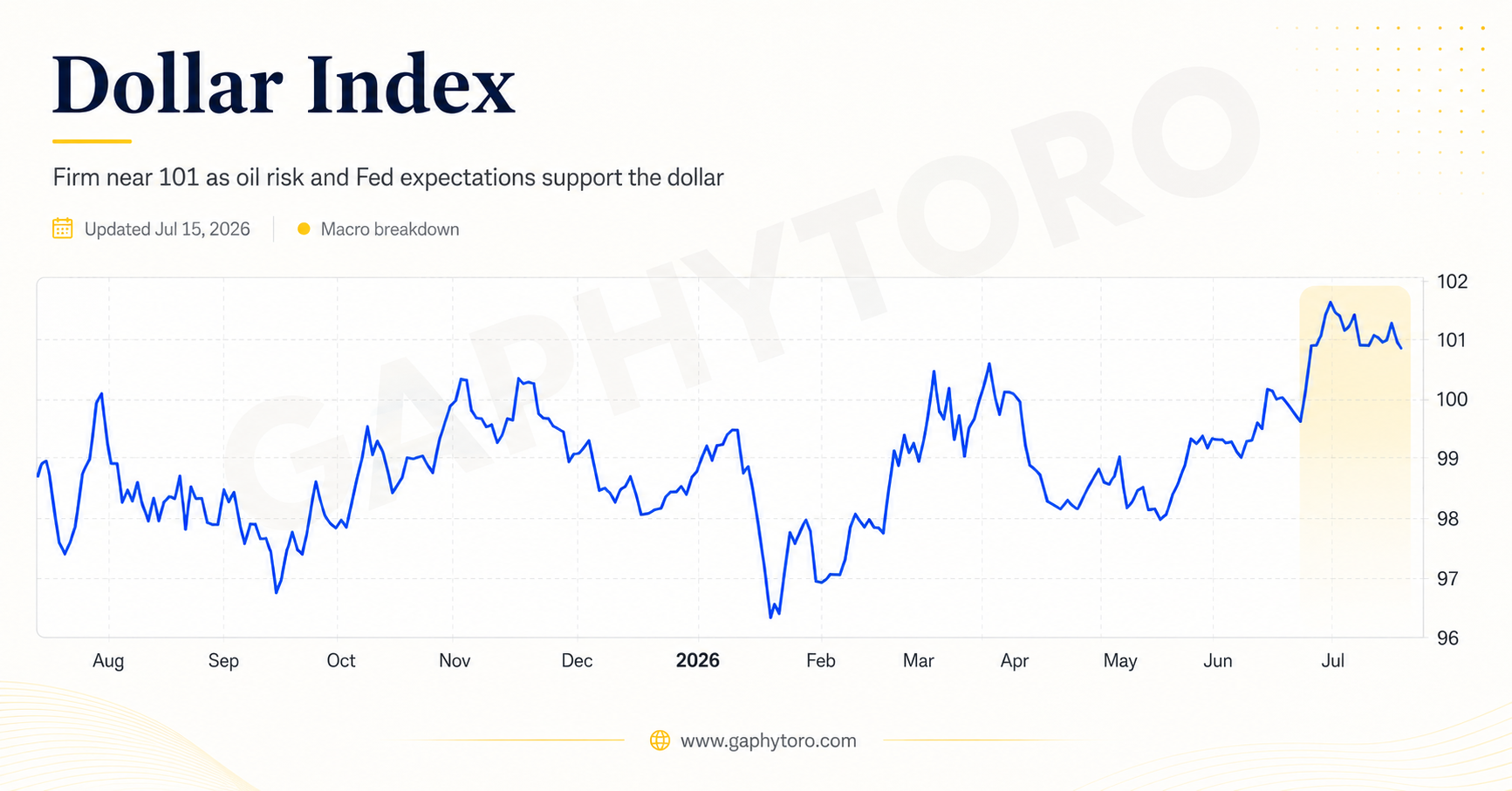
A softer dollar created by yen intervention can provide short-term support for gold.
However, the deeper gold outlook still depends more heavily on US real yields, Federal Reserve expectations and the inflationary consequences of the energy shock.
If high oil keeps global inflation elevated and encourages major central banks to maintain restrictive policy, higher yields can continue limiting gold even when geopolitical uncertainty remains high.
If the yen strengthens alongside lower oil and softer US yields, the environment becomes more constructive for bullion.
The distinction is important.
Intervention-driven dollar weakness may provide a temporary price impulse.
A sustained decline in real yields would provide a stronger fundamental foundation.
What Markets Should Watch Next
The first variable is intervention follow-through.
A single operation can create a powerful squeeze. Repeated operations demonstrate that authorities are committed to preventing traders from immediately rebuilding speculative positions.
The second is BOJ communication.
Clearer guidance toward another rate increase would give the yen fundamental support. An overly cautious message would leave the carry trade largely intact.
The third is oil.
Lower energy prices would reduce Japan’s import burden, ease inflation pressure and improve the economy’s external position.
The fourth is US policy.
A decline in US yields would narrow the interest-rate differential without requiring the BOJ to deliver aggressive tightening. Continued Federal Reserve hawkishness would make the yen’s recovery more difficult.
Japan has shown that it can move the currency market.
It has not yet demonstrated that it can permanently reverse the forces behind yen weakness.
The intervention bought time.
The BOJ’s next decisions, global energy prices and the US-Japan yield gap will determine whether that time produces a durable recovery or merely delays another test of Tokyo’s resolve.
Powered by GaphyToro
GaphyToro is an AI trading journal and trader-development platform built for forex and prop traders.
Import trades from MT4 and MT5, document your reasoning, attach screenshots, track psychology and review how central-bank decisions, intervention and energy shocks affected your execution.
Journal the trade. Review the decision. Improve with data.
Filed under
Written by

Founder & CEO, GaphyToro
Philip Ogina is the Founder and CEO of GaphyToro, a trader-first performance ecosystem built to help modern traders improve through structure, discipline, data, and better execution. He is a trader, investor, market analyst, educator, and software builder focused on building tools and infrastructure for the next generation of traders.