The dollar is holding firm because the market is not simply waiting for another Federal Reserve decision.
It is waiting to discover what Kevin Warsh’s Federal Reserve actually means when it says every meeting is live.
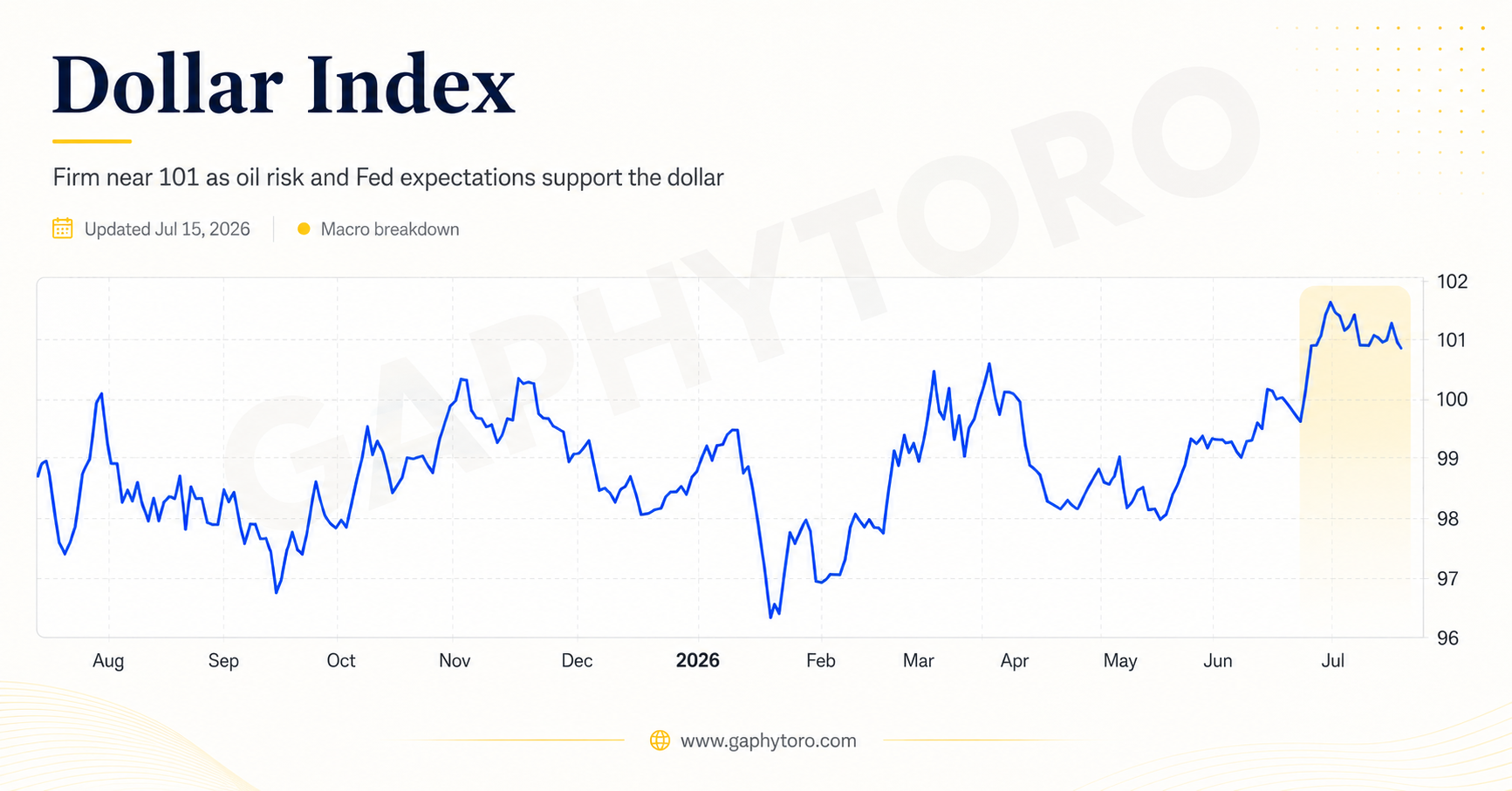
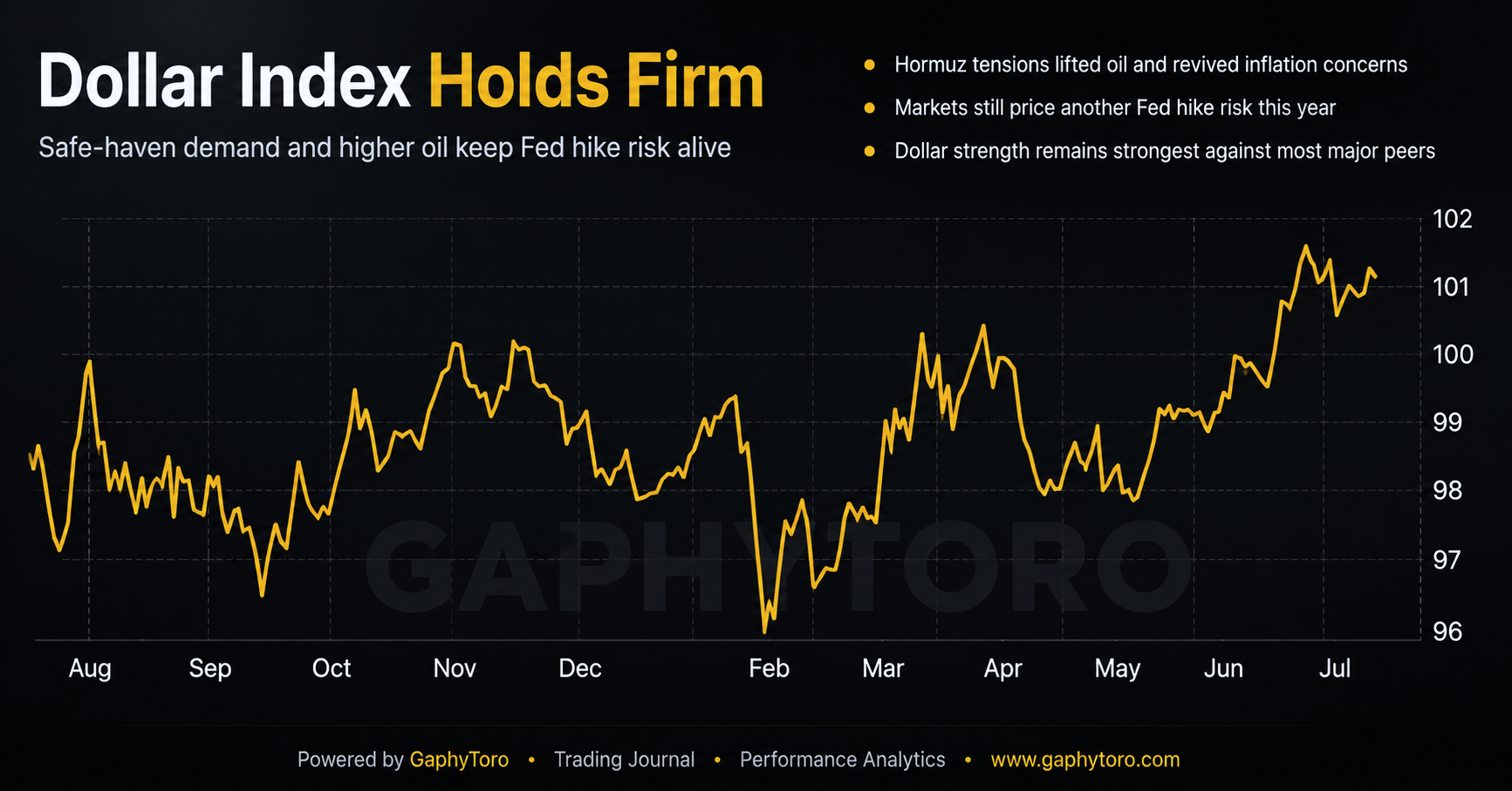
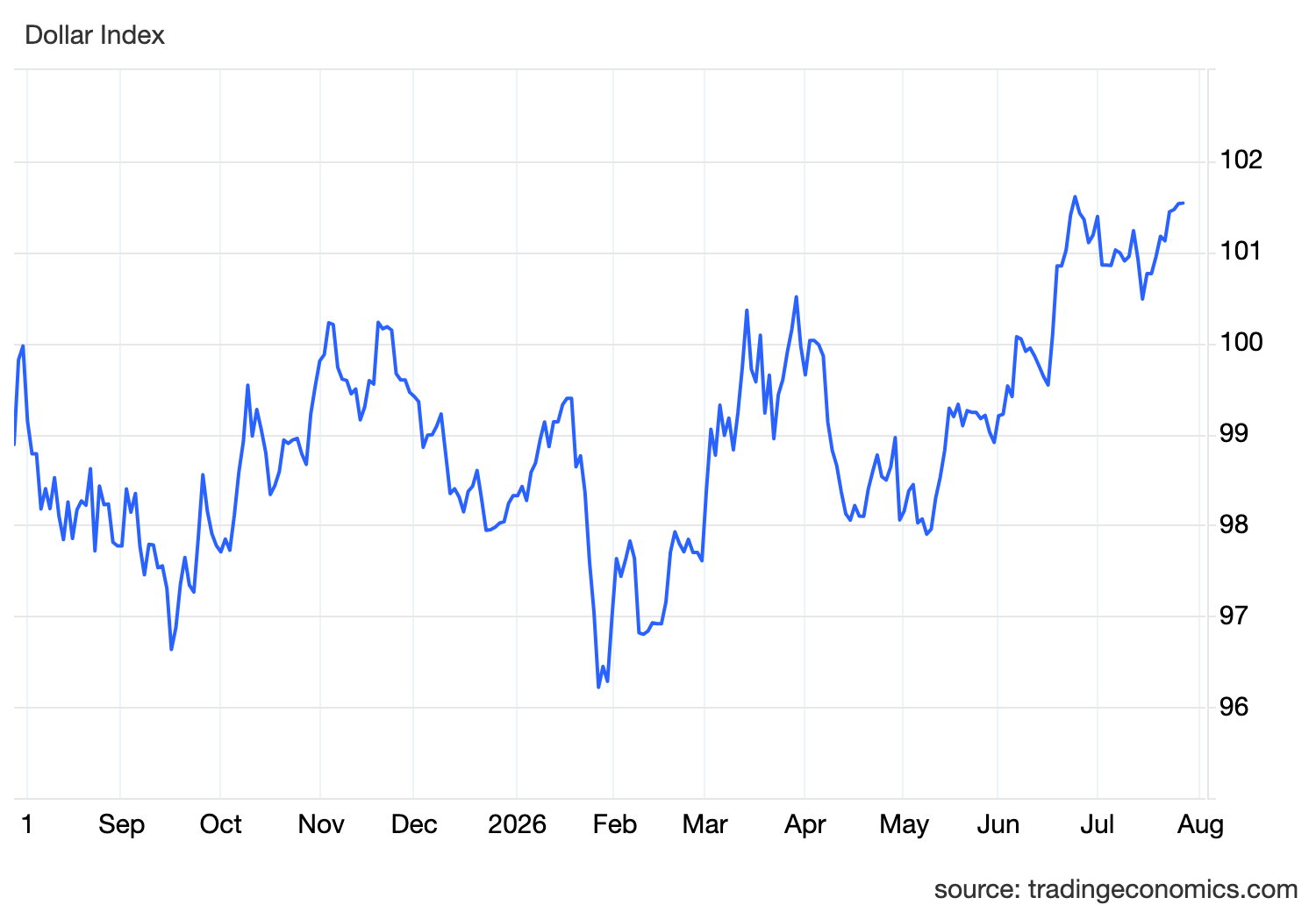
The dollar index traded around 101.5 after reaching its highest level in roughly one month, supported by an unusually high level of uncertainty surrounding this week’s policy announcement. Markets assign close to a 38% probability to an immediate rate increase, far higher than would normally be expected this close to a meeting without a clear signal from officials.
That uncertainty is itself supporting the currency.
Under the previous policy framework, the Fed generally prepared markets for major interest-rate changes through speeches, projections and carefully coordinated forward guidance. A surprise move was usually associated with a crisis rather than an ordinary scheduled meeting.
Warsh has deliberately moved away from that approach.
Since taking over the central bank, he has argued that the Fed should preserve flexibility, respond more quickly to changing conditions and stop providing investors with a guaranteed roadmap for future decisions.
The result is a policy meeting where both a hike and a hold remain credible possibilities.
That changes how the dollar trades before the announcement.
When markets are confident that the Fed will hold, investors can focus on the next meeting and reduce short-term volatility. When a hike remains a realistic possibility, traders must maintain protection against higher front-end yields, tighter financial conditions and a stronger dollar.
This helps explain why the greenback has remained resilient even as oil prices retreat and US-Iran diplomacy improves.
President Donald Trump said the United States was engaged in constructive talks with Iran, raising hopes that the Middle East conflict could move toward a negotiated resolution. Oil fell as markets reduced the immediate risk of another severe disruption to regional energy supplies.
Lower oil should normally weaken the case for further Fed tightening.
The earlier energy surge lifted fuel, transportation, production and import costs, raising fears that inflation would remain elevated for longer. If diplomacy restores confidence in Hormuz shipping and brings crude prices down sustainably, part of that future inflation pressure should fade.
However, lower oil only removes one part of the inflation problem.
It does not immediately reverse the price increases already passed through the economy, nor does it guarantee that core inflation, services prices, wages and demand will return quickly to the Fed’s 2% target.
The Fed must therefore distinguish between an improving future energy outlook and the inflation already present in the data.
This is where Warsh’s credibility becomes central.
The Fed Chair has repeatedly described price stability as the institution’s primary objective. He has argued that prolonged above-target inflation has damaged households, businesses and public confidence in monetary policy.
Those statements created expectations that the Fed would act rather than simply continue warning about inflation.
Citadel Securities is among the firms treating this week’s meeting as genuinely live. Its broader argument is that markets should not interpret Warsh’s language using the inertia of the previous Fed regime. When the new Chair says the next move is likely to be tighter and that the committee has more work to do, investors should consider the possibility that action could arrive without months of advance preparation.
An immediate hike would therefore serve more than one purpose.
It would raise interest rates to address inflation pressure.
It would also demonstrate that Warsh’s communication shift is real.
A surprise increase would show that the Fed is prepared to act at any meeting when conditions justify it, even if markets have not been guided to near certainty beforehand.
That would likely be strongly supportive for the dollar.
Higher policy rates would lift the return available on short-term dollar assets and reinforce the United States’ yield advantage over other major economies. Lower-yielding currencies such as the Japanese yen and Swiss franc would be especially vulnerable as carry trades regained momentum.
Treasury yields would probably rise, particularly at the front end of the curve, while gold would face renewed pressure from the higher opportunity cost of holding a non-yielding asset.
Equities could also struggle, particularly technology and other highly valued growth companies whose valuations depend heavily on future earnings.
However, a hike is not the only way the Fed can preserve its inflation credibility.
The committee could leave rates unchanged while delivering a clearly hawkish message.
In that scenario, Warsh could emphasise that inflation remains too high, that recent oil relief is not enough to guarantee disinflation and that September remains a live meeting.
A hawkish hold may initially create some disappointment among traders positioned for an immediate increase, but it could keep the dollar supported if markets retain a high probability of tightening in September.
The vote would also matter.
If several policymakers favour a hike while the majority prefers to wait, the decision could reveal that the committee is moving steadily toward tighter policy even without an immediate change.
That would preserve the tightening narrative and limit the dollar’s downside.
The most negative outcome for the currency would be a hold accompanied by a softer-than-expected explanation.
If Warsh focuses heavily on lower oil, improving diplomacy, weaker employment growth and the need for more evidence, markets could rapidly remove part of the tightening currently priced into the curve.
That would lower Treasury yields and weaken the dollar.
Gold and equities would likely benefit as the opportunity cost of holding bullion declined and investors applied lower discount rates to future corporate earnings.
This is why the press conference may matter as much as the rate decision.
Markets will listen for whether Warsh treats falling oil as confirmation that inflation risks are easing or as temporary relief that does not change the Fed’s broader responsibility.
They will also watch how he discusses the labour market.
Recent employment data has shown softer job creation, which argues against tightening too aggressively. But unemployment remains relatively contained, and the economy has not weakened enough to remove the Fed’s ability to prioritise inflation.
That leaves policymakers balancing two risks.
A premature hike could deepen the labour-market slowdown.
A prolonged hold could allow inflation expectations to remain elevated and weaken confidence in the Fed’s commitment to its target.
The improving geopolitical picture makes that calculation even more complicated.
Peace talks reduce the probability of another immediate oil shock, but the region’s supply and shipping networks remain fragile. A breakdown in negotiations or renewed attacks around Hormuz could quickly reverse the decline in crude and restore energy-driven inflation concerns.
The Fed cannot base policy on the assumption that diplomacy will succeed.
It must respond to the broader distribution of risks.
For the dollar, the current resilience reflects that uncertainty.
Safe-haven demand has eased as negotiations improve, but rate support has not disappeared. The front end of the Treasury market has not rallied strongly enough to suggest investors are confident the Fed will remain on hold for long.
That keeps capital attracted to dollar-denominated assets.
The dollar is therefore being supported less by fear of the conflict itself and more by uncertainty over the Fed’s response to the inflation that conflict created.
The meeting also carries implications for the global policy cycle.
The Bank of Japan remains under pressure to support a yen trading near multi-decade lows. A Fed hike would widen the effective US-Japan rate gap and make Tokyo’s currency problem even more difficult.
The Bank of England and other major central banks are also attempting to balance softer growth against inflation risks. A more aggressive Fed could tighten global financial conditions and make it harder for those institutions to ease without weakening their currencies.
Emerging markets would face similar pressure through higher dollar funding costs and potentially weaker local currencies.
This is why the decision matters far beyond the federal funds rate.
It will reveal how Warsh intends to translate his inflation rhetoric into policy.
It will show whether the end of traditional forward guidance means genuine flexibility or simply less transparent communication.
And it will determine whether markets should continue treating September as the likely beginning of a new tightening phase.
For now, the dollar remains supported because investors cannot confidently remove the possibility of action.
Lower oil has reduced the urgency of another inflation shock.
Diplomatic progress has reduced immediate safe-haven demand.
But neither development has fully resolved the Fed’s inflation problem.
The central market question is therefore not simply whether the Fed raises rates this week.
It is whether Warsh can hold without weakening the credibility he has spent his first months trying to establish.
Powered by GaphyToro
GaphyToro is an AI trading journal and trader-development platform built to help forex and prop traders record their decisions, analyse execution, identify recurring performance patterns and strengthen discipline through structured data.
Import trades automatically from MT4 and MT5, attach screenshots, track psychology and review how major events such as this Fed decision affected your own trading.
Turn every trade into evidence for improvement at www.gaphytoro.com.
Filed under
Written by

Founder & CEO, GaphyToro
Philip Ogina is the Founder and CEO of GaphyToro, a trader-first performance ecosystem built to help modern traders improve through structure, discipline, data, and better execution. He is a trader, investor, market analyst, educator, and software builder focused on building tools and infrastructure for the next generation of traders.