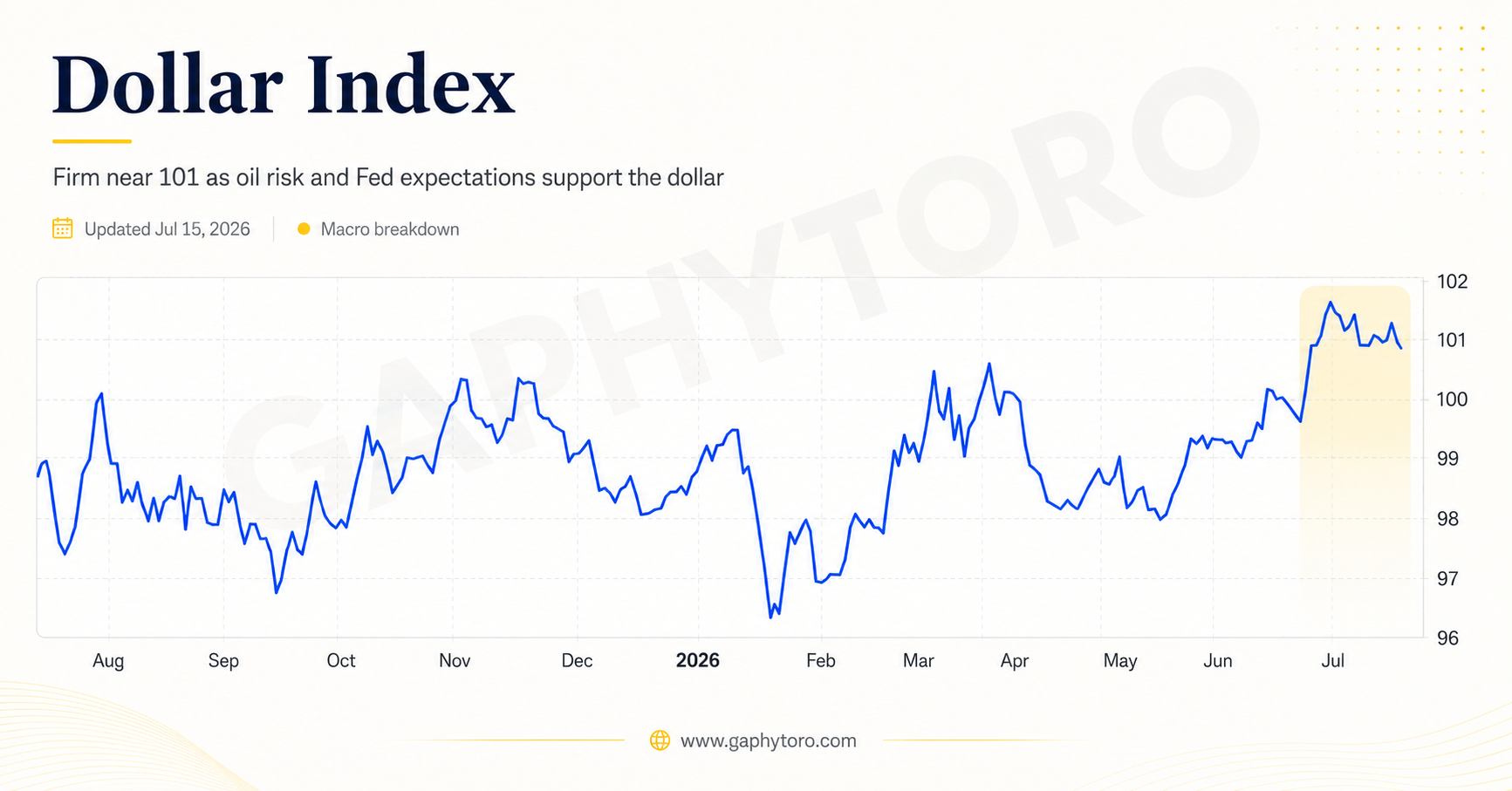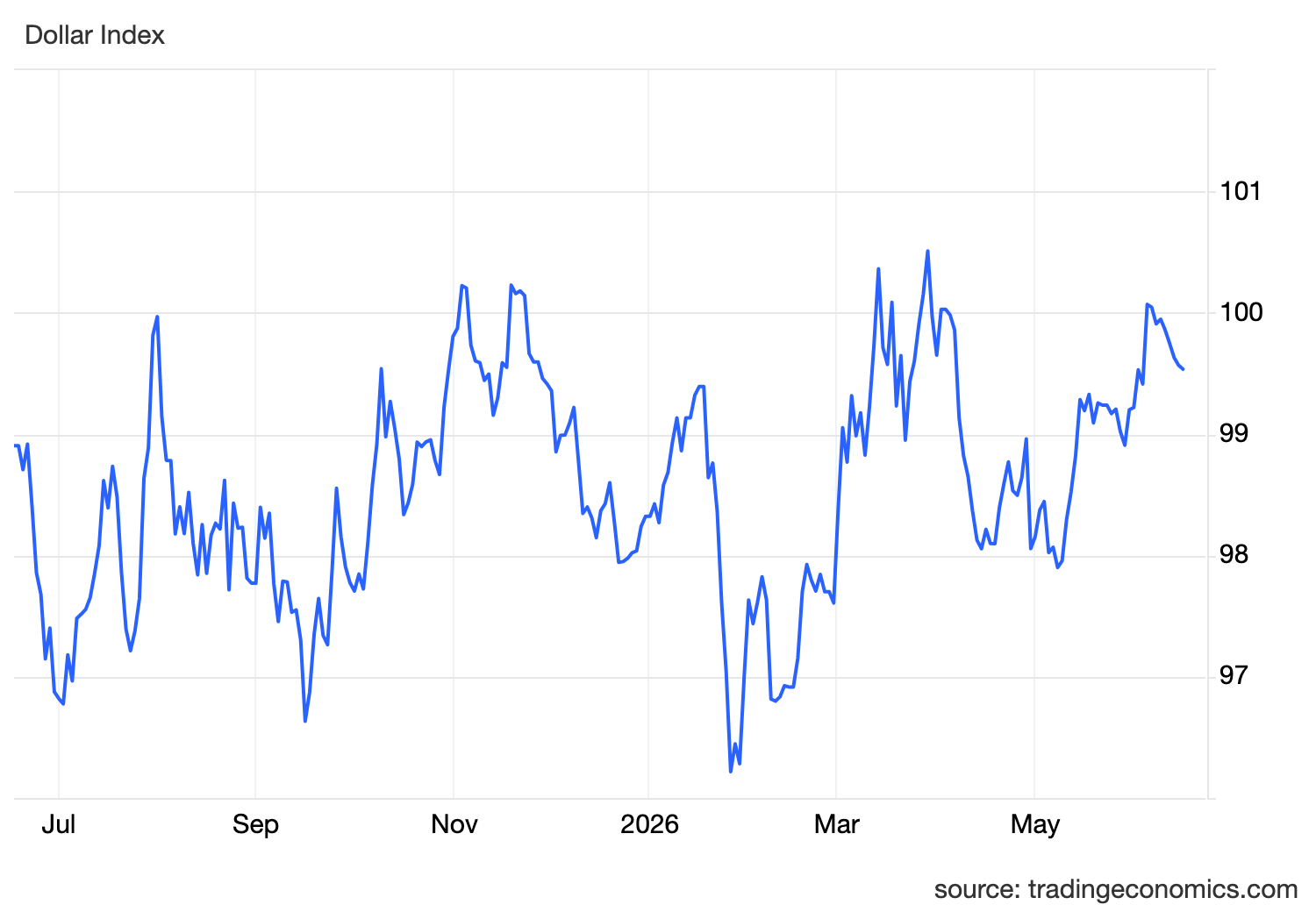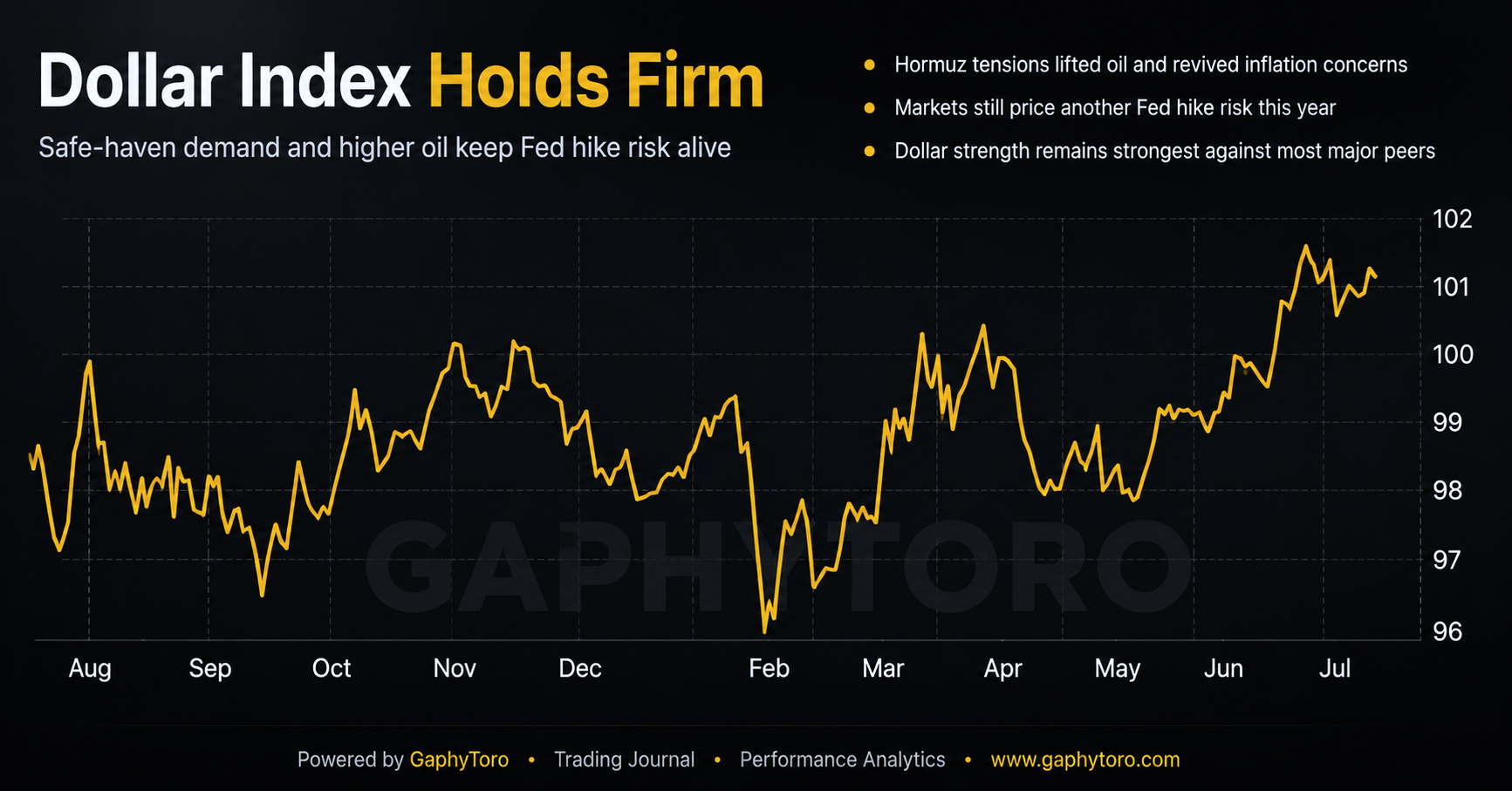
The dollar is being supported by both fear and inflation.
The dollar index held around 101.2 after surging in the previous session as President Donald Trump reinstated a blockade on Iranian vessels and said countries benefiting from US protection of the Strait of Hormuz should contribute toward the cost of securing the waterway.
The immediate market reaction was familiar.
Oil prices rose sharply.
Global equities came under pressure.
Investors moved toward the dollar as a safe-haven asset.
But the dollar’s strength is not being driven by geopolitical fear alone. The more important macro channel is the renewed risk that higher energy prices will keep inflation elevated and force central banks to tighten policy further.
That distinction matters.
When conflict threatens a major energy corridor, markets do not only price the possibility of lost oil production. They also price slower shipping, higher insurance premiums, longer delivery times and greater costs for companies moving crude and refined products through the region.
The Strait of Hormuz remains central to that process.
Even when the waterway is not completely closed, uncertainty surrounding vessel access can reduce effective supply. Shipowners may delay departures, insurers may raise premiums and producers may struggle to move available barrels into international markets.
Those costs eventually spread beyond energy.
Higher oil raises fuel and transportation expenses. Those increases affect manufacturing, logistics, food distribution, air travel and consumer prices. If businesses pass those costs on, the energy shock becomes a broader inflation problem.
That is why renewed Hormuz disruption supports the dollar.
The Federal Reserve was already dealing with inflation above its 2% target before the latest oil surge. Policymakers raised their inflation forecasts in June, and a significant portion of the FOMC indicated that at least one additional rate increase could be needed this year.
Markets are now assigning roughly a 51% probability to a September increase.
The recent weakening in US employment had previously reduced confidence in another hike. June payroll growth slowed sharply, giving investors a reason to believe the Fed might hesitate before tightening into a softer labour market.
Higher oil complicates that argument.
If employment is slowing while inflation risk is rising, the Fed faces an increasingly uncomfortable policy mix. It cannot ignore weaker job creation, but it also cannot allow another energy shock to destabilize inflation expectations.
This is why the upcoming US inflation data matters so much.
Investors will be watching headline inflation for the direct impact of energy prices, but the core measures will be even more important for the policy outlook.
If core inflation remains sticky, the Fed may conclude that underlying price pressures are strong enough to justify another increase even before the full impact of the latest oil rally appears in the data.
A softer report would produce a more complicated reaction.
Cooling core inflation could weaken the argument for a September hike, but persistent disruption around Hormuz would still leave policymakers facing the possibility of another inflation increase later in the year.
In other words, the inflation data will tell markets where the economy was before the latest escalation.
Oil will tell them where inflation could be going next.
Kevin Warsh’s first congressional appearance will therefore be watched closely.
Markets will want to know how the new Fed Chair balances three competing developments: elevated inflation, weaker employment growth and renewed energy-market disruption.
Warsh has already emphasized that restoring price stability remains the Fed’s primary objective. He has also moved away from traditional forward guidance, meaning investors should not expect a clear commitment on September policy.
That makes his tone especially important.
If Warsh focuses heavily on oil, inflation expectations and the danger of allowing price pressures to become embedded, markets could raise the probability of another hike. Treasury yields would likely remain supported, giving the dollar additional momentum.
If he places greater emphasis on softer payrolls, downside growth risks and the need to assess incoming data, the dollar could give back part of its recent advance.
However, silence would not necessarily be dovish.
Under Warsh’s new communication approach, refusing to guide markets may simply mean the Fed wants to preserve flexibility. With inflation and geopolitical conditions shifting rapidly, policymakers have little incentive to lock themselves into a decision weeks before the meeting.
The dollar is also benefiting from its position relative to other currencies.
The US is a net energy producer and is generally less vulnerable to imported oil shocks than many European and Asian economies. When oil rises, energy-importing countries face worsening trade balances, higher production costs and weaker growth prospects.
That relative advantage can support the dollar.
The euro, yen and several emerging-market currencies are particularly sensitive to oil because their economies depend heavily on imported energy. A sustained oil surge can weaken those currencies even before central banks respond.
The Japanese yen remains especially vulnerable.
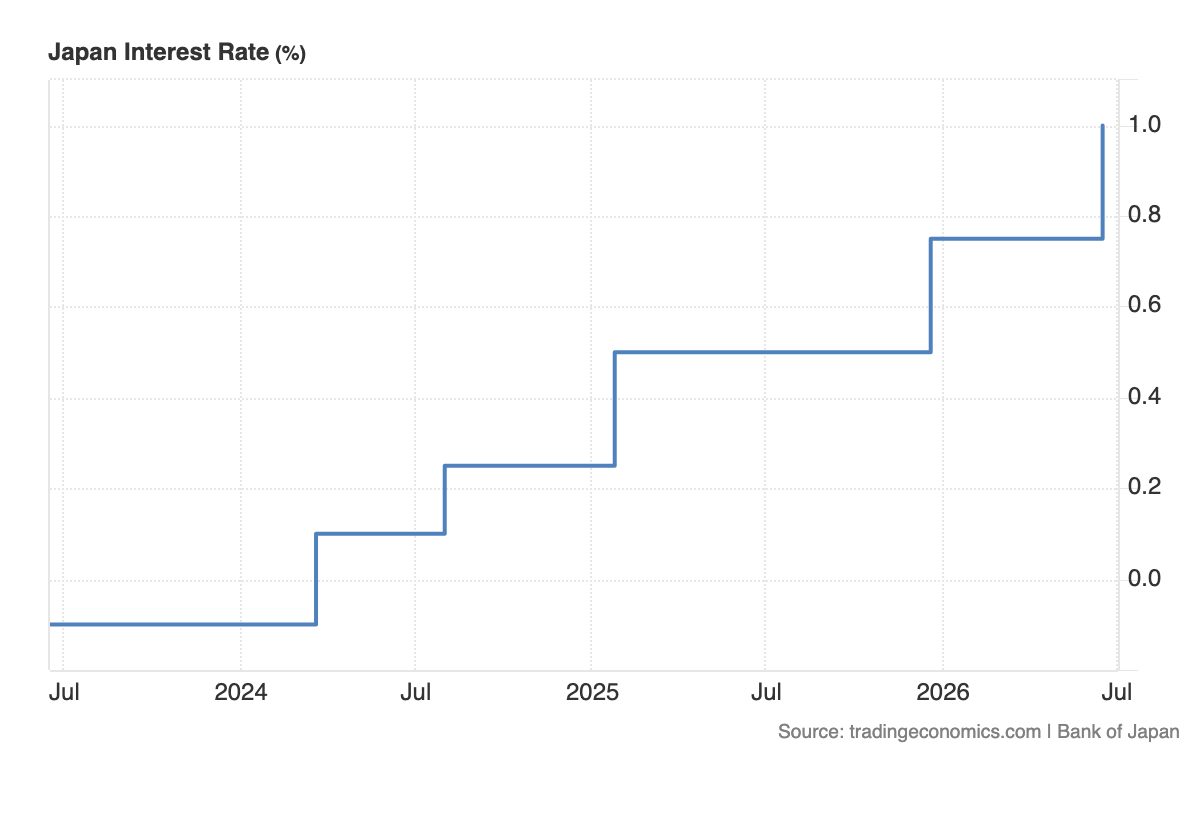
Although the Bank of Japan has raised its policy rate to 1%, the gap between US and Japanese rates remains large. Higher oil also raises Japan’s import bill and worsens the inflation pressure created by a weak currency.
That combination keeps the dollar supported against the yen, while also increasing the risk that Japanese authorities intervene to slow excessive currency depreciation.
The New Zealand dollar was the major exception.
The dollar weakened against the kiwi after hawkish signals from the Reserve Bank of New Zealand encouraged traders to increase expectations for local rate hikes. This shows that central-bank divergence can temporarily overpower the broader safe-haven environment.
When two currencies are both supported by tightening expectations, the market focuses on which central bank is expected to move more aggressively.
For the wider market, the dollar’s strength creates another layer of pressure.
A stronger dollar tightens global financial conditions. It increases the cost of dollar-denominated debt, pressures commodity-importing economies and makes internationally traded goods more expensive for holders of other currencies.
Gold also faces a difficult setup.
Geopolitical escalation can generate safe-haven demand for bullion, but an inflationary conflict can simultaneously lift Treasury yields and the dollar. In this environment, the negative impact from higher real-rate expectations can overpower gold’s traditional war premium.
Equities face a similar challenge.
Higher energy costs pressure corporate margins, while higher yields reduce the present value of future earnings. Technology and other highly valued growth sectors are particularly vulnerable when both oil and rate expectations rise together.
The dollar is therefore sitting at the center of the current macro transmission mechanism.
Hormuz risk raises oil prices.
Higher oil raises inflation expectations.
Stronger inflation expectations increase the probability of Fed tightening.
Higher expected rates support Treasury yields.
Higher yields and safe-haven demand support the dollar.
The next move will depend on whether incoming inflation data confirms that price pressure remains broad and persistent.
If inflation surprises higher and Warsh emphasizes price stability, the dollar could extend its gains as markets strengthen their September hike expectations.
If inflation cools and Warsh acknowledges growing labour-market risks, the dollar may struggle to hold the latest surge.
For now, however, the balance of risk remains supportive.
The blockade has restored geopolitical demand for the currency.
The oil rally has revived inflation concerns.
And the Fed has not given markets a reason to dismiss the possibility of another hike.
The dollar is not merely benefiting from fear.
It is benefiting from the possibility that fear becomes inflation, and inflation becomes tighter monetary policy.
Powered by GaphyToro
Market headlines explain what moved. GaphyToro helps traders understand why it moved and how oil, inflation, interest rates, currencies and global risk sentiment connect.
Build a more structured, data-driven trading process at www.gaphytoro.com.
Filed under
Written by

Founder & CEO, GaphyToro
Philip Ogina is the Founder and CEO of GaphyToro, a trader-first performance ecosystem built to help modern traders improve through structure, discipline, data, and better execution. He is a trader, investor, market analyst, educator, and software builder focused on building tools and infrastructure for the next generation of traders.