The dollar is falling because the latest inflation report weakened the immediate case for another Federal Reserve rate hike.
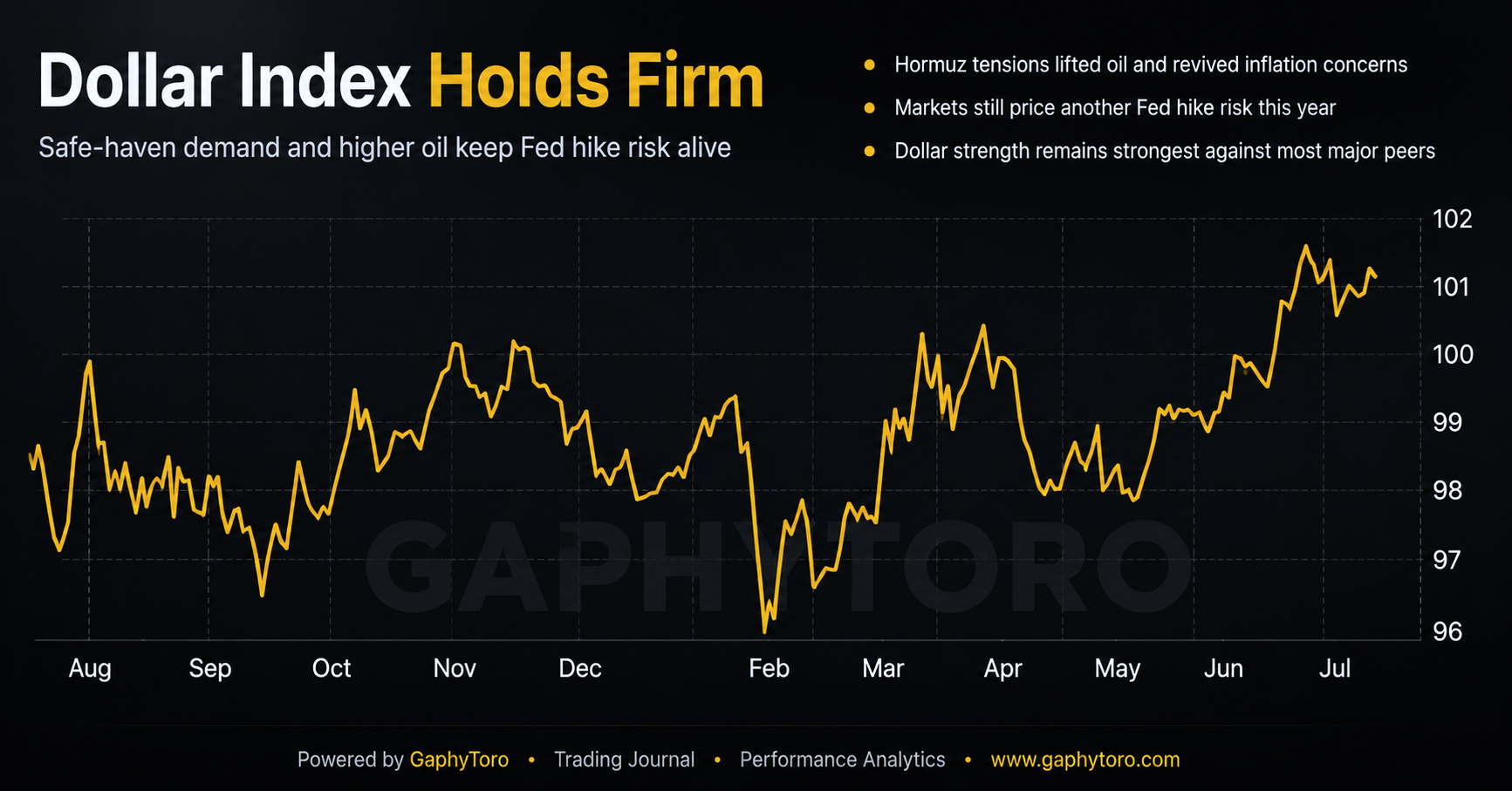
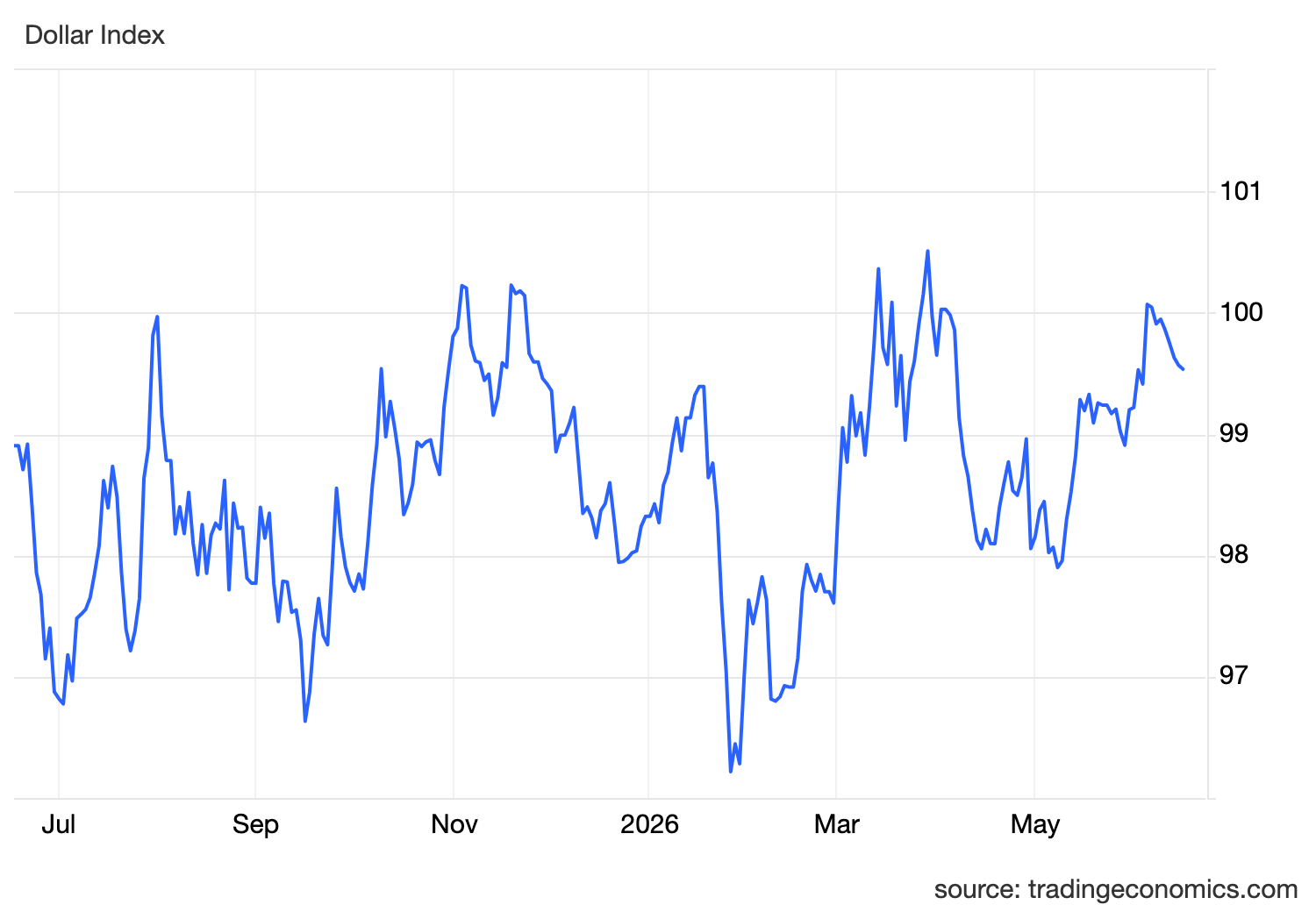
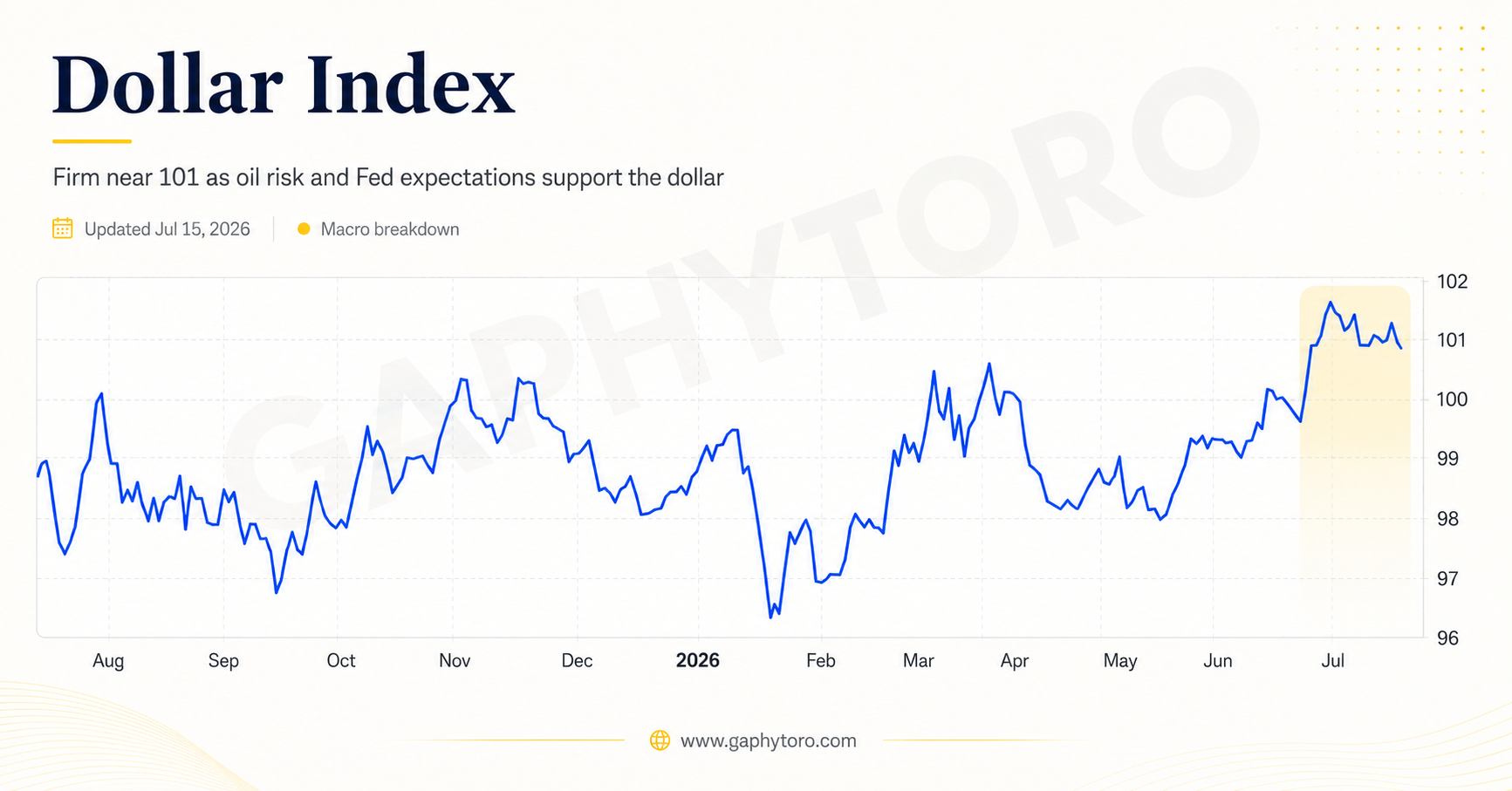
The dollar index slipped below 101 for a second consecutive session after US consumer inflation eased more sharply than expected in June. Annual CPI slowed to 3.5% from 4.2% in May, while prices fell 0.4% from the previous month, recording their first monthly decline since 2020.
The report offered markets something they had been waiting for: evidence that the inflation shock created by the earlier surge in oil prices may finally be losing momentum.
Energy was the main driver.
Oil prices fell sharply during June as the temporary US-Iran ceasefire improved shipping conditions through the Strait of Hormuz and allowed more Middle Eastern supply to reach global markets. That decline filtered into gasoline and broader energy costs, helping pull headline inflation lower.
Core inflation also provided some relief.
Prices excluding food and energy were unchanged during the month and rose 2.6% from a year earlier. That remains above the Fed’s 2% target, but it suggests underlying inflation was not accelerating alongside the earlier energy shock.
This distinction is important.
Headline inflation tells the Fed what households are currently experiencing.
Core inflation gives policymakers a clearer view of whether price pressure is spreading across the broader economy.
The June report showed improvement in both areas, which reduced the urgency for immediate tightening and placed pressure on Treasury yields and the dollar.
The market reaction followed a familiar chain.
Softer inflation reduced expectations for an aggressive Fed response.
Lower rate expectations reduced support for US yields.
Lower yields made dollar-denominated assets less attractive relative to competing markets.
The dollar weakened as a result.
However, this is not a clean return to the disinflation story that dominated markets before the Middle East conflict.
The inflation report is backward-looking.
It captures the economic environment that existed during June, when oil was falling and shipping through Hormuz was recovering. Since then, renewed hostilities between the US and Iran have pushed crude prices higher and brought energy-supply risks back into focus.
That means June CPI may show where inflation has been, while oil prices may be warning where inflation could go next.
This is the central tension facing the Federal Reserve.
The latest data argues for patience.
The renewed energy shock argues for caution.
Markets continue to assign roughly a 50% probability to a September rate increase, showing that traders are not yet prepared to remove tightening risk completely. The softer inflation report weakened the case for a near-term hike, but persistent disruption around Hormuz could rebuild that case before the September meeting.
The Fed will therefore need to separate temporary energy volatility from persistent underlying inflation.
If oil rises for only a short period and core prices continue cooling, policymakers may have little reason to tighten further.
If higher oil begins feeding into inflation expectations, transportation costs and business pricing decisions, the Fed may be forced to respond even as other parts of the economy slow.
Kevin Warsh’s congressional testimony reflected that uncertainty.
The Fed Chair reiterated that restoring price stability remains the central bank’s primary objective, but he stopped short of signaling a more hawkish policy path or endorsing a specific move at the next meeting.
That restraint matters.
Warsh has already moved the Fed away from traditional forward guidance. Markets should therefore not expect him to clearly confirm or reject a September hike months in advance. Policy will depend on how inflation, employment, oil and economic activity evolve before the meeting.
His refusal to sound more hawkish helped reinforce the dollar’s decline.
Markets had entered the testimony looking for confirmation that the Fed was prepared to respond aggressively to renewed oil pressure. Instead, Warsh defended the inflation mandate while preserving policy flexibility.
That does not make the Fed dovish.
It makes the Fed data-dependent.
The next inflation reports will carry even greater significance because they will begin capturing the effects of renewed Middle East escalation. If July energy prices rise sharply, headline inflation could rebound even after June’s encouraging decline.
The labour market will also influence the decision.
June payroll growth slowed substantially, and previous months were revised lower. That has made the Fed more cautious about raising rates into an economy showing signs of weaker employment momentum.
The central bank is therefore balancing two conflicting risks.
Raising rates could deepen the labour-market slowdown.
Leaving policy unchanged could allow another oil-driven inflation shock to become embedded.
For the dollar, that creates a less certain outlook.
The currency lost ground because the inflation report reduced near-term tightening expectations. But the decline may remain limited while geopolitical risk, higher oil and the possibility of a September hike remain in play.
The dollar could face further pressure if upcoming PCE and employment data confirm that both headline and underlying inflation are cooling. That would weaken the September hike case and could pull Treasury yields lower.
However, a renewed rise in energy inflation or stronger demand data could quickly restore dollar support.
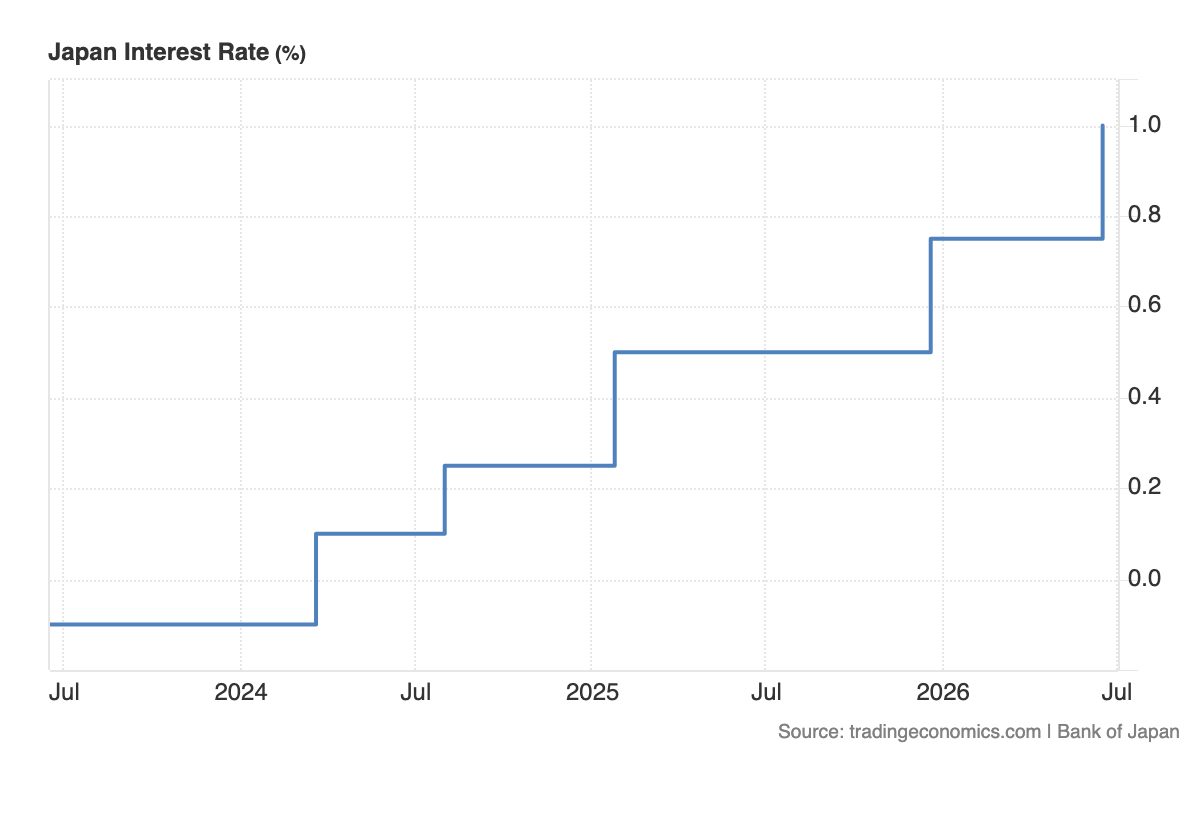
The yen and euro may benefit from reduced Fed hike expectations, but both remain exposed to higher oil prices because Japan and Europe depend heavily on imported energy. If crude continues rising, the relative resilience of the US economy could once again favor the dollar.
Gold should benefit from lower yields and a softer dollar, but the same geopolitical complication remains.
If higher oil revives inflation and pushes yields upward, the rates channel could once again overpower gold’s safe-haven appeal.
Equities may initially welcome softer inflation because it reduces tightening risk. But a rally built on lower yields could remain fragile if renewed energy disruption raises business costs and damages consumer spending.
The key takeaway is that June inflation provided relief, not resolution.
The dollar is falling because the data reduced the urgency for a Fed hike.
But the inflation outlook is already changing again.
Lower oil helped deliver the June slowdown.
Renewed Hormuz tensions could threaten the next report.
For now, the Fed has gained room to wait.
Whether it can continue waiting will depend heavily on what happens to oil.
Powered by GaphyToro
GaphyToro is a trading journal and trader-development platform built to help traders record every trade, analyse performance, identify recurring mistakes and improve decision-making through structured data.
Track your trades, review your execution and build a more disciplined trading process at www.gaphytoro.com.
Filed under
Written by

Founder & CEO, GaphyToro
Philip Ogina is the Founder and CEO of GaphyToro, a trader-first performance ecosystem built to help modern traders improve through structure, discipline, data, and better execution. He is a trader, investor, market analyst, educator, and software builder focused on building tools and infrastructure for the next generation of traders.