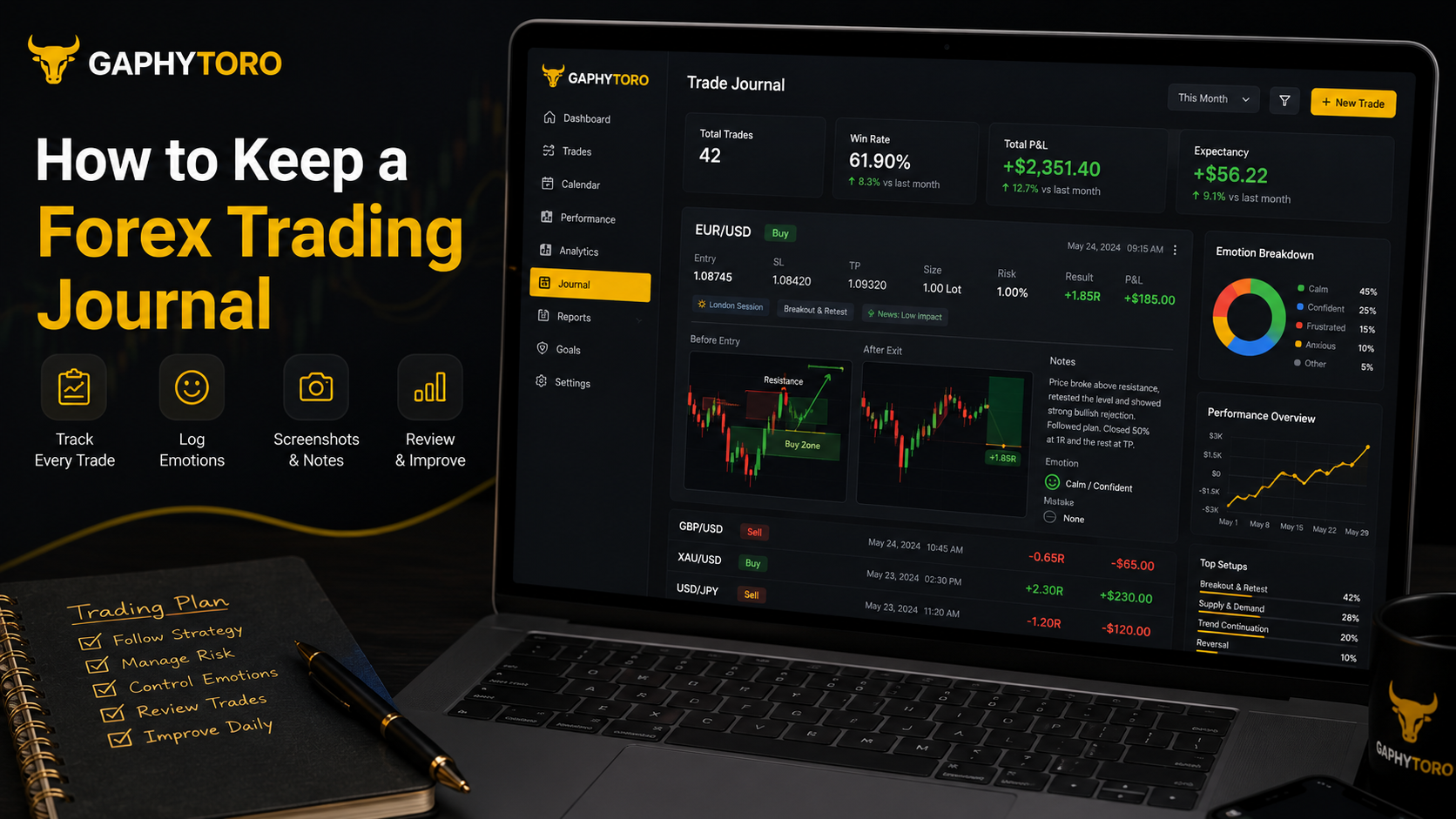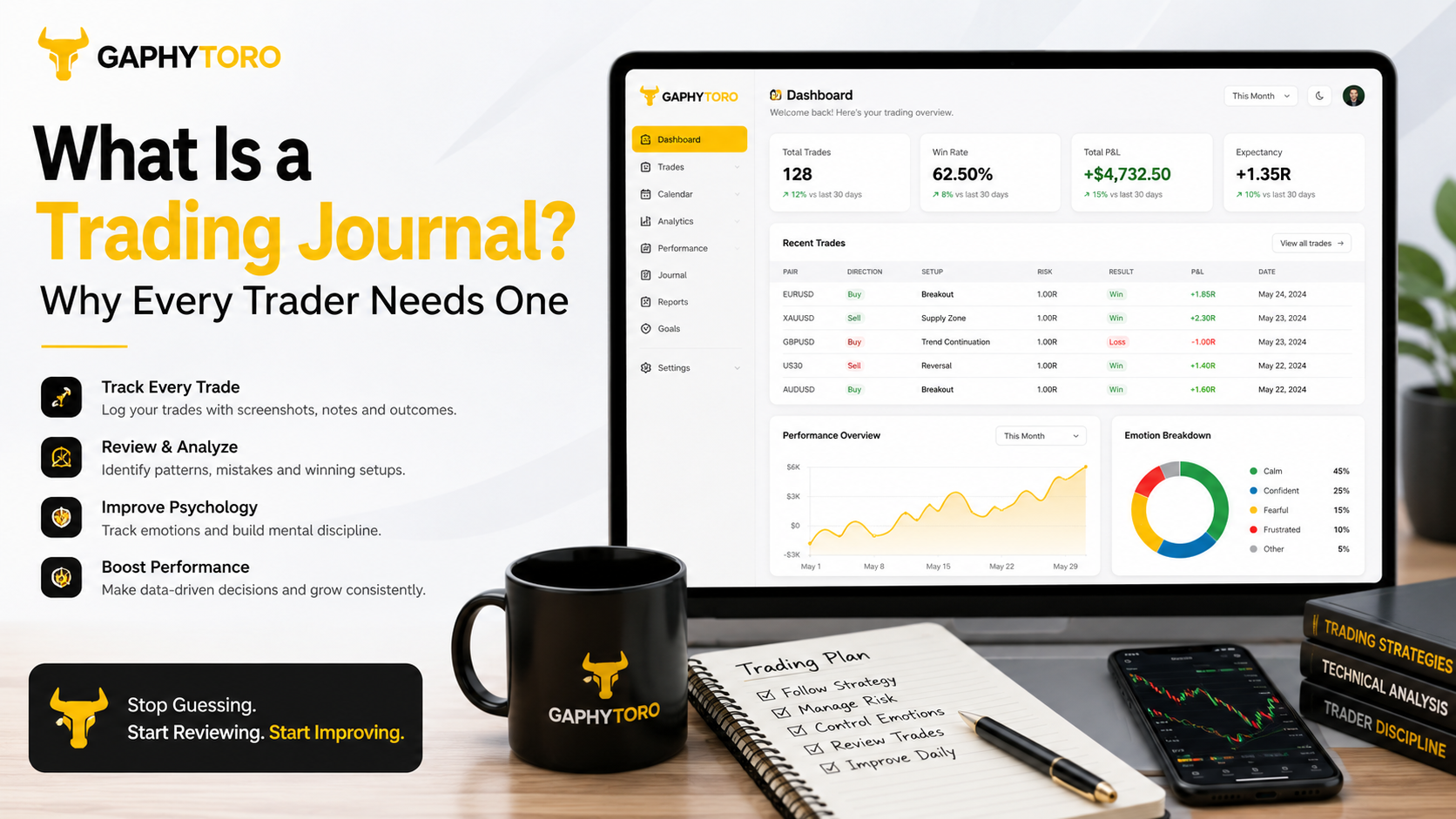
What Is a Trading Journal and Why Every Trader Needs One
A trading journal is a record of your trades, decisions, emotions, risk, screenshots, mistakes and results. It helps you understand how you actually trade, not how you think you trade.
Most traders focus only on finding better entries. They look for new strategies, better indicators, stronger signals and more accurate market predictions. But the biggest difference between a random trader and a serious trader is not just the setup they use. It is how well they review their own behavior.
A trading journal gives you that review system.
Without one, every trade becomes an isolated event. You win, you feel good. You lose, you feel bad. Then you move on without understanding what happened. Over time, this creates a dangerous cycle where the same mistakes keep repeating, but the trader never has enough clear data to fix them.
A proper trading journal changes that. It turns your trading history into feedback.
What Is a Trading Journal?
A trading journal is a structured record of every trade you take. It usually includes the market traded, entry price, exit price, trade direction, lot size, risk, reward, profit or loss, screenshot, setup type, emotional state and notes about what happened before, during and after the trade.
The purpose is not just to store results. The purpose is to understand your process.
A good trading journal answers questions like:
Why did I enter this trade?
Did I follow my trading plan?
Was my risk correct?
Was I emotionally stable?
Did I enter too early or too late?
Did I exit because of my plan or because of fear?
Was this trade part of my strategy or just an impulse?
Over time, those answers reveal patterns. You may discover that your strategy works well during the London session but performs poorly during low-volume periods. You may realize that most of your losses come after one big winning trade because you become overconfident. You may see that your best trades come when you wait for confirmation instead of chasing price.
That is why a trading journal is not just a record. It is a mirror.
Why Traders Need a Trading Journal
Trading is one of the easiest businesses to lie to yourself in.
A trader can lose money and still believe the strategy is good. A trader can make money and still have taken a terrible trade. One winning trade does not prove skill, and one losing trade does not prove failure.
This is why trade review matters. Investopedia notes that winning and losing trades can both be misleading because traders often judge decisions by the outcome instead of the quality of the process. Trade journals and performance reviews help traders identify recurring patterns across multiple trades.
That point is important because many traders judge themselves emotionally. They feel smart after a win and useless after a loss. But professional improvement does not come from emotional reactions. It comes from reviewing a large enough sample of trades and identifying what keeps showing up.
A trading journal helps you separate luck from skill.
For example, you may take a trade outside your rules and make money. Without a journal, you may remember that as a good decision. With a journal, you can mark it as a rule-breaking trade that happened to win. That distinction matters because if you keep rewarding bad process, the market will eventually punish it.
The opposite is also true. You may take a clean trade, follow your plan, manage risk properly and still lose. Without a journal, you may abandon the strategy too early. With a journal, you can see that the trade was well-executed and that losses are part of the sample.
This is how a trading journal protects your mind from bad conclusions.
A Trading Journal Helps You Build Discipline
Most traders already know what they should do. They know they should use stop losses. They know they should not overtrade. They know they should not revenge trade. They know they should not increase lot size emotionally.
The problem is not always knowledge. The problem is execution.
Once money is on the line, emotions change everything. Fear, greed, frustration and impatience can push a trader away from the original plan. Investopedia explains that traders often break rules because emotions, volatility and changing perceptions of risk interfere with discipline, and that predefined systems can reduce emotional decision-making.
A trading journal creates accountability.
When you know you have to record why you entered a trade, it becomes harder to take random trades. When you know you have to write down your emotional state, it becomes harder to pretend you were calm when you were actually chasing. When you know you have to review screenshots later, it becomes harder to lie about whether the setup was valid.
This is where a tool like the GaphyToro trading journal becomes valuable. Instead of relying on memory, traders can record trades, review screenshots, track emotions, identify repeated mistakes and build a more disciplined trading process in one place.
Discipline is not built by motivation. Discipline is built by systems.
What Should You Record in a Trading Journal?
A useful trading journal should record both technical and psychological details. Many traders only track entry, exit and profit or loss. That is not enough.
The numbers tell you what happened. The notes tell you why it happened.
At minimum, your trading journal should include:
The market you traded, such as EUR/USD, gold, NASDAQ or BTC.
The date and trading session.
The trade direction, either buy or sell.
The entry price and exit price.
The stop loss and take profit.
The risk-to-reward ratio.
The lot size or position size.
The amount risked.
The final profit or loss.
The setup type.
A screenshot before entry.
A screenshot after exit.
Your reason for entering.
Your emotional state before the trade.
Your emotional state during the trade.
Your mistake, if any.
The lesson from the trade.
Whether you followed your plan.
This is where most traders start seeing the truth. Maybe the issue is not the strategy. Maybe the issue is that you enter late. Maybe you move your stop loss. Maybe you close winners too early. Maybe you overtrade after losses. Maybe you trade well in the morning but badly when tired.
A trading journal helps you stop guessing.
Trading Journal Example
Here is a simple example of how a journal entry can look.
Market: XAU/USD
Session: New York
Direction: Buy
Setup: Breakout and retest
Entry reason: Price broke above previous high, pulled back into the breakout zone and rejected with strong bullish structure.
Risk: 1%
Reward target: 2.5R
Emotional state before entry: Calm, waited for confirmation.
Mistake: Entered slightly late after hesitation.
Result: Win, 2R.
Lesson: Setup was valid, but hesitation reduced the final reward. Need to trust the plan once confirmation appears.
This kind of entry is much more useful than simply writing “gold buy, profit.”
The goal is not to write a story for every trade. The goal is to capture the information that helps you improve.
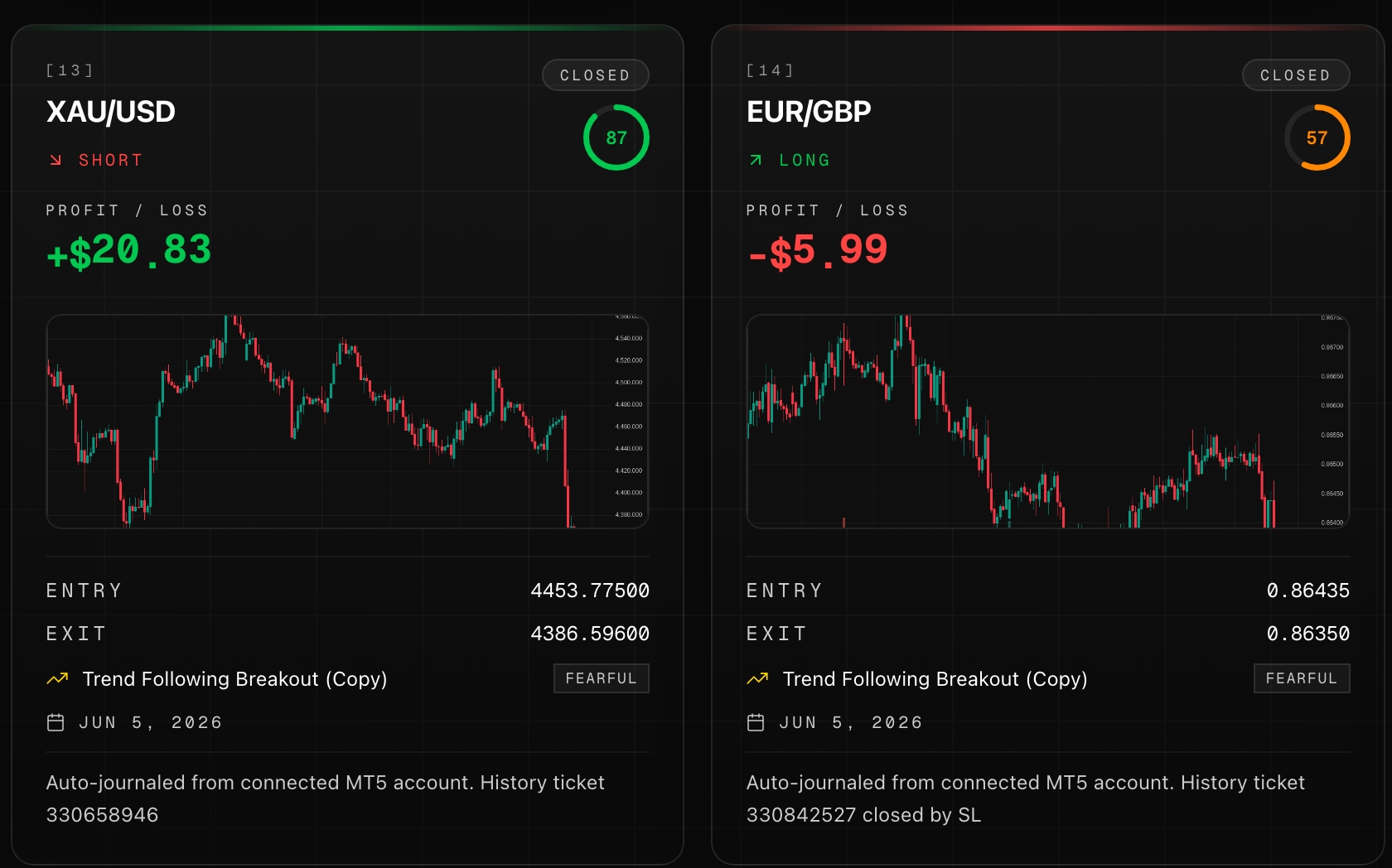
Manual Trading Journal vs Trading Journal Software
Some traders use notebooks. Others use Excel, Google Sheets or Notion. These can work in the beginning, especially if you are still learning how to record trades.
But as your trading becomes more serious, manual journaling becomes harder to maintain.
Spreadsheets can become messy. Screenshots may be stored separately. Emotional notes can be inconsistent. Weekly reviews take more time. It becomes harder to see patterns quickly, especially across many trades, accounts or strategies.
That is why many traders eventually move to trading journal software.
A modern trading journal should help you organize trades, screenshots, emotions, mistakes, setups and performance metrics in one place. The easier the journal is to use, the more likely you are to stay consistent.
This is the main problem GaphyToro is built to solve. It helps traders stop relying on memory and start reviewing their performance with structure.
Why Forex Traders Especially Need a Journal
Forex traders need a journal because the forex market moves fast, leverage can magnify mistakes and emotions can easily take control.
That is why a forex trading journal is not optional for serious traders. It helps you track whether your losses are coming from the market, your strategy or your behavior.
For example, a forex trader may discover that they lose most often when trading during news releases. Another may realize that they perform better on major pairs than exotic pairs. Another may find that most losses come from entering before confirmation.
Without a journal, those patterns remain hidden.
With a journal, they become visible.
A Trading Journal Helps With Risk Management
Risk management is one of the most important parts of trading because you can have a good strategy and still destroy your account with bad position sizing.
A trading journal helps you track whether you are following your risk rules. It shows whether you are risking too much after wins, increasing lot size after losses, moving stop losses or taking trades with poor risk-to-reward ratios.
This matters because risk mistakes compound quickly.
If you risk 1% per trade, a losing streak is manageable. If you risk 10% per trade because you are frustrated, a few bad trades can damage the account badly. The journal keeps the evidence in front of you.
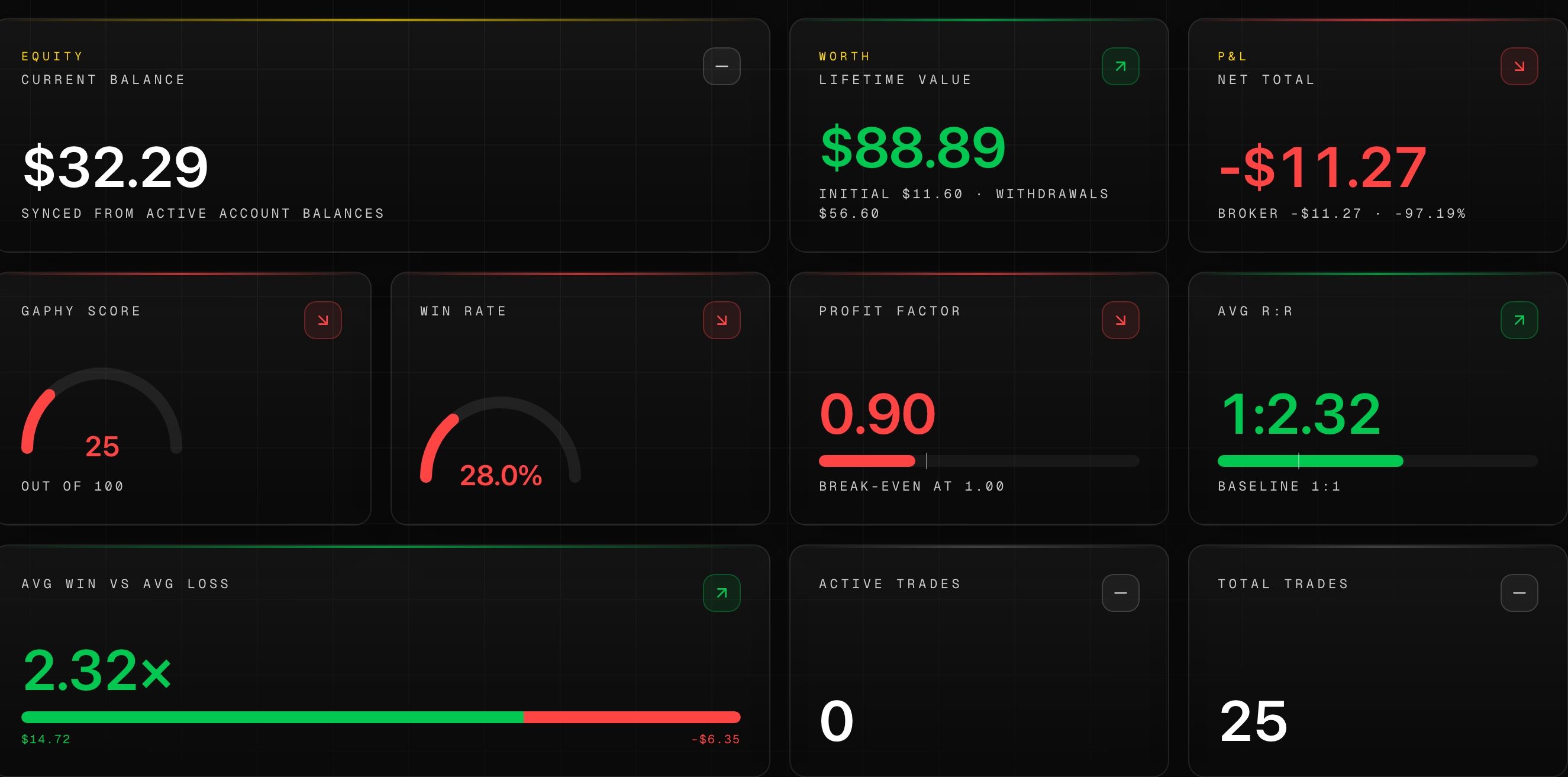
A proper trading journal should show:
Your planned risk.
Your actual risk.
Your average risk per trade.
Your biggest loss.
Your average win.
Your average loss.
Your risk-to-reward ratio.
Your drawdown.
Your win rate.
Your expectancy.
These numbers help you think like a business owner instead of a gambler.
A Trading Journal Helps You Improve Trading Psychology
Most trading problems are not just technical. They are psychological.
A trader may know the setup but still enter early because of FOMO. A trader may know the stop loss but still move it because they do not want to accept the loss. A trader may know the daily limit but still revenge trade after losing.
This is why trading psychology should be part of your journal.
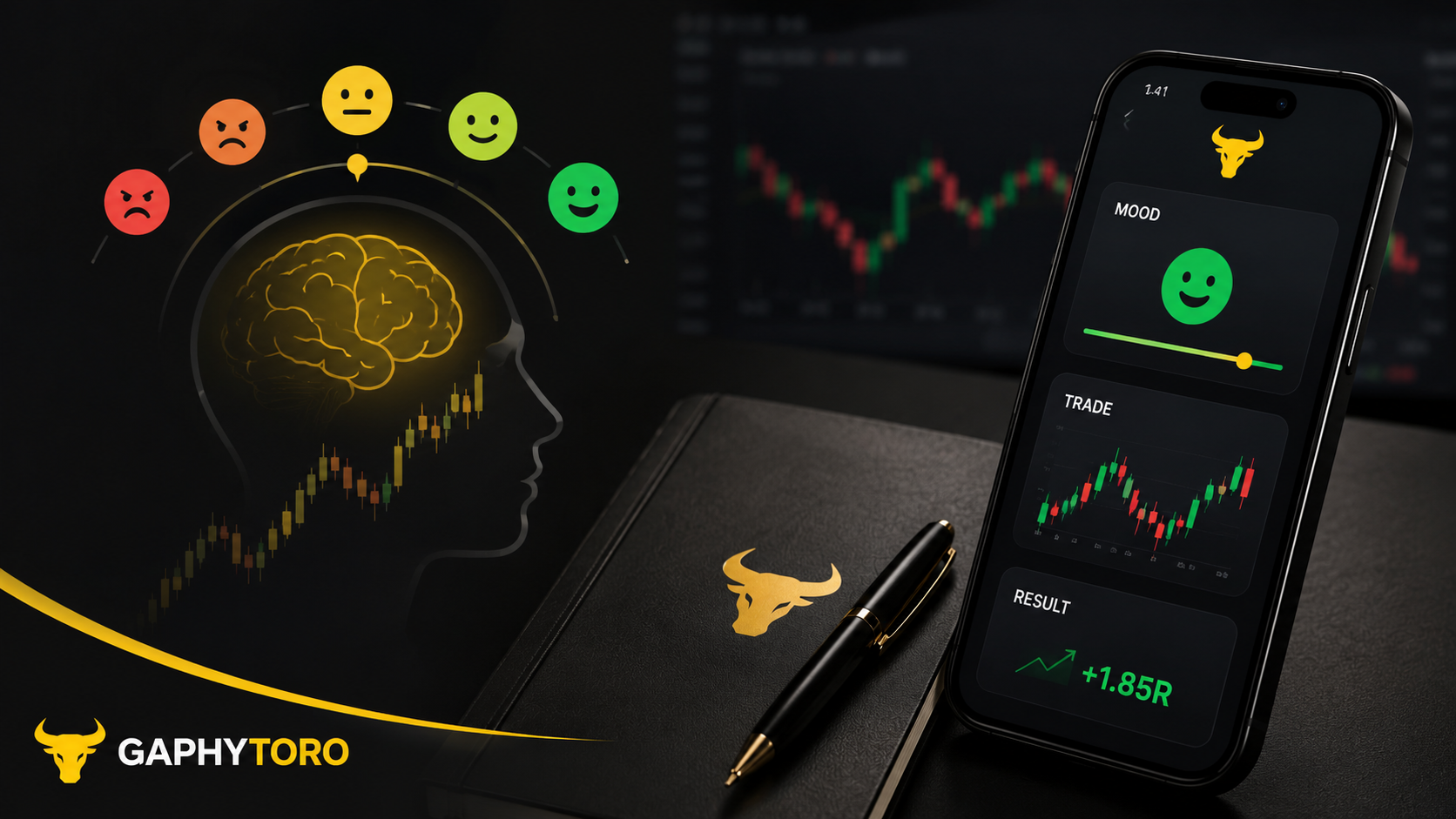
Your journal should track emotional states like confidence, fear, greed, hesitation, frustration, boredom and overconfidence. Over time, you will start to see which emotions lead to bad decisions.
Maybe boredom makes you take low-quality trades. Maybe overconfidence makes you increase risk. Maybe fear makes you exit winners too early. Maybe frustration makes you revenge trade.
Once you see the emotional pattern, you can build rules around it.
For example:
If I lose two trades in a row, I stop trading for the day.
If I feel rushed, I do not enter.
If the setup is not clear enough to screenshot and explain, I skip it.
If I am trading only to recover a loss, I stop.
A trading journal turns emotions into data. That is powerful.
How Often Should You Review Your Trading Journal?
You should update your trading journal after every trade and review it at the end of each week.
Daily journaling captures details while they are still fresh. Weekly review helps you step back and see patterns. Monthly review helps you judge whether your strategy and execution are improving over a larger sample.
A good weekly trade review should answer:
What was my best trade of the week?
What was my worst trade of the week?
Which mistakes repeated?
Did I follow my trading plan?
Which setup performed best?
Which market gave me the cleanest trades?
Was I emotionally stable?
Did I overtrade?
What should I improve next week?
The goal of review is not to punish yourself. The goal is to improve the next set of trades.
This is why journaling works best when you treat it like a performance system, not a diary.
Common Trading Journal Mistakes
The first mistake is only journaling losing trades. This creates a distorted picture. Winning trades also need review because some winners come from bad decisions.
The second mistake is only recording numbers. Profit and loss matter, but they do not explain behavior. You need notes, screenshots and emotional context.
The third mistake is being vague. Writing “bad trade” does not help. Writing “entered before confirmation because I feared missing the move” gives you something to fix.
The fourth mistake is not reviewing the journal. Recording trades is useful, but the real improvement comes from reviewing patterns.
The fifth mistake is changing strategy too quickly. One losing trade does not mean the strategy is broken. You need a sample size before making serious changes.
The sixth mistake is lying to yourself. A journal only works if you are honest.
Who Should Use a Trading Journal?
Every serious trader should use a trading journal.
Beginner traders need it because they are still learning what works and what does not. Intermediate traders need it because they often know enough to trade but still struggle with consistency. Advanced traders need it because small execution errors can have a large impact at scale.
A trading journal is useful for forex traders, crypto traders, stock traders, futures traders, gold traders, scalpers, swing traders and prop firm traders.
Prop firm traders especially need a journal because they must manage drawdown limits, daily loss rules, risk consistency and emotional discipline. A trader can have a profitable strategy and still fail a challenge by breaking risk rules.
A journal helps prevent that.
Trading Journal Template
A simple trading journal template should include these sections:
Trade details.
Setup details.
Risk details.
Screenshot.
Emotion before entry.
Emotion during trade.
Emotion after exit.
Mistake.
Lesson.
Plan for improvement.
That structure is enough to start.
As you grow, you can add more advanced metrics like expectancy, average R, profit factor, maximum drawdown, setup performance, session performance and pair-by-pair performance.
The key is consistency. A simple journal used every day is better than a complex journal used once a month.
Is a Trading Journal Worth It?
Yes, a trading journal is worth it because it helps you find the real reason behind your results.
Most traders do not fail because they lack information. They fail because they do not review their own behavior with enough honesty and structure.
A trading journal helps you see whether your trading problem is strategy, risk, psychology, timing, discipline or market selection. Once you know the real problem, you can fix it faster.
If you want to become a more consistent trader, start tracking your trades before your next session.
Do not wait until the account is damaged.
Do not wait until you pass or fail a prop firm challenge.
Do not wait until you feel ready.
Start now, record honestly, review weekly and improve one pattern at a time.
Start Your Trading Journal With GaphyToro
GaphyToro is built for traders who want to take their performance seriously. It helps you track trades, review mistakes, record emotions, organize screenshots and understand the patterns behind your results.
Whether you trade forex, gold, indices, crypto or prop firm accounts, a structured journal can help you move from emotional trading to intentional improvement.
Start your trading journal with GaphyToro and give every trade a lesson, not just a result.
Frequently Asked Questions
What is a trading journal?
A trading journal is a structured record of your trades, including entries, exits, risk, screenshots, emotions, mistakes, results and lessons. It helps traders review performance and identify repeated patterns.
Why do traders need a trading journal?
Traders need a journal because it helps them understand their behavior, improve discipline, manage risk and avoid repeating the same mistakes. It turns trading history into useful feedback.
What should I write in a trading journal?
You should record the market, entry, exit, trade direction, position size, stop loss, take profit, risk, result, setup type, screenshot, emotional state, mistake and lesson from each trade.
Is a trading journal useful for forex traders?
Yes. A forex trading journal is very useful because forex trading can be fast, leveraged and emotionally demanding. A journal helps traders track risk, timing, setups, mistakes and performance across different currency pairs.
Can I use Excel as a trading journal?
Yes, Excel can work as a beginner trading journal. However, as your trading becomes more serious, trading journal software can make it easier to organize screenshots, emotions, setups, mistakes and performance analytics.
How often should I update my trading journal?
You should update your trading journal after every trade. You should also review it weekly to identify repeated mistakes, strong setups and areas for improvement.
Does a trading journal make you profitable?
A trading journal does not guarantee profits. However, it can help you become more consistent by showing what is working, what is failing and which behaviors need to change.
What is the best trading journal for beginners?
The best trading journal for beginners is one that is simple, easy to update and focused on the most important details: setup, risk, emotion, screenshot, mistake and lesson. GaphyToro is designed to help traders build that habit with structure.
Filed under
Written by

Founder & CEO, GaphyToro
Philip Ogina is the Founder and CEO of GaphyToro, a trader-first performance ecosystem built to help modern traders improve through structure, discipline, data, and better execution. He is a trader, investor, market analyst, educator, and software builder focused on building tools and infrastructure for the next generation of traders.