Japan’s equity rally is still being powered by AI.
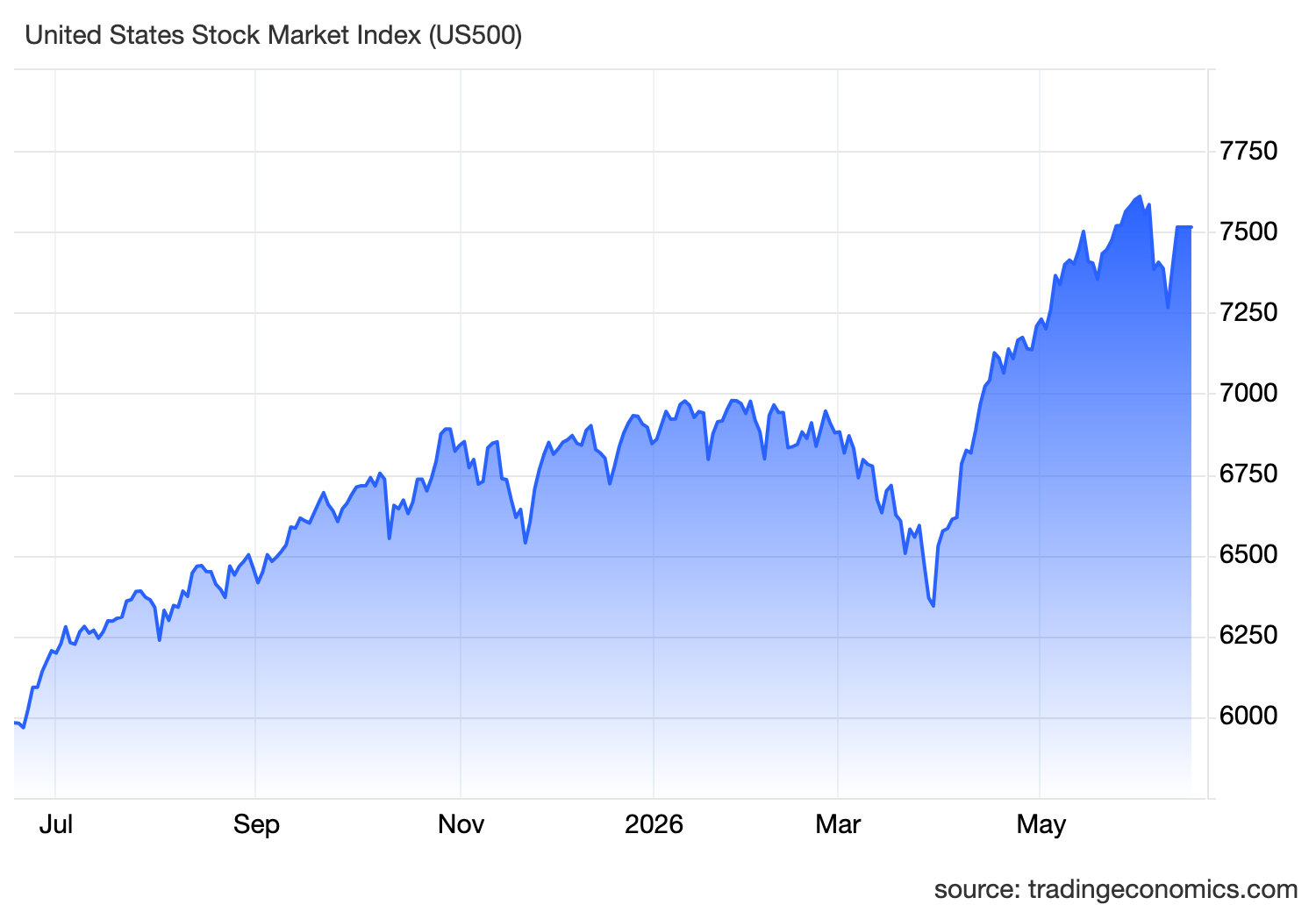
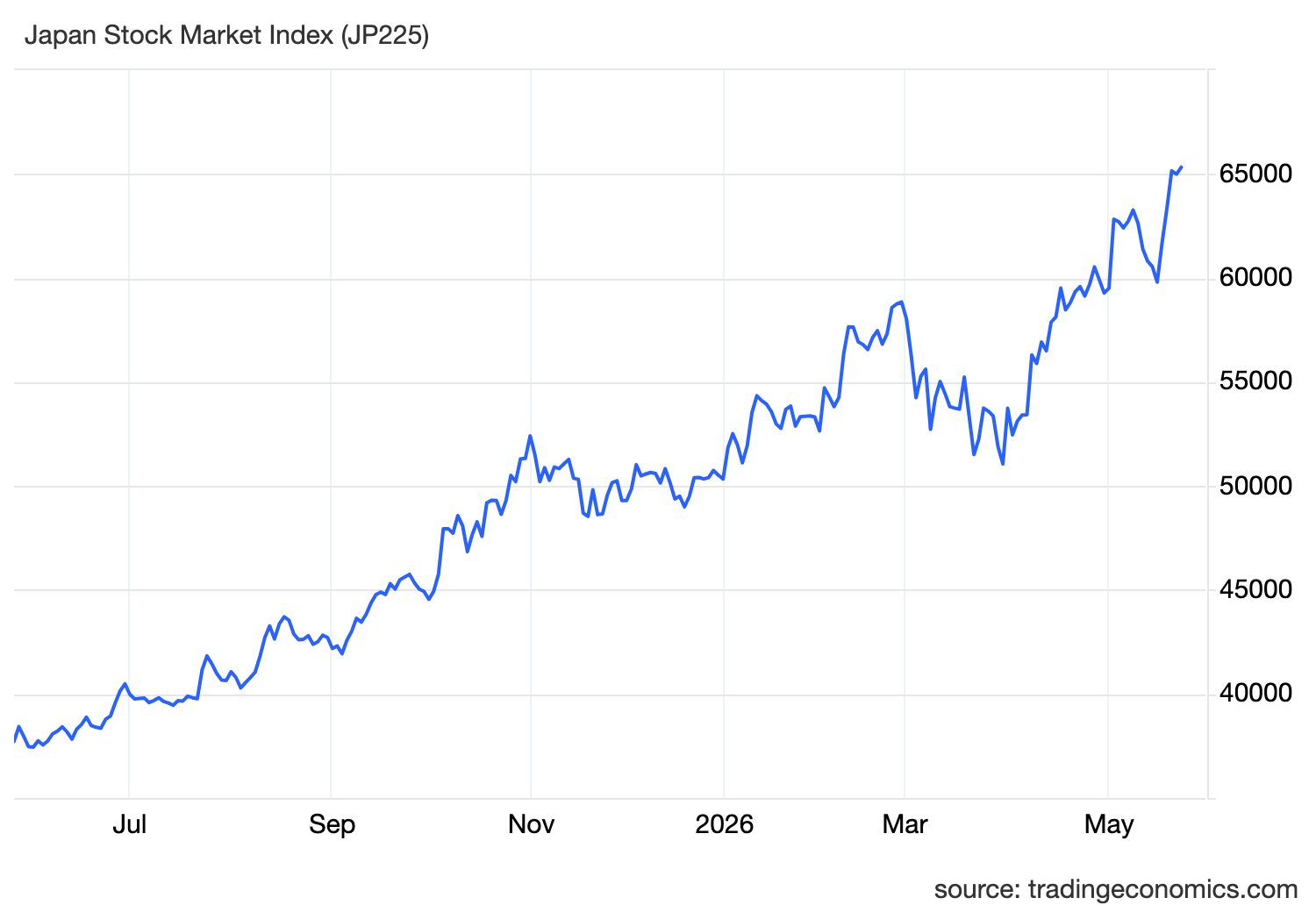
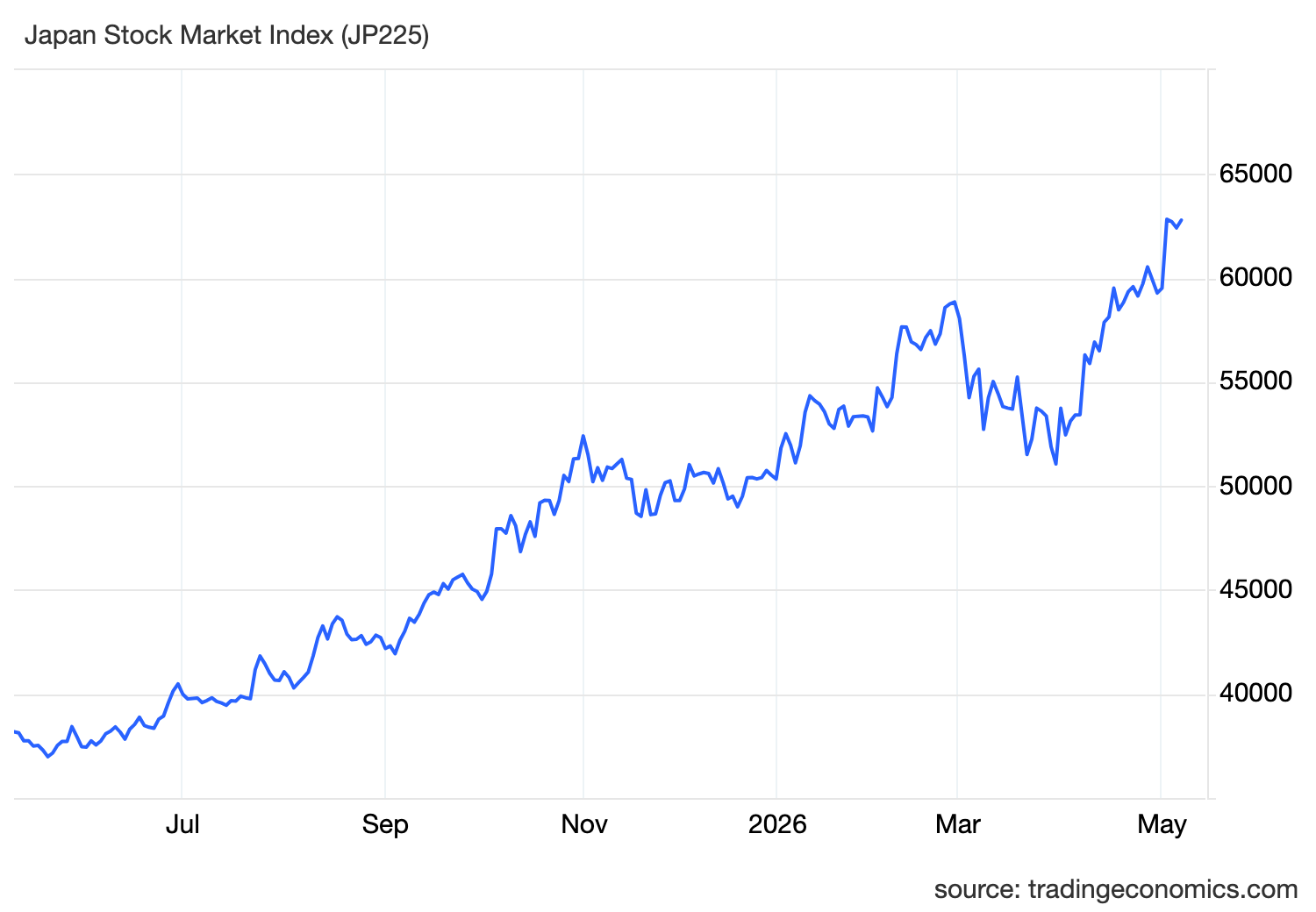
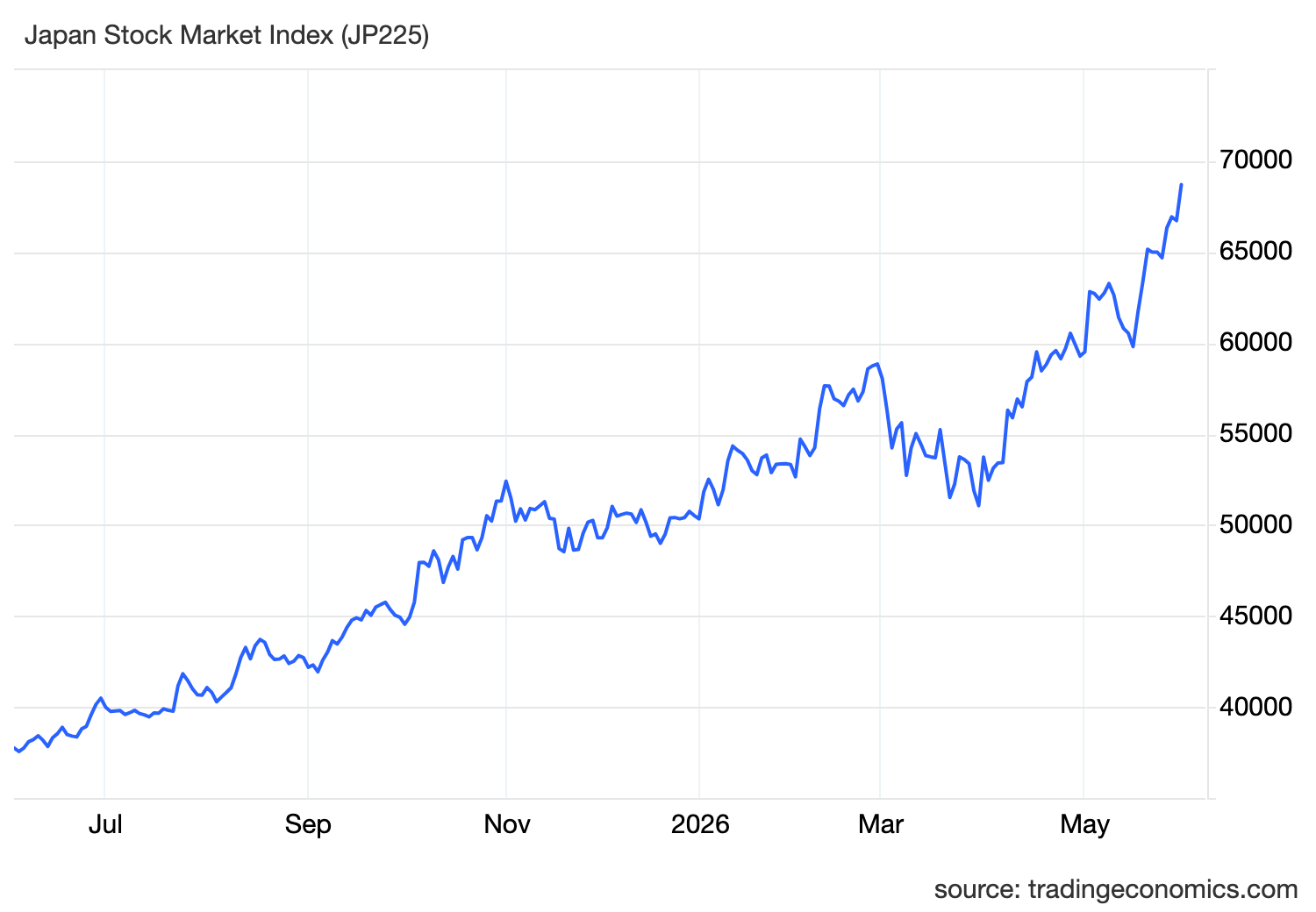
The Nikkei 225 jumped close to the 68,000 mark, while the Topix also moved higher, extending Japan’s run into fresh record territory. The rally followed another strong session on Wall Street, where AI-linked technology shares continued to attract capital. AP also reported that the Nikkei topped 68,000 for the first time, supported by the global surge in AI-related technology stocks and gains in semiconductor names.
That tells you what investors are prioritizing.
They are looking through the geopolitical noise and paying for exposure to the AI infrastructure cycle.
Japanese companies are deeply plugged into that theme. Names like Tokyo Electron, Advantest, Kioxia, Fujikura and Lasertec are not just domestic equity plays. They are tied to semiconductors, memory, testing equipment, advanced components, data centres and the broader AI supply chain.
That is why the rally is so concentrated in technology.
This is not a broad “everything is fine” move.
It is a growth and earnings momentum move.
The market is saying that AI demand is strong enough to offset the macro risks for now.
But the macro backdrop still matters.
US-Iran talks remain uncertain, and the lack of clear progress keeps oil risk alive. Reuters reported that oil prices rose again as Middle East hostilities flared and talks stalled, with supply concerns still tied to disruption around the Strait of Hormuz.
That is the risk sitting behind the equity rally.
If US-Iran negotiations fail and Hormuz remains disrupted, oil can stay elevated. If oil stays elevated, inflation risk stays alive. If inflation risk stays alive, central banks have less room to ease.
That is the chain investors are trying to balance.
Oil drives inflation.
Inflation drives yields.
Yields drive equity valuations.
For technology stocks, yields are especially important. AI names are valued heavily on future earnings growth, so lower yields support higher valuations. When yields ease, the present value of future cash flows rises, and investors are more willing to pay up for growth.
That is why easing US Treasury yields helped the Nikkei rally.
Markets have recently scaled back some near-term Fed hike expectations as oil prices cooled from earlier highs and investors weighed the possibility that negotiations could still prevent a full energy shock. But that relief is fragile. If oil spikes again, yields can move higher again, and the discount-rate pressure comes straight back onto tech.
So the Nikkei’s record high is impressive, but it is not risk-free.
The second layer is the Bank of Japan.
Japan is dealing with stronger inflation pressure because higher energy costs feed directly into import prices, producer prices and household costs. The BoJ has already shown a more hawkish tone recently, and if oil stays elevated, the pressure for another rate hike builds.
That matters for equities.
Higher Japanese yields can pressure valuations. A stronger yen can also become a headwind for exporters because it reduces the value of overseas earnings when translated back into yen.
But for now, investors are not treating BoJ risk as the dominant story.
AI is winning.
That also explains the sector rotation.
Technology and AI-linked shares are leading because they have the strongest growth narrative. Financials and consumer names are participating, but they are not the centre of the move. Banks may benefit from higher domestic rates, but if yields ease globally and risk appetite shifts toward growth, capital naturally rotates toward tech.
The current setup is clear.
Japanese equities are rallying because AI demand remains powerful, Wall Street tech momentum is strong, and easing US yields are giving growth stocks room to extend.
But the ceiling risk is still macro.
If US-Iran talks fail, oil can rise again.
If oil rises, inflation pressure returns.
If inflation pressure returns, yields move higher.
If yields move higher, high-growth tech gets tested.
That is the tension.
The Nikkei is not ignoring the Middle East completely.
It is simply saying that, for now, AI earnings momentum is stronger than the oil shock risk.
The rally can continue if three things hold.
AI demand stays strong.
US yields remain contained.
Oil does not break higher again.
If any of those three breaks, the record-high rally becomes much more vulnerable.
So the market picture is simple.
Japan is trading like a global AI winner.
But oil, yields and central banks still decide how far that trade can run.
Filed under
Written by

Founder & CEO, GaphyToro
Philip Ogina is the Founder and CEO of GaphyToro, a trader-first performance ecosystem built to help modern traders improve through structure, discipline, data, and better execution. He is a trader, investor, market analyst, educator, and software builder focused on building tools and infrastructure for the next generation of traders.