Mood Tracking for Traders: Why Your Emotions Matter More Than You Think
Most traders track entries, exits, profits and losses.
Very few track how they felt before taking the trade.
That is a problem because trading is not only a technical game. It is also emotional. You can have a good setup, a clear trading plan and a strong strategy, but if your mood is unstable, your execution can still fall apart.
A trader who is calm may wait for confirmation. A trader who is frustrated may enter too early. A trader who is overconfident may increase risk. A trader who is fearful may close a good trade too soon.
The chart may be the same, but the decision can change depending on your emotional state.
That is why mood tracking matters.
What Is Mood Tracking in Trading?
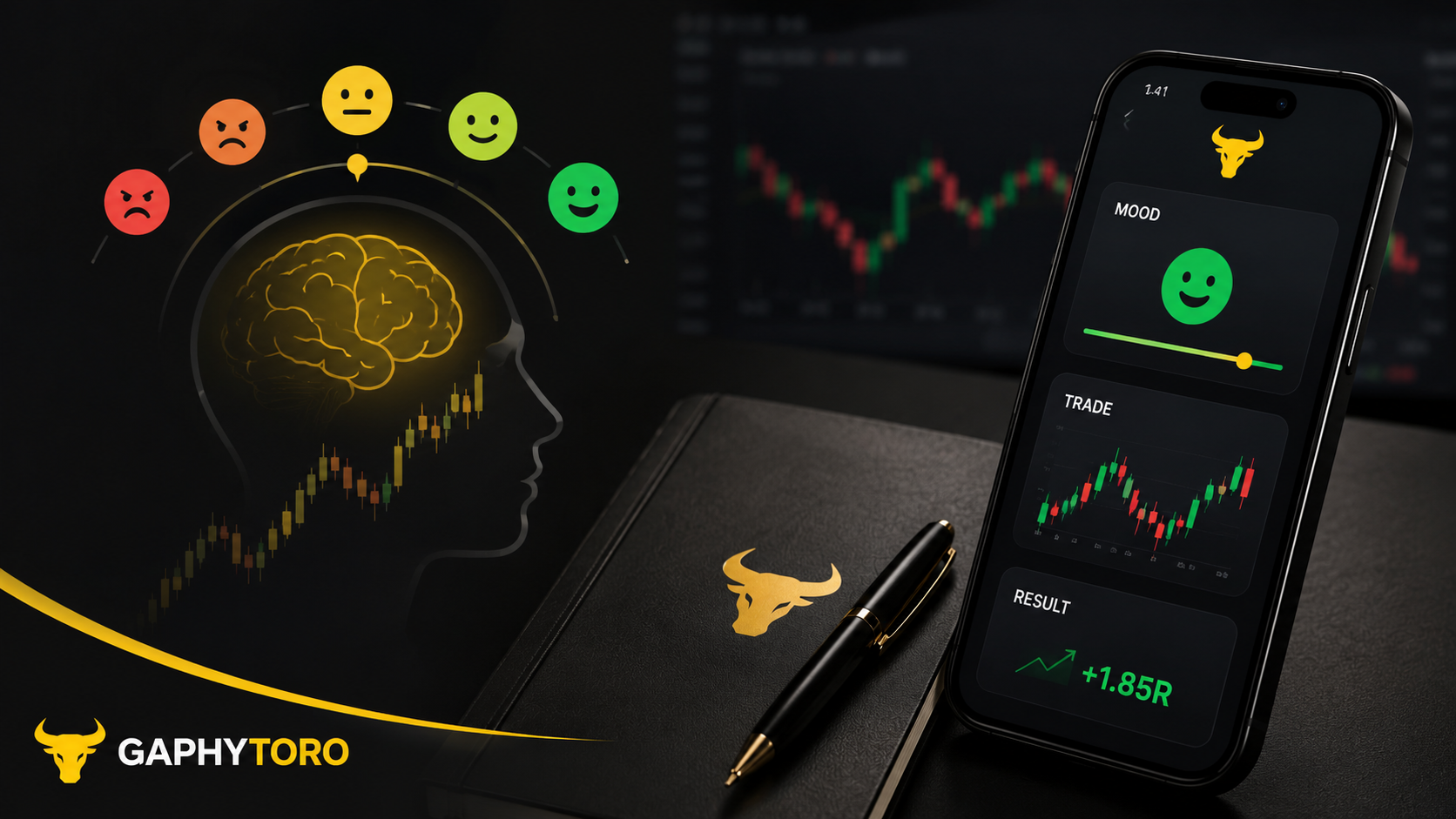
Mood tracking in trading means recording your emotional state before, during and after each trade.
It is a simple habit, but it gives you powerful information. Instead of only asking whether a trade made money, mood tracking helps you ask a deeper question.
What state of mind was I in when I made this decision?
That question matters because many trading mistakes do not come from lack of knowledge. They come from emotional pressure.
A trader may know not to revenge trade but still do it after a loss. A trader may know not to overtrade but still force another setup because they feel impatient. A trader may know not to move a stop loss but still do it because they cannot accept being wrong.
Mood tracking helps you see those patterns clearly.
Why Mood Tracking Matters for Traders
The biggest danger in trading is not always a bad strategy. Sometimes the biggest danger is a good strategy executed in a bad mental state.
You may have a system that works when you are patient, focused and disciplined. But when you are angry, tired, distracted or desperate, you may stop following that system properly.
That is where mood tracking becomes useful.
It helps you separate strategy problems from behavior problems.
For example, you may think your strategy is not working because you had a losing week. But after reviewing your mood data, you may realize that most of the losses came from trades taken when you were frustrated or rushing.
That changes the solution.
Instead of changing the strategy, you may need to change your trade timing, reduce position size, take breaks after losses or stop trading when your mood is not stable.
Investopedia notes that traders often break rules because emotions and market pressure interfere with discipline. It also points out that structured systems can reduce the amount of decision-making left to emotion in the moment.
That is exactly why mood tracking should be part of every serious trading journal.
The Link Between Mood and Trading Discipline
Discipline is easy before the trade starts.
It becomes harder when price is moving, money is at risk and emotions are active.
This is why many traders can explain their rules perfectly but still fail to follow them in real time. The issue is not that they forgot the plan. The issue is that emotion became stronger than the plan.
Mood tracking makes this visible.
If you record your mood consistently, you may notice things like:
You overtrade when you are bored.
You increase lot size when you are angry.
You exit too early when you are anxious.
You chase price when you feel FOMO.
You ignore your stop loss when you are desperate to recover.
You take cleaner trades when you are calm.
Once you see the pattern, you can build rules around it.
For example, if frustration leads to revenge trading, your rule can be simple. After two losses, stop trading for the day. If anxiety makes you close trades too early, your rule can be to reduce position size so the trade feels easier to hold.
Mood tracking does not remove emotion. It helps you manage emotion before it manages you.
What Moods Should Traders Track?
You do not need to make mood tracking complicated.
Start with the emotional states that affect trading decisions the most.
Track moods like calm, confident, anxious, frustrated, fearful, greedy, impatient, tired, bored, rushed and overconfident.
These are simple labels, but they reveal a lot over time.
Calm usually supports better decisions. Confidence can be useful, but too much confidence can become risk-taking. Anxiety can make you close trades too early. Frustration can lead to revenge trading. Greed can make you hold too long. Boredom can lead to unnecessary trades.
The goal is not to judge yourself. The goal is to collect honest data.
A trader who writes “I was frustrated before this trade” has something useful to review later. A trader who only writes “loss” learns very little.
How to Track Mood Before a Trade
The most important mood check happens before entry.
Before taking a trade, ask yourself:
Am I calm enough to follow my plan?
Am I entering because of the setup or because I want action?
Am I trying to recover a loss?
Am I afraid of missing out?
Am I increasing risk because I feel confident?
Am I tired or distracted?
If the answer shows emotional pressure, you do not have to take the trade.
This is one of the most underrated trading skills. Sometimes the best trade is the one you skip because your mindset is not right.
A good setup can still become a bad trade if your emotional state causes poor execution.
How to Track Mood During a Trade
Many traders are calm before entry but emotional once the trade is live.
This is why you should also record how you felt during the trade.
Did you feel nervous as soon as price pulled back?
Did you want to close early even though your setup was still valid?
Did you move your stop loss because you felt uncomfortable?
Did you add to the trade without a plan?
Did you keep checking every candle?
These details matter because they show how well you handle pressure.
Some traders discover that their entries are good, but their trade management is emotional. They close winners too early, hold losers too long or interfere with trades that should have been left alone.
Mood tracking helps you identify that.
How to Track Mood After a Trade
The mood after a trade is also important because it affects the next decision.
After a win, some traders become overconfident. After a loss, some traders become frustrated. After missing a move, some traders become desperate to catch the next one.
This is how one trade can damage the next trade.
After every trade, record how you feel.
Relieved.
Angry.
Proud.
Disappointed.
Calm.
Revengeful.
Overconfident.
Numb.
Then ask yourself whether that emotion could affect your next trade.
If the answer is yes, take a break.
The market will always give more opportunities. Protecting your mental state is part of protecting your account.
Mood Tracking and Revenge Trading
Revenge trading is one of the clearest examples of why mood tracking matters.
Most traders do not revenge trade because they found a perfect setup. They revenge trade because they feel the need to recover. The emotion comes first, then the trade is justified afterward.
Mood tracking exposes that.
If your journal shows that your worst trades happen after losses, you have a clear behavioral pattern. That means you can create a rule.
No new trade immediately after a loss.
Five-minute reset after every losing trade.
Maximum two losses per day.
Lower position size after a losing streak.
Stop trading when frustration is above a certain level.
The point is not to become emotionless. The point is to stop emotional states from making trading decisions for you.
Mood Tracking and Risk Management
Mood affects risk more than most traders admit.
When traders feel confident, they often risk more. When they feel desperate, they may increase lot size to recover. When they feel afraid, they may reduce size too much or exit before the trade has room to work.
This is why mood tracking belongs next to risk management.
A proper trading journal should not only show how much you risked. It should also show how you felt when you accepted that risk.
If you risked 1% while calm, that is different from risking 5% while frustrated.
The number alone does not tell the full story. The mood explains the decision.
This is why traders need systems that protect them from emotional risk-taking.
How GaphyToro Fits Into Mood Tracking
A mood tracker becomes much more useful when it is connected to your actual trades.
That is where a trading journal like GaphyToro helps.
Instead of only tracking profit and loss, traders can connect each trade to emotional context, screenshots, notes, mistakes and performance patterns. Over time, this helps you understand not just what you traded, but how your mindset affected the outcome.
This matters because the goal is not to collect random notes. The goal is to build self-awareness that improves execution.
If you see that calm trades perform better than rushed trades, you have useful data.
If you see that frustrated trades produce your biggest losses, you have useful data.
If you see that overconfidence leads to poor risk control, you have useful data.
That is how mood tracking becomes a performance tool.
Mood Tracking Template for Traders
Here is a simple mood tracking template you can use inside your trading journal.
Mood: Calm, anxious, frustrated, confident, tired or rushed.
Reason for entry: Setup-based or emotion-based.
Confidence level: Low, medium or high.
Risk level: Normal, reduced or increased.
Plan: Entry, stop loss, target and invalidation.
Mood while holding: Calm, nervous, impatient or tempted to interfere.
Did I follow the plan: Yes or no.
Did I move stop loss: Yes or no.
Did I close early: Yes or no.
Did I add to the trade: Planned or emotional.
Result: Win, loss or breakeven.
Mood after exit: Calm, relieved, angry, disappointed or overconfident.
Mistake: What went wrong, if anything.
Lesson: What should improve next time.
Next action: Continue, reduce size, take a break or stop for the day.
This simple structure is enough to start seeing patterns within a few weeks.
Common Mood Tracking Mistakes
The first mistake is only tracking emotions after losing trades. Winning trades matter too because some wins come from bad behavior.
The second mistake is being vague. Writing “bad mood” is less useful than writing “frustrated after previous loss and entered too early.”
The third mistake is lying. Mood tracking only works if you are honest.
The fourth mistake is tracking mood but not reviewing it. Data is only useful when you study it.
The fifth mistake is using mood as an excuse. Feeling emotional does not mean you are weak. It means you need better rules around your trading behavior.
Final Thoughts
Mood tracking is not soft. It is practical.
Your mood affects your patience, risk, entries, exits, confidence and discipline. If you do not track it, you are missing one of the most important parts of your trading performance.
The market does not only test your strategy. It tests your emotional control.
A trading journal helps you review the trade. Mood tracking helps you review the trader behind the trade.
If you want to improve, start recording how you feel before, during and after every trade. Then review the patterns honestly.
The goal is simple.
Trade with more awareness.
Make fewer emotional decisions.
Protect your account.
Build discipline one trade at a time.
Start Tracking Your Trading Mood With GaphyToro
GaphyToro helps traders review trades with more structure by connecting performance, screenshots, notes, mistakes and emotional context in one place.
If you want to stop guessing why your trading results keep changing, start tracking your trades and your mood together.
Your emotions are already affecting your trading.
The difference is whether you are tracking them or ignoring them.
FAQs
What is mood tracking for traders?
Mood tracking for traders is the process of recording your emotional state before, during and after each trade. It helps traders understand how emotions affect entries, exits, risk and discipline.
Why should traders track their mood?
Traders should track their mood because emotions can influence decision-making. Mood tracking helps identify patterns such as revenge trading, overtrading, fear-based exits and overconfidence after wins.
What emotions should traders track?
Traders should track emotions like calm, confident, anxious, frustrated, fearful, greedy, impatient, tired, bored, rushed and overconfident.
Can mood tracking improve trading performance?
Mood tracking does not guarantee profits, but it can improve self-awareness and discipline. It helps traders identify emotional habits that may be damaging their performance.
How often should I track my trading mood?
You should track your mood before, during and after every trade. You should also review mood patterns weekly to see which emotional states are linked to your best and worst trades.
Is mood tracking useful for forex traders?
Yes. Forex traders often deal with fast price movement, leverage and emotional pressure. Mood tracking helps traders manage discipline, risk and execution in these conditions.
How does mood tracking help with revenge trading?
Mood tracking helps reveal when trades are being taken from frustration or the need to recover losses. Once that pattern is visible, traders can create rules such as taking breaks after losses or stopping after a daily loss limit.
Filed under
Written by

Founder & CEO, GaphyToro
Philip Ogina is the Founder and CEO of GaphyToro, a trader-first performance ecosystem built to help modern traders improve through structure, discipline, data, and better execution. He is a trader, investor, market analyst, educator, and software builder focused on building tools and infrastructure for the next generation of traders.