How to Keep a Forex Trading Journal Properly
Most forex traders know they should keep a trading journal.
Very few actually keep one properly.
Some traders only record the pair, entry, exit and profit or loss. Others take screenshots but never review them. Some write emotional notes after a bad trade but ignore the winning trades. Others start journaling for one week, then stop as soon as trading gets busy.
That is not enough.
A forex trading journal is only useful when it helps you understand your trading behavior, execution, risk, emotions and decision-making. It should show you why you are making money, why you are losing money and what keeps repeating across your trades.
The goal is not to collect random data.
The goal is to improve.
What Is a Forex Trading Journal?
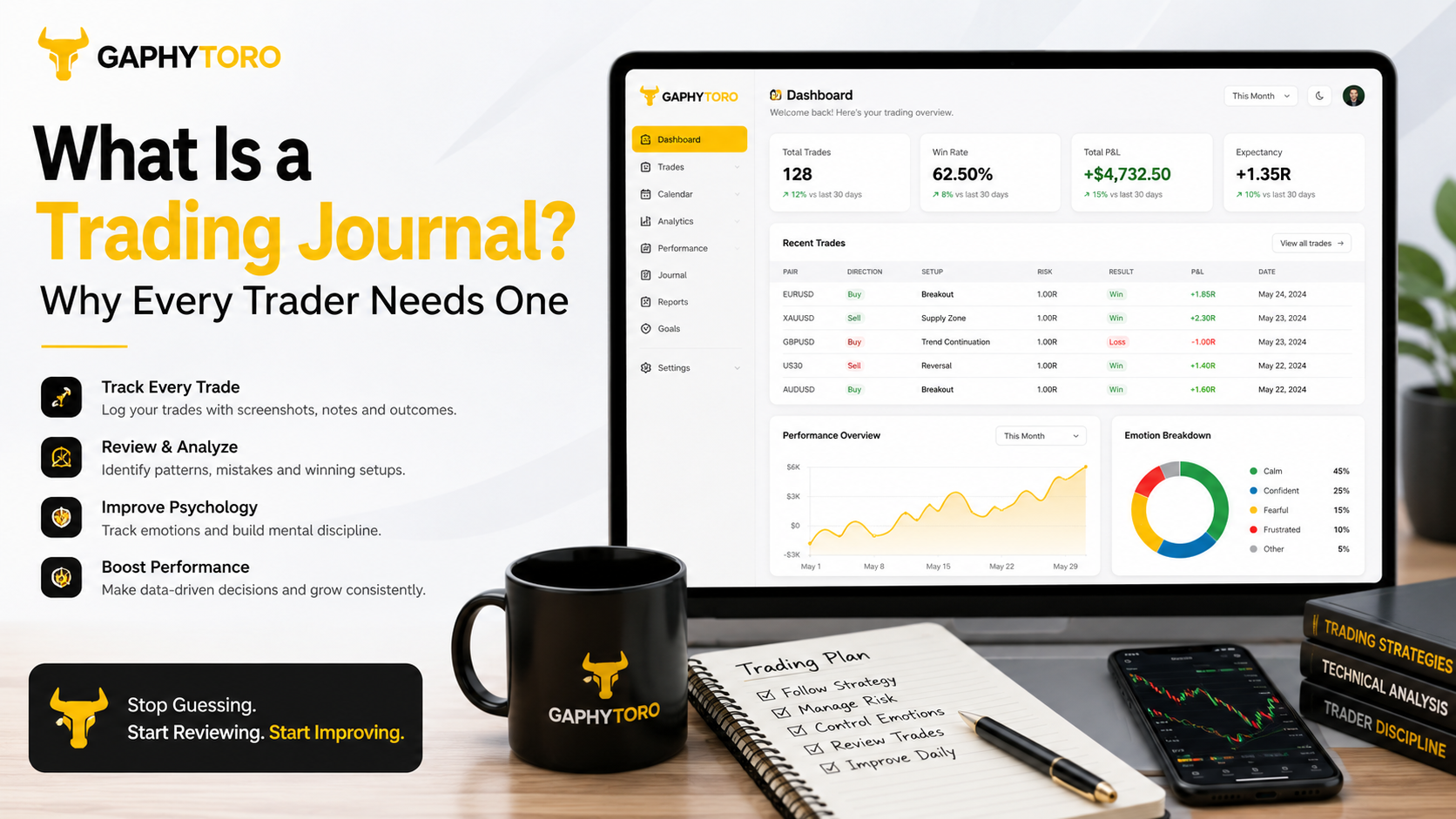
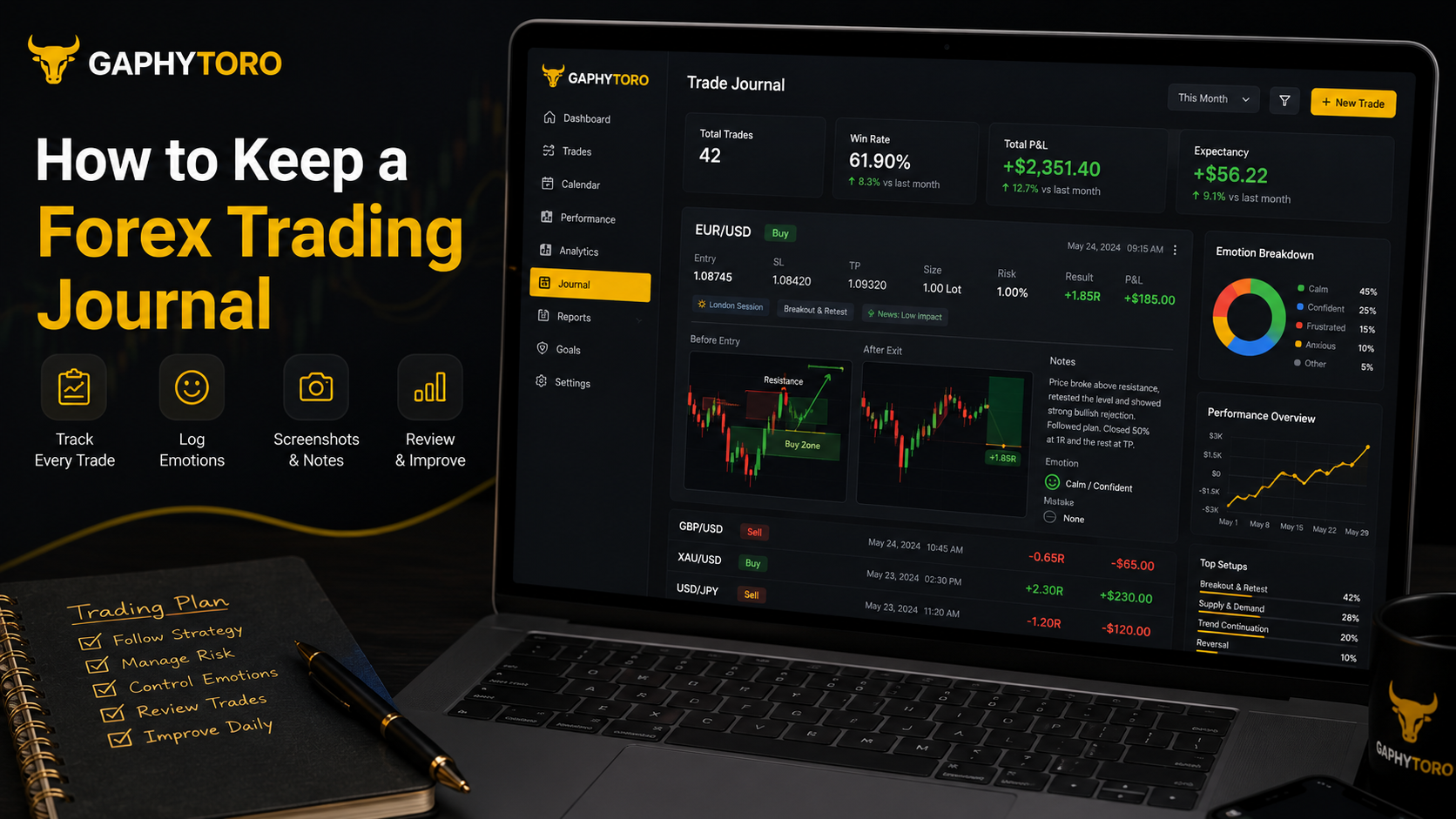
A forex trading journal is a structured record of every forex trade you take. It tracks the currency pair, trade direction, entry, exit, risk, reward, setup, session, screenshot, emotional state, mistake and lesson from each trade.
A proper journal helps you answer one simple question.
Am I trading well or just hoping?
That question matters because forex trading can become emotional very quickly. The market moves fast. Leverage can magnify both wins and losses. News events can change price direction within seconds. A trader can take one clean trade, then ruin the day by overtrading after a loss.
The CFTC warns that forex trading is volatile and carries substantial risks, including the possibility of losing most or all of your funds quickly.
That is why a forex trading journal is not just a nice habit. It is a risk-control tool.
Why Forex Traders Need a Journal
Forex traders need a journal because the market gives too much room for self-deception.
You can lose money and blame manipulation.
You can win money and think you are better than you are.
You can break your rules and still get rewarded once.
You can follow your plan and still lose.
This is why reviewing only profit and loss is dangerous. A winning trade does not always mean good execution. A losing trade does not always mean bad execution. Investopedia notes that traders can fall into outcome bias when they judge the quality of a decision only by whether the trade won or lost.
A journal helps you judge the process, not just the result.
For example, you may take a EUR/USD buy outside your strategy and make money. Without a journal, you may remember it as a good trade. With a journal, you can mark it as a rule-breaking trade that happened to win.
That difference matters.
If you keep rewarding bad behavior because it sometimes makes money, you will eventually build habits that damage the account.
What to Record in a Forex Trading Journal
A proper forex trading journal should record more than entry and exit.
The basic details are important, but they are only the surface. If you want the journal to improve your trading, you need to track the decision behind the trade.
Record the currency pair. This helps you know which pairs suit your strategy best.
Record the trading session. A setup that works well during London may perform badly during Asian session liquidity. A setup that works during New York may fail during quiet periods.
Record the trade direction. Was it a buy or sell?
Record the entry price, stop loss, take profit and exit price.
Record the position size and percentage risk.
Record the planned risk-to-reward ratio.
Record the actual result.
Record the setup type.
Record the reason for entry.
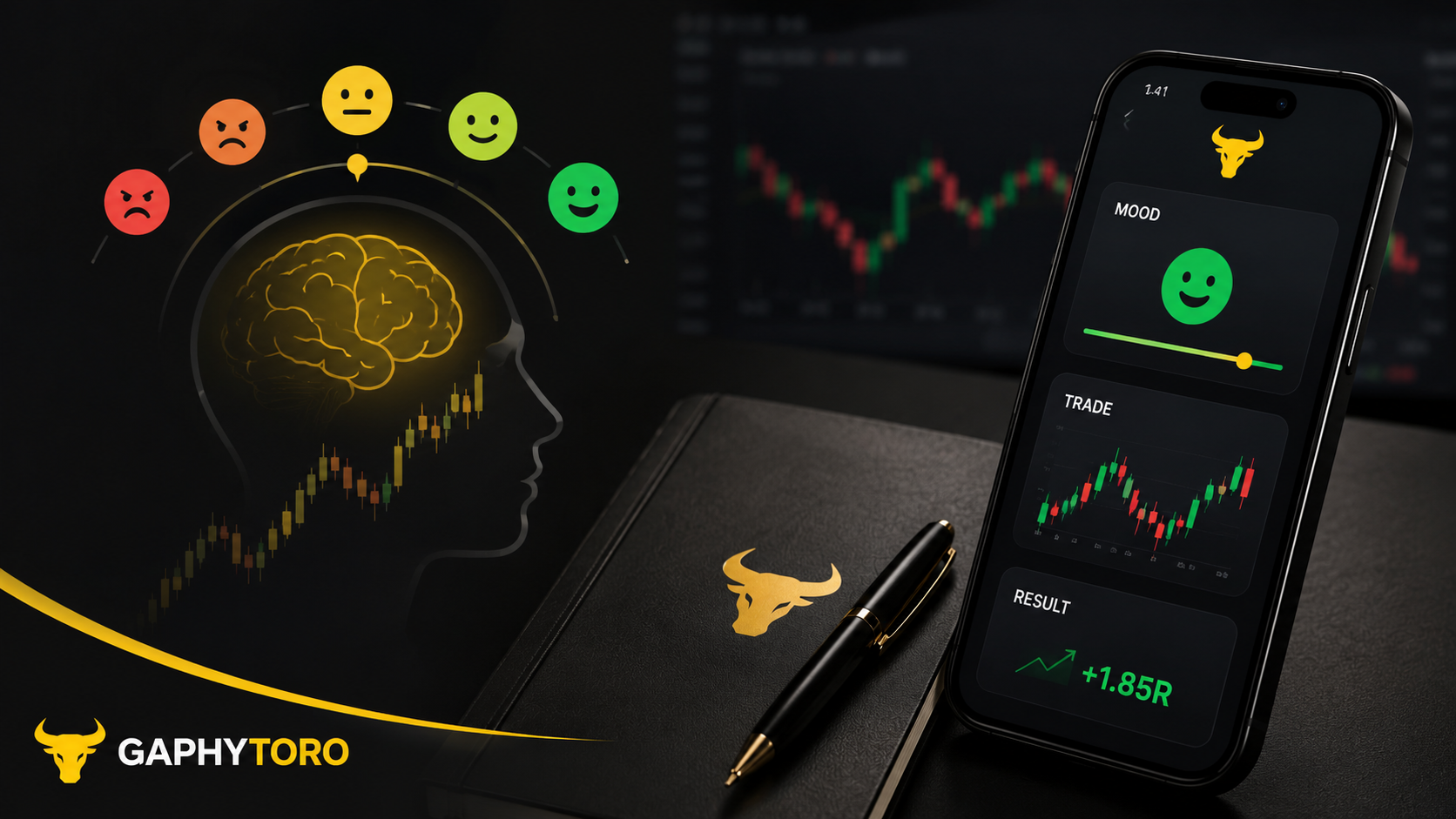
Record your emotional state before entry.
Record your emotional state while holding.
Record the mistake, if any.
Record the lesson from the trade.
Record screenshots before and after the trade.
These details help you see the full picture.
If all your losses happen on GBP/JPY, that matters.
If your best trades happen during London but your worst trades happen late in New York, that matters.
If your losing trades often happen when you are frustrated, that matters.
If your winning trades come from one setup and your losses come from random setups, that matters.
A forex journal turns those patterns into evidence.
Use Screenshots for Every Trade
Screenshots are one of the most important parts of a trading journal.
A written note can help, but a screenshot shows the truth. It shows whether the setup was actually clean. It shows whether you entered early. It shows whether price had already moved too far. It shows whether there was structure, liquidity, support, resistance, trend alignment or clear invalidation.
Take one screenshot before entry.
Take one screenshot after exit.
The before-entry screenshot should show why you took the trade. It should include the setup, the level, the candle structure and the reason you believed the trade was valid.
The after-exit screenshot should show what happened next. Did price follow your plan? Did it reject your level? Did you close too early? Did you hold too long? Did the setup fail clearly?
This is especially useful for forex traders because price can move quickly and memory becomes unreliable.
You may think the trade looked perfect.
The screenshot may show that it was forced.
Track Emotions Before, During and After the Trade
Forex trading is not only technical. It is emotional.
A trader can have a good setup but execute badly because of fear, greed, frustration or impatience. That is why emotional tracking should be part of your forex trading journal.
Before the trade, record how you feel.
Calm.
Rushed.
Anxious.
Frustrated.
Confident.
Overconfident.
Tired.
Bored.
After a few weeks, you may start seeing patterns.
Maybe your calm trades perform well.
Maybe your frustrated trades produce your biggest losses.
Maybe your overconfident trades have the worst risk control.
Maybe your bored trades are low-quality setups.
This kind of information is more useful than most traders realize.
It shows you when you should trade and when you should stop.
Record the Reason for Entry
Every trade should have a clear reason for entry.
If you cannot explain why you entered, the trade probably should not have been taken.
A good entry reason sounds specific.
Price broke above the previous day high, pulled back into the breakout level and rejected with bullish structure.
Price swept Asian session liquidity, returned above the range and confirmed a reversal setup.
Price rejected a higher timeframe support zone with confirmation on the 15-minute chart.
A weak entry reason sounds emotional.
I felt like it would go up.
It looked strong.
I did not want to miss it.
I wanted to recover the previous loss.
The difference is important.
Your journal should help you identify whether your trades are strategy-based or emotion-based. Over time, this will show whether your results are coming from a repeatable trading process or from random decision-making.
Investopedia emphasizes that active traders need structured systems with clear entry rules, exit rules, position sizing and conditions for when not to trade.
That is exactly what your journal should help you measure.
Record Whether You Followed Your Trading Plan
One of the most important fields in your forex trading journal should be simple.
Did I follow my plan?
Yes or no.
This matters because a trader can lose money while following the plan and still be trading correctly. A trader can also make money while breaking the plan and still be building a dangerous habit.
Your journal should separate execution quality from outcome.
For every trade, ask:
Was this setup part of my strategy?
Did I wait for confirmation?
Did I use the correct lot size?
Did I place the stop loss properly?
Did I respect my invalidation level?
Did I exit according to the plan?
Did I avoid emotional interference?
If the answer is no, the journal should capture that clearly.
You are not journaling to look good.
You are journaling to improve.
Record Mistakes Honestly
A forex journal only works if you are honest.
Do not write vague notes like “bad trade” or “poor entry.”
Write the real mistake.
Entered before confirmation.
Moved stop loss.
Closed early because of fear.
Increased lot size after a loss.
Ignored news risk.
Entered after price had already moved too far.
Took a trade outside the plan.
Revenge traded after previous loss.
Traded while tired.
This level of honesty is uncomfortable, but it is where improvement starts.
If the same mistake appears ten times in your journal, that is no longer a random error. It is a pattern.
Once it is a pattern, you can build a rule around it.
For example, if you keep losing after two losses in a row, create a daily rule that stops you from trading after two losses.
If you keep closing winners too early, reduce risk so the trade is easier to hold.
If you keep entering too late, create a checklist that stops you from chasing price after the move has already expanded.
A journal is not there to judge you.
It is there to show you the truth.
Track Risk on Every Trade
Risk tracking is one of the biggest reasons to keep a forex trading journal.
Forex traders often destroy accounts not because they never find good setups, but because they risk too much at the wrong time.
Your journal should show planned risk and actual risk.
Planned risk is what you intended to risk before entering.
Actual risk is what you really exposed the account to.
Sometimes traders plan to risk 1%, then move the stop loss and end up risking more. Sometimes they increase lot size after a loss. Sometimes they take multiple trades on correlated pairs without realizing the total exposure is too high.
A forex trading journal helps you catch this.
Track risk per trade.
Track total daily risk.
Track drawdown.
Track average loss.
Track average win.
Track risk-to-reward ratio.
Track whether your position size matched your plan.
These numbers matter because trading is not only about being right. It is about surviving long enough for your edge to play out.
Review Winning Trades Too
Many traders only review losing trades.
That is a mistake.
Winning trades can teach you just as much as losing trades. Sometimes a winning trade was a clean execution. Other times, it was a bad decision that got lucky.
You need to know the difference.
Review your wins and ask:
Was this trade part of my plan?
Was the entry clean?
Did I manage risk properly?
Did I exit well?
Did I hold according to the setup?
Did I make money because of skill or because of luck?
This protects you from building confidence around bad habits.
A trader who wins from reckless behavior may become more dangerous after the win. That trader may increase size, ignore rules and assume the market will keep rewarding them.
A journal helps stop that.
Review Losing Trades Without Emotion
Losing trades also need calm review.
Not every losing trade is a bad trade. Some losses are normal. If the setup was valid, risk was controlled and the trade followed the plan, then the loss is part of trading.
The real problem is not losing.
The real problem is losing because you broke your rules.
Review losing trades and ask:
Was the setup valid?
Did I enter too early?
Did I chase price?
Was my stop loss in the right place?
Did I risk too much?
Was I trading emotionally?
Did I ignore a higher timeframe level?
Did I trade into major news?
Did I follow the plan?
This helps you avoid overreacting. You do not need to change your entire strategy because of one losing trade. You need to review a full sample and see what repeats.
Do a Weekly Forex Journal Review
Daily journaling captures the details.
Weekly review reveals the patterns.
At the end of each week, review all trades and look for repeated behavior. This is where the journal becomes powerful.
Ask yourself:
Which currency pair performed best?
Which pair performed worst?
Which session gave the cleanest trades?
Which setup worked best?
Which setup failed most often?
What was my biggest mistake?
Was I disciplined with risk?
Did I overtrade?
Did I revenge trade?
Did I follow my plan?
What one thing should I improve next week?
Do not try to fix everything at once.
Pick one trading behavior and work on it for the next week.
For example, if the journal shows that you keep entering too early, your next week’s goal is patience and confirmation.
If it shows that you keep increasing risk after losses, your next week’s goal is fixed position sizing.
If it shows that you keep taking low-quality trades during boredom, your next week’s goal is fewer trades.
Small improvements repeated every week can change your trading over time.
Forex Trading Journal Example
Here is a simple example of a useful forex journal entry.
Pair: EUR/USD
Session: London
Direction: Buy
Setup: Breakout and retest
Entry reason: Price broke above the Asian high, pulled back into the breakout area and formed bullish rejection.
Entry: 1.08720
Stop loss: 1.08580
Take profit: 1.09070
Risk: 1%
Planned reward: 2.5R
Mood before entry: Calm
Mood during trade: Slightly anxious during pullback
Result: Win, 2R
Mistake: Closed part of the position early without a rule
Lesson: Setup was valid, but trade management needs more patience. Follow partial close rules instead of reacting emotionally.
This is useful because it tells the full story.
It does not only say whether the trade won or lost. It explains the setup, the emotional state, the execution mistake and the lesson.
That is what a proper trading journal should do.
Manual Forex Journal vs Trading Journal Software
You can start with a notebook, Excel sheet, Google Sheet or Notion template.
That is fine in the beginning.
But manual journals can become difficult to maintain as your trading grows. Screenshots get lost. Notes become inconsistent. Performance review takes too long. It becomes harder to connect setups, emotions, mistakes and results in one place.
This is where trading journal software becomes useful.
A tool like GaphyToro helps traders record trades, organize screenshots, track emotions, review mistakes and understand performance patterns with more structure.
The easier the journal is to use, the more likely you are to keep using it.
That matters because consistency is the real edge of journaling.
A complicated journal that you never update will not help you.
A simple journal that you update every day can change how you trade.
Common Forex Trading Journal Mistakes
The first mistake is only tracking profit and loss.
Profit and loss tells you what happened, but not why it happened.
The second mistake is not taking screenshots.
Without screenshots, you rely too much on memory. Memory is unreliable, especially after emotional trades.
The third mistake is being dishonest.
If you revenge traded, write it. If you increased lot size emotionally, write it. If you ignored your plan, write it.
The fourth mistake is not reviewing the journal.
Recording trades is only half the process. The improvement comes from review.
The fifth mistake is changing strategy too quickly.
One bad day does not mean the strategy is broken. Use your journal to review a proper sample size.
The sixth mistake is journaling only when you feel motivated.
A trading journal is not a motivational tool. It is a discipline tool.
How GaphyToro Helps Forex Traders Journal Better
GaphyToro is built for traders who want to stop guessing and start reviewing properly.
It helps traders track trades, screenshots, emotions, mistakes and performance patterns in one place. Instead of looking only at profit and loss, traders can connect results to the decisions behind them.
That is the difference between recording trades and learning from trades.
If you trade forex, gold, indices, crypto or prop firm accounts, a structured journal can help you see what is working, what is failing and what needs to change.
The goal is simple.
Trade.
Record.
Review.
Improve.
Then repeat.
Final Thoughts
A forex trading journal is not just a spreadsheet.
It is a feedback system.
It shows whether you are following your plan, managing risk properly, controlling emotions and improving over time. It helps you stop relying on memory and start using real evidence from your own trading.
If you want to become more consistent, start journaling every trade.
Not only the losses.
Not only the wins.
Every trade.
Record the setup. Record the risk. Record the screenshot. Record the emotion. Record the mistake. Record the lesson.
That is how trading experience becomes trading improvement.
Start Your Forex Trading Journal With GaphyToro
If you want to review your trades with more structure, start tracking them with GaphyToro.
GaphyToro helps traders connect trades, screenshots, emotions, mistakes and performance data so every trade gives you more than just a result.
Start tracking your trades before your next session.
Your future trading decisions should be based on evidence, not memory.
FAQs
What is a forex trading journal?
A forex trading journal is a structured record of your forex trades. It tracks your pair, entry, exit, risk, reward, setup, screenshot, emotional state, mistake and lesson from each trade.
What should I include in a forex trading journal?
You should include the currency pair, trading session, direction, entry price, stop loss, take profit, position size, risk, result, setup type, screenshot, emotion, mistake and lesson.
Why is a forex trading journal important?
A forex trading journal is important because it helps traders review performance, identify repeated mistakes, manage risk, improve discipline and understand whether losses are caused by strategy, execution or emotion.
Should I journal winning trades too?
Yes. Winning trades should also be reviewed because some wins come from good execution while others come from bad decisions that happened to work. Reviewing wins helps traders avoid building confidence around poor habits.
How often should I update my forex trading journal?
You should update your forex trading journal after every trade. You should also do a weekly review to identify repeated mistakes, strong setups and areas for improvement.
Can I use Excel as a forex trading journal?
Yes. Excel can work as a beginner forex trading journal. However, as your trading becomes more serious, trading journal software can make it easier to organize screenshots, emotions, mistakes and performance data.
Does a forex trading journal make you profitable?
A forex trading journal does not guarantee profits. It helps you improve your process by showing what is working, what is failing and which behaviors need to change.
Filed under
Written by

Founder & CEO, GaphyToro
Philip Ogina is the Founder and CEO of GaphyToro, a trader-first performance ecosystem built to help modern traders improve through structure, discipline, data, and better execution. He is a trader, investor, market analyst, educator, and software builder focused on building tools and infrastructure for the next generation of traders.