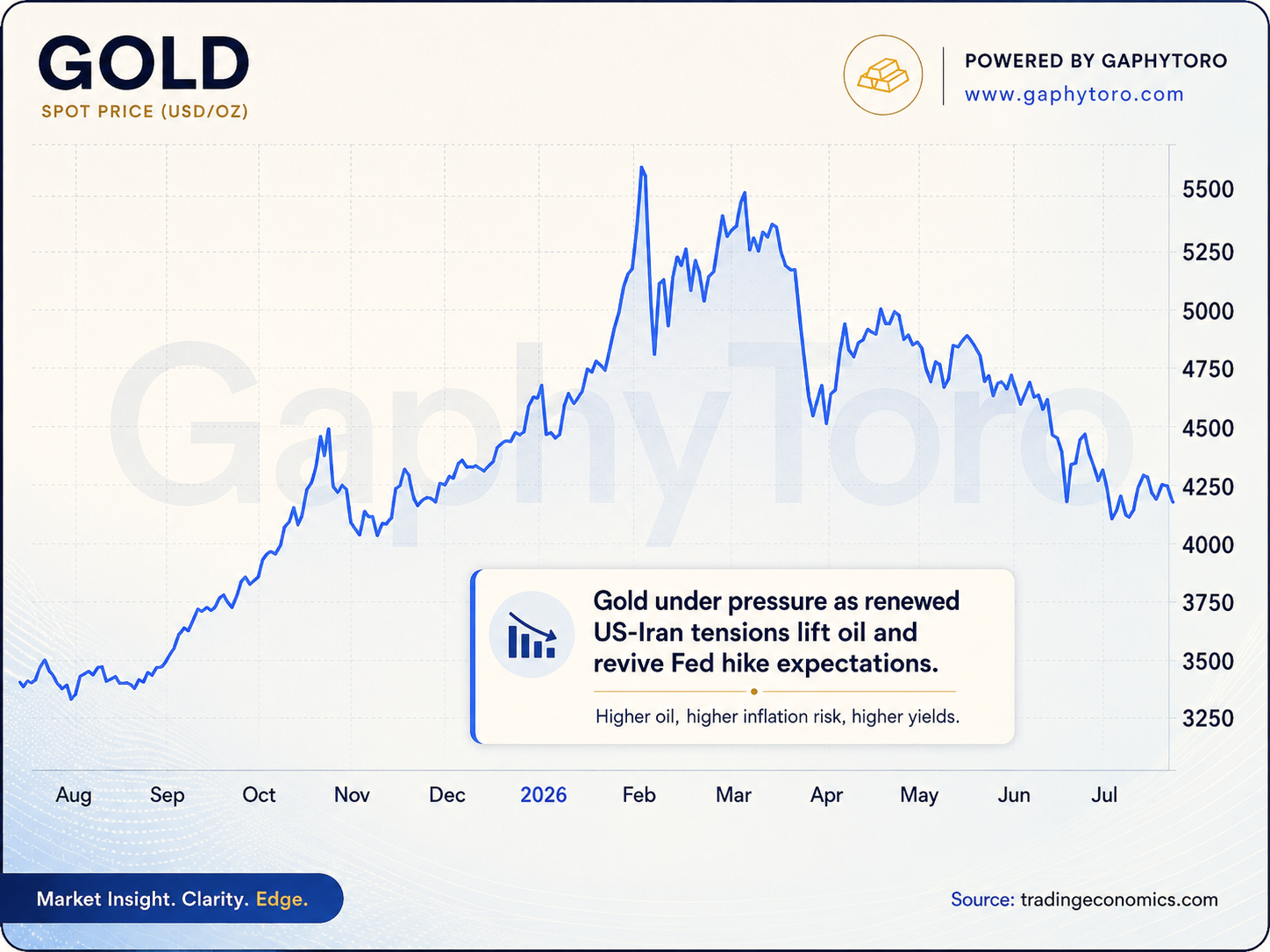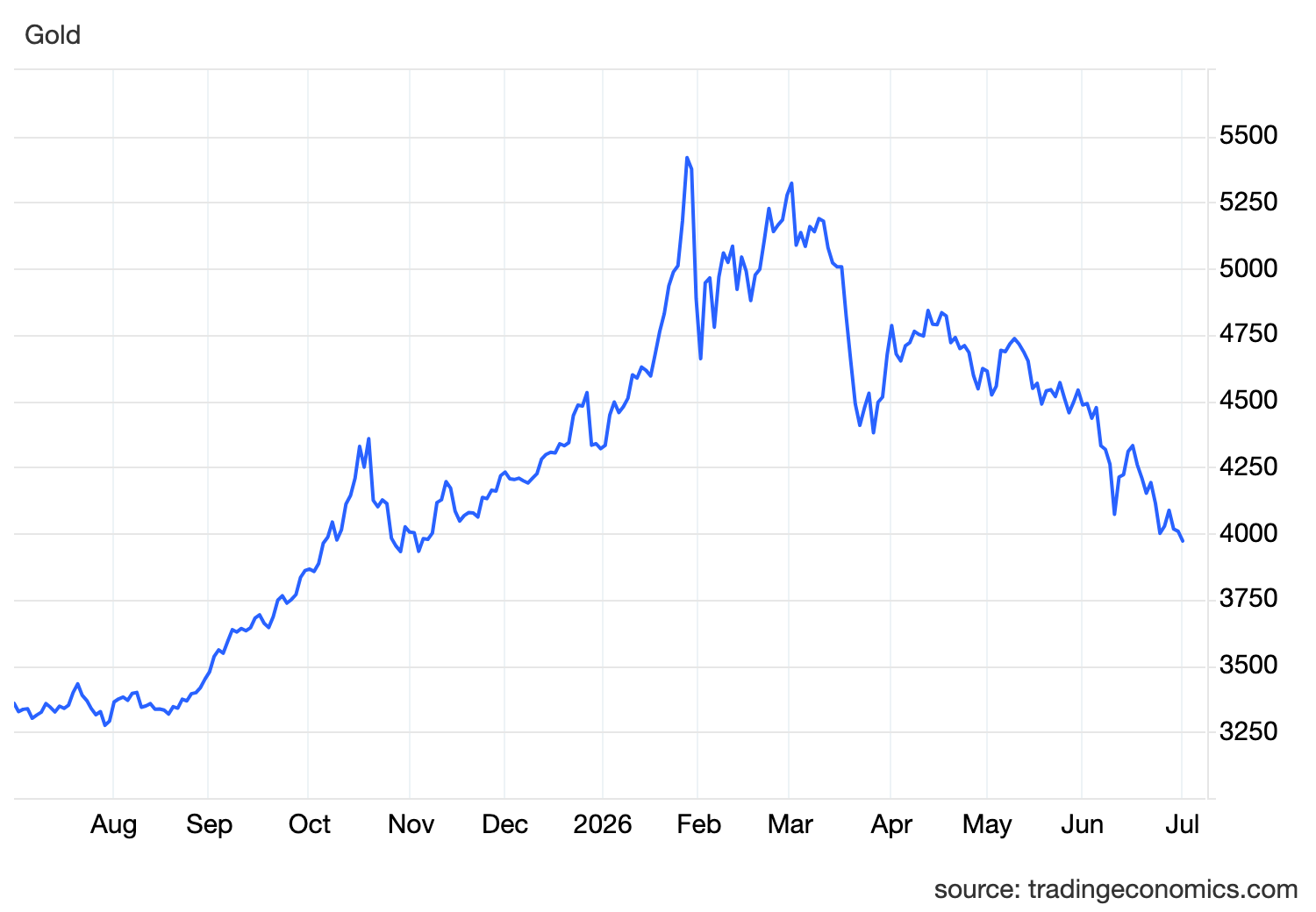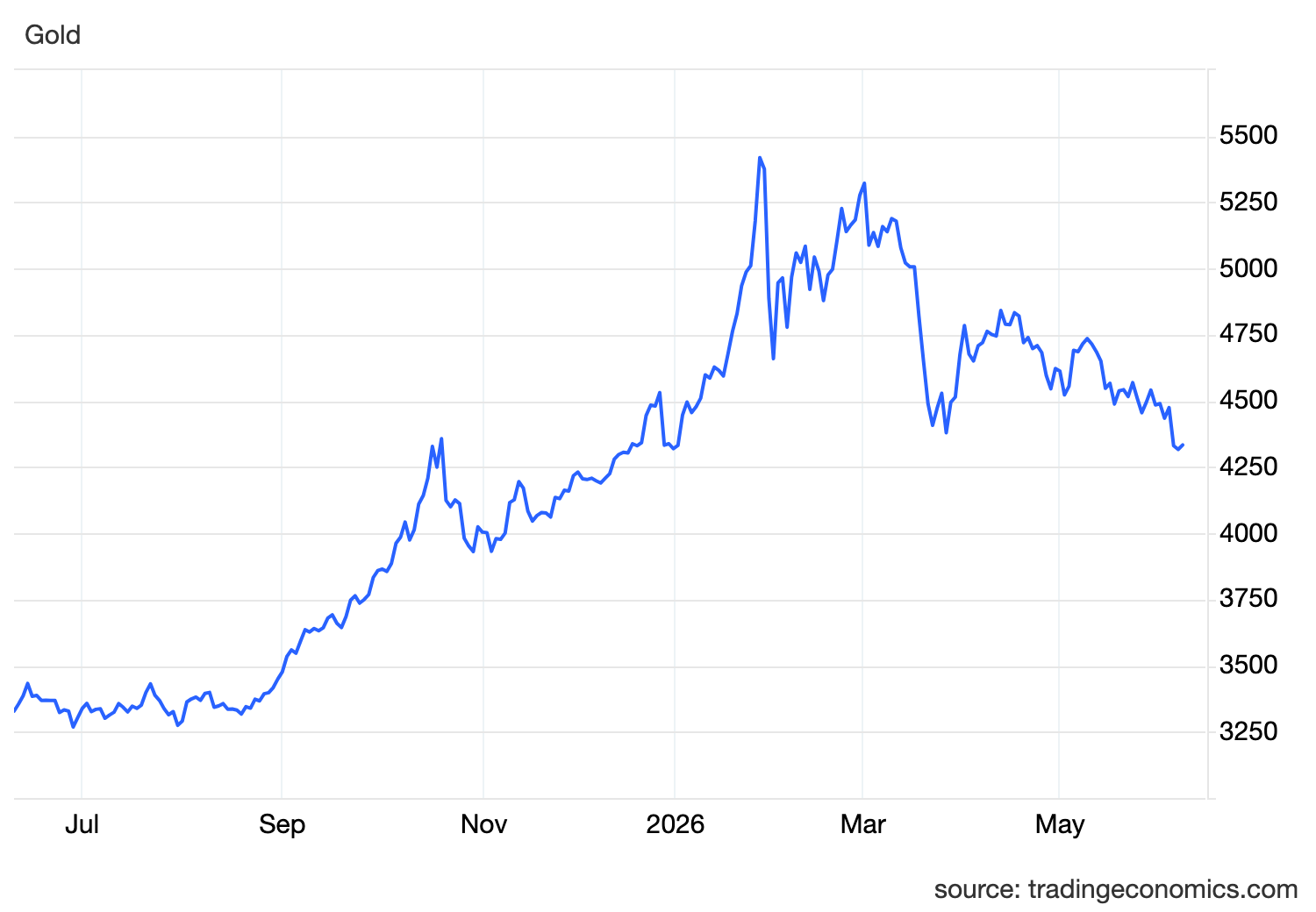
Gold has stopped falling for now, but the recovery is still fragile.
The metal steadied above 4300 after Iran and Israel agreed to halt attacks, reducing fears of a wider regional escalation. That matters because the biggest risk from the conflict has not been fear alone. It has been oil.
When tensions rise in the Middle East, markets immediately look at energy supply. If oil rises, inflation pressure rises with it. If inflation pressure rises, Treasury yields move higher because bond investors demand more compensation for future price risk.
That is the chain that has been hurting gold.
Oil goes up.
Inflation expectations rise.
Yields move higher.
The Fed becomes more hawkish.
The dollar strengthens.
Gold struggles.
The ceasefire helps because it lowers the probability of another immediate oil spike. President Trump also said both sides were seeking an immediate ceasefire and that final negotiations were moving forward. That gives markets some relief after weeks of trading the risk of a broader energy shock.
But this is not enough to flip the gold story bullish.
The rates side is still heavy.
Last week’s US jobs report was stronger than expected. Nonfarm payrolls rose by 172,000 in May, while the unemployment rate held at 4.3%. The report also included upward revisions to prior months, which reinforced the view that the labour market is cooling slowly, not breaking.
That matters for the Fed.
If inflation is high and the labour market is weak, the Fed has a reason to become cautious.
If inflation is high and the labour market is resilient, the Fed has room to keep policy tight.
Right now, markets are trading the second scenario.
That is why gold is still near its lowest level since late March. The ceasefire reduces the inflation shock at the margin, but strong labour data keeps the Fed from sounding dovish.
Markets are now pricing a high probability of a December rate hike, with Reuters reporting that traders see more than a 70% chance of a hike by year-end. Goldman Sachs also pushed its expected Fed cuts into 2027 after the strong jobs data, arguing that stronger growth and employment give the Fed more room to hold rates steady despite inflation pressure.
This is the main pressure on gold.
Gold does not pay interest. When Treasury yields rise, the opportunity cost of holding bullion increases. Reuters reported that gold extended losses as rising Treasury yields pressured the metal, while the benchmark 10-year yield reached a two-week high.
So even though geopolitical risk has eased, gold is not getting a clean rally.
Less war risk reduces safe-haven demand.
Strong jobs lift Fed hike expectations.
Higher yields pressure bullion.
That is why the move is stabilization, not recovery.
The next test is inflation data.
Investors are waiting for CPI and PPI later this week because those reports will show whether the oil shock is still feeding into prices. If inflation comes in hot again, the market will have more reason to price a hawkish Fed, keeping yields and the dollar supported.
That would be negative for gold.
If CPI and PPI soften, the story changes. Lower inflation would weaken the case for a December hike, cool yields and give gold more room to recover.
But the Fed needs evidence, not hope.
A ceasefire can reduce future oil risk, but it does not erase the inflation already moving through the economy. And as long as the labour market remains strong, the Fed can afford to wait before cutting or even keep the option of another hike alive.
The dollar also remains important.
A stronger dollar makes gold more expensive for foreign buyers. If US yields stay high because of strong jobs and sticky inflation, the dollar keeps support. That adds another headwind to bullion.
So the current gold setup is clear.
The ceasefire has eased the worst-case oil shock.
But the jobs report has strengthened the higher-for-longer Fed story.
Gold is no longer falling aggressively because geopolitical pressure has cooled.
But it is not rallying strongly because yields and the dollar are still doing the heavy lifting.
Until CPI and PPI confirm inflation is cooling, gold remains trapped.
Peace helps.
Lower yields would help more.
Filed under
Written by

Founder & CEO, GaphyToro
Philip Ogina is the Founder and CEO of GaphyToro, a trader-first performance ecosystem built to help modern traders improve through structure, discipline, data, and better execution. He is a trader, investor, market analyst, educator, and software builder focused on building tools and infrastructure for the next generation of traders.