Gold is facing a new problem.
The market is no longer debating whether inflation surged.
The debate is now about how aggressively the Federal Reserve must respond.
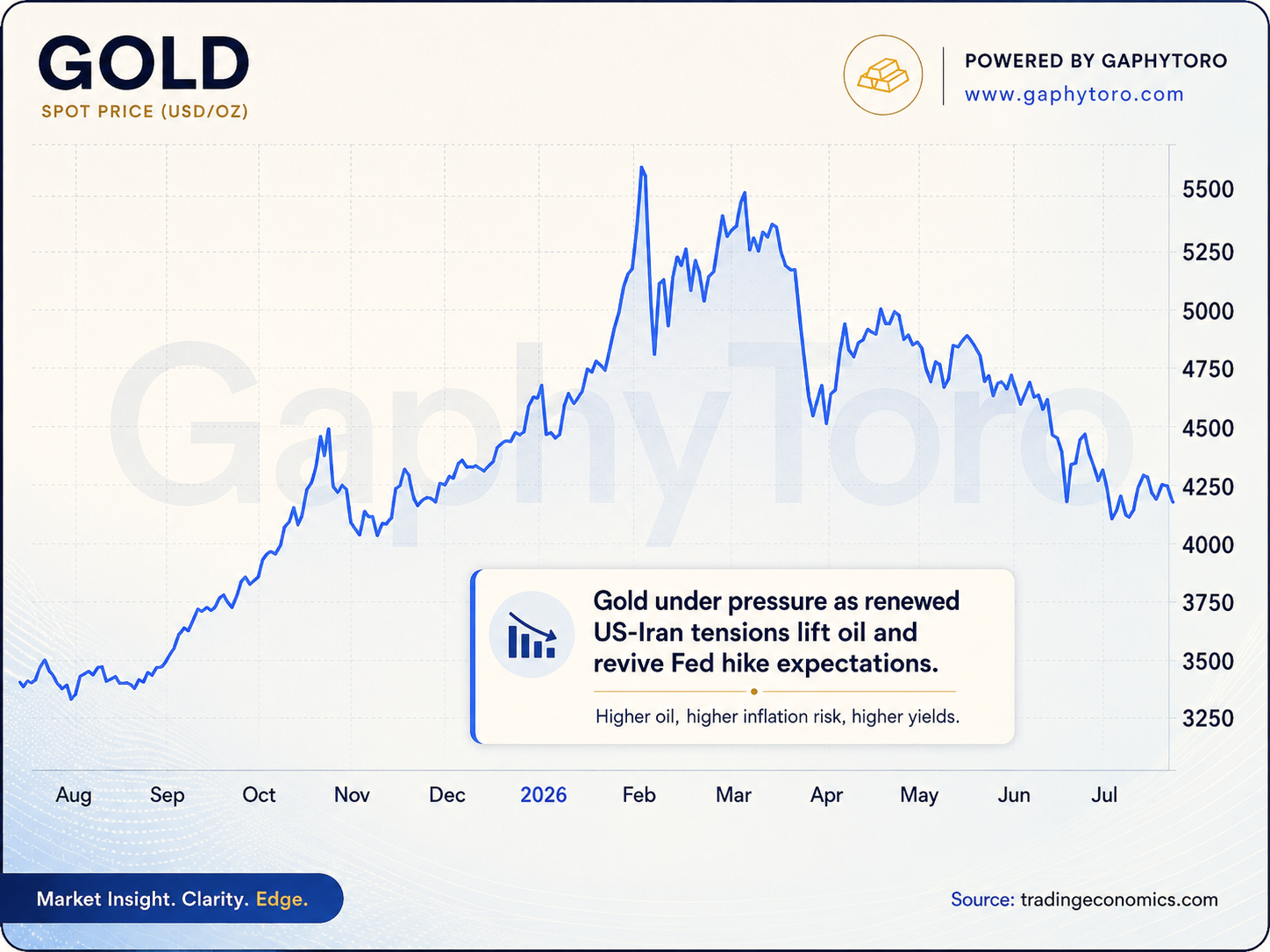
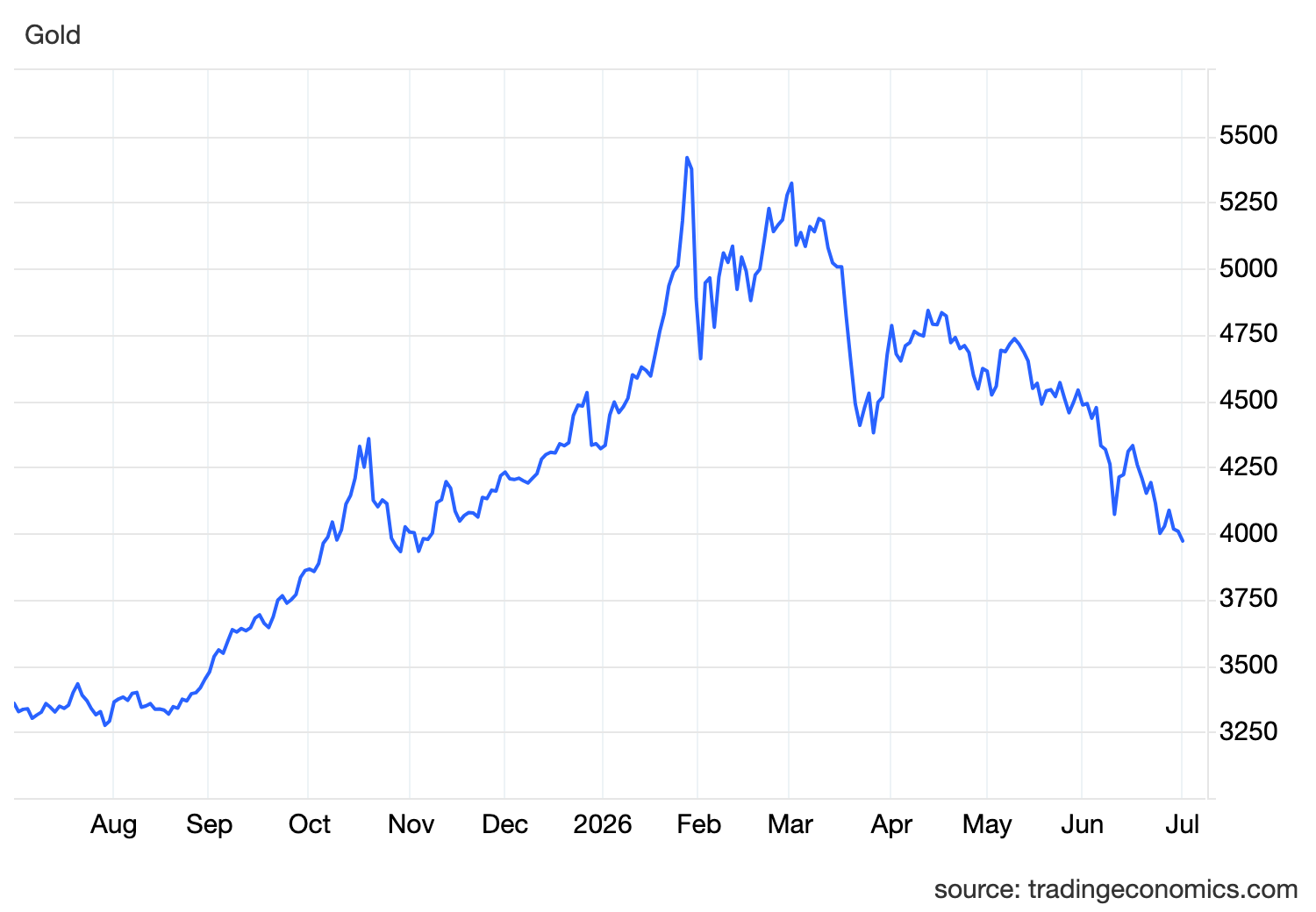
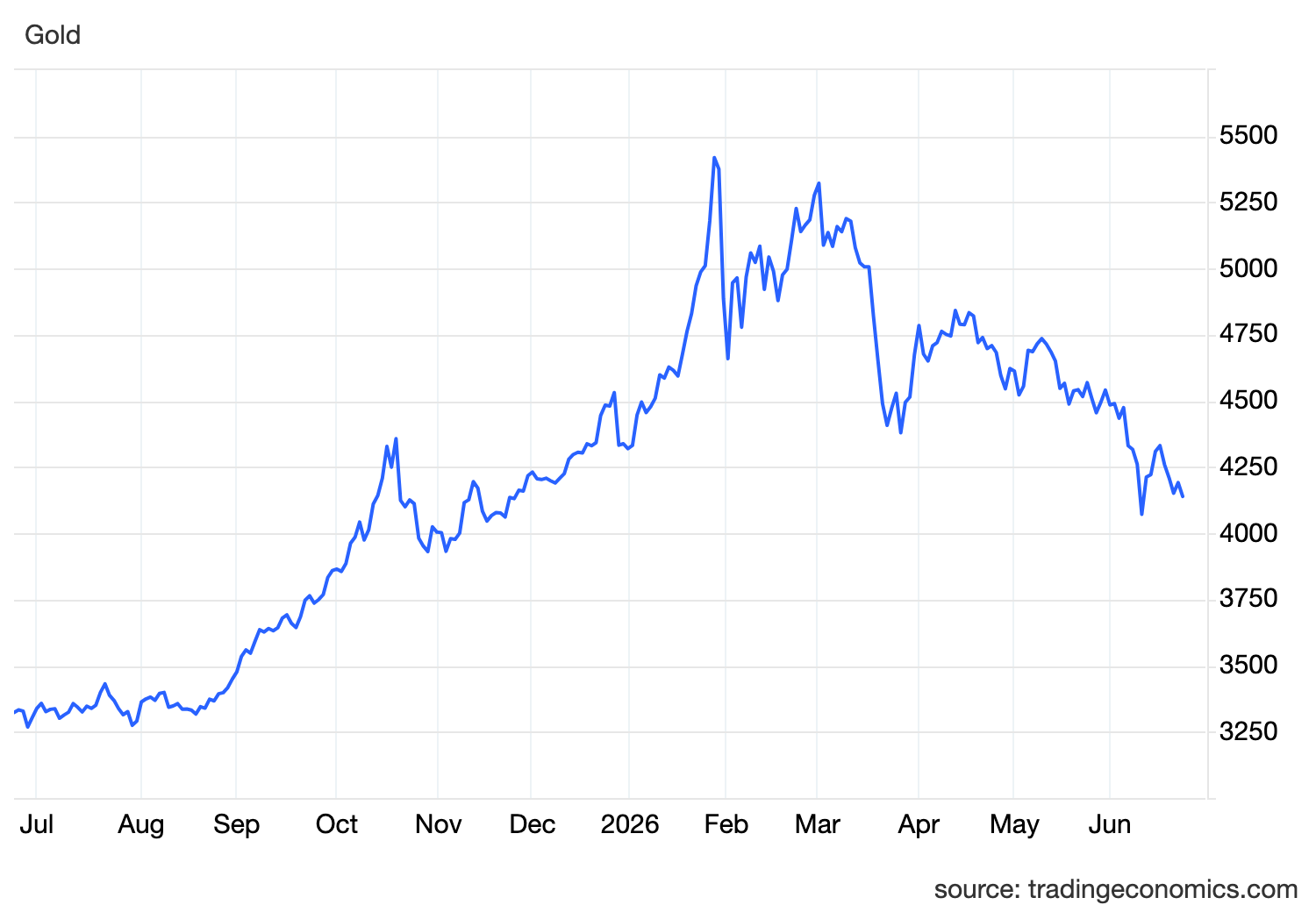
Bullion slipped below $4,150 as investors continued reducing exposure to non-yielding assets amid growing expectations that the Fed may raise interest rates as soon as September. Both Deutsche Bank and Bank of America now expect an additional hike this year, highlighting how quickly market sentiment has shifted over recent weeks.
That shift explains why gold is struggling even as one of its biggest recent headwinds begins to fade.
On the surface, the macro backdrop should be improving for bullion.
The US-Iran peace process continues to advance, Washington has granted Iran a 60-day license to sell oil internationally, and energy exports through the Strait of Hormuz continue recovering. Iran alone shipped more than 30 million barrels over the past week, while producers across the Gulf are restoring supply and expanding exports through alternative routes.
Oil markets are responding accordingly.
Crude prices have fallen sharply from the highs reached during the conflict as traders increasingly price in supply normalization rather than supply disruption.
Normally, lower oil would be supportive for gold.
Lower energy prices reduce inflation pressures. Lower inflation reduces the likelihood of central bank tightening. Lower rates reduce bond yields and weaken the dollar, improving the appeal of gold.
That transmission mechanism has not fully materialized yet.
The reason is timing.
While oil prices have fallen, the inflation shock created during the conflict has already moved through the global economy. Recent US inflation data showed CPI accelerating to 4.2%, its highest level since 2023, while producer prices recorded their strongest increase since 2022.
The Federal Reserve acknowledged that reality last week.
At its first meeting under Chair Kevin Warsh, policymakers left rates unchanged but sharply raised inflation forecasts. Officials now expect PCE inflation to reach 3.6% this year, up from 2.7% just three months ago.
More importantly, the Fed's projections revealed a growing willingness to tighten further.
Nine policymakers now expect at least one rate hike before year-end, while six foresee two or more increases. Markets have responded by pushing Treasury yields higher and increasing expectations for additional tightening.
That is the core driver behind gold's weakness.
Gold does not compete with oil.
Gold competes with yields.
As Treasury yields rise, investors can earn increasingly attractive returns from government bonds and cash. That increases the opportunity cost of holding a non-yielding asset like gold.
The dollar has benefited from the same dynamic.
Despite easing geopolitical tensions, the dollar recently climbed to its strongest level in more than a year as investors focused on higher US interest rates rather than lower oil prices. A stronger dollar further pressures gold by making it more expensive for international buyers.
This week's PCE report could become the next major catalyst.
Unlike CPI, PCE is the inflation measure most closely watched by the Federal Reserve. Investors will be looking for evidence that lower oil prices are beginning to filter through the economy and moderate underlying inflation pressures.
If PCE comes in softer than expected, markets could start questioning whether current rate hike expectations have become too aggressive.
That would likely support gold through lower yields and a weaker dollar.
However, if inflation remains stubbornly elevated, the Fed's hawkish stance could gain further credibility.
In that scenario, September hike expectations would strengthen and gold could remain under pressure despite the improvement in the geopolitical backdrop.
The broader market environment reinforces this challenge.
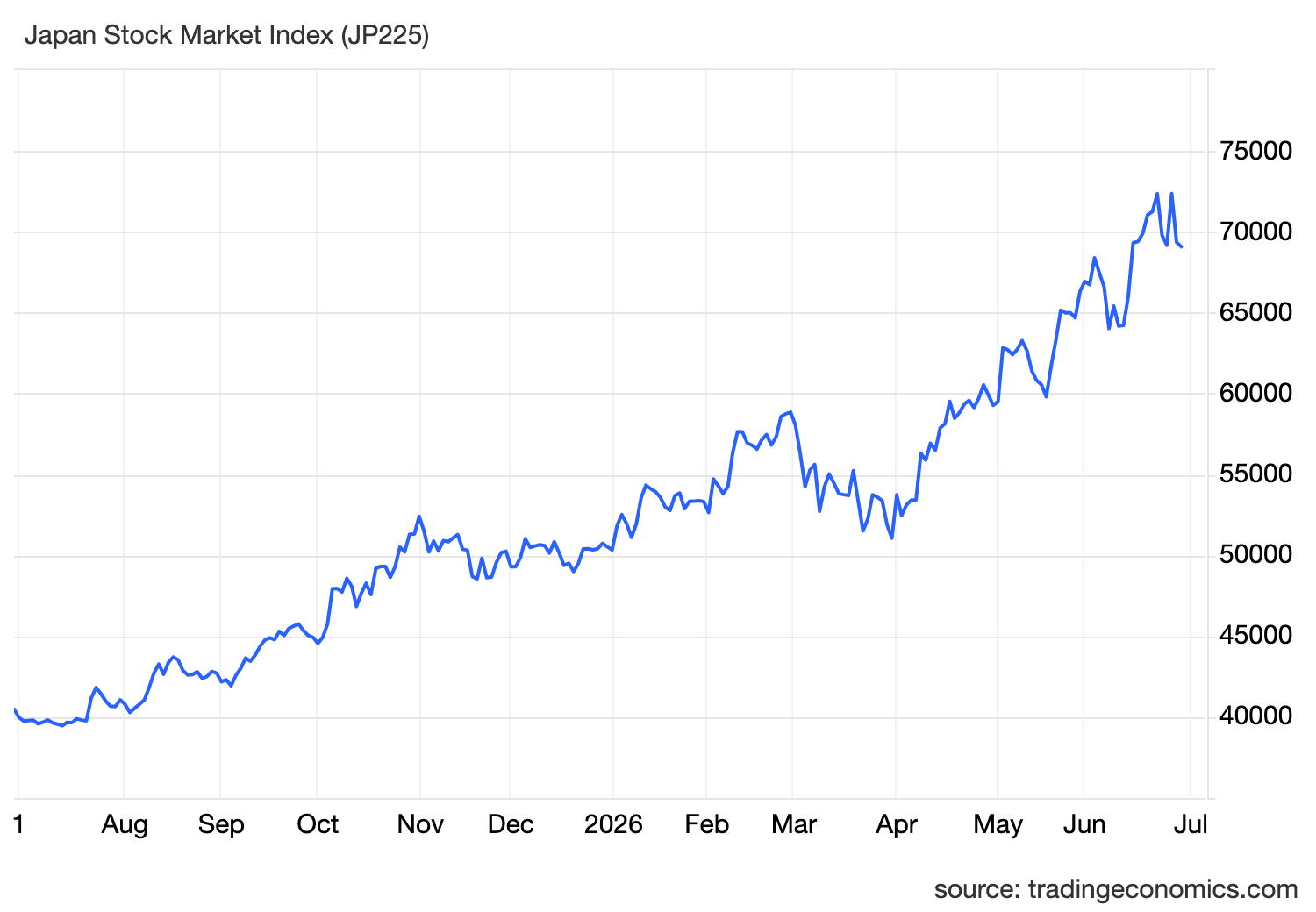
The Bank of Japan recently raised rates to 1.0%, while the European Central Bank has also shifted toward a more hawkish posture. Across major economies, central banks remain focused on inflation rather than growth.
That leaves little room for gold to benefit from monetary policy expectations.
For now, the market believes the inflation damage has already been done.
Peace negotiations may be progressing.
Oil supply may be recovering.
But until inflation begins showing clear signs of retreat, investors are likely to remain focused on higher interest rates.
And right now, higher rates are a bigger story for gold than lower oil.
Filed under
Written by

Founder & CEO, GaphyToro
Philip Ogina is the Founder and CEO of GaphyToro, a trader-first performance ecosystem built to help modern traders improve through structure, discipline, data, and better execution. He is a trader, investor, market analyst, educator, and software builder focused on building tools and infrastructure for the next generation of traders.