Gold is not moving much this week, but the market is far from calm.
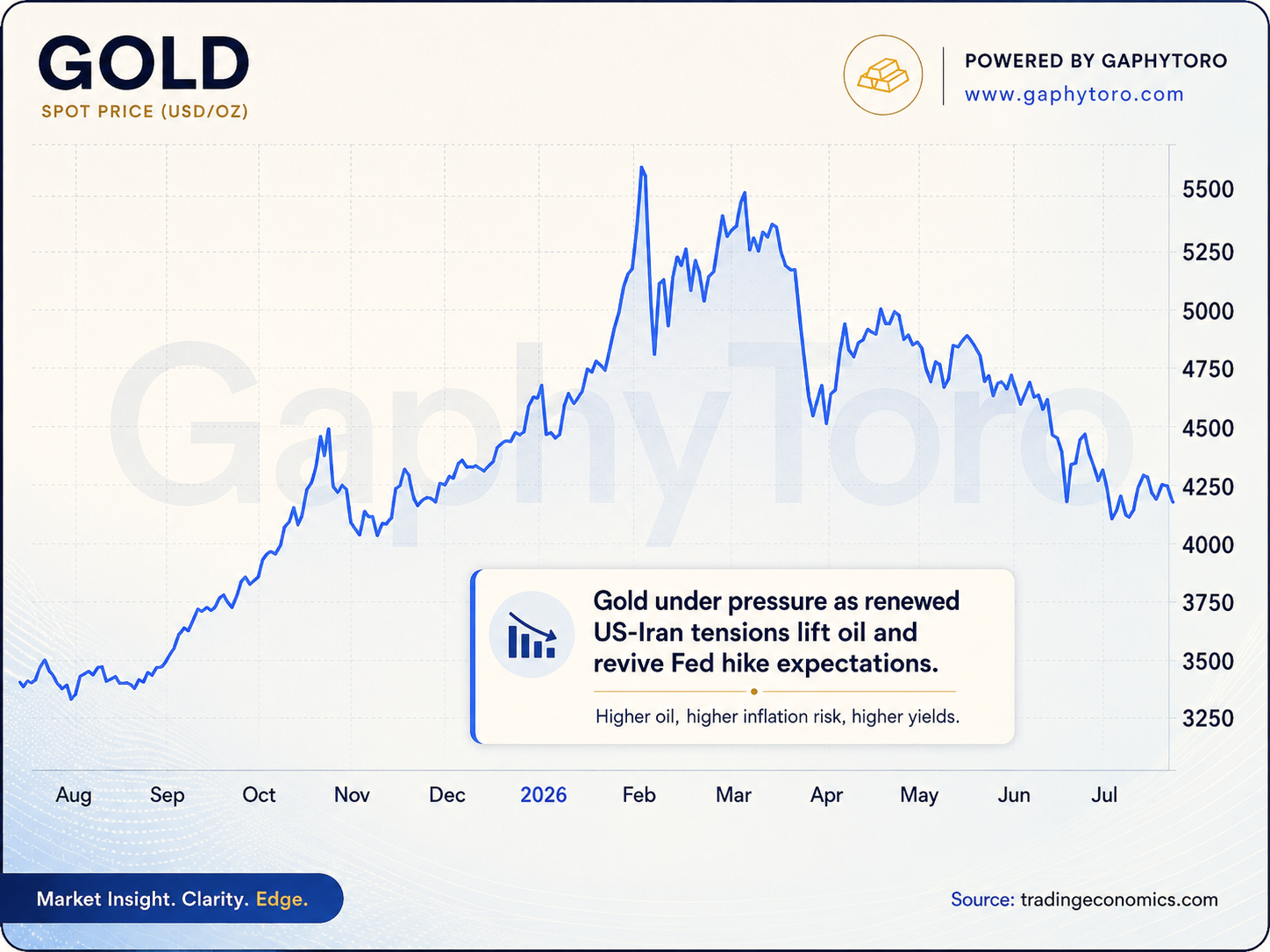
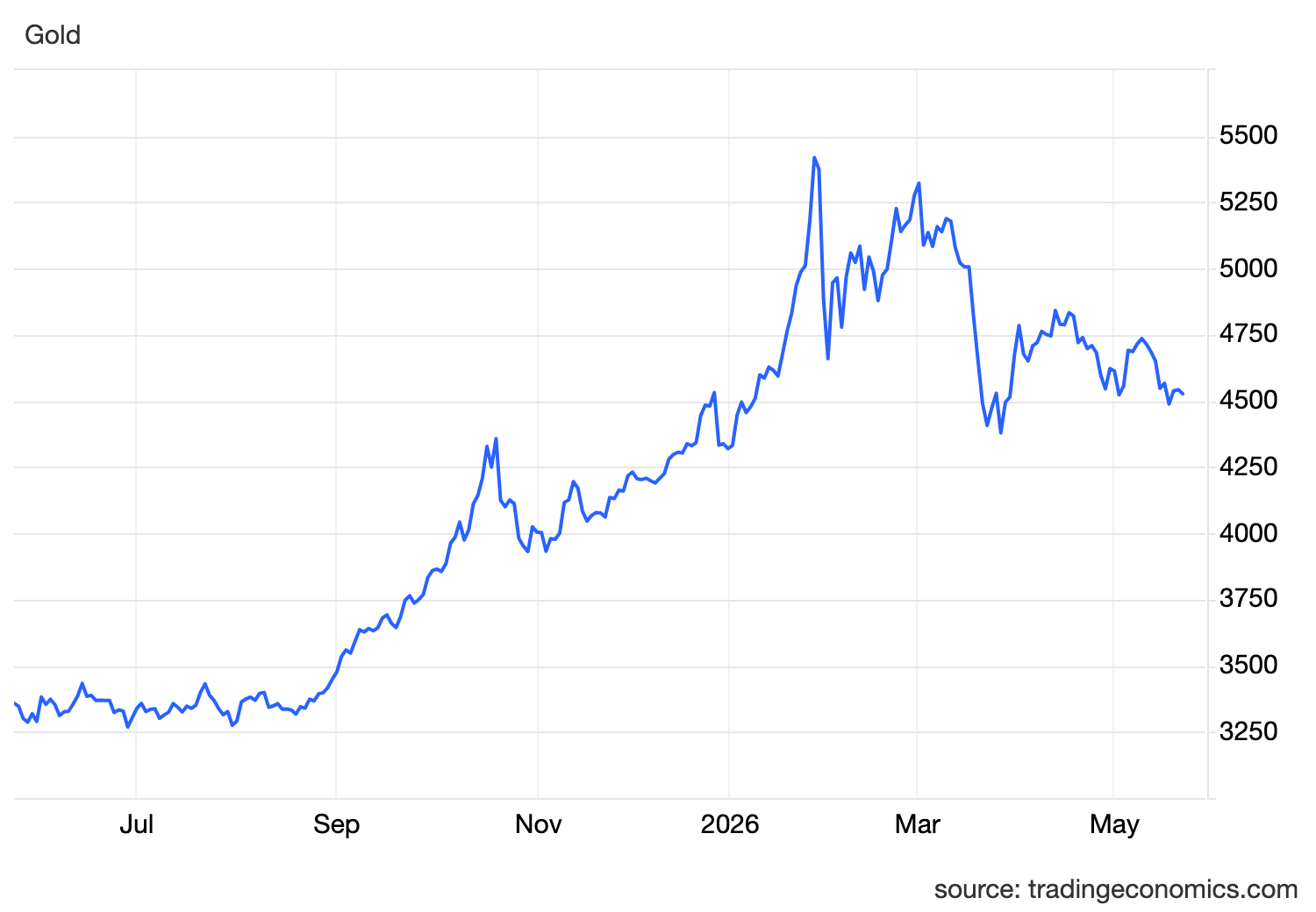
The metal is hovering above 4500 and is on track to finish the week little changed. That stability reflects a market stuck between two competing forces.
On one side, there is some diplomatic progress. Tehran has said the latest US proposal partially narrowed the gap between both sides. That gives markets a reason to believe a broader deal may still be possible.
On the other side, the biggest obstacles are still unresolved.
Reports that Iran’s Supreme Leader wants the country’s enriched uranium stockpile to remain inside Iran complicate the negotiation process, because dismantling or limiting Iran’s nuclear program remains one of Washington’s key objectives. At the same time, Iran’s reported discussions with Oman over a permanent toll system in the Strait of Hormuz have created another major flashpoint.
This matters because Hormuz is the centre of the oil shock.
Reuters reported that US officials have warned a Hormuz tolling system would make a diplomatic agreement with Iran unworkable, while the idea has been framed as a deal-breaker because it would formalize Iranian control over a critical global shipping route.
That is why gold is not getting a clean bullish or bearish signal.
Peace headlines reduce safe-haven demand.
But unresolved Hormuz and nuclear issues keep the risk premium alive.
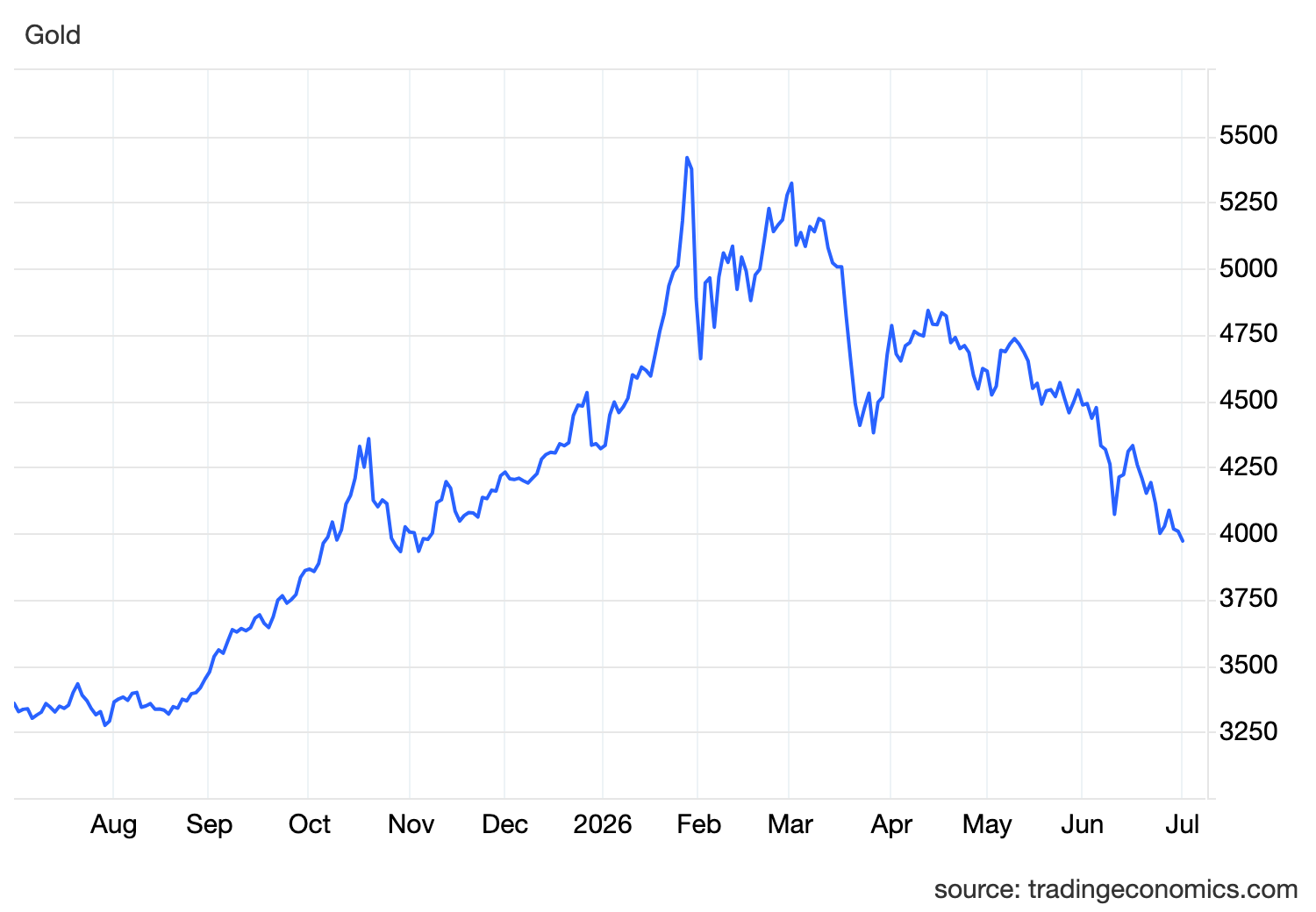
The bigger point is that gold is still around 14% lower since the conflict began. That tells us the market is not treating this war as automatically bullish for bullion.
The reason is inflation.
The near-shutdown of Hormuz has kept energy flows disrupted and oil prices elevated. Reuters reported that full oil flows through Hormuz may not return until 2027 according to ADNOC’s chief executive, even if the conflict ends immediately, showing how deep the supply damage has become.
That means the conflict is no longer just a geopolitical risk.
It is an inflation shock.
Higher oil raises fuel prices, freight costs, production costs and import costs. Those pressures have already moved into the US inflation data.
US CPI rose 3.8% in April, the highest since 2023, with energy costs tied to the Iran war playing a major role in the increase.
Producer inflation is sending the same message from the business side. US PPI rose 1.4% in April and 6.0% from a year earlier, the strongest annual increase since December 2022.
That is the pressure point for gold.
Gold normally benefits when uncertainty rises. But this conflict has created a second channel that works against gold.
Oil rises.
Inflation rises.
Yields rise.
Fed cuts get priced out.
The dollar gets supported.
Gold struggles.
That is the chain.
The latest US PMI data adds another layer. Reuters reported that US manufacturing activity rose to a four-year high in May, but part of that strength came from inventory building as firms tried to protect themselves from shortages and rising costs linked to the conflict. Input costs also rose sharply, showing that the supply shock is still feeding through the economy.
That matters for the Federal Reserve.
If inflation is rising and activity is not collapsing, the Fed has little room to cut. Markets have already priced out rate cuts for the year, and traders have been moving toward the possibility that another hike may be needed if inflation keeps accelerating.
That is why gold cannot rally cleanly.
The safe-haven bid is there because negotiations remain fragile.
But the rates pressure is also there because inflation is hot again.
This is why gold is flat on the week instead of breaking strongly higher.
The market is waiting for proof.
If negotiations produce a credible path to reopening Hormuz, oil could fall, inflation expectations could ease and yields could soften. That would be supportive for gold because it would reduce the interest-rate pressure.
If talks break down, the first reaction could be a defensive bid into gold. But if the breakdown also pushes oil higher again, the rally could run into the same problem as before: higher inflation and higher yields.
That is the contradiction.
Peace can reduce fear, but help gold through lower yields.
Escalation can lift fear, but hurt gold through higher oil and higher rates.
So the current setup is not simple.
Gold is stable because traders are waiting for clarity. But the bigger macro backdrop is still heavy.
The war is keeping oil risk alive.
Oil is feeding CPI and PPI.
Hot inflation is keeping the Fed restrictive.
Higher yields are limiting gold.
Until that chain breaks, gold remains vulnerable even when geopolitical tension stays elevated.
Filed under
Written by

Founder & CEO, GaphyToro
Philip Ogina is the Founder and CEO of GaphyToro, a trader-first performance ecosystem built to help modern traders improve through structure, discipline, data, and better execution. He is a trader, investor, market analyst, educator, and software builder focused on building tools and infrastructure for the next generation of traders.