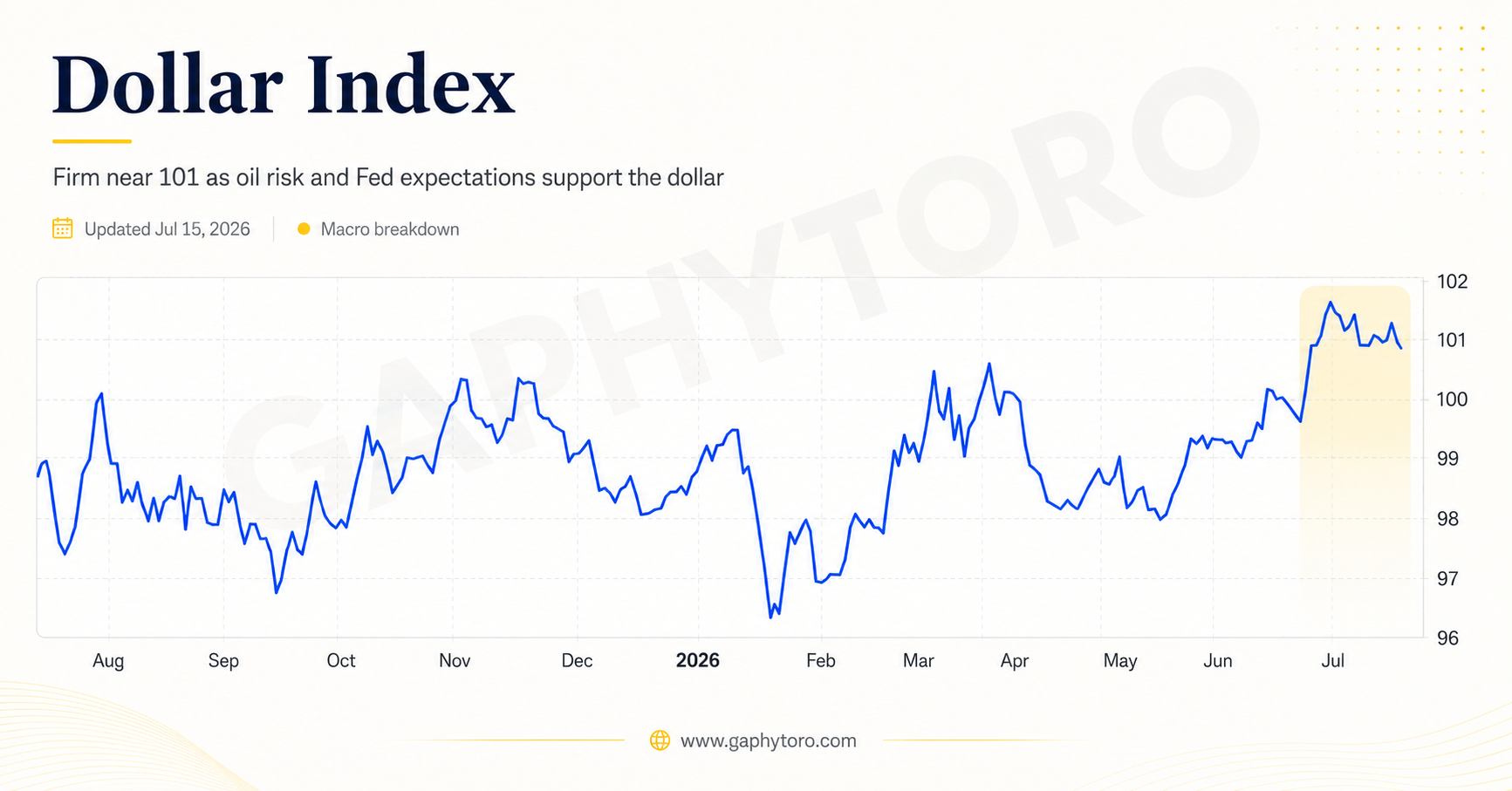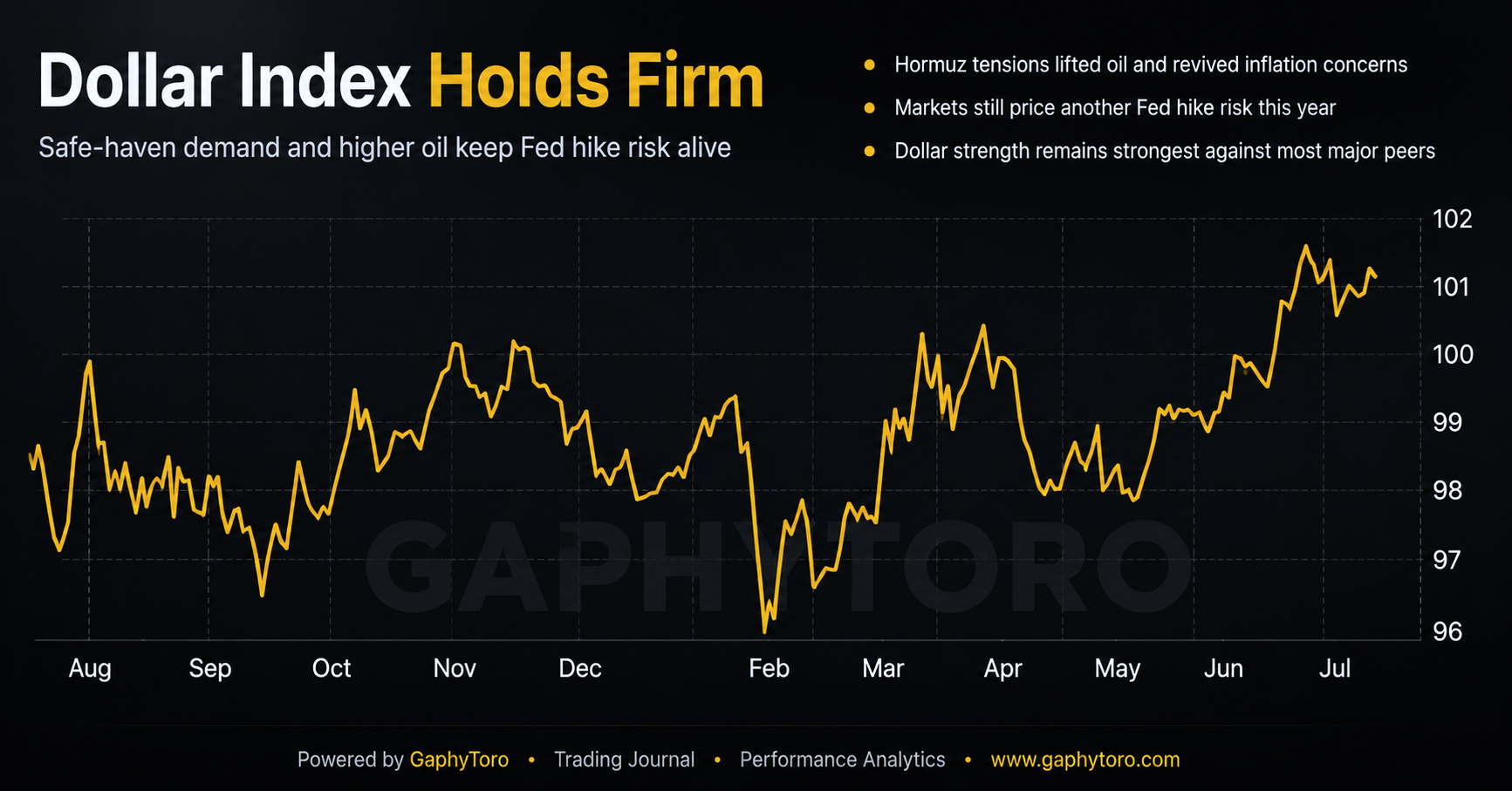
The dollar is holding firm because the market does not have a clean de-escalation signal yet.
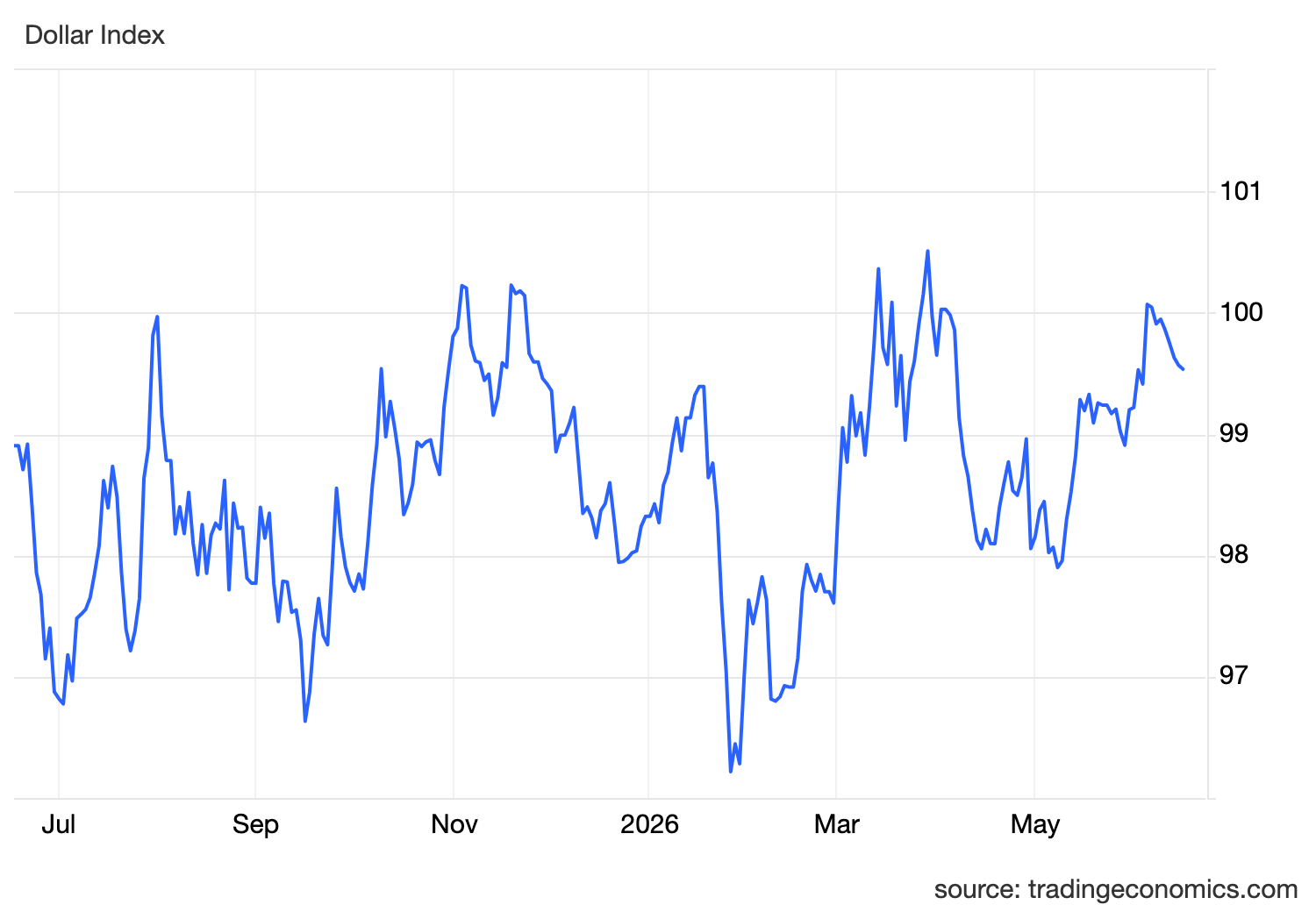
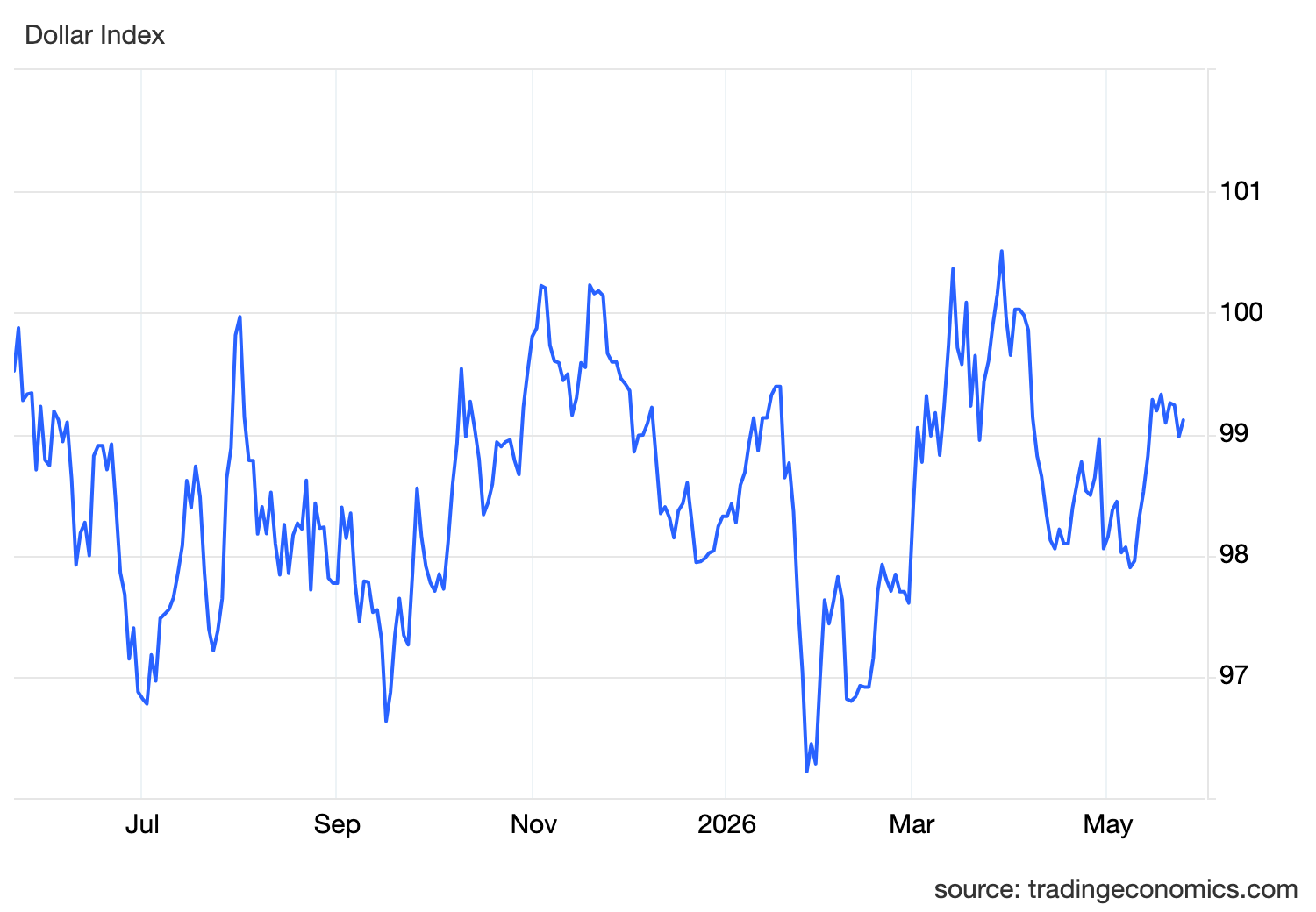
The dollar index steadied above 99 after coming under pressure at the start of the week. The pressure came from hopes that US-Iran negotiations were moving closer to a deal. A deal would reduce safe-haven demand, lower oil risk and ease the inflation pressure that has been supporting the dollar.
But the dollar did not break lower.
The reason is simple.
The conflict is not over.
US military operations in southern Iran have kept investors cautious. Reports said American forces targeted vessels suspected of attempting to deploy mines, as well as missile launch sites that posed a threat to US forces in the region. Reuters reported that US military strikes hit Iranian boats and missile launch sites, with CENTCOM framing the operations as defensive action to protect American forces.
That keeps the risk premium alive.
At the same time, President Trump said talks with Tehran were progressing well, but warned that further attacks could follow if negotiations collapsed. So markets are not dealing with pure peace optimism. They are dealing with negotiation progress sitting beside military pressure.
That is why the dollar is steady rather than falling sharply.
The peace channel is dollar negative.
The inflation and risk channel is dollar supportive.
The inflation channel is the bigger macro issue.
The Iran conflict has kept oil and shipping risk elevated through the Strait of Hormuz. When Hormuz is threatened, crude markets price supply disruption. When oil stays high, inflation pressure moves through fuel, transport, production and import costs.
That is exactly what markets saw in last week’s inflation data.
US CPI and PPI showed that the energy shock is no longer just a commodity story. It is feeding into consumer and producer prices. Reuters reported last week that the dollar held near six-week highs as traders assessed whether the Fed may need to raise rates if inflation continues to accelerate, with Fed hike odds rising as energy disruptions kept pressure on prices.
That is the key reason the dollar still has support.
Markets have already priced out rate cuts for the year and are now focused on whether the Fed may need to tighten again before year-end. Once the market shifts from “when does the Fed cut?” to “does the Fed hike?”, the dollar gets a very different foundation.
Higher inflation keeps yields supported.
Higher yields support the dollar.
Geopolitical uncertainty adds safe-haven demand.
That is the current setup.
Now attention turns to PCE inflation.
PCE matters because it is the Fed’s preferred inflation gauge. CPI and PPI gave markets the warning shot, but PCE will help confirm whether the energy shock is showing up in the measure policymakers care about most.
If PCE comes in hot, the Fed has even less room to soften its tone. That would reinforce higher-for-longer policy, support Treasury yields and keep the dollar bid.
If PCE cools meaningfully, markets could trim some hike risk, especially if peace negotiations continue to progress and oil prices fall.
But that second outcome needs confirmation.
For now, the Fed cannot relax.
The central bank is looking at an economy where inflation is accelerating again, energy risk remains unresolved and activity has not weakened enough to force immediate easing. That means policy remains restrictive, and the market has to respect the possibility of more tightening.
This matters across assets.
For yields, the risk is still upward if inflation remains sticky. Bond investors demand more compensation when energy shocks threaten to keep inflation above target.
For gold, the setup remains conflicted. Peace progress can reduce safe-haven demand, while lower oil can reduce yield pressure. But if inflation stays hot and yields remain high, gold struggles because it pays no interest.
For oil, the direction depends on whether talks produce a real breakthrough. If Hormuz reopens, crude can fall further and inflation pressure can ease. If talks collapse or military operations expand, oil can rebound quickly.
For risk assets, the dollar’s stability is a warning. Markets are not fully pricing relief yet. Higher yields, stronger dollar conditions and unresolved energy risk keep the backdrop fragile.
So the current market picture is clear.
The dollar is not rallying aggressively because peace talks are still alive.
But it is not falling much either because military action, oil risk and hot inflation data keep the Fed path hawkish.
Until PCE confirms inflation is cooling, or Hormuz progress becomes real, the dollar has a floor.
Filed under
Written by

Founder & CEO, GaphyToro
Philip Ogina is the Founder and CEO of GaphyToro, a trader-first performance ecosystem built to help modern traders improve through structure, discipline, data, and better execution. He is a trader, investor, market analyst, educator, and software builder focused on building tools and infrastructure for the next generation of traders.