The dollar is no longer trading on geopolitics.
It is trading on monetary policy.
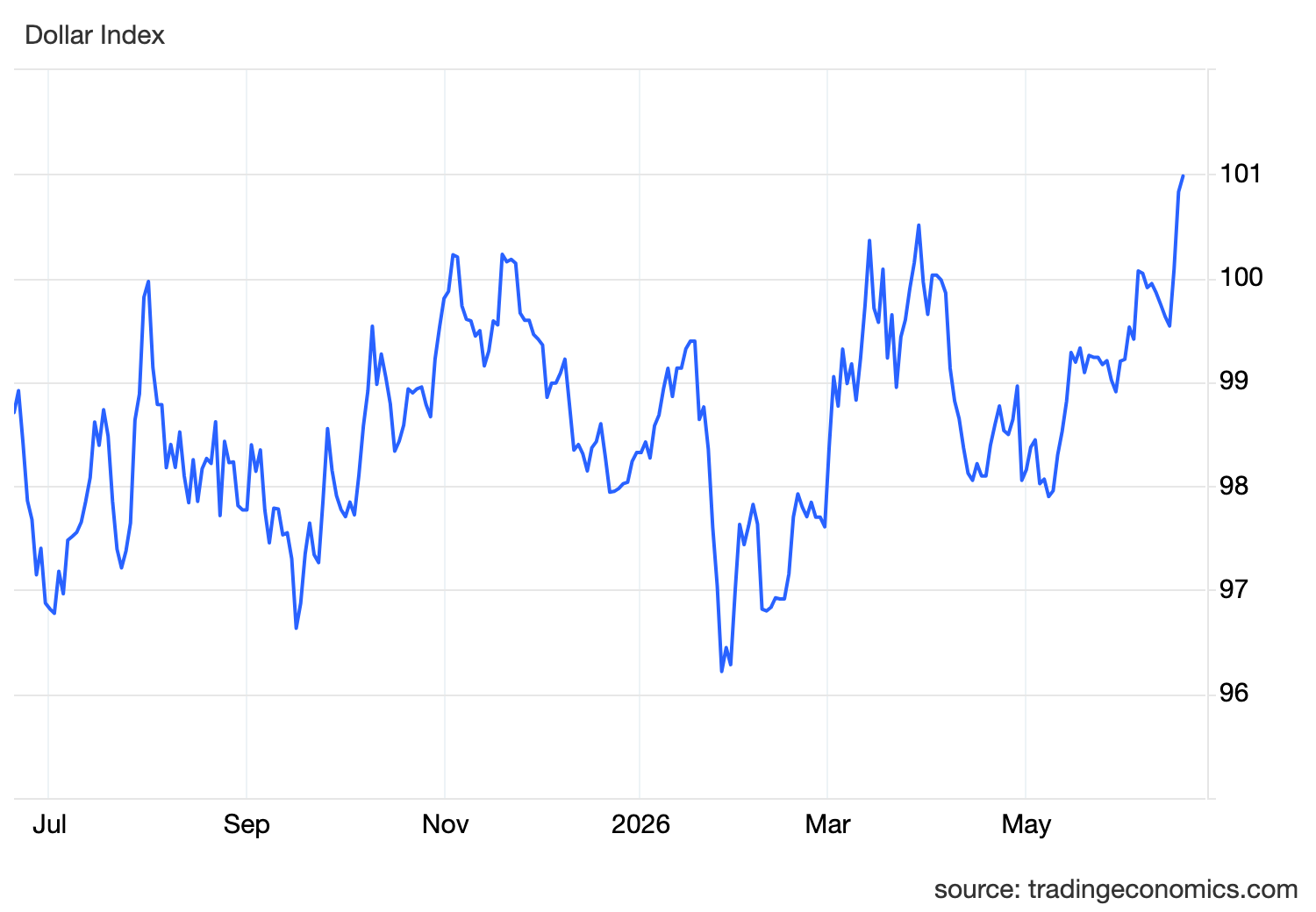
The dollar index hovered near its highest level since May 2025 after the Federal Reserve delivered what was effectively a hawkish hold. Rates remained unchanged as expected, but the updated projections and policy signals shifted market attention firmly toward the possibility of additional tightening.
That is why the dollar continued strengthening even as one of the largest geopolitical risks of the year began to fade.
The US-Iran interim peace agreement officially took effect on Thursday, ending a conflict that had severely disrupted energy markets and contributed to one of the most significant oil supply shocks in recent years. The agreement has already helped push oil prices sharply lower as markets anticipate the reopening of the Strait of Hormuz and the restoration of regional energy flows.
Under normal circumstances, easing geopolitical tensions and falling oil prices would likely weigh on the dollar.
That is not happening.
The reason is that investors are increasingly focused on what the energy shock has already done to inflation.
During the conflict, disruptions to shipping through Hormuz sent energy prices sharply higher, feeding through transportation costs, manufacturing inputs and consumer prices. The result was a clear reacceleration in inflation across the US economy.
Recent data confirmed the trend.
Consumer inflation rose to 4.2%, its highest level since 2023, while producer prices recorded their fastest annual increase since 2022. Even though oil has now started moving lower, the inflation created by that earlier shock remains embedded throughout the economy.
The Federal Reserve acknowledged this reality in its latest projections.
Policymakers sharply upgraded their inflation outlook, raising their PCE forecast for 2026 from 2.7% to 3.6%. At the same time, growth forecasts were revised slightly lower, creating a more challenging policy environment.
That combination matters.
If growth were weakening rapidly, the Fed could look through higher inflation and focus on supporting the economy. But that is not what the data currently shows.
The labor market remains resilient.
Payroll growth has consistently exceeded expectations. Job openings recently reached their highest level in nearly two years. Consumer spending has slowed but continues to expand.
As a result, the Fed does not face the type of economic weakness that would justify rate cuts.
Instead, it faces an economy where inflation is moving higher while activity remains relatively strong.
That explains why roughly half of FOMC members now expect at least one rate hike next year.
Kevin Warsh reinforced that message.
While the new Fed Chair declined to provide explicit guidance on future moves, he repeatedly emphasized the central bank's commitment to restoring price stability. Markets interpreted that stance as confirmation that inflation remains the Fed's primary concern.
The bond market has responded accordingly.
Treasury yields have remained elevated as investors continue pricing a higher-for-longer rate environment. Rising yields increase the attractiveness of dollar-denominated assets, helping support the currency even as geopolitical uncertainty declines.
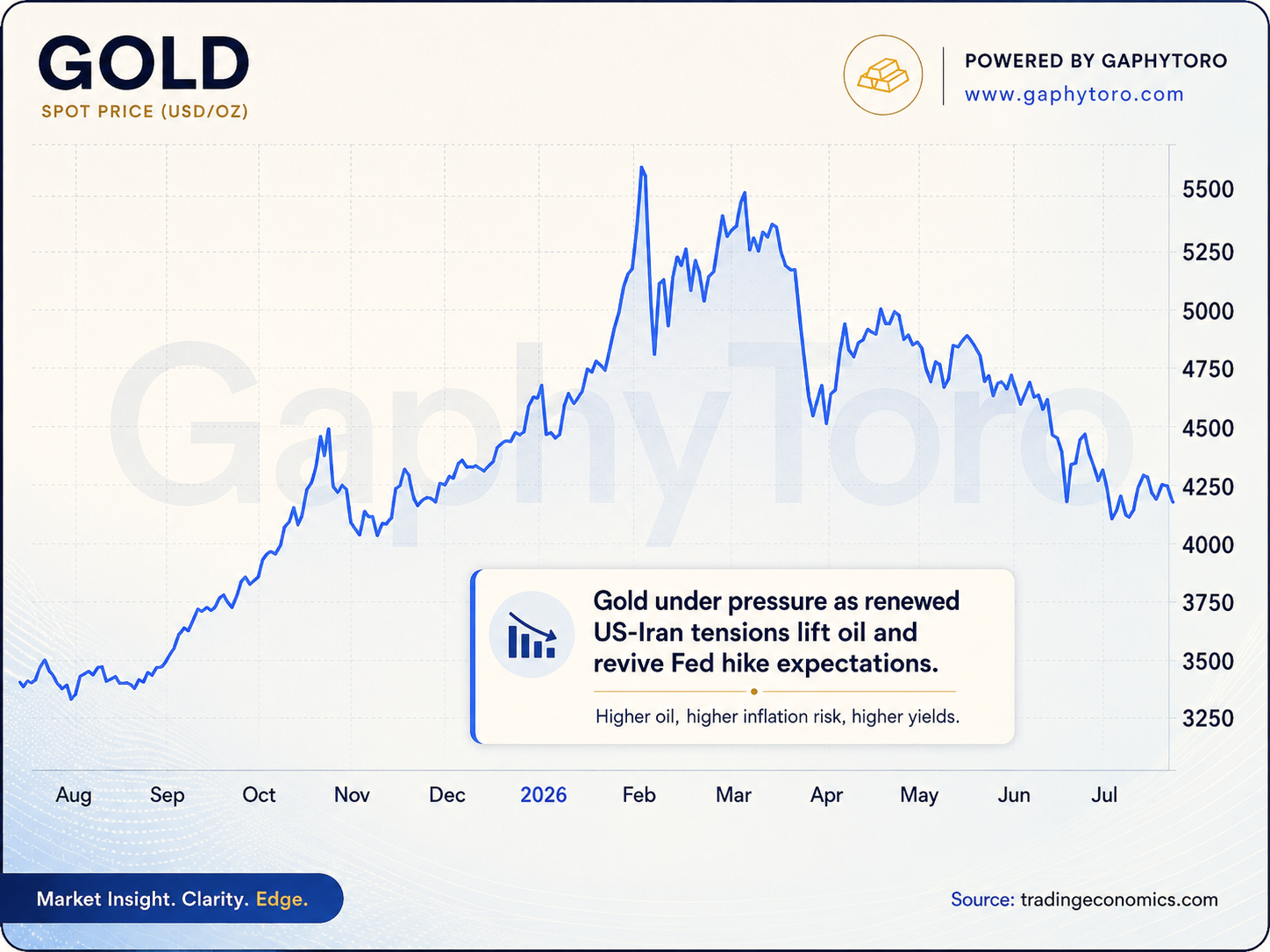
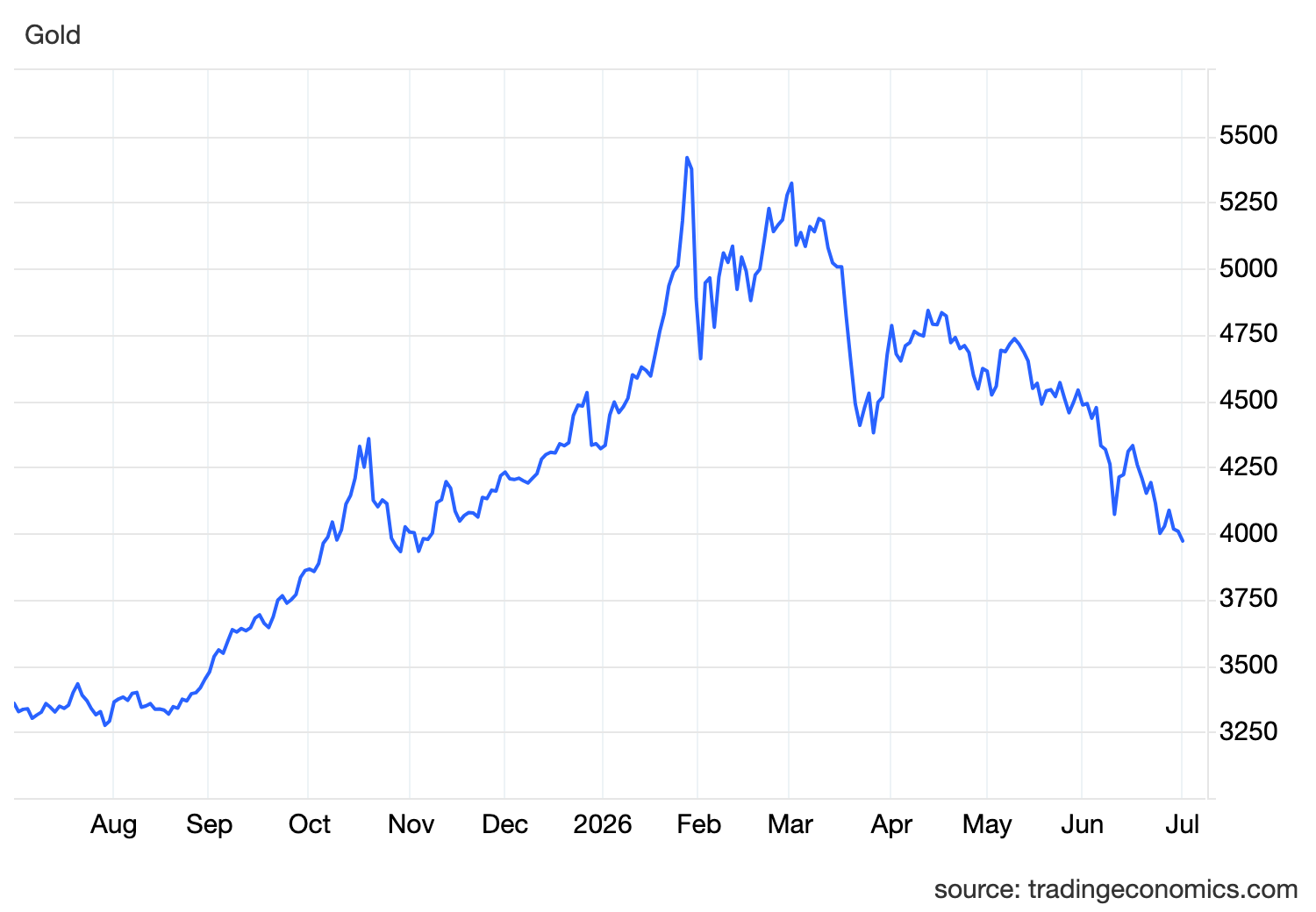
This dynamic also helps explain recent weakness in gold.
For much of the conflict, investors assumed gold would benefit from geopolitical instability. Instead, the dominant market reaction came through inflation, yields and monetary policy. As rate expectations moved higher, gold faced persistent selling pressure despite elevated geopolitical risks.
The same transmission mechanism is now supporting the dollar.
Higher inflation leads to tighter policy expectations.
Tighter policy expectations lead to higher yields.
Higher yields support the dollar.
The global policy backdrop reinforces that trend.
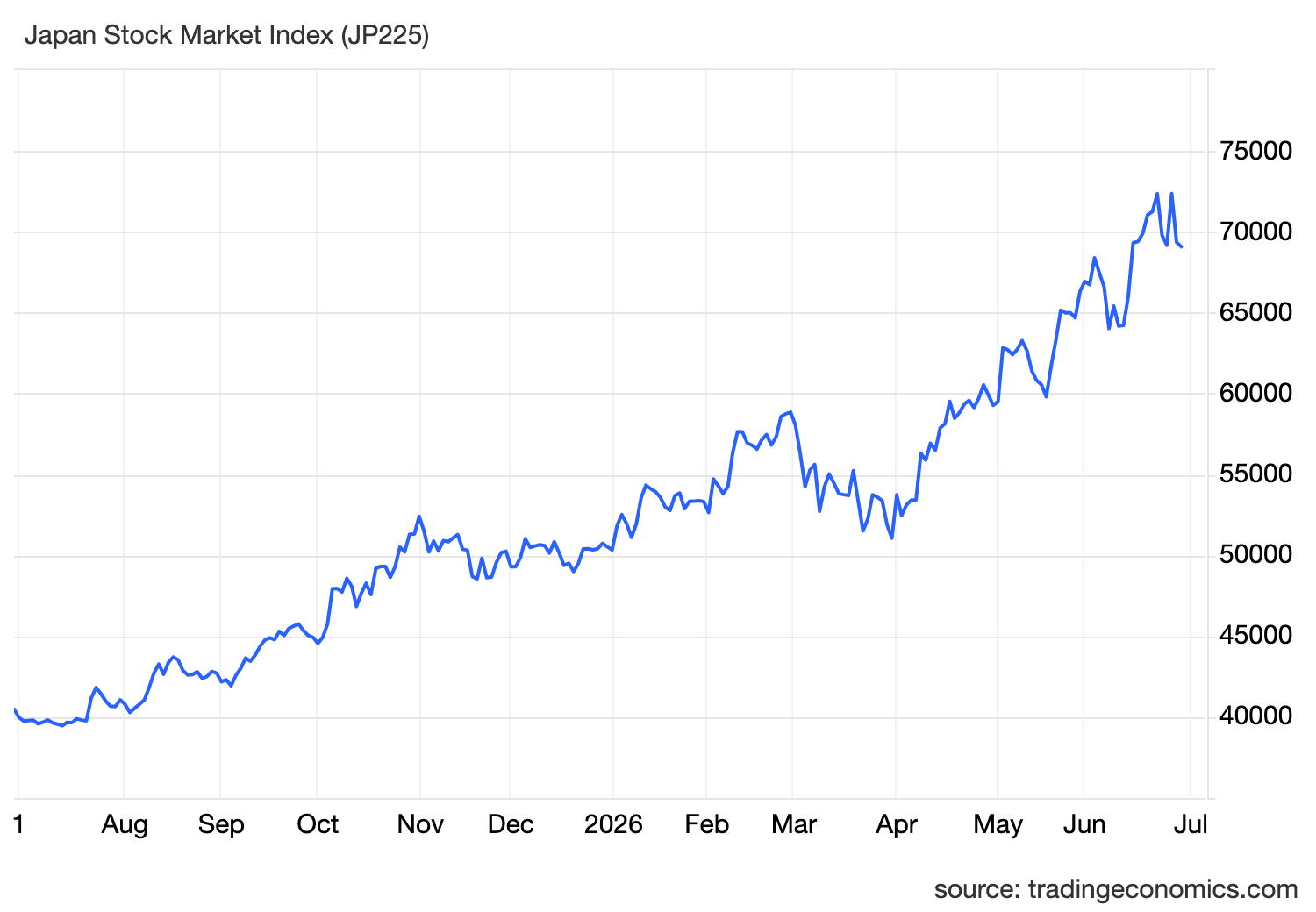
Earlier this week, the Bank of Japan raised rates to 1.0%, while the European Central Bank recently delivered its first hike since 2023. Although central banks are responding differently to domestic conditions, a common theme has emerged across developed markets.
Inflation remains the primary concern.
For investors, the key question is whether lower oil prices can eventually reverse the inflation shock that developed over recent months.
The peace agreement creates a pathway toward lower energy costs and softer inflation pressures later this year. But policymakers are unlikely to respond to potential future improvements before they appear in the data.
That means incoming inflation reports will become increasingly important.
If price pressures begin easing materially, markets may scale back expectations for further tightening.
If inflation remains sticky despite falling oil prices, the Fed's hawkish stance could become even more justified.
For now, markets are choosing to focus on what the Fed said rather than what oil is doing.
And the Fed's message was clear.
Inflation remains too high.
The economy remains resilient.
And the possibility of tighter policy has not disappeared.
That combination continues to support the dollar.
Filed under
Written by

Founder & CEO, GaphyToro
Philip Ogina is the Founder and CEO of GaphyToro, a trader-first performance ecosystem built to help modern traders improve through structure, discipline, data, and better execution. He is a trader, investor, market analyst, educator, and software builder focused on building tools and infrastructure for the next generation of traders.