The yuan is pulling back, but this is not a collapse in sentiment.
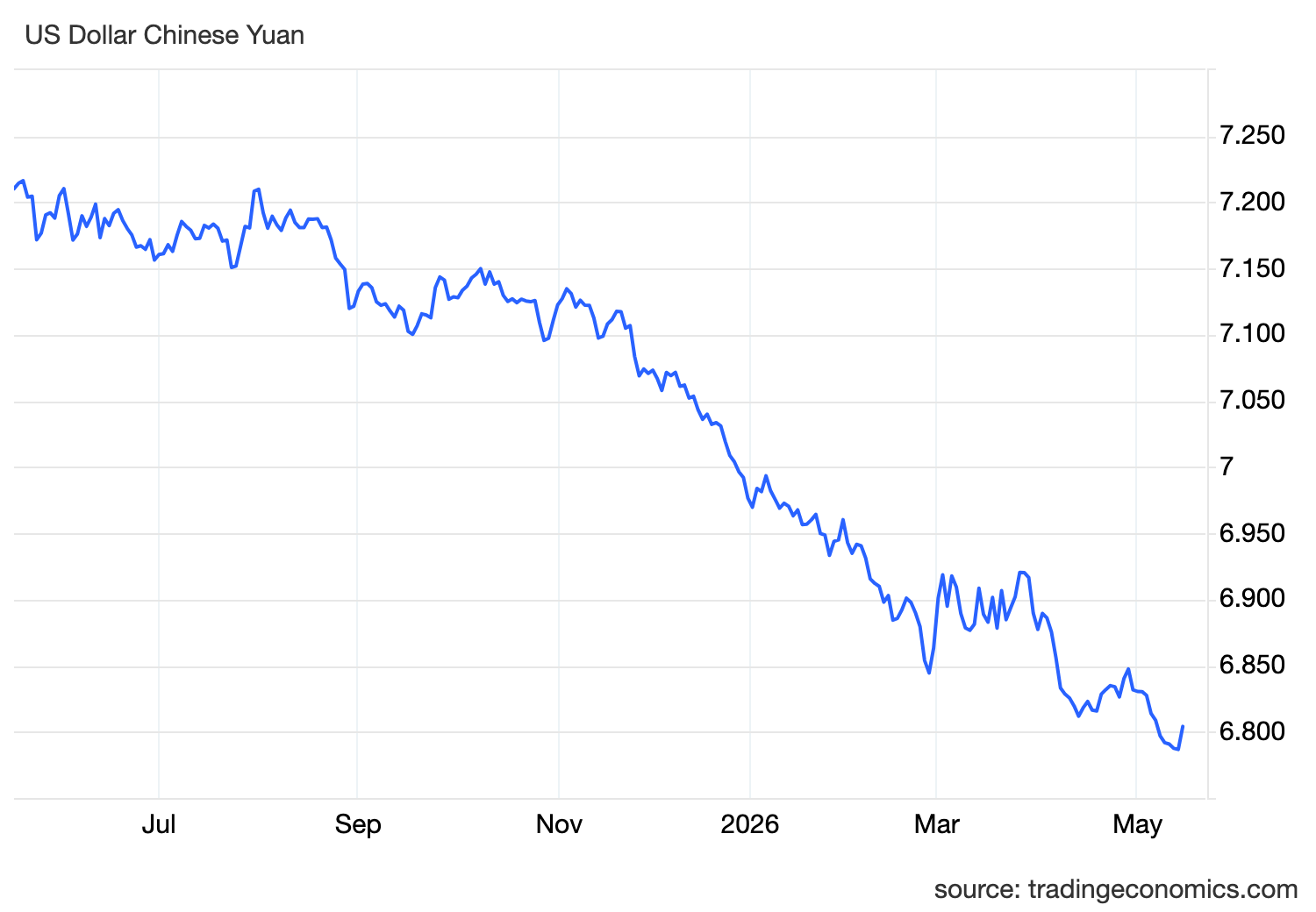
The offshore yuan weakened toward 6.79 per dollar after touching its strongest levels in more than three years. The trigger was caution around Taiwan after President Xi warned that the issue could become a flashpoint for clashes between the US and China.
That matters because Taiwan is not just a political issue.
It sits at the centre of the global technology supply chain, especially semiconductors. Any rise in Taiwan-related tension immediately affects how markets think about Asia risk, chip supply, capital flows and regional currencies.
So the yuan pullback makes sense.
Traders had been pricing optimism into the Trump-Xi summit. The currency rallied into the meeting because investors expected some easing in trade tensions, more Chinese purchases of US goods and possibly a more coordinated approach to the Middle East energy shock.
That optimism is still there, but it is no longer clean.
The Taiwan comments reminded markets that US-China relations can improve tactically while remaining strategically fragile. Trade talks can progress, but the security rivalry does not disappear.
That is why the yuan gave back part of its rally.
Still, the broader tone is not deeply negative.
The White House said both sides discussed expanding Chinese purchases of US agricultural products and oil. US Trade Representative Jamieson Greer also suggested both sides appeared willing to extend the current trade truce if progress continues.
That matters for the yuan because trade stability reduces pressure on China’s export outlook.
A calmer trade channel supports confidence in Chinese assets, reduces the need for defensive dollar demand and helps limit yuan weakness.
The Hormuz angle is also important.
Both sides reportedly agreed that the Strait of Hormuz should remain open. This is not a small detail. China is a major energy importer, and any sustained disruption through Hormuz raises input costs for its economy.
Higher oil prices hurt China through imported inflation, weaker margins and pressure on consumers.
So if Beijing and Washington can at least align on keeping energy flows open, that lowers one of the biggest external risks facing the yuan.
This links directly to the global macro picture.
The Iran conflict has pushed oil higher, which has fed into US inflation. Recent CPI and PPI data showed inflation pressure reaccelerating, forcing markets to price out Fed cuts and even consider hike risk later this year.
That is normally dollar supportive and yuan negative.
A stronger US inflation backdrop keeps US yields elevated. Higher US yields support the dollar and make it harder for Asian currencies to rally.
So the yuan is being pulled between two forces.
On one side, summit optimism is supportive. Trade progress, possible Chinese purchases of US goods and Hormuz cooperation reduce external pressure.
On the other side, Taiwan risk and higher US yields limit the upside.
That is why the weekly picture remains steady rather than outright bearish.
The yuan is weaker on the day because investors are reducing risk after the Taiwan comments. But it is not breaking down because the summit still has enough constructive signals to keep traders positioned for a positive outcome.
The key question now is whether the second day of talks delivers substance.
If the trade truce is extended, Chinese purchases increase and both sides avoid escalating over Taiwan, the yuan can stabilize or recover.
If Taiwan rhetoric hardens, or if trade talks fail to produce follow-through, the dollar can regain strength and pull the yuan lower.
For now, the market is saying one thing clearly.
The yuan rally is not dead.
But it now needs real progress, not just summit optimism.
Written by

Founder & CEO, GaphyToro
Philip Ogina is the Founder and CEO of GaphyToro, a trader-first performance ecosystem built to help modern traders improve through structure, discipline, data, and better execution. He is a trader, investor, market analyst, educator, and software builder focused on building tools and infrastructure for the next generation of traders.