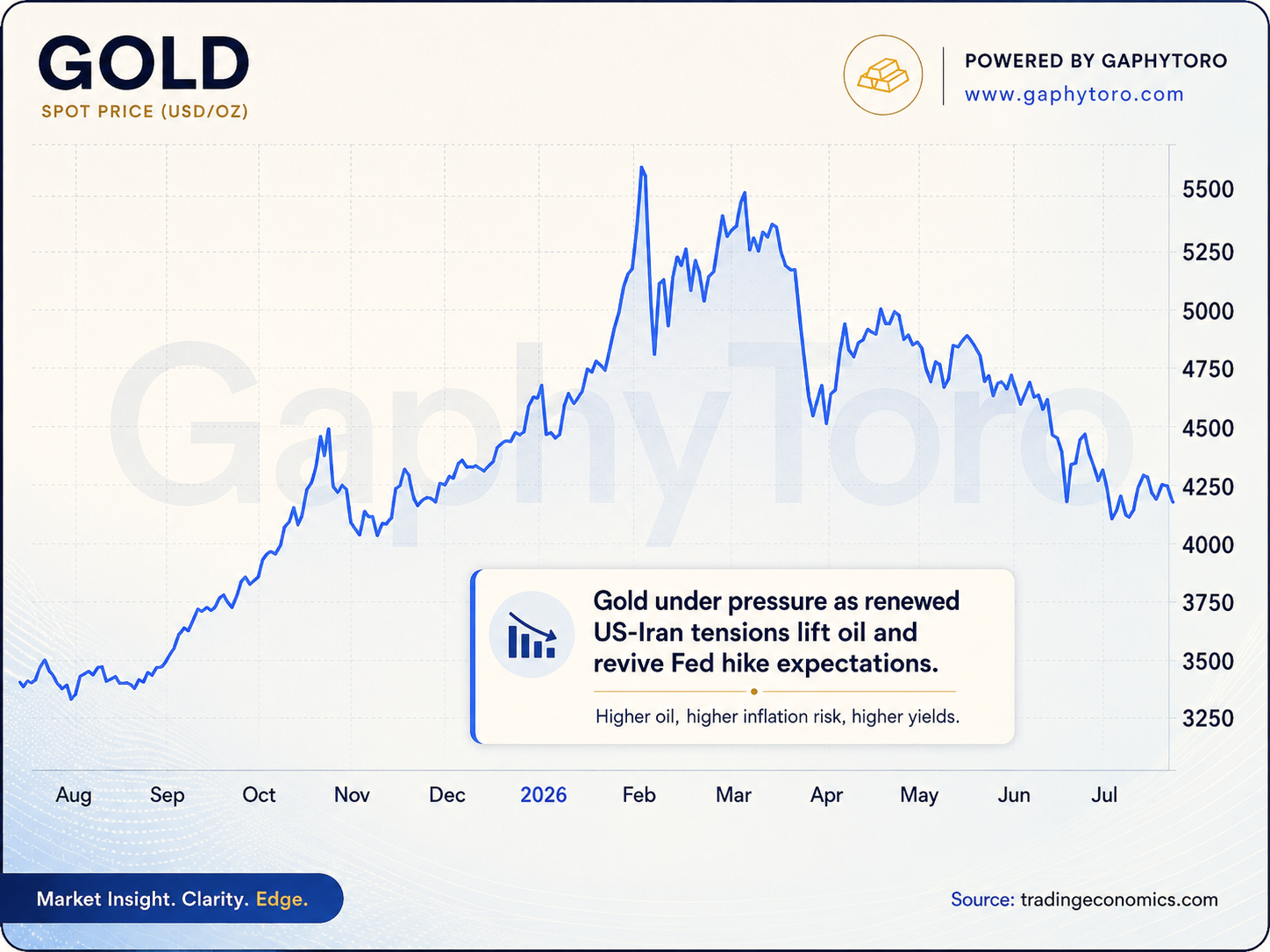
Gold is closing the week on the back foot, and the reason is clear.
The market is not reacting to geopolitics in isolation. It is reacting to what geopolitics is doing to inflation and policy.
Tensions between the US and Iran have intensified again, with both sides maintaining blockades around the Strait of Hormuz. This is not just a political standoff. It is a direct constraint on one of the most important energy supply routes globally. That keeps oil elevated. And once oil stays elevated, inflation does not ease. Recent developments reinforce that pressure.
President Donald Trump has taken a more aggressive stance, ordering action against vessels laying mines in the strait while US forces intercept shipments linked to Iranian oil. At the same time, negotiations are going nowhere. The ceasefire has been extended, but without progress, which means the underlying risk remains. Markets understand this. They are not pricing resolution. They are pricing persistence. That is why gold is struggling.
Under normal conditions, rising geopolitical tension supports gold through safe-haven demand. But that is not the dominant force right now. The dominant force is rates. Higher oil feeds directly into inflation expectations. Once inflation expectations rise, central banks cannot pivot easily. Instead of moving toward easing, policy expectations shift back toward holding rates higher for longer, with some scenarios even reopening the discussion around further tightening. That shift lifts yields. And when yields rise, the opportunity cost of holding gold increases.
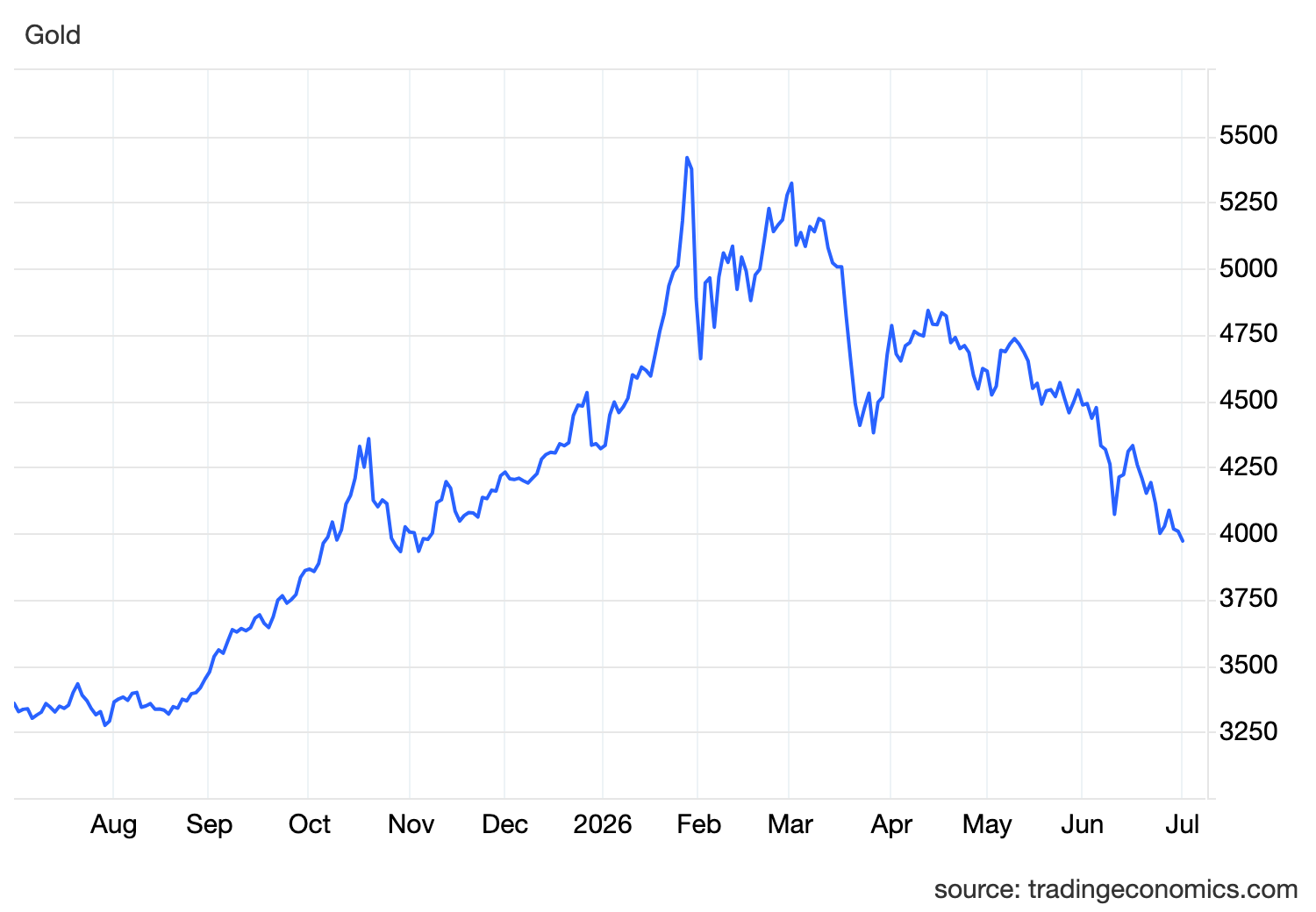
At the same time, the dollar remains supported. Elevated yields attract capital, while geopolitical uncertainty adds a layer of defensive demand. That combination puts additional pressure on gold. So despite the escalation, gold is down around three percent for the week and remains well below recent highs. The key point is simple. This is not a safe-haven-driven market. It is a policy-driven market. As long as oil remains elevated and inflation risks persist, central banks stay cautious, yields stay supported, and gold struggles to gain traction. A sustainable move higher in gold requires a shift in that chain. Either oil needs to fall, easing inflation pressure, or growth needs to weaken enough to force policy easing. Until then, rallies are likely to fade.
Written by

Founder & CEO, GaphyToro
Philip Ogina is the Founder and CEO of GaphyToro, a trader-first performance ecosystem built to help modern traders improve through structure, discipline, data, and better execution. He is a trader, investor, market analyst, educator, and software builder focused on building tools and infrastructure for the next generation of traders.