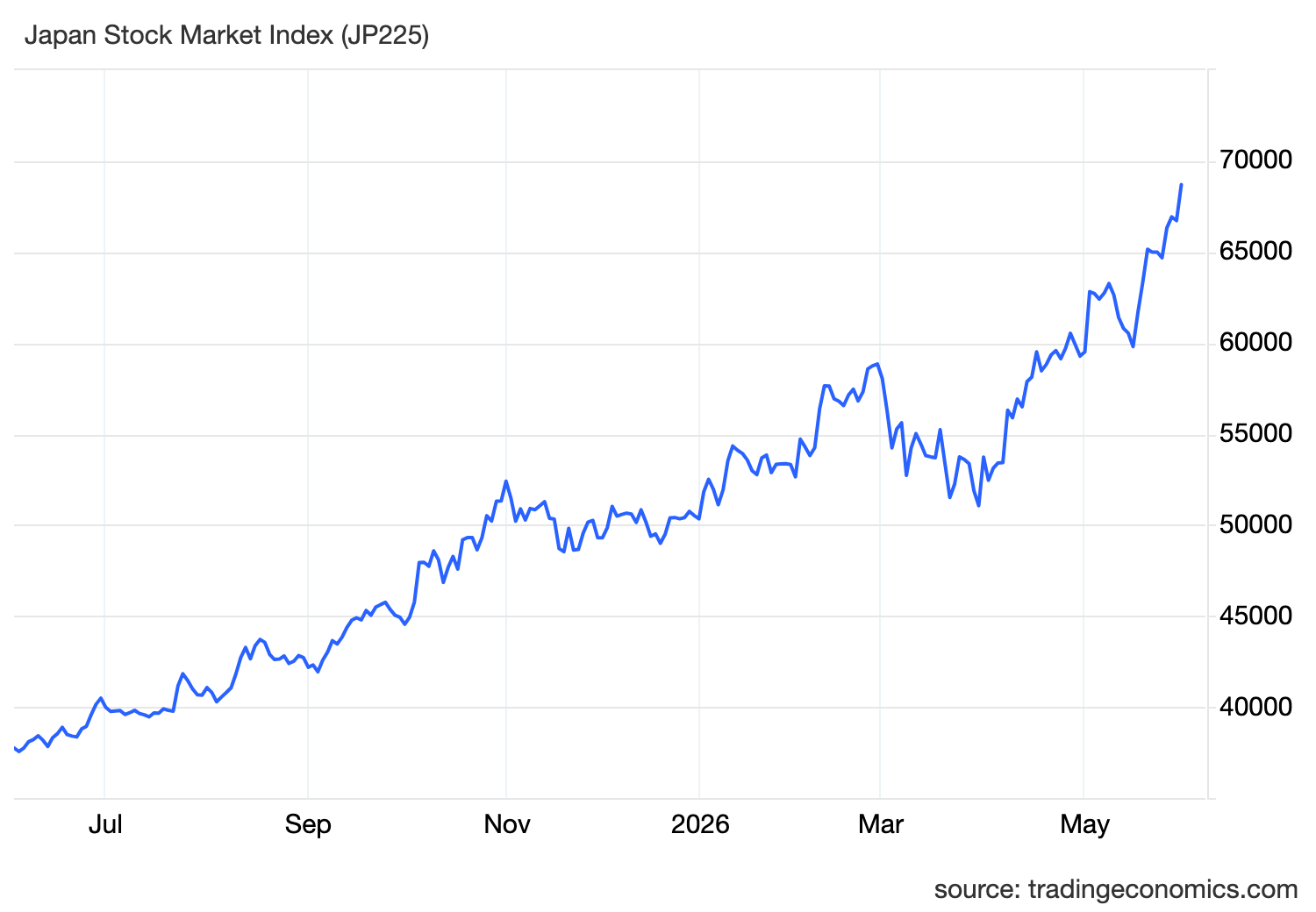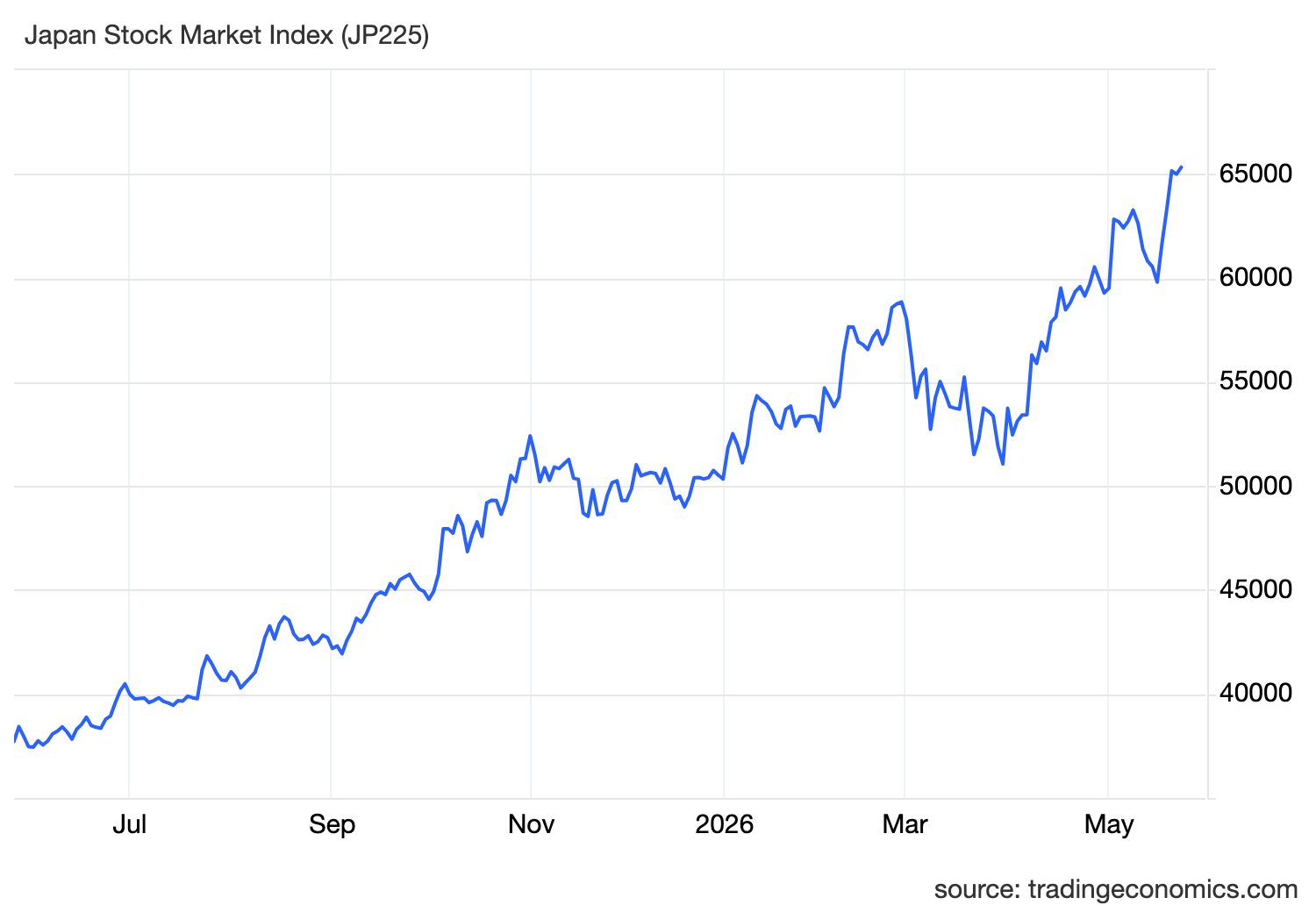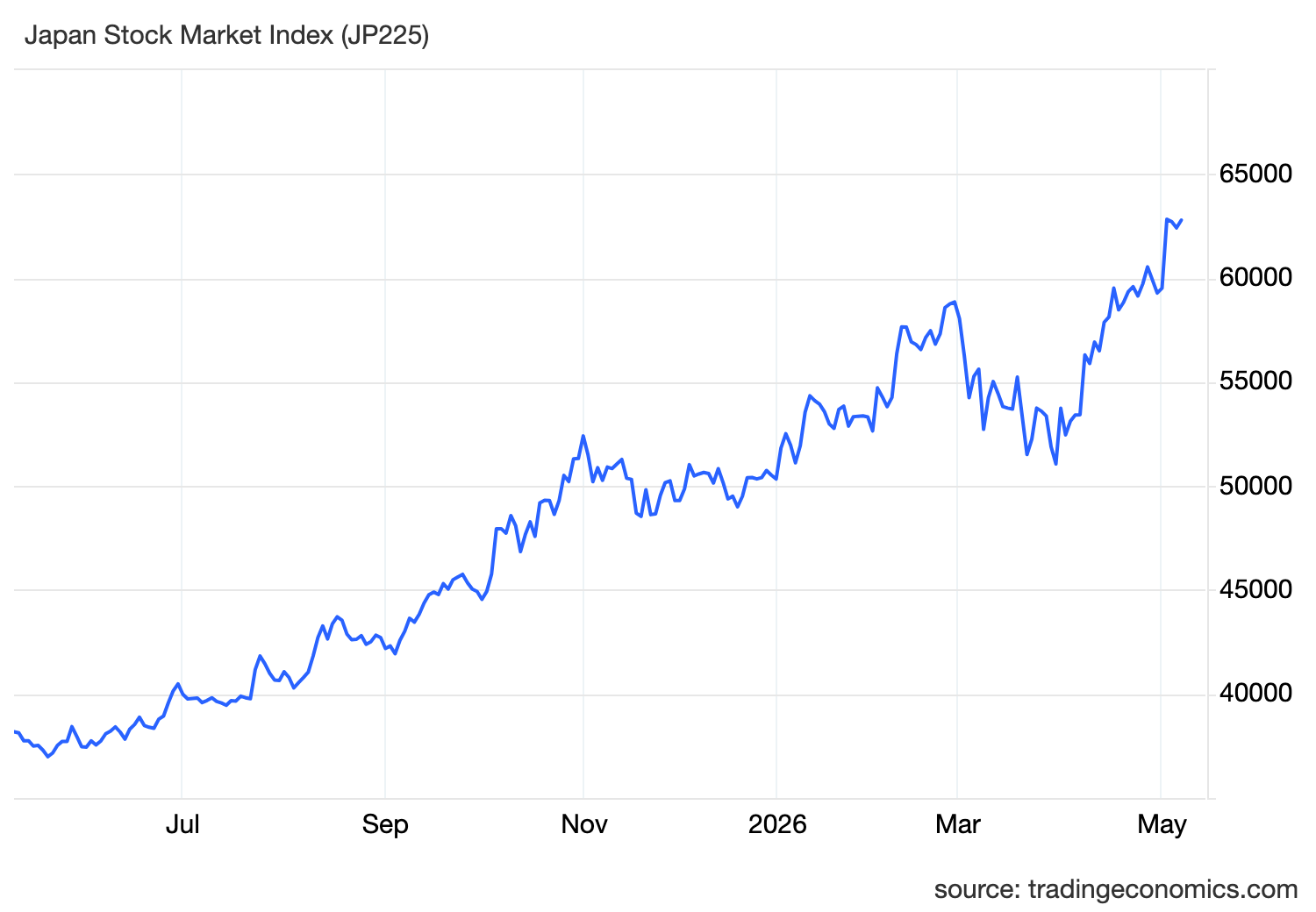
Japan’s equity market is still being carried by the AI trade.
The Nikkei 225 climbed above 63,000, while the Topix also advanced, with both indexes gaining around 1.1 percent. That move is important because it happened in a backdrop that should normally make investors more cautious.
US-Iran tensions are still unresolved. President Donald Trump warned that the ceasefire was on “massive life support” after rejecting Tehran’s latest peace proposal. That keeps energy supply risk alive and keeps markets focused on the Strait of Hormuz.
At the same time, the Bank of Japan is sounding less comfortable.
The Summary of Opinions from the April meeting showed policymakers discussing the possibility of additional rate hikes as early as the next meeting. That matters because rising oil prices are lifting inflation concerns in Japan, especially through imported energy and goods costs.
So the macro setup is not clean.
Oil risk is rising. Inflation pressure is building. The BoJ is moving closer to another hike. Yet Japanese stocks are still climbing.
That tells you what the market is prioritizing.
AI demand.
Technology and AI-linked shares are carrying the index higher, with strong gains in names like Fujikura, Ibiden, SoftBank Group, Kioxia and Advantest. These stocks are tied to the broader global AI infrastructure theme, including semiconductors, data centres, advanced components and high-performance computing demand.
This is the key tension.
Macro is becoming more restrictive, but earnings optimism is still strong enough to absorb it.
For now, investors are treating potential BoJ tightening as manageable. A rate hike from the BoJ would raise funding costs and could support the yen, but Japanese policy is still relatively accommodative compared with the US. That means the equity market is not yet seeing the BoJ as a major threat to liquidity.
But the risk is building.
If oil keeps rising, Japan faces a difficult mix. Higher energy prices lift inflation, but they also pressure household purchasing power and corporate margins. That can force the BoJ into a tighter stance even if growth is not accelerating strongly.
That is not ideal for equities.
The yen also matters here.
If BoJ hike expectations rise, the yen could strengthen. That would reduce the earnings benefit for Japanese exporters, especially those that have benefited from a weaker currency. But if the dollar stays supported because of US yields and safe-haven demand, dollar yen may not fall aggressively.
So Japanese equities are sitting between two forces.
AI momentum is pulling the market higher.
Oil-driven inflation and BoJ tightening risk are creating a ceiling.
For now, AI is winning.
But this rally is becoming more sensitive to policy and energy shocks. If US-Iran tensions worsen and oil rises further, investors may begin to question whether the BoJ can stay gradual.
That would change the tone.
A steady oil market keeps the Nikkei supported.
A fresh oil spike brings inflation, yields and yen risk back into the conversation.
The current picture is simple.
Japan stocks are rising because AI demand remains the dominant equity story.
But the macro backdrop is getting heavier.
Filed under
Written by

Founder & CEO, GaphyToro
Philip Ogina is the Founder and CEO of GaphyToro, a trader-first performance ecosystem built to help modern traders improve through structure, discipline, data, and better execution. He is a trader, investor, market analyst, educator, and software builder focused on building tools and infrastructure for the next generation of traders.