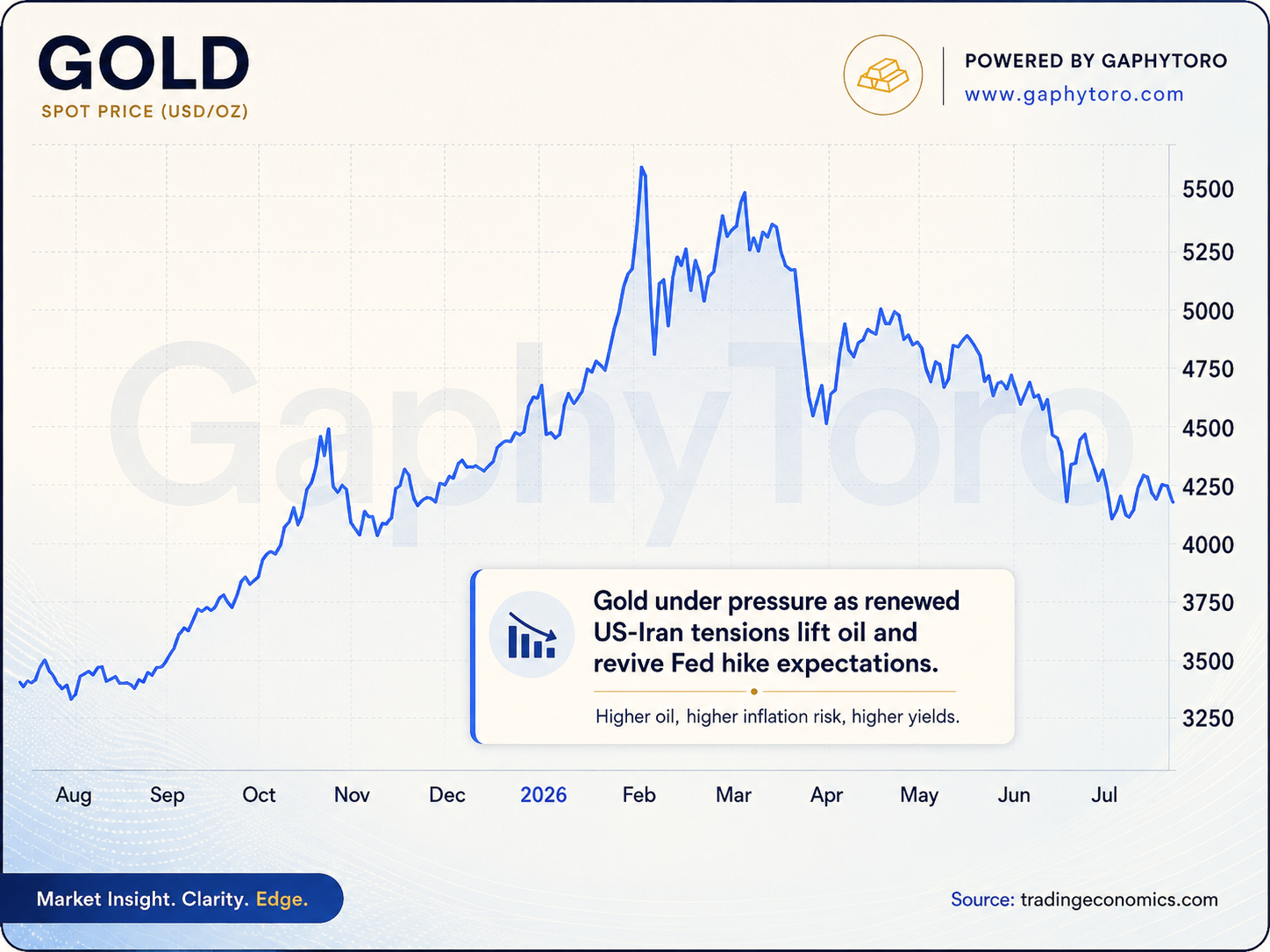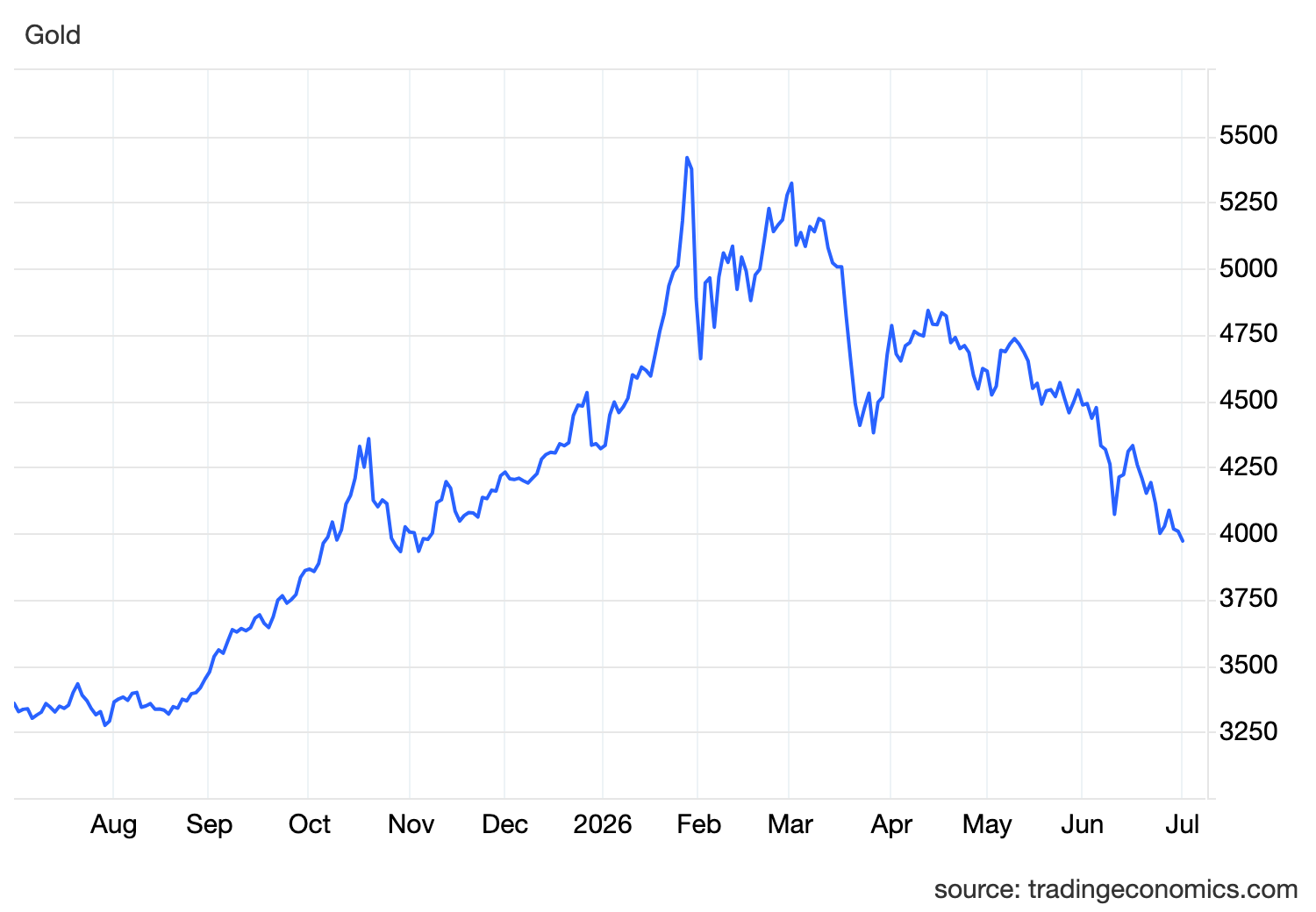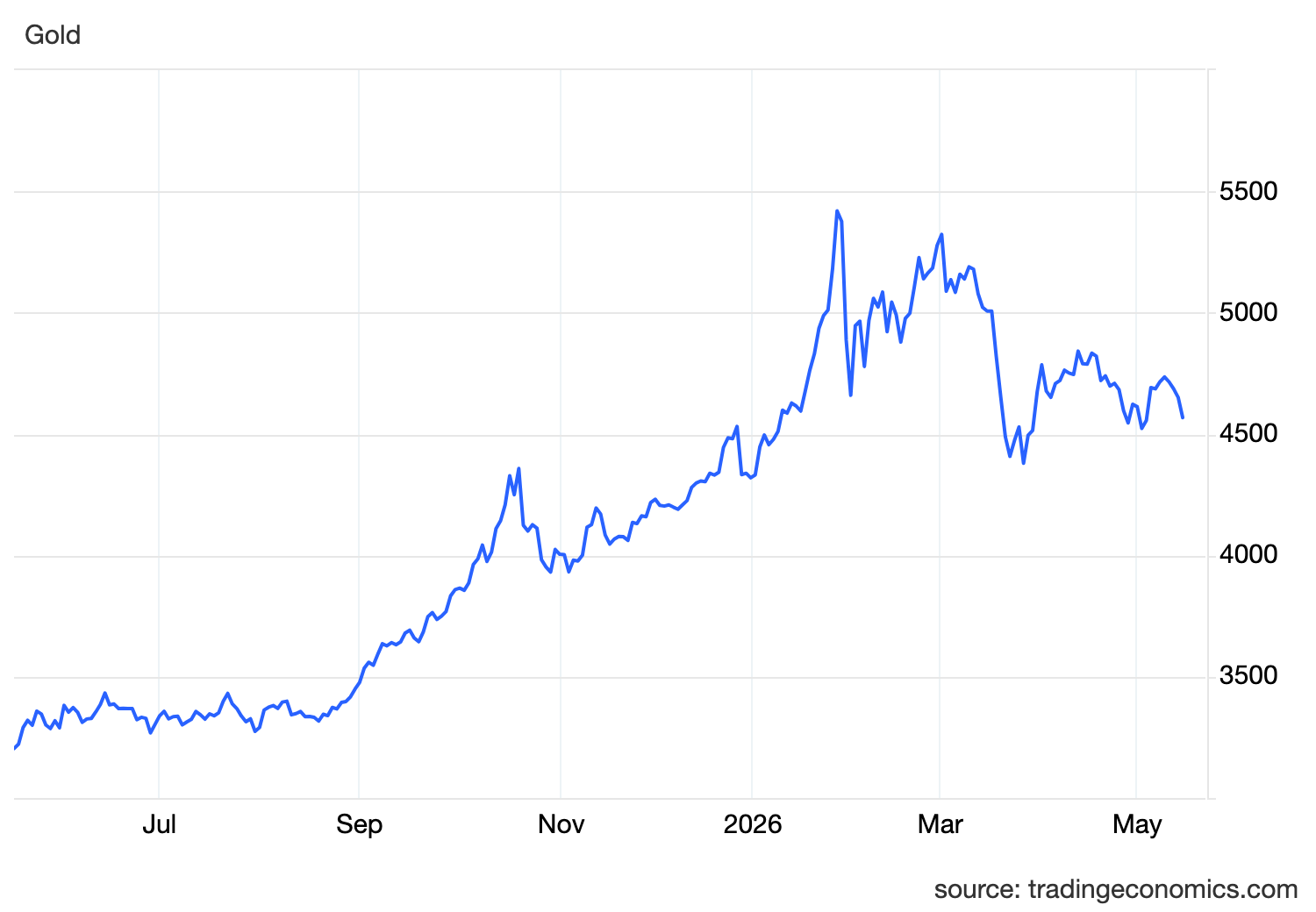
Gold is falling because the market is back to trading inflation and rates.
The metal weakened toward 4600 and is on track to lose around 2% for the week. That move is not just about gold. It is about the entire macro chain that started with the Iran war, moved into oil, then into inflation data, then into yields and Fed pricing.
That chain is now dominating everything.
The first pressure point is energy.
The near-shutdown of the Strait of Hormuz has disrupted global energy shipments and kept oil prices elevated. That matters because Hormuz is not just a geopolitical headline. It is a critical artery for global crude flows. When that route is impaired, oil supply becomes tighter, shipping risk rises and energy prices remain structurally supported.
That energy shock is now showing up in the data.
US consumer inflation rose 3.8% in April, above expectations of 3.7%, while import prices jumped 1.9% in the month as imported fuel prices surged 16.3%, the strongest fuel-price increase since 2022. That confirms the point clearly. The war is no longer only a market-risk story. It is feeding directly into the inflation basket.
Wholesale inflation is sending the same message.
US producer prices rose 6% in April, the highest since 2022, with energy costs tied to the Iran war driving the acceleration. PPI matters because it captures cost pressure before it reaches consumers. If producers are paying more for fuel, transport and inputs, the next stage is either weaker margins or higher final prices.
That is why yields are rising.
Bond investors do not wait for inflation to become permanent. They reprice as soon as the risk of persistent inflation increases. Higher oil raises inflation expectations. Higher inflation expectations force investors to demand higher compensation to hold long-term Treasuries. That pushes yields higher.
For gold, this is the problem.
Gold does not pay interest. When Treasury yields rise, especially when real yields remain firm, the opportunity cost of holding gold increases. So even though geopolitical uncertainty can create safe-haven demand, the rates channel is stronger right now.
That is why gold is weakening despite the war.
This has been the key pattern throughout the conflict. Escalation should normally support gold through fear. But this conflict is different because the escalation keeps lifting oil, and higher oil keeps forcing the Fed conversation in a more hawkish direction.
The Federal Reserve is now boxed in.
Markets have fully ruled out rate cuts this year, while some traders are increasingly pricing the possibility of a rate hike by December. Major banks have also pushed back their rate-cut expectations as the oil shock keeps inflation pressure alive. BofA now expects the Fed to remain on hold for the rest of the year, while Goldman has delayed its expected first cut.
This is the reaction function.
If inflation is cooling and growth is weakening, the Fed can cut.
If inflation is accelerating and the labour market is still resilient, the Fed cannot cut.
That is exactly where markets are now.
Jobless claims remain low at around 211,000, even as hiring slows, which points to a labour market that is cooling but not breaking. That gives the Fed less urgency to support growth and more reason to stay focused on inflation credibility.
Retail sales also matter here.
Spending has slowed, but it has not collapsed. That keeps the economy strong enough for the Fed to wait, especially when inflation is being pushed higher by energy. For markets, this is the uncomfortable mix. Growth is not weak enough to force easing, but inflation is hot enough to keep policy tight.
That is negative for gold.
It supports yields.
It supports the dollar.
And it keeps risk assets under pressure.
The dollar benefits because US yields remain elevated and because geopolitical uncertainty still creates defensive demand. A stronger dollar adds another headwind for gold, since bullion becomes more expensive for non-dollar buyers.
India is another important piece of the gold story.
India has tightened gold import regulations and capped duty-free gold imports for jewellery exporters at 100 kilograms per licence, after also raising gold and silver import tariffs from 6% to 15%. The goal is to curb gold demand and support the rupee as higher oil prices pressure India’s external balances.
That matters because India is one of the world’s key gold demand centres.
When authorities restrict imports, it can soften physical demand at the margin, especially at a time when global macro conditions are already pressuring bullion through higher yields and a firmer dollar.
The Trump-Xi meeting adds another layer, but it is not the core driver yet.
The key point from the talks is energy security. If the US and China can cooperate on keeping Hormuz open, that would reduce the oil risk premium, ease inflation pressure and take some heat out of yields. That would be constructive for gold.
But if talks fail to produce real progress and Hormuz remains constrained, the oil shock stays alive.
That means inflation stays sticky.
The Fed stays cautious.
Yields stay supported.
The dollar stays firm.
And gold remains vulnerable.
So the current setup is clear.
Gold is not falling because geopolitical risk has disappeared.
Gold is falling because geopolitical risk is feeding inflation.
The war is lifting oil.
Oil is lifting CPI and PPI.
Hot inflation is lifting yields.
Higher yields are forcing Fed cuts out of the market.
And that is why gold is under pressure.
Until oil cools or the inflation data softens, gold rallies will struggle to hold.
Written by

Founder & CEO, GaphyToro
Philip Ogina is the Founder and CEO of GaphyToro, a trader-first performance ecosystem built to help modern traders improve through structure, discipline, data, and better execution. He is a trader, investor, market analyst, educator, and software builder focused on building tools and infrastructure for the next generation of traders.