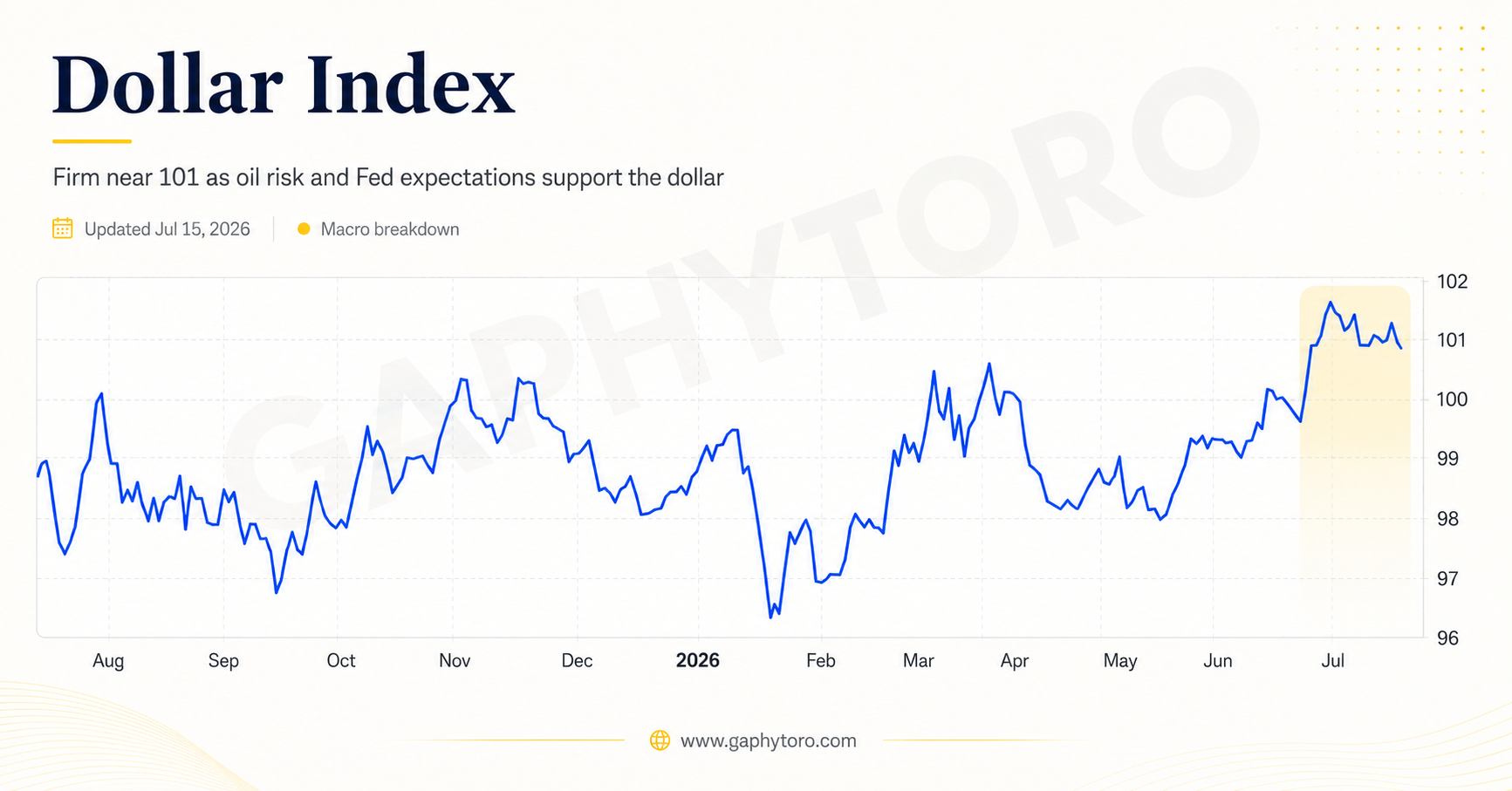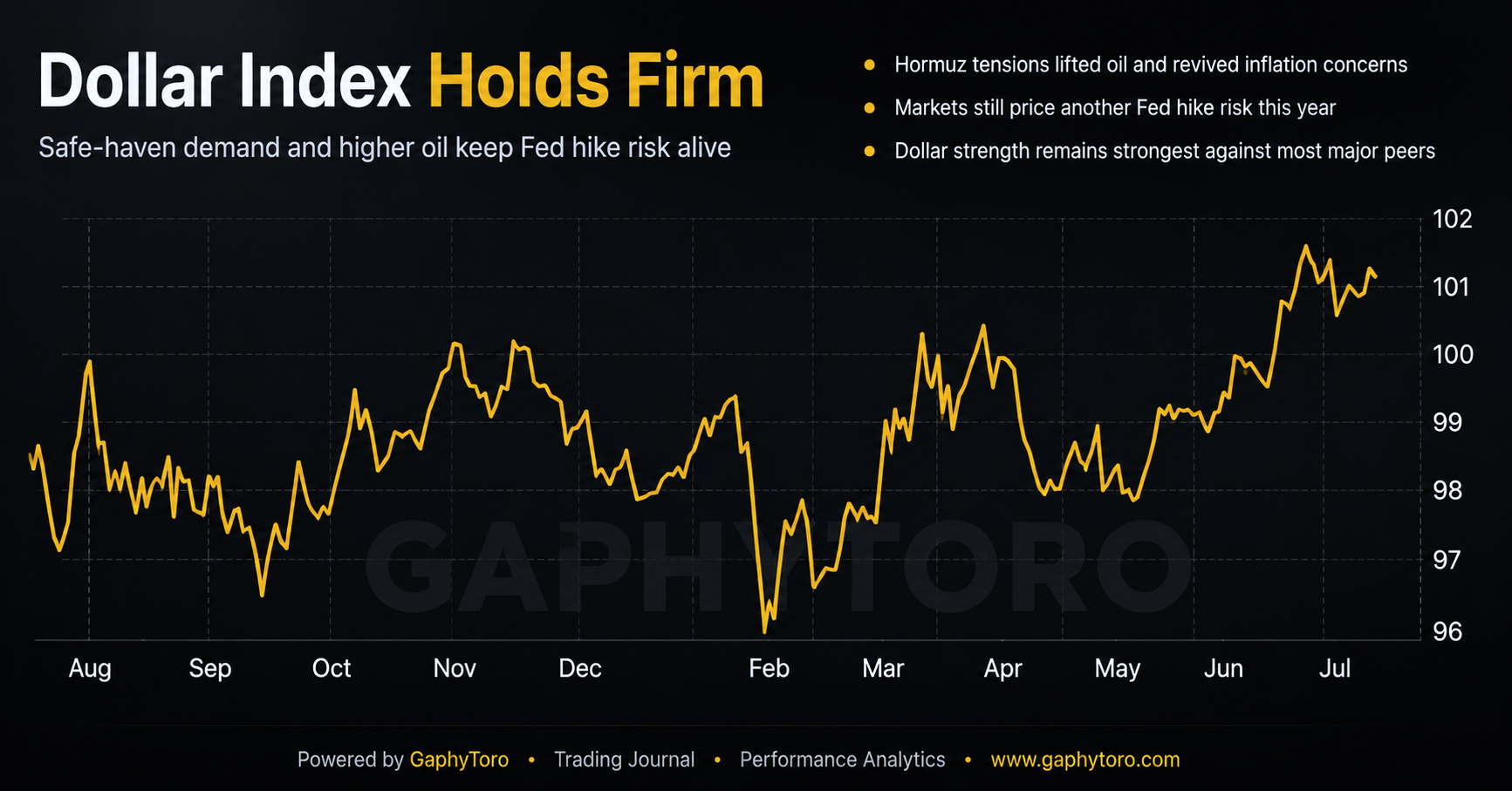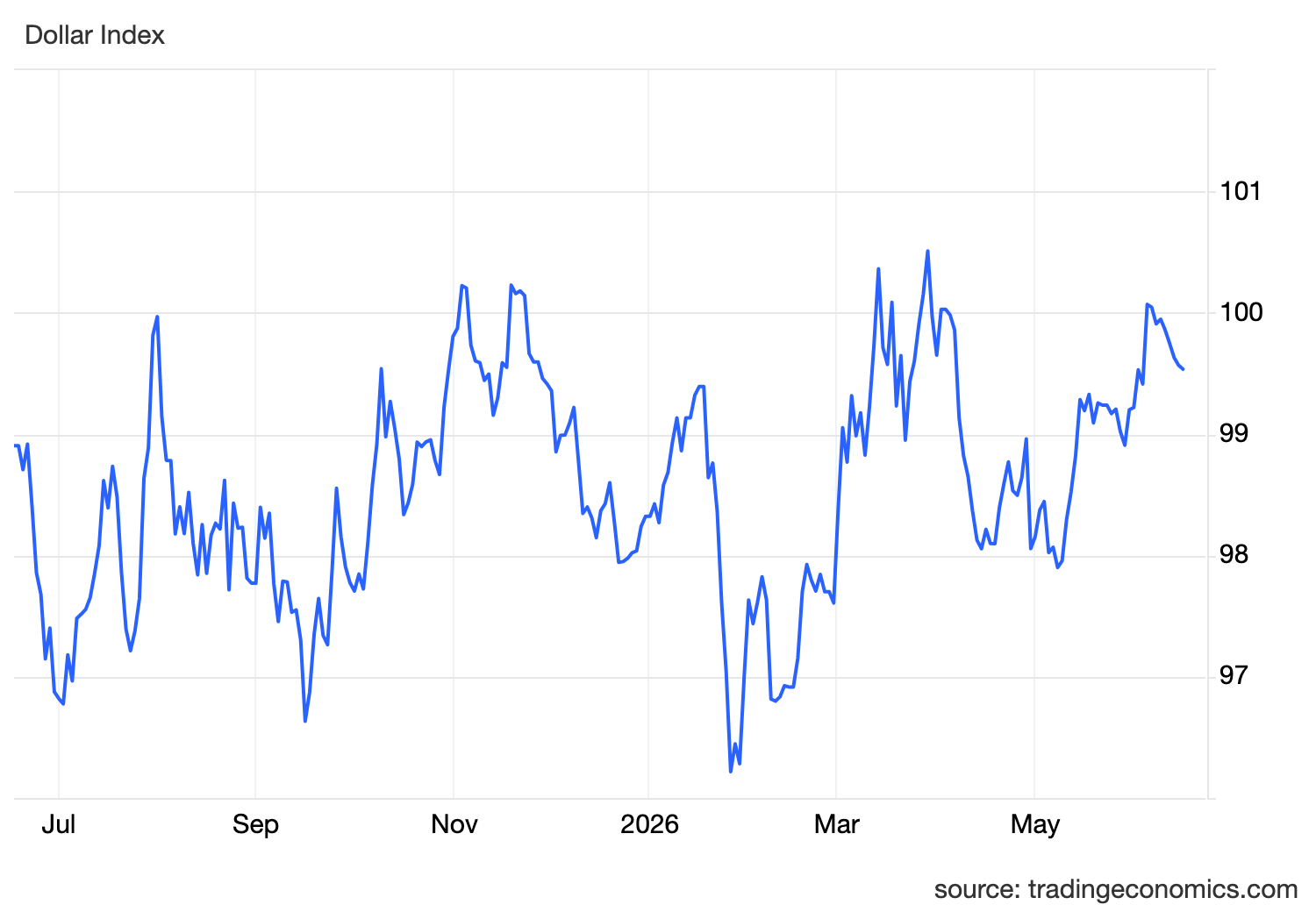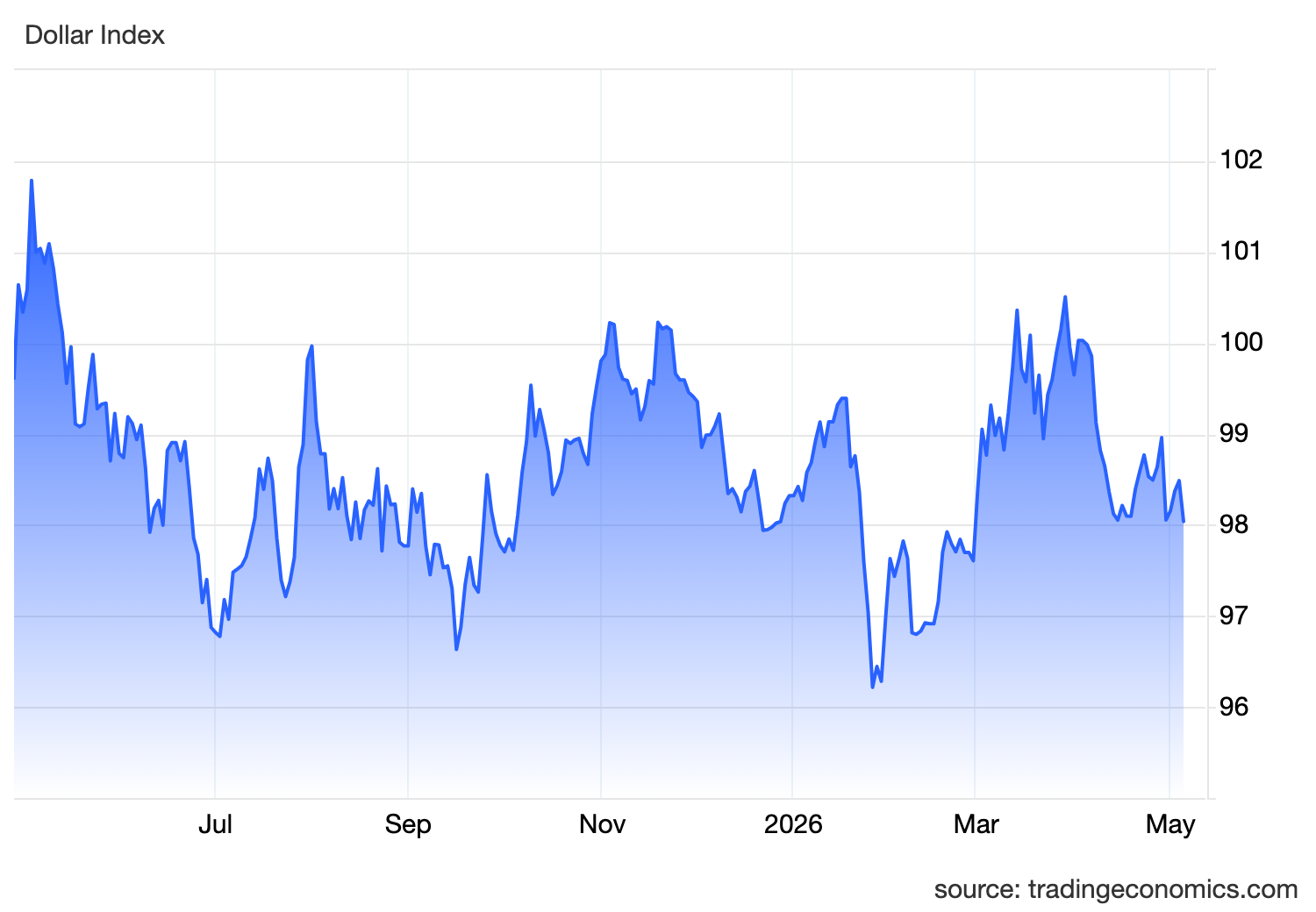
The dollar is losing momentum because the market is no longer pricing the worst-case scenario.
After three days of gains, the dollar index slipped toward 98 as investors reacted to signs that Washington and Tehran may still move toward a deal. The ceasefire remains intact, offensive operations have concluded, and the US is shifting its focus toward protecting shipping routes rather than escalating military action.
That changes the macro tone.
For the past few weeks, the dollar was supported by two major forces.
Safe-haven demand from geopolitical risk.
And higher rate expectations from rising oil prices.
Both are now softening.
The temporary pause in the US-led effort to assist stranded vessels out of the Strait of Hormuz gives renewed talks more room. It does not guarantee a deal, but it reduces immediate escalation risk.
That matters because oil is the transmission channel.
When Hormuz risk rises, oil rises. When oil rises, inflation expectations rise. When inflation expectations rise, the Fed has less room to ease and markets begin to price a more restrictive policy path.
Now that oil is retreating, that chain is reversing.
Lower oil eases inflation fears. Lower inflation risk reduces the probability that the Federal Reserve needs to consider another hike. That takes pressure off yields and weakens one of the dollar’s strongest supports.
This is why the dollar pullback makes sense.
It is not just about peace headlines. It is about markets removing the inflation premium that had been built into energy, rates, and the currency.
The Fed is still not free to declare victory.
Inflation risk has eased, but not disappeared. Policy remains data dependent, and the next test is the labor market.
That is why ADP and Friday’s payrolls report matter.
If labor data stays strong, the Fed can remain patient and keep rates elevated. That would limit dollar downside.
If labor data softens, and oil continues to fall, the market may start pricing a cleaner path toward easing. That would put more pressure on yields and the dollar.
Gold benefits from this setup if yields fall and the dollar weakens. But the move depends on whether markets believe inflation pressure is genuinely fading.
Risk sentiment improves as well.
Lower oil reduces pressure on consumers, businesses, and central banks. It supports the idea that the inflation shock may be cooling without forcing a deeper policy squeeze.
So the setup is clear.
The dollar is falling because geopolitical risk is easing, oil is retreating, inflation fears are cooling, and Fed hike risk is being priced out.
But the next move now depends on jobs data.
If labor stays strong, the dollar stabilizes.
If labor weakens, the dollar faces more downside.
Filed under
Written by

Founder & CEO, GaphyToro
Philip Ogina is the Founder and CEO of GaphyToro, a trader-first performance ecosystem built to help modern traders improve through structure, discipline, data, and better execution. He is a trader, investor, market analyst, educator, and software builder focused on building tools and infrastructure for the next generation of traders.